The Thylacine: Is the Tasmanian Tiger Really Extinct?
Officially extinct since 1936, the Tasmanian tiger keeps turning up in witness reports, in scientific models, and now in a lab trying to rebuild it.
On the night of 7 September 1936, in a bare concrete enclosure at the Beaumaris Zoo in Hobart, the last animal of its kind died. It had a name problem, a sex problem, and a weather problem. Nobody is entirely sure what it was called, nobody agrees on whether it was male or female, and the story that it died because a careless keeper locked it out of its sheltered den on a bitterly cold night, left to shiver in the open until morning, has never been fully confirmed or ruled out. What is certain is this: when the sun came up, the thylacine was gone from the Earth, and the species that had hunted the forests of Tasmania for thousands of years existed nowhere but in pelts, pickled specimens, and a few seconds of grainy film.
That is the official story. It has a tidy date, a tidy location, and a tidy ending. The trouble is that almost nobody who knows the thylacine believes the ending, because the Tasmanian tiger refused to stay dead. For ninety years, people in Tasmania and on the Australian mainland have kept seeing it: a stiff-tailed, striped animal crossing a road at dusk, standing frozen in a spotlight, slipping into the scrub before anyone could get close. Hundreds of reports. A government manhunt. A scientific study that put the real extinction date half a century after the zoo death. And now, in a laboratory in Melbourne, a team is trying to build the animal back out of its own genome. The thylacine may be the only creature that is officially extinct, widely reported, and under active reconstruction all at once.
This article contains affiliate links. If you buy through them we may earn a small commission at no extra cost to you.
What You'll Learn
- •The Animal That Looked Like a Mistake
- •How to Erase a Species in Fifty Years
- •The Last Thylacine and Its Uncertain Name
- •The Sightings That Never Stopped
- •What the Witnesses Keep Describing
- •The Scientists Who Moved the Extinction Date
- •The Cryptid That Was Unquestionably Real
- •The Hunt Goes North: Queensland, 2017
- •Building It Back From the Genome
- •Three Different Meanings of Extinct
- •Frequently Asked Questions
- •Further Reading
The Animal That Looked Like a Mistake
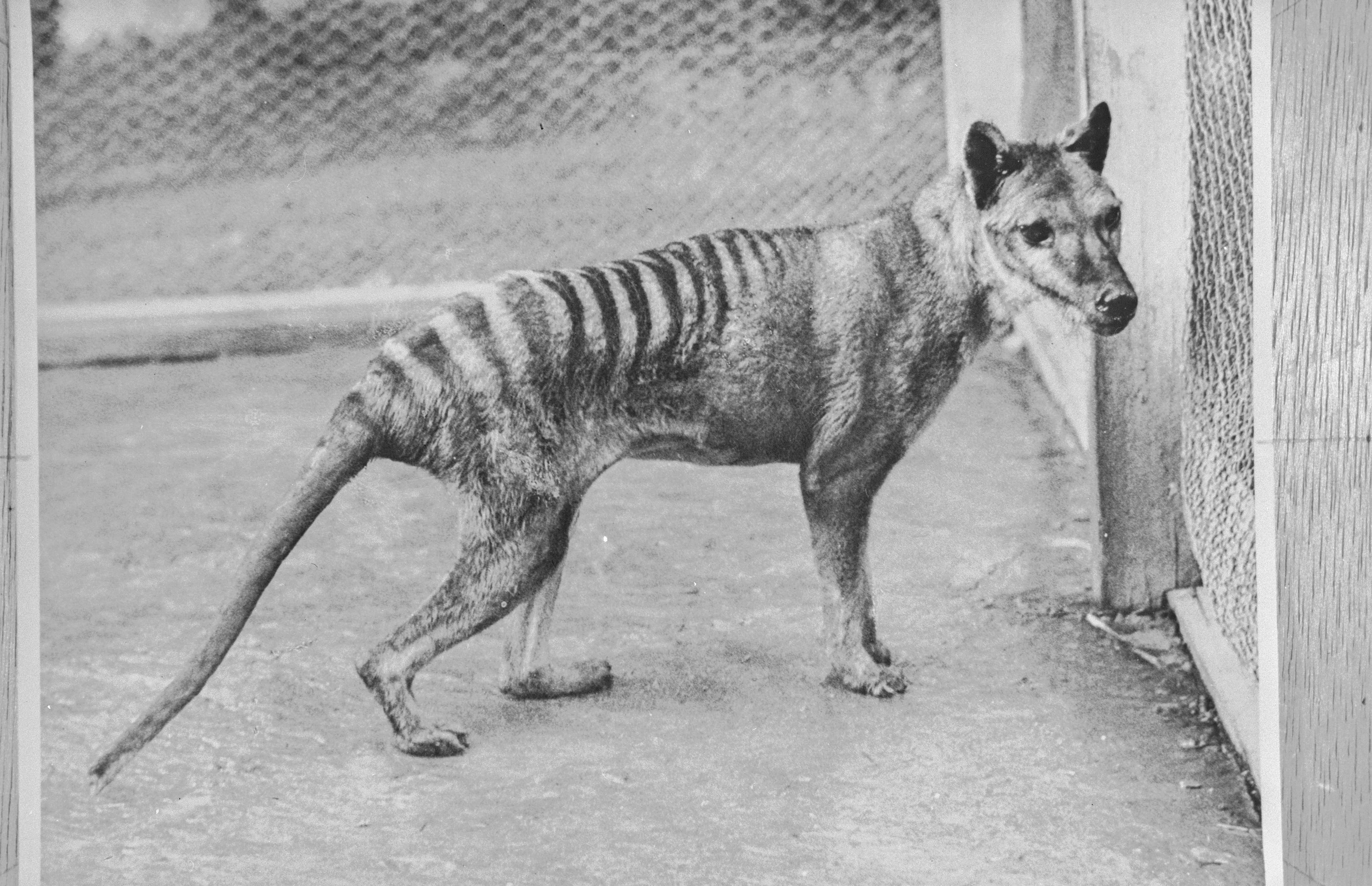
To understand why the thylacine haunts people, you have to understand how strange it was to look at. It was a marsupial, a pouched mammal more closely related to a kangaroo or a wombat than to any dog. Yet it had evolved into something that looked uncannily like a wolf. It had a long muzzle, a lean body, a deep chest, and a coat of sandy brown fur broken by fifteen to twenty dark stripes across its lower back and the base of its tail, the markings that earned it the name Tasmanian tiger. It carried its young in a backward-opening pouch, and the males had a partial pouch too. Its tail was thick and stiff at the base, held out like a kangaroo's, not swinging loose like a dog's.
This is one of the most quoted examples of convergent evolution in all of biology. The last common ancestor of marsupials and placental carnivores lived more than one hundred million years ago, and yet the thylacine's skull is so close to a canid's that even trained anatomists have been fooled by one on a lab bench. George Prideaux Robert Harris gave the animal its first scientific description in 1808, placing it, at first, among the opossums. The creature that resulted from two entirely separate evolutionary lines arriving at the same design was, by the time Europeans met it, already confined to a single island. Thylacines had once ranged across mainland Australia and New Guinea, but they vanished from the mainland somewhere around two to three thousand years ago, after the arrival of the dingo, growing human populations, and a drying climate. Tasmania, cut off by rising seas and free of dingoes, became the last refuge.
One more detail stays with everyone who reads about it. The thylacine could open its jaws to an extraordinary gape, roughly eighty degrees, wider than almost any other mammal. Photographs of the animal yawning, jaws splayed to a frightening angle, became some of the most reproduced images of the species. The gape looked ferocious. The bite, biomechanical studies later suggested, was surprisingly weak, built for small prey rather than livestock. That gap between how the animal looked and what it could actually do would help seal its fate.
How to Erase a Species in Fifty Years
The thylacine was killed off on purpose, and quickly. When European settlers arrived in Van Diemen's Land, as Tasmania was then called, they brought sheep, and the sheep industry decided the thylacine was its enemy. The Van Diemen's Land Company offered private bounties on the animal as early as the 1830s. In 1888 the Tasmanian government made it official, paying one pound for every adult thylacine turned in and ten shillings for a pup. By the time the scheme ended in 1909, the government had paid out on 2,184 animals.
Whether the thylacine deserved its reputation as a sheep killer is a question that has never been settled, and the evidence points away from the verdict that condemned it. Its jaw was weak. Reliable accounts of thylacines taking sheep in large numbers are thin, and much of the damage blamed on the tiger was more plausibly the work of feral dogs and poor husbandry. The animal made a convenient scapegoat for an industry looking for something to blame. By the time naturalists began to worry that the bounty had gone too far, disease may have swept through the remaining population as well, and the thylacine was collapsing faster than anyone was counting.
The timing of what came next is the part that still stings. Wilf Batty shot the last thylacine known to have been killed in the wild near Mawbanna, in the state's northwest, in 1930. The Tasmanian government finally granted the species official protection on 10 July 1936. The last captive thylacine died fifty-nine days later. Protection arrived for an animal that was, as far as anyone could prove, down to a single individual in a zoo.
The Last Thylacine and Its Uncertain Name
The animal that died at Beaumaris Zoo in September 1936 is often called Benjamin. There is a real chance it was never called that at all. The name first surfaced publicly in 1968, when a man named Frank Darby, who said he had worked at the zoo, used it in an interview. Alison Reid, whose father ran the zoo and who worked there herself, said she had never heard the animal called Benjamin and could not confirm Darby had ever been employed there. The name stuck anyway, because people wanted the last of a species to have a name. Even the animal's sex is argued over, with some researchers studying the surviving film frame by frame to settle whether the last thylacine was male or female, and still not agreeing.
What does survive, and what makes the loss feel so close, is the footage. In December 1933 the naturalist David Fleay set up a camera at the zoo and captured less than a minute of black-and-white film of the animal pacing its enclosure, scratching, yawning that enormous yawn, and lying down. Fleay reportedly got bitten on the backside for his trouble. For decades that footage, a few dozen flickering seconds, was the closest the world could get to a living thylacine. In 2021 the National Film and Sound Archive of Australia released a digitally colourised version, and the sandy coat and dark stripes appeared in something close to life for the first time since the animal breathed. The date of its death, 7 September, is now marked across Australia as National Threatened Species Day. Fifty years after the last one died, in 1986, the thylacine was formally declared extinct, the span of silence that convention requires before a species is given up for lost.
The Sightings That Never Stopped
Here is where the official story starts to come apart. Extinction is supposed to be the end of reports. The thylacine's reports never ended. From the moment the zoo animal died, Tasmanians kept saying they had seen one, and they did not stop. Parks and wildlife authorities have logged hundreds of claimed sightings in the decades since 1936, from farmers, bushwalkers, truck drivers, and, crucially, from their own trained staff.
The most serious of all came from inside the system. In 1982 Hans Naarding, an experienced wildlife officer with the Tasmanian Parks and Wildlife Service, was parked overnight in the state's rain-soaked northwest. He woke in the early hours, swept his spotlight across the scene out of habit, and found himself looking at an adult thylacine. He watched it for several minutes. He counted twelve stripes across its back. He had time to take in the coat, the shape, the stiff tail. Then he reached for his camera and the animal moved off into the rain, and the downpour ruined any chance of a footprint cast. Naarding was not a hoaxer or a hobbyist. He was a government biologist who knew exactly what he was looking at, and he was so sure of what he had seen that the Parks service kept it quiet and then, in 1984, funded a formal search of the region led by the wildlife biologist Nick Mooney. The search found no thylacine. It also found no reason to call Naarding wrong.
That is the pattern the thylacine has followed for ninety years. A credible witness, a clear description, a few seconds too few, and then nothing solid enough to hold. The reports cluster in the remote northwest and the southwest wilderness, the exact country where an animal that hunts at dawn and dusk and avoids people could, in theory, still be hiding.
What the Witnesses Keep Describing
Mass hoaxes and simple mistakes tend to produce scattered, inconsistent stories. The thylacine reports are strikingly consistent, and consistent in ways that match the real animal rather than a dog or a cat. Witnesses describe the stiff tail held out straight from the body, thick at the base, nothing like the loose wag of a dog. They describe the stripes, usually across the hindquarters, sometimes counted precisely. They describe an awkward, slightly stiff gait, and occasionally that strange upright pause the thylacine was known for, rising on its hind legs for a moment. They describe the animal freezing in headlights or a spotlight rather than bolting, then slipping away without panic.
These are not the details a casual fabricator reaches for. They are the details recorded in the old zoo films and the museum specimens. When a truck driver on a lonely Tasmanian road says the thing he saw had a tail that would not bend and a back full of stripes and did not run like a dog, he is describing, without necessarily knowing it, the specific anatomy of an animal most people have only ever seen in a photograph. That does not prove a thylacine crossed the road. It does mean the reports cannot be waved away as people seeing foxes and feral dogs, because foxes and feral dogs do not look like that.
The Scientists Who Moved the Extinction Date
For a long time the sightings and the official record sat in separate worlds. The witnesses had their stories and science had its date, 1936, and the two did not speak. Then, in 2021, a team of researchers decided to treat the sightings as data.
Barry Brook and colleagues, including Stephen Sleightholme and Cameron Campbell, who maintain detailed records of thylacine specimens and reports, compiled a database of 1,237 thylacine records, the Thylacine Sighting Records Database, spanning physical specimens, expert sightings, and public reports. They ran the whole set through statistical models designed to estimate when a species actually went extinct given a trail of sightings of varying reliability. Their paper, published in the journal Science of the Total Environment, reached a conclusion that should have made headlines everywhere. The most probable extinction date was not 1936. It fell decades later, somewhere in the 1980s or 1990s, and the models could not entirely rule out the animal surviving into the present in the remote southwest.
Read that carefully. This was not a cryptozoology newsletter. It was a peer-reviewed analysis by scientists who concluded that the thylacine, declared extinct in 1986, may in fact have still been alive when that declaration was made, and might, at the edge of the probability curve, be alive now. The witnesses, in other words, may have been right all along. The animal was gone from the zoos and the bounty records, but perhaps not from the forest.
The Cryptid That Was Unquestionably Real
This is what sets the thylacine apart from every other animal in cryptozoology, and it is the detail most retellings miss. With Bigfoot, the Loch Ness Monster, or the Mokele-mbembe, the first question is always whether the creature ever existed at all. With the thylacine, that question has a flat answer: yes. It is in museums. It is on film. Its genome has been sequenced. There is no debate about whether the Tasmanian tiger was real, because the world spent a century killing it and photographing the survivors.
So the thylacine inverts the usual mystery. The uncertainty is not about existence but about endings. The animal was real; the only question is when, or whether, it stopped being real. That is a far more unsettling kind of mystery than a monster that might never have been. A Bigfoot sighting asks you to believe in something unprecedented. A thylacine sighting only asks you to believe that a known animal, seen by trained officers and cataloged in a scientific database, might have outlived its own obituary by a few decades in country where almost no one goes. The leap is small. That is precisely why it is so hard to dismiss.
The Hunt Goes North: Queensland, 2017
The strangest recent chapter did not happen in Tasmania at all. In 2017 researchers at James Cook University, led by Professor Bill Laurance, announced they were planning camera-trap surveys on Cape York, in far north Queensland, thousands of kilometers from Tasmania and on the mainland where the thylacine supposedly vanished three thousand years ago. The reason was a pair of eyewitness accounts the scientists judged credible, including one from a former long-serving Queensland national parks ranger who described a close nighttime encounter with animals he could not match to anything known.
The surveys deployed camera traps across likely habitat. No thylacine was confirmed. But the fact that serious field biologists were willing to spend their reputations looking, on the mainland, for an animal extinct there since before the pyramids, tells you how much weight the eyewitness pattern carries once you stop laughing at it. Meanwhile, back in Tasmania, enthusiasts kept setting their own cameras. In 2021 a man named Neil Waters, who runs a thylacine awareness group, announced he had photographed a family of thylacines. Nick Mooney, the same biologist who led the 1984 search and is now an honorary curator at the Tasmanian Museum and Art Gallery, examined the images and concluded the animal was a Tasmanian pademelon, a small native marsupial. The cycle repeats: a photograph, an expert, a deflation, and a species that still will not quite leave.
Building It Back From the Genome
While the field searches came up empty, the laboratory got busy, and this is where the thylacine story turns into something no other extinct animal has quite matched. In 2017 a team led by Andrew Pask at the University of Melbourne sequenced the thylacine's complete genome, reading it from a pouch young specimen roughly 108 years old, preserved in ethanol in the collection at Museums Victoria. The result, published in Nature Ecology and Evolution, was one of the most complete genomes ever recovered from an extinct species, and it confirmed just how little genetic diversity the thylacine had left even before the bounty, which may have made its collapse faster than anyone realized.
Then the project grew ambitions no one expected. In 2022 the biotechnology company Colossal Biosciences partnered with Pask's laboratory, now called the Thylacine Integrated Genetic Restoration Research lab, to attempt to bring the animal back. The plan uses the fat-tailed dunnart, a mouse-sized living marsupial, as the genetic template and surrogate, editing its cells toward the thylacine genome and aiming, eventually, to produce a living animal. Whether that counts as resurrection or as building a convincing copy is a question biologists argue over fiercely. And in 2023 researchers in Sweden, led by work from Emilio Mármol-Sánchez and Marc Friedländer, announced something stranger still: they had recovered RNA, the fragile working molecules of a living cell, from a desiccated thylacine specimen around 130 years old that had been sitting at room temperature in a museum. It was the first time RNA had ever been recovered from an extinct species, a glimpse not just of the animal's blueprint but of its genes caught in the act of switching on and off.
Three Different Meanings of Extinct
Stand back and the thylacine occupies three contradictory states at once, and no single word holds them together. Officially, it is extinct, a line drawn in 1986 under a death in 1936. Statistically, according to peer-reviewed modeling of 1,237 records, it may have survived until the 1980s or 1990s and possibly beyond, which means the official line was drawn over a living animal. And experimentally, its genome is being rewritten into the cells of another marsupial right now, which means the thylacine may yet exist in a future that the bounty hunters could never have imagined.
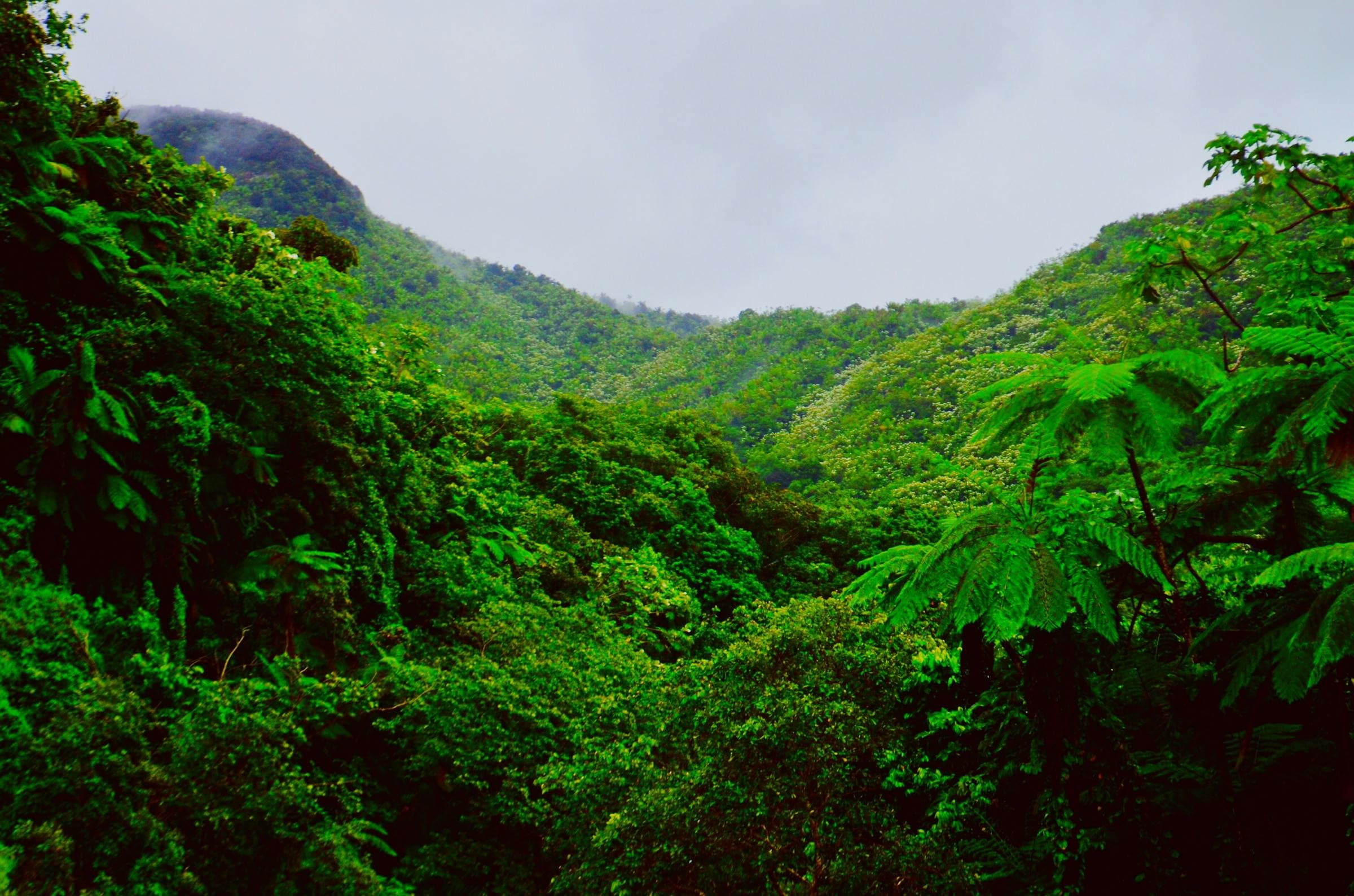
An animal that was unmistakably real. A death with a date and a place. A hundred years of witnesses, including the state's own biologists, who insist it never fully ended. A scientific study that agrees with them. And a laboratory trying to make the question moot by building a new one. The thylacine is not a monster that might be out there. It is a known animal that we declared gone, that keeps appearing to the people most qualified to recognize it, in exactly the country where it could still hide. Somewhere in the southwest rainforest, under the dripping myrtle and the deep green dark, something may still be moving with a stiff tail and a striped back. We killed it carefully, counted it out, and closed the book. The forest did not get the memo.
Frequently Asked Questions
When did the thylacine officially go extinct? The last known thylacine died at Beaumaris Zoo in Hobart on 7 September 1936, and the species was formally declared extinct in 1986, fifty years later, as convention requires. But a 2021 study modeling 1,237 records concluded the real extinction date likely fell decades after the zoo death, in the 1980s or 1990s, which would mean the animal was still alive somewhere when it was officially given up for lost.
Are people still seeing Tasmanian tigers today? Yes, and that is the heart of the mystery. Reports have continued without interruption since 1936, including a multi-minute, close-range sighting by a Tasmanian wildlife officer in 1982 that was credible enough to trigger a government-funded search. Hundreds of reports sit in the files. None has yet produced a body, a clear photograph, or a confirmed track, but neither have decades of searching produced proof that the animal is truly gone.
Why do the thylacine sightings seem more believable than other cryptid reports? Because the thylacine was real, cataloged, filmed, and preserved in museums, so a sighting only asks you to accept that a known animal outlived its recorded extinction, not that an entirely unknown creature exists. Witnesses also tend to describe specific, accurate traits, the stiff out-held tail, the hindquarter stripes, the stiff gait, details that match the museum specimens rather than a dog or a fox.
Can scientists really bring the thylacine back? A laboratory in Melbourne, working with the company Colossal Biosciences, is trying, using the thylacine's sequenced genome and a living relative, the fat-tailed dunnart, as a template. Whether the result would be a true thylacine or a close genetic approximation is hotly debated. What is certain is that this is the only extinct animal whose genome has been read, whose RNA has been recovered, and whose reconstruction is actively underway, all while people keep reporting the original in the wild.
Could a breeding population have survived undetected for ninety years? Tasmania's southwest is one of the least-traveled temperate wildernesses on Earth, a roadless expanse of rainforest and buttongrass where a shy, crepuscular animal could plausibly avoid people for a very long time. Skeptics note that no verified carcass or roadkill has ever turned up in all those decades, which is hard to square with a surviving population. Supporters note that the same could be said right up until almost any rediscovery of a species thought extinct. The country is big, the animal was secretive, and the proof has simply never arrived either way.
Further Reading
For the full history of the animal and its destruction, Robert Paddle's The Last Tasmanian Tiger: The History and Extinction of the Thylacine is the definitive scholarly account, and it is the book that did the most to dismantle the myth that the thylacine was a serial sheep killer. David Owen's Thylacine: The Tragic Tale of the Tasmanian Tiger is a more accessible telling that runs right up to the modern sightings and searches. For the view from inside the hunt, Col Bailey's Shadow of the Thylacine: One Man's Epic Search for the Tasmanian Tiger follows a lifelong searcher through the Tasmanian bush.
If reading about the camera-trap expeditions makes you want to set your own in the wild, a weatherproof trail and game camera is the same tool the field biologists use to watch remote country without disturbing it.
Want to explore more mysteries?
We've got plenty more rabbit holes to go down.