The Jersey Devil: What Haunts the Pine Barrens?
For three centuries, the New Jersey Pine Barrens have produced sightings of a winged, hoofed creature no one can name. Inside the legend that won't die.
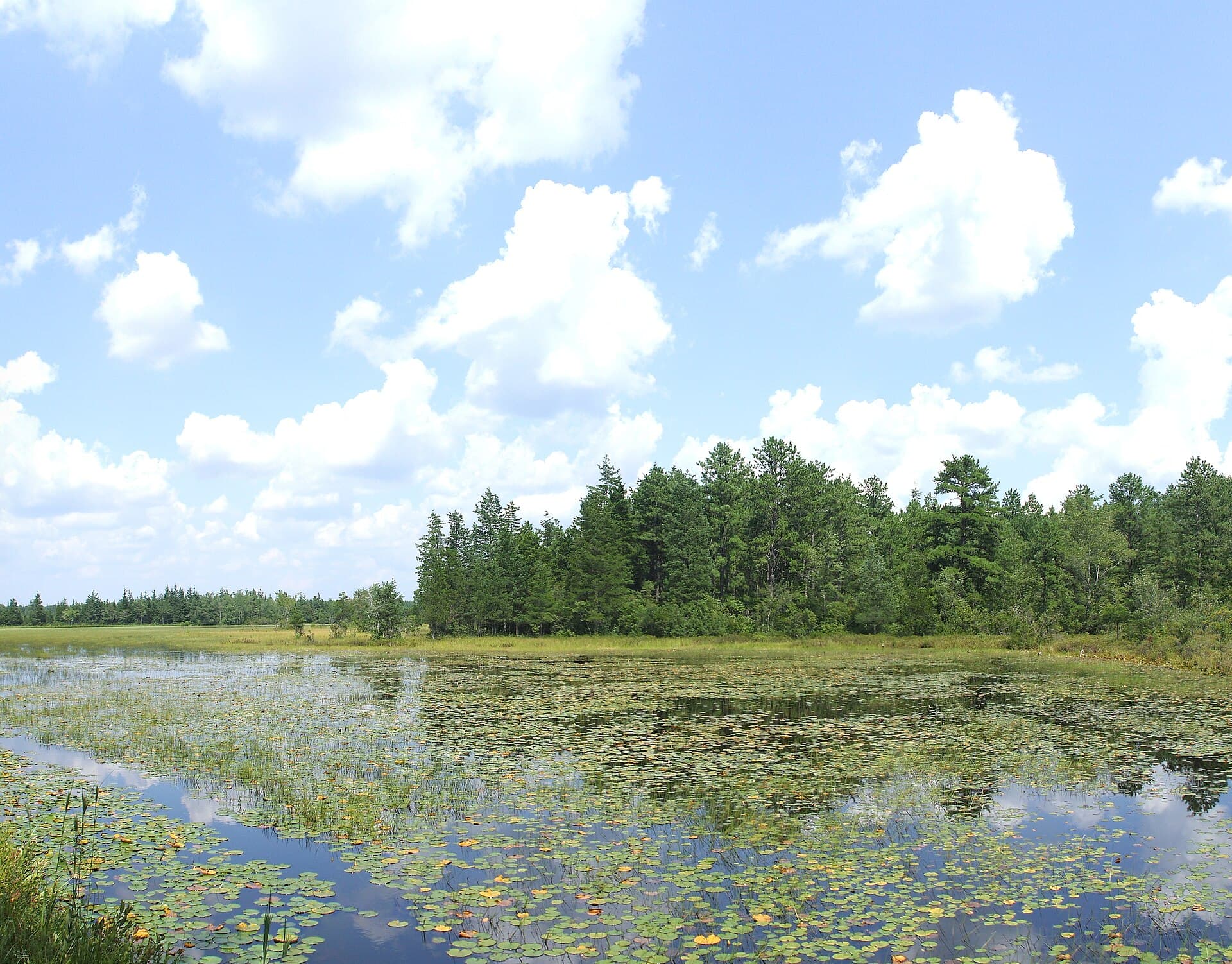
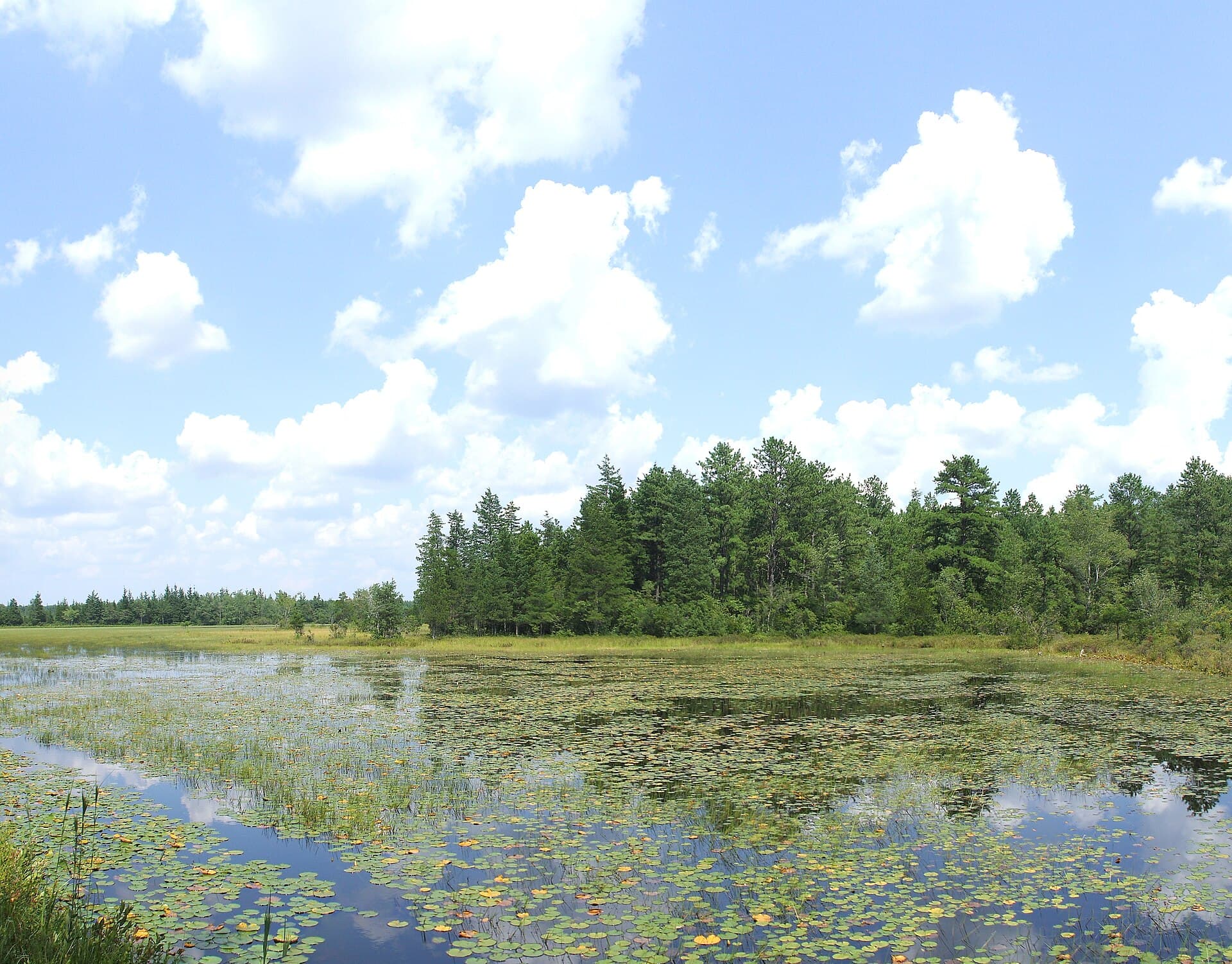
There is a stretch of New Jersey that most people who live in the state have never set foot in. It covers more than a million acres, an expanse of stunted pine and oak, tea-colored streams, and sand so pale it looks like beach left behind by a vanished sea. They call it the Pine Barrens, and the name is a warning the colonists left for us: the soil is too acidic to farm, the ground swallows roads, and the forest closes in fast once you leave the few paved lanes that cross it. It sits less than an hour from Philadelphia and Atlantic City, ringed by the most densely populated corridor in the United States, and yet you can walk into it and not see another human being for a day.
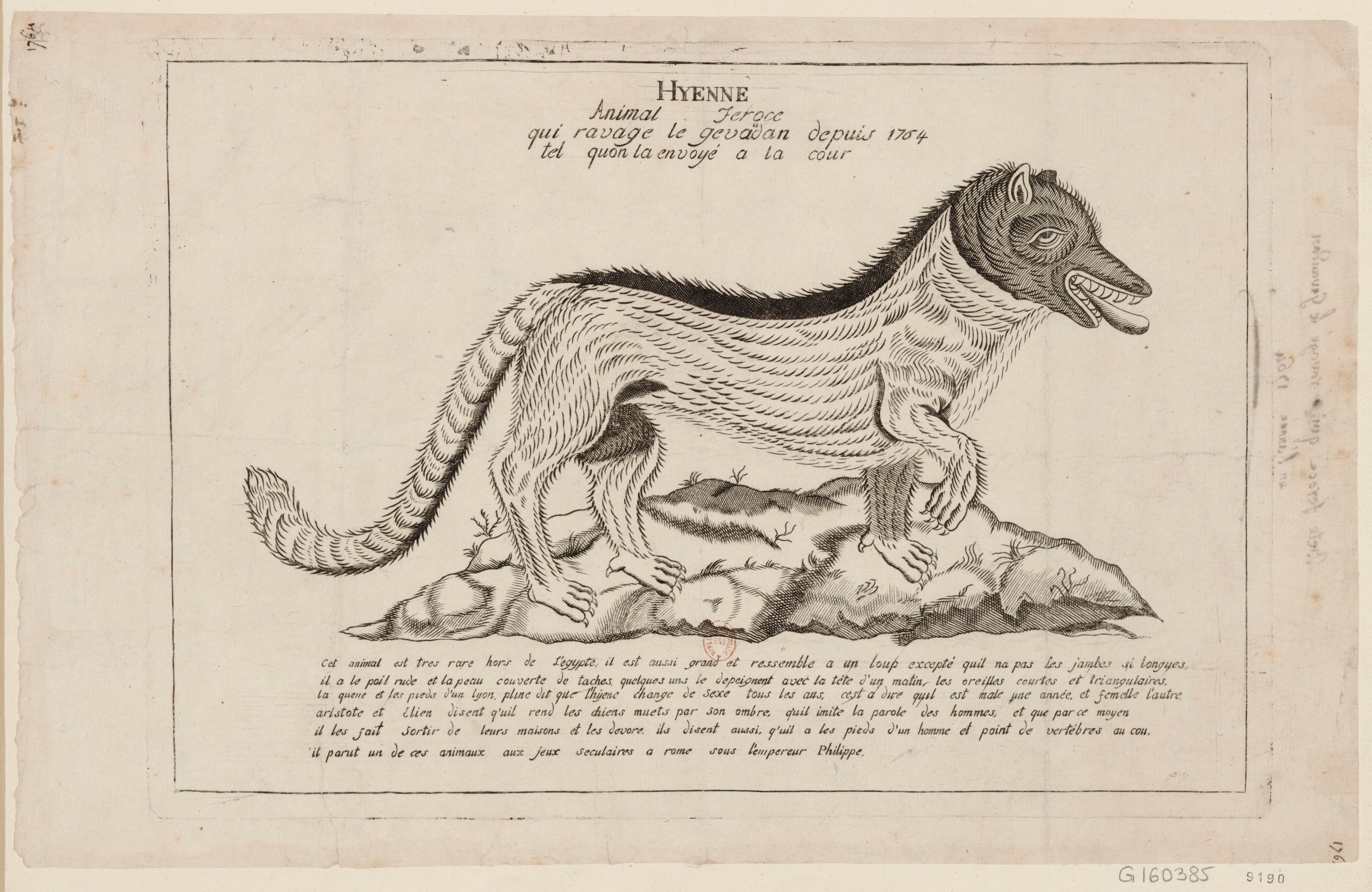
Something is supposed to live in there. For roughly three hundred years, the people of the Pine Barrens have described a creature with the head of a horse, the wings of a bat, a forked or serpentine tail, and hooves where its hands should be. It screams in the night. It leaves tracks that start and stop in the middle of open ground. It has been blamed for dead livestock, ruined crops, and a week of mass panic so severe that factories closed and posses roamed the woods with shotguns. People call it the Jersey Devil, and after three centuries of sightings, nobody has been able to say what it actually is.
What You'll Learn
- •The Legend of Mother Leeds
- •The Real Leeds Family and the Devil's Origins
- •The Week the State Lost Its Mind: January 1909
- •What Witnesses Actually Describe
- •The Pine Barrens: A Wilderness Built to Hide Things
- •The Conventional Explanations
- •The Sandhill Crane Theory and Its Problems
- •Modern Sightings and the Devil That Won't Die
- •Why the Jersey Devil Endures
- •Frequently Asked Questions
The Legend of Mother Leeds
Every version of the story circles back to the same night, somewhere in the 1730s, in a cabin deep in the Pines near present-day Leeds Point.
A woman known in the tale only as Mother Leeds was pregnant with her thirteenth child. The family was poor, the winter was hard, and twelve children were already more mouths than the household could feed. In a moment of exhaustion and despair, as the story goes, she cried out that this thirteenth child could be the Devil for all she cared. The words were spoken, and words like that, in the folklore of the colonial frontier, were not idle.
The child was born on a storm-lashed night. Accounts differ on what happened next, and the differences are part of what gives the legend its strange power. In some tellings the baby was born normal and then transformed, its body stretching and contorting in front of the assembled women, hooves splitting through its feet, leathery wings unfolding from its back. In others it was monstrous from its first breath. Either way, the creature is said to have let out a cry, beaten the midwives with its newly grown wings or tail, and escaped up the chimney into the night, vanishing into the dark forest that has supposedly hidden it ever since.
It is a perfect campfire story, and for a long time that is all most people assumed it was. But the names attached to it turn out to be real, and that is where the mystery stops behaving like a simple folktale.
The Real Leeds Family and the Devil's Origins
The Leeds family genuinely lived in the area around Leeds Point in the early eighteenth century. The patriarch, Daniel Leeds, arrived in the colonies as a Quaker and settled in what was then West Jersey. He became a surveyor, a landowner, and eventually a publisher of almanacs, and it is in that last role that historians have found a thread worth pulling.
Daniel Leeds got into a bitter, public feud with his fellow Quakers. His almanacs dabbled in astrology and Christian mysticism, which the local Quaker leadership condemned as occult and ungodly. They denounced him in print. He fired back. The dispute turned venomous enough that Leeds came to be branded, by his own former community, as something close to an agent of evil. His family adopted a coat of arms that featured a wyvern, a winged, two-legged dragon-like creature with a barbed tail. Look at that heraldic image and then look at the standard description of the Jersey Devil, and the resemblance is hard to unsee.
The folklorist Brian Regal has argued that the monster grew, at least in part, out of this very human conflict. The Leeds family were political and religious outcasts. Benjamin Franklin himself, in a long-running almanac rivalry, mockingly "predicted" the death of Daniel's son Titan Leeds and kept up the joke even after Titan was still very much alive, effectively writing him off as a ghost. To call the thirteenth Leeds child a devil, in this reading, was a way of branding an entire disgraced family as monstrous. Over generations, the political insult curdled into a literal monster, and the monster moved into the woods.
It is a compelling piece of historical detective work. What it does not do, and what Regal would not claim it does, is explain why people kept seeing something in the Pine Barrens for the next two hundred years. A slander against a colonial publisher accounts for the name. It does not account for the tracks in the snow.
The Week the State Lost Its Mind: January 1909
If the Jersey Devil were only an old folktale, it would have faded the way most colonial ghost stories faded. Instead, in a single week, it produced one of the strangest episodes of mass sighting in American history, documented in real time by newspapers across the region.
The week of January 16 through 23, 1909, was bitterly cold. It began with reports of unidentifiable tracks in the snow, hoofprints that wandered across yards and rooftops, sometimes seeming to stop at a fence or a wall and resume on the far side as though the animal had passed straight through or flown over. The tracks appeared across an enormous area, in town after town throughout the Delaware Valley, on both sides of the river in New Jersey and Pennsylvania.
Then people started seeing the thing that made them.
In Bristol, Pennsylvania, a postmaster reported watching a flying creature. In Gloucester City, New Jersey, a couple named Nelson Evans said they watched the creature for ten full minutes from their window in the early morning, and gave a detailed description: about three and a half feet tall, with a head like a collie, the face of a horse, a long neck, wings perhaps two feet across, back legs like a crane, and hooves. It walked on its back legs and held up two short front legs with paws. When Evans shouted at it, he said, it turned, let out a sound, and flew off.
Reports poured in from across the region. A trolley car full of passengers in Haddon Heights said the creature flew at the car. Posses formed. Hunting dogs refused to follow the trail. The Philadelphia Zoo offered a reward for the creature's capture. Two Philadelphia museums put up bounties. Schools closed and workers stayed home from the mills in some Pine Barrens towns, too frightened to walk the roads. For roughly a week, an entire corner of the industrialized northeast genuinely believed a monster was loose among them.
Then, almost as suddenly as it began, it stopped. The sightings thinned out, the snow melted, and life returned to normal. But more than a thousand people, across dozens of towns, had reported something, and they had reported it consistently enough that the descriptions matched.
What Witnesses Actually Describe
Strip away the campfire embellishments and look at what people across three centuries say they saw, and a stable picture emerges. That stability is one of the most genuinely puzzling features of the case.
The core description almost always includes:
- •A body roughly the size of a large dog, deer, or small kangaroo, often reported standing three to four feet tall
- •A long neck and an elongated head frequently compared to a horse or a collie
- •Membranous, bat-like wings
- •Hind legs adapted for hopping or standing upright, sometimes described as crane-like
- •Cloven hooves rather than paws or claws
- •A long tail, sometimes forked, sometimes described as reptilian
- •A piercing scream or screech, the detail witnesses return to again and again
What is strange is not that the description is exotic. Plenty of folklore produces exotic monsters. What is strange is the consistency, across centuries and across people who had no contact with one another, and the awkward, chimeric specificity of it. The Jersey Devil is not a generic dragon or a generic ghost. It is a precise and biologically incoherent assembly of parts: hooves and wings, a horse's head and a kangaroo's stance. No single animal looks like this. And yet the people who report it keep reporting the same impossible animal.
Skeptics read that consistency as proof of cultural transmission: everyone in the region grew up with the same picture in their heads, so everyone "sees" the same thing. Believers read it as the opposite: that the description has stayed stable because witnesses are describing a real creature. Both readings fit the evidence, which is precisely the problem.
The Pine Barrens: A Wilderness Built to Hide Things
To understand why the legend survives, you have to understand the place that produced it. The Pine Barrens are unlike anywhere else on the eastern seaboard.
The region covers roughly 1.1 million acres across seven New Jersey counties, the largest body of open space on the Mid-Atlantic coast between Boston and Richmond. Beneath it sits the Kirkwood-Cohansey aquifer, holding an estimated 17 trillion gallons of some of the purest water in the country. The sandy, acidic soil supports a forest of pitch pine and scrub oak found in few other places, along with orchids, carnivorous plants, and the famous Pine Barrens tree frog.
It is also a landscape with a long history of being a place people disappear into. In the eighteenth and nineteenth centuries the Pines were home to bog iron works, charcoal makers, and isolated communities so cut off from the rest of the state that outsiders called the residents "Pineys," a term that carried a heavy, unfair stigma of backwardness and inbreeding. Bootleggers ran stills in the Pines during Prohibition. Whole towns, like the once-thriving glassmaking village of Harrisville, were abandoned and swallowed back by the forest, their brick ruins now standing among the trees.
This is the genius of the Jersey Devil as a story. It lives in exactly the kind of place where a thing could plausibly hide. The Pines are vast, thinly traveled, and genuinely easy to get lost in. Sound carries strangely across the flat sand and water. Foxes scream, owls call, and the wind in the pines makes noises that do not sound like wind. A person alone out there at night, primed by a three-hundred-year-old legend, is a person ready to see and hear almost anything. Whether the Devil is a product of that landscape or a resident of it is the question no one has settled.
The Conventional Explanations
Over the years, a range of explanations has been offered for the Jersey Devil, and each one accounts for part of the case while leaving something stubbornly unexplained.
It was always just folklore. The historical work on the Leeds family is strong, and it convincingly explains where the name and the basic shape of the legend came from. What it cannot explain is the lived experience of the witnesses. Folklore tells us why a region had a monster ready to hand. It does not tell us what Nelson Evans watched outside his window for ten minutes in 1909, or what made the tracks that crossed the snow in town after town that same week.
The 1909 panic was a hoax. One persistent claim is that the entire 1909 flap was manufactured. A man named Norman Jefferies, a press agent for a Philadelphia dime museum, later admitted to staging a "captured Jersey Devil" exhibit during the panic, a kangaroo fitted with fake wings and claws, to draw paying crowds. That a showman exploited the hysteria is well documented. But Jefferies exploited a panic that was already in full swing. His fraud explains a sideshow exhibit. It does not explain the hundreds of independent sightings and the tracks that triggered the panic in the first place.
It was mass hysteria. Crowd psychology is real, and a cold, dark week with a frightening rumor circulating is fertile ground for it. Mass hysteria can spread a sighting from one person to a hundred. What it struggles to explain is the physical evidence: the actual tracks in the actual snow that people photographed and cast and followed across miles of countryside, and the fact that the descriptions held together across communities that were not in contact.
Each explanation is reasonable. None of them closes the case on its own, and stacking them together still leaves a residue of reports that resist tidy accounting.
The Sandhill Crane Theory and Its Problems
The single most cited "answer" to the Jersey Devil is the sandhill crane. It is worth taking seriously, because it gets closer than most.
The sandhill crane is a large bird, standing up to four feet tall, with a wingspan that can exceed six feet, long crane legs, a long neck, and a loud, rattling, deeply unsettling call that carries for miles. A crane glimpsed at the edge of a clearing at dusk, by someone who had never seen one, could account for the size, the legs, the neck, and especially that scream. It is a genuinely good fit for several elements of the description, and it has the advantage of being a real animal.
But the theory runs into trouble fast. Sandhill cranes are not native to and have historically been all but absent from southern New Jersey; the region sits well off their usual range. A bird that hardly ever appears in the Pines cannot easily explain a creature reported there for three hundred years. And a crane, however eerie, does not have a horse's head, leathery bat wings instead of feathered ones, cloven hooves, or a forked reptilian tail. It does not hop like a kangaroo or stand holding up two short front paws. Witnesses did not describe a big unfamiliar bird. They described a chimera, and they described it the same way over and over.
The crane explains the scream and maybe the silhouette. It does not explain the animal. That gap, between the parts of the description a known creature can cover and the parts it cannot, is where the Jersey Devil has always lived.
Modern Sightings and the Devil That Won't Die
The Jersey Devil did not retire after 1909. Reports have continued, in a slow but unbroken trickle, right up to the present.
Through the twentieth century, Pine Barrens residents and visitors kept reporting strange screams in the night, livestock found dead, and glimpses of something large and winged moving through the trees. In 2015, a man named Dave Black photographed what he claimed was the Jersey Devil flying over Galloway Township, New Jersey, a winged shape against the sky that briefly went viral and was, predictably, both defended and dismissed. Sightings continue to be logged on cryptid databases and reported to local news, often clustered, as they always have been, in the deep Pines of Burlington, Atlantic, and Ocean counties.
The creature has also become inseparable from New Jersey's identity in a way that keeps it alive culturally even where it is doubted. The state's NHL team is named the New Jersey Devils. Towns hold Jersey Devil festivals. Pine Barrens tour guides build itineraries around the legend. This cultural ubiquity cuts both ways for the mystery. On one hand, it keeps the image in everyone's head, priming new sightings. On the other, it means that for three centuries, in good times and bad, a corner of the most crowded region in America has refused to let go of the conviction that something is out there in the trees.
What no modern sighting has produced is a body, a clear photograph, a carcass, or a single bone. In an age of trail cameras, smartphones, and DNA analysis, that absence weighs heavily. And yet the same could be said of the Pine Barrens themselves: a million acres where, even now, a person can stand in total silence and see nothing human in any direction, and wonder what made the sound that just came out of the dark.
Why the Jersey Devil Endures
Most American monsters are local and stay local. The Jersey Devil is unusual for how long it has held on, how consistent its description has remained, and how thoroughly it is woven into the history of a real place and a real family.
Part of the answer is the historical hook. Unlike a generic lake monster or forest giant, the Jersey Devil comes attached to documented names, a documented feud, and a documented week in 1909 when over a thousand people across two states reported the same impossible animal at the same time. That gives it a spine of fact that pure folklore lacks.
Part of it is the landscape. The Pine Barrens are still there, still vast, still genuinely wild, less than an hour from millions of people who never enter them. A legend needs somewhere to live, and the Pines are one of the last places on the crowded eastern seaboard where a monster could.
And part of it is the shape of the thing itself: hooves and wings, a horse's head and a scream that empties the woods of every other sound. It is too specific to be a vague fear and too incoherent to be a real animal, and that contradiction is exactly what keeps people arguing about it three centuries later. The historians have explained the name. The biologists have explained the scream. No one has explained what, if anything, still moves through the Pine Barrens at night, and until someone does, the Devil has somewhere to hide.
If the Jersey Devil draws you in, you might also look into Bigfoot, North America's most reported cryptid, or the Mothman of Point Pleasant, a winged creature whose sightings, like the Devil's, clustered into one unforgettable wave. You can also find the Jersey Devil and dozens of other unexplained cases on our interactive map.
Frequently Asked Questions
Is the Jersey Devil based on a real family?
Yes, and this is one of the case's strangest features. The Leeds family genuinely lived near Leeds Point, New Jersey, in the early 1700s. Daniel Leeds, an almanac publisher, was branded as something close to an agent of evil by his fellow Quakers after a bitter religious feud, and the family's coat of arms featured a winged, dragon-like wyvern. The "Mother Leeds" of the legend maps onto a real lineage, which is why the story has roots that a typical folktale does not.
What happened during the 1909 sightings?
For roughly one week in January 1909, more than a thousand people across New Jersey and Pennsylvania reported unexplained hoofed tracks in the snow and sightings of a flying, hoofed creature. Posses formed, schools and mills closed, zoos and museums offered rewards, and hunting dogs reportedly refused the trail. A press agent later admitted faking a "captured" Devil exhibit during the panic, but that hoax came after the sightings had already begun, and it does not account for the tracks or the independent reports that started it all.
Could the Jersey Devil just be a sandhill crane?
A sandhill crane explains some of the description: it is tall, long-necked, long-legged, and has a famously eerie, carrying call. But cranes are essentially absent from southern New Jersey, and no crane has a horse's head, bat wings, cloven hooves, or a forked tail. The theory covers the scream and maybe the silhouette, and leaves the rest of the creature unexplained. That is the recurring pattern with every conventional answer to this case.
Has anyone ever captured or photographed the Jersey Devil?
No verified body, bone, or clear photograph has ever been produced. There have been claimed photographs, including a widely shared 2015 image from Galloway Township, but none has held up as proof. In an era of trail cameras and smartphones, that absence is real evidence against the creature. It is also, the Pines being what they are, exactly what you would expect of something living in a million acres of forest that almost no one walks.
Why do sightings keep happening if the creature isn't real?
That is the heart of the mystery. The Pine Barrens are vast, dark, and acoustically strange, full of screaming foxes, calling owls, and wind that does not sound like wind. A three-hundred-year-old legend primes anyone alone out there to interpret an unfamiliar sound or shape as the Devil. Whether the sightings are the landscape playing tricks on primed minds or something genuinely living in the Pines is a question that has never been settled, which is precisely why people are still looking.
Where would you go to look for the Jersey Devil today?
Sightings have always clustered in the deep Pines of Burlington, Atlantic, and Ocean counties, near places like Leeds Point and the abandoned ruins scattered through Wharton State Forest. It remains one of the few places on the crowded northeastern seaboard wild enough to get lost in. Whatever the Devil is, the forest that made it is still standing, still mostly empty, and still perfectly capable of hiding whatever screams out there after dark.
Further Reading
This article contains affiliate links. If you buy through them we may earn a small commission at no extra cost to you.
Want to explore more mysteries?
We've got plenty more rabbit holes to go down.