Mokele-mbembe: Is a Living Dinosaur Hiding in the Congo?
Deep in the Congo's flooded swamps, locals describe a long-necked beast that stops rivers. Inside the century-long search for Mokele-mbembe.
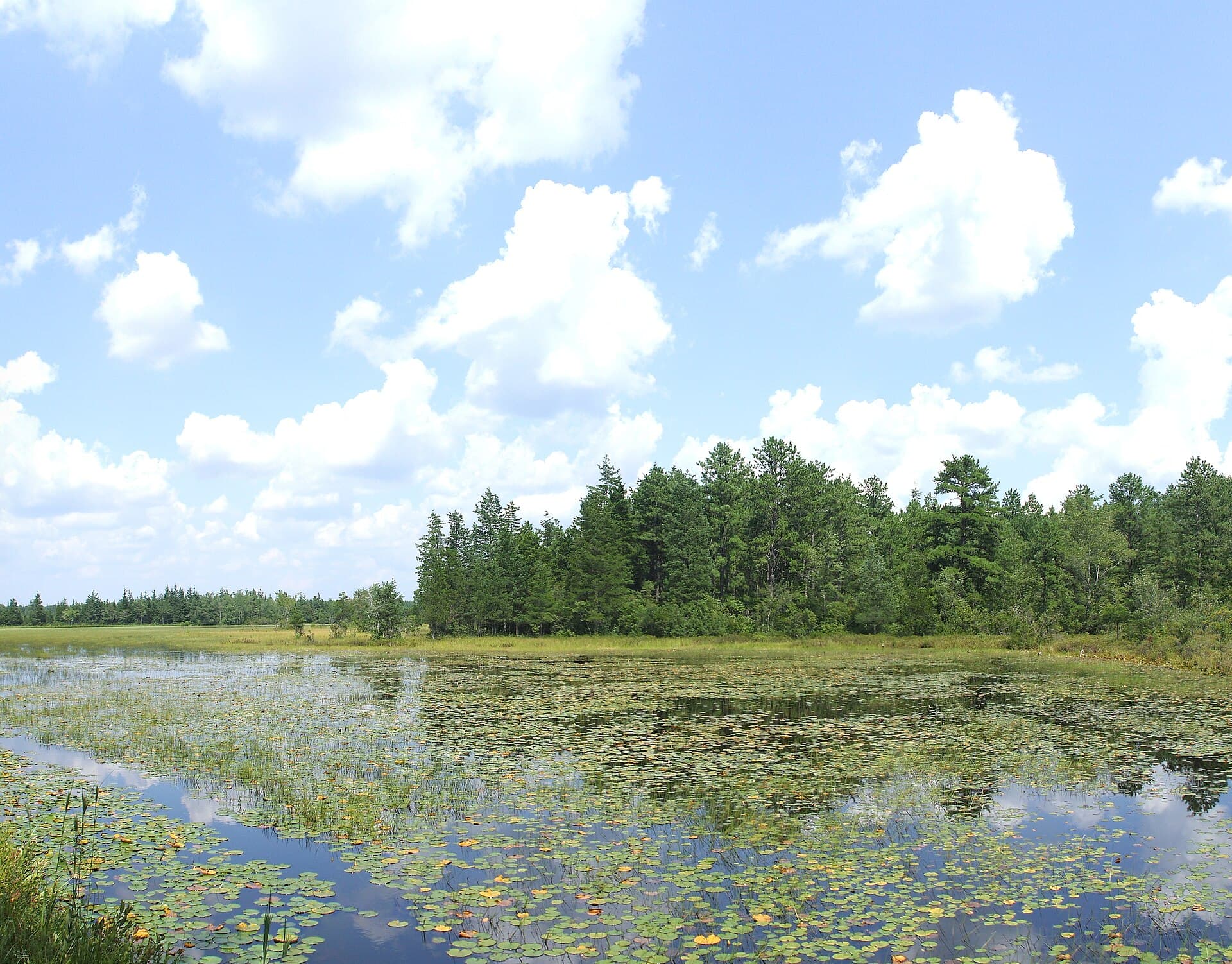
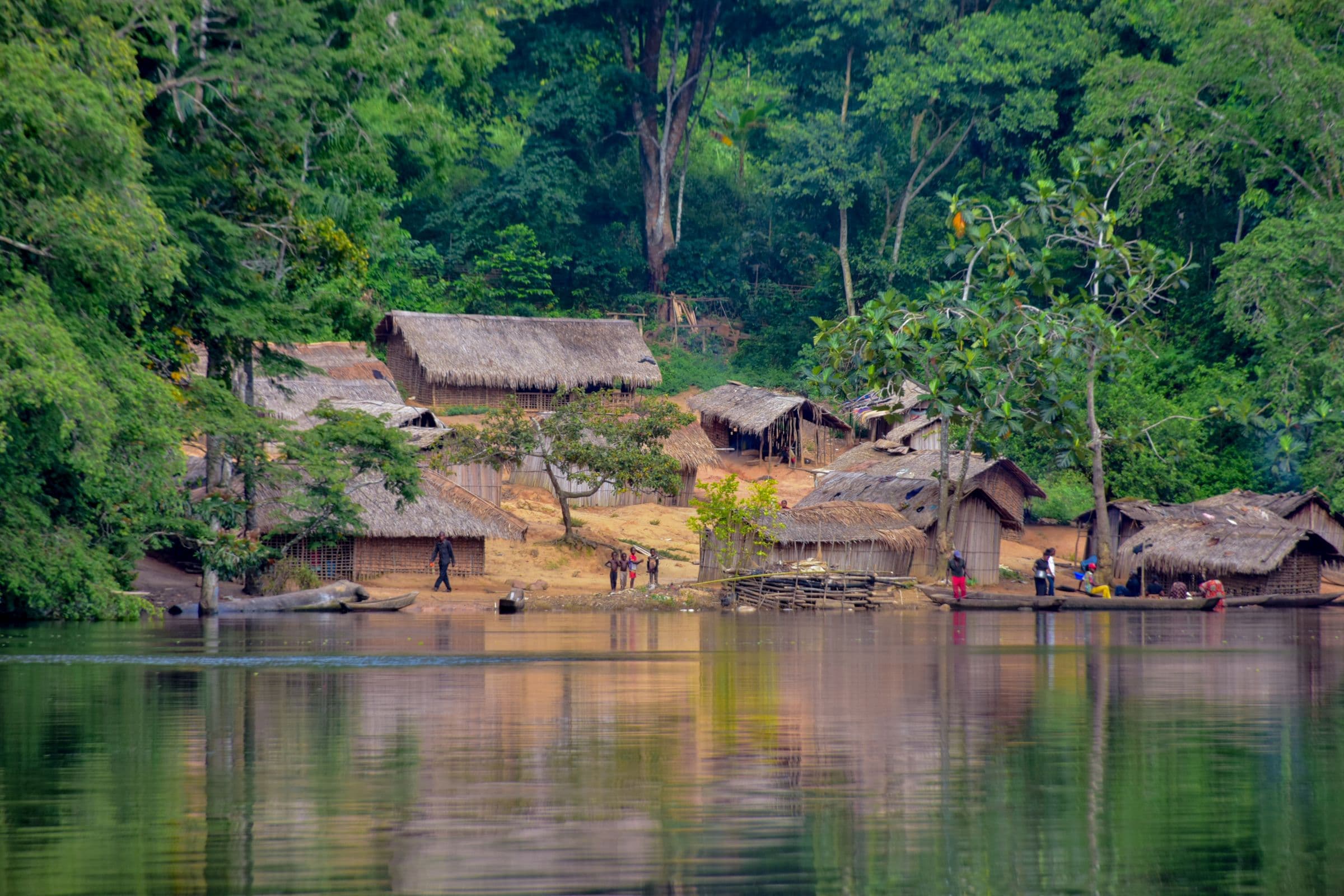
There is a lake in the northern Republic of the Congo that almost no one reaches. Lake Tele sits in the Likouala swamp, a flooded wilderness roughly the size of a small country, where the water is the color of strong tea and the forest closes overhead so completely that satellite maps still show blank green. To get there you walk for days through chest-deep mud, past trees that grow straight out of the standing water. And when you finally arrive, if you ask the Bangombe people who live nearby what lives in that lake, some of them will tell you about an animal with a body like an elephant, a long neck, a small head, and a tail that sweeps the water behind it. They call it Mokele-mbembe.
The name, in the Lingala language, is usually translated as "one who stops the flow of rivers." For more than a century, that name has pulled explorers, biologists, missionaries, and television crews into one of the least accessible places on Earth, all chasing the same impossible idea: that something the rest of the world believes died out sixty-six million years ago might still be out there, breathing, in the green dark of the Congo.
What You'll Learn
- •The Creature That Stops Rivers
- •A Legend Older Than the Word "Dinosaur"
- •Captain von Stein's Report
- •The Living Dinosaur Hypothesis
- •Roy Mackal and the Expeditions of the 1980s
- •The Lake Tele Sightings
- •The Photograph That Never Developed
- •What the Conventional Explanations Leave Out
- •Not the Only Monster in the Swamp
- •Why No One Has Settled It
- •Frequently Asked Questions
The Creature That Stops Rivers
Strip away the speculation and you are left with a consistent physical description, repeated by people who in many cases had never met one another and lived hundreds of miles apart. Mokele-mbembe is said to be large, somewhere between a hippopotamus and an elephant in bulk, with smooth brownish-gray or reddish skin rather than fur or scales like a crocodile. The neck is long and flexible. The head is small relative to the body. The tail is long and muscular. Witnesses describe a single horn or tooth in some accounts, though the long neck and heavy body are the features almost everyone agrees on.
It is said to live in the deepest pools and bends of the rivers, surfacing to feed on the vegetation along the banks. Local accounts are emphatic on one strange point: it does not eat meat. It is described as a plant eater, fond of a particular fruit-bearing liana the people call malombo. And yet it is also feared. Mokele-mbembe is said to be fiercely territorial, capable of overturning canoes and killing any hippopotamus that enters its stretch of water, though it leaves the carcass uneaten. Hunters told early researchers that the animal had killed people who got too close, and that those who ate its flesh would die.
This is not the behavior anyone would invent for a simple monster. A made-up beast eats villagers. Mokele-mbembe eats lianas and ignores the bodies of the hippos it kills. The oddness of the detail is part of what keeps the question alive.
A Legend Older Than the Word "Dinosaur"
The stories did not begin with cryptozoology. One of the earliest written hints comes from a French missionary, Abbe Lievin Bonaventure Proyart, who in 1776 published an account of the region and described enormous clawed tracks his fellow missionaries reportedly came across, prints said to measure around three feet in circumference and spaced widely apart. Proyart had no framework for what could have left them. The word "dinosaur" would not be coined until 1841, more than sixty years later. He simply recorded that something very large had passed through and moved on.
By the early twentieth century the reports were reaching Europe through the animal trade. Carl Hagenbeck, the famous German collector who supplied zoos around the world, wrote in his 1909 memoir that two of his agents, working independently, had brought back native accounts of a creature in the Congo interior described as "half elephant, half dragon." One of his men, the explorer Hans Schomburgk, had noted something that nagged at him: a lake in central Africa that looked like perfect hippo habitat had no hippos at all, and the local people told him an animal lived there that the hippos avoided.
To a European zoologist in 1909, "half elephant, half dragon" sounded like a fairy tale. But Hagenbeck was not a credulous man. He had spent his life learning to tell a real animal report from a tall one, and he chose to put this one in print.
Captain von Stein's Report
The account that researchers return to most often was compiled in 1913 by Ludwig Freiherr von Stein zu Lausnitz, a German army officer sent to survey what was then the colony of Kamerun. Von Stein gathered descriptions from local guides and hunters across the region, people he considered reliable, and wrote them up in an official report.
His summary is striking for how level-headed it is. He recorded that the animal was said to be brownish-gray, approximately the size of an elephant or at least a hippopotamus, with a long and very flexible neck and a single tooth or horn. He noted the long, muscular tail, the smooth skin, and the claim that it lived in the deep pools of the rivers and climbed the banks to feed on plants. He added the same detail about the malombo liana. Von Stein was careful to say he had not seen the animal himself and could not vouch for its existence. He was simply reporting, faithfully, what multiple independent witnesses had told him.
What no one can fully account for is why a German officer, an eighteenth-century missionary, and the agents of a Hamburg animal dealer, none of whom had read one another, all came back with the same long-necked, plant-eating, river-dwelling animal. Either the description was traveling through the culture intact for centuries, or it was describing something.
The Living Dinosaur Hypothesis
It was inevitable that someone would look at that description, the elephantine body, the long neck, the small head, the long tail, and think of a sauropod. The plant-eating dinosaurs like Diplodocus and Apatosaurus had exactly that silhouette. And the idea is not quite as absurd as it first sounds.
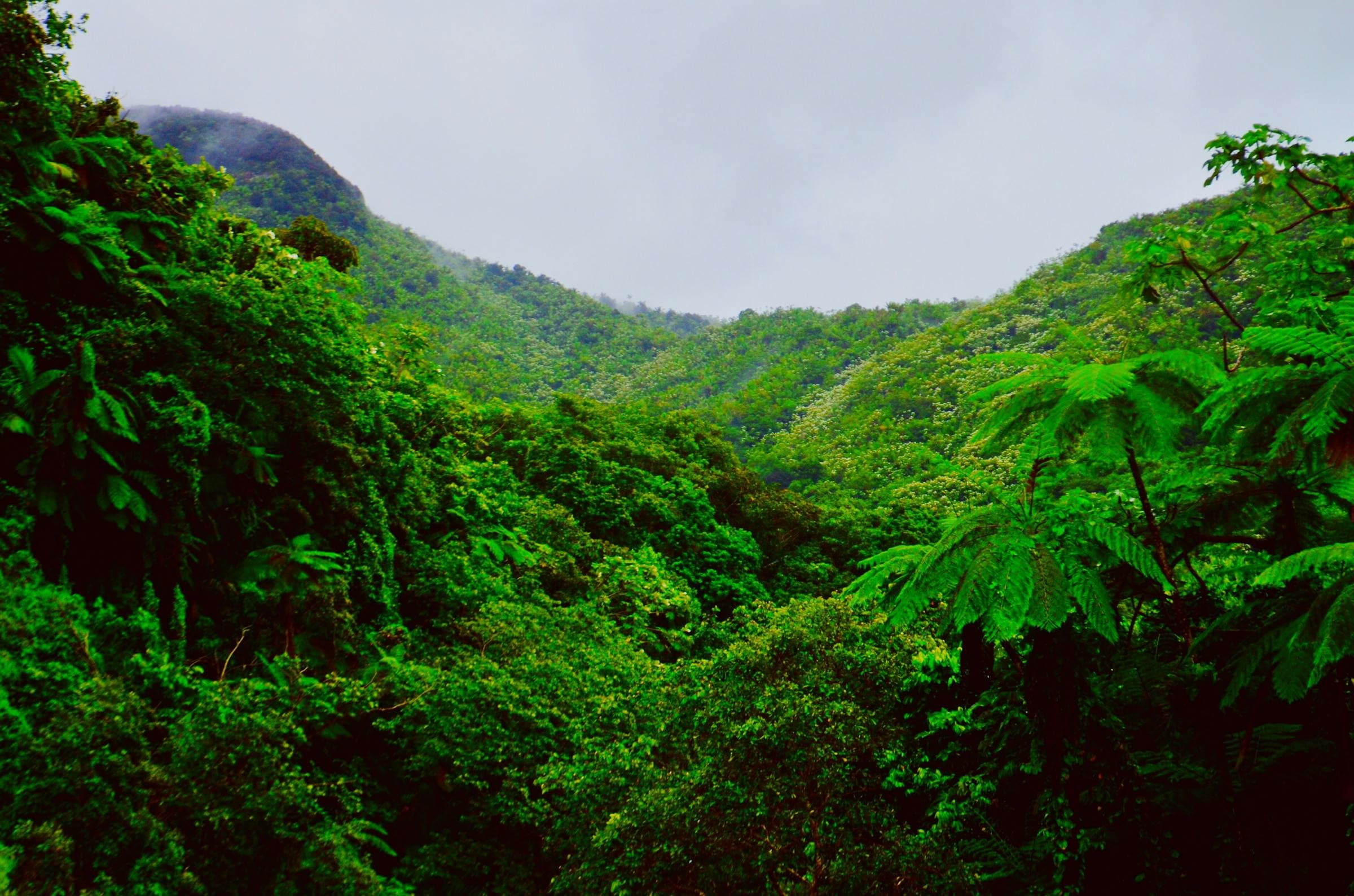
The Congo Basin is one of the oldest continuously stable environments on the planet. While ice sheets ground across Europe and North America and deserts swallowed other regions, the central African rainforest stayed warm, wet, and largely undisturbed for tens of millions of years. Supporters of the living dinosaur theory point out that the region was never glaciated and that its climate has changed little. If any place on Earth could shelter a relict population of something ancient, they argue, it would be exactly this: a vast, roadless, waterlogged forest that has barely been surveyed by science.
There is precedent for the general idea, even if not for a dinosaur. The coelacanth, a heavy-bodied fish thought to have died out with the dinosaurs, was hauled up alive off the South African coast in 1938 and stunned the scientific world. The okapi, a forest relative of the giraffe, was unknown to Western science until 1901 despite being well known to the people who lived alongside it. Both came out of the same broad part of Africa. Neither was supposed to exist. The Congo has a habit of keeping secrets.
Roy Mackal and the Expeditions of the 1980s
The search moved from anecdote to organized expedition largely because of one man. Roy Mackal was a respected biochemist at the University of Chicago, a serious scientist with an unserious obsession. In 1980 and again in 1981 he led expeditions deep into the Likouala swamp, accompanied by the herpetologist James Powell, to find out whether the stories had a living animal behind them.
Mackal never saw Mokele-mbembe. What he came back with instead was a body of testimony he found difficult to dismiss. He interviewed dozens of witnesses, and he and Powell tried a now-famous test. They showed people a series of pictures of animals, some real and local, some not, including an illustration of a sauropod. According to Mackal, witnesses who had described the creature repeatedly singled out the sauropod as the closest match, and showed no particular reaction to pictures of animals that did not belong, like bears or other continents' wildlife. When shown the long-necked dinosaur, some reportedly grew frightened and refused to continue.
Mackal laid out his findings in his 1987 book, A Living Dinosaur? In Search of Mokele-Mbembe. He stopped short of claiming the animal was real. But he came away convinced that the people of the Likouala were describing a genuine animal unknown to science, and that the swamp was big enough and empty enough to hide it.
The Lake Tele Sightings
The clearest claimed sightings cluster around Lake Tele, and they come from two expeditions in the early 1980s.
In 1981 an American expedition led by Herman Regusters reached the lake. Regusters and his wife reported seeing a long-necked animal moving in and partially out of the water, and they returned with audio recordings of strange, low calls they said came from the creature. The recordings were inconclusive and the photographs they took did not clearly resolve the animal, but the team was adamant about what they had witnessed.
Then in 1983 came the account that researchers still argue about. Marcellin Agnagna, a Congolese biologist working at the national zoo in Brazzaville, was leading his own expedition at Lake Tele when, he reported, the animal surfaced in front of him in broad daylight. He described a wide back, a long neck, and a small head, and said he watched it for a sustained period at close range. Agnagna was not a tourist or a thrill seeker. He was a trained scientist, a citizen of the country, with a professional reputation to lose. He insisted for years afterward that he had seen exactly what the legends described.
The Photograph That Never Developed
Here is where the story turns almost cruel. Agnagna had a film camera. He was watching, he said, an unknown animal in clear daylight, the single most important wildlife observation imaginable. And he came away with no usable footage.
The explanations he gave over the years varied. In some accounts the camera had been set to the wrong mode in his excitement; in others the film was somehow ruined. Skeptics have seized on the inconsistency. Believers point out that a man who has just been confronted by something his entire culture treats as deadly might be forgiven for fumbling a camera. Either way, the result was the same, and it has been the same result for a hundred years. Every expedition that gets close comes back with a story and not a specimen. A recording that could be anything. A photograph that did not come out. A track filled with water before a cast could be made.
A 1992 Japanese television expedition flew over Lake Tele and captured aerial footage of a large object moving through the water, leaving a substantial wake. It has been interpreted as everything from the creature itself to two elephants swimming nose to tail. Like every other piece of evidence in this story, it is suggestive and it is not proof. The pattern is almost too perfect. Mokele-mbembe is always just out of frame.
What the Conventional Explanations Leave Out
The most common explanation is that Mokele-mbembe is a misidentified known animal. The leading candidate is a rhinoceros, possibly seen swimming with its head and horn raised, which could account for the single-horn reports and the bulk. Others suggest elephants crossing deep water with only the curve of the trunk and back visible, which from a distance could read as a long neck and a hump.
These ideas explain part of the picture and stumble on the rest. Rhinoceroses are not native to the dense swamp forest of the Likouala and are not found there, which makes a region full of rhino sightings hard to credit. The swimming-elephant theory has real force for a distant glimpse on open water, but it does not fit the close-range accounts of an animal hauling its body up a riverbank to strip a liana, or von Stein's careful note that witnesses distinguished the creature clearly from the elephants they hunted and knew well.
The folklore explanation says the whole thing is a cultural figure, a river spirit dressed up by outsiders as a dinosaur. There is truth in the warning. Western explorers wanted a living dinosaur and may have led witnesses toward one. But folklore does not usually come with a feeding ecology, a preferred plant, a documented absence of hippos in lakes it supposedly inhabits, and a physical description stable enough that a 1776 missionary and a 1913 army officer recorded the same animal. To this day, no single explanation accounts for everything the witnesses describe.
Not the Only Monster in the Swamp
What complicates the picture, and arguably deepens it, is that Mokele-mbembe is not alone. The peoples of the Congo Basin describe a small bestiary of large unknown animals, each distinct.
There is the emela-ntouka, whose name is often translated as "killer of elephants," described as a heavy, semi-aquatic animal with a single horn on its snout, said to disembowel elephants and rhinos with it. There is the mbielu-mbielu-mbielu, reported to carry plank-like plates along its back, a description that has tempted some to think of a Stegosaurus. There is the nguma-monene, a giant ridge-backed serpent of the rivers. None of these match Mokele-mbembe, and the local people do not confuse them. They are as different from one another, the witnesses insist, as a leopard is from a buffalo.
A skeptic can read this list as proof that the swamp simply generates monsters. But it can be read the other way too. A culture that carefully distinguishes four or five different large animals, gives each its own behavior and habitat, and keeps the descriptions consistent across generations is doing something that looks a great deal like natural history.
Why No One Has Settled It
The honest answer to why this remains open is geography. The Likouala swamp region covers something on the order of fifty thousand square miles of flooded forest with almost no roads, no infrastructure, and a climate that punishes equipment and people alike. Cameras corrode. Boats cannot pass where the vegetation mats over the water. Walking is measured in miles per day, not per hour. Lake Tele itself is a multi-day trek from the nearest navigable river.
This is not a lake that scientists can simply go and trawl. When people say the Congo is unexplored, they usually mean it loosely. Here it is close to literal. And an animal that lives in deep water, surfaces rarely, and is feared and avoided by the people who share its rivers is, by definition, one you would almost never see even if it were there.
So the search continues, in fits and starts, expedition after expedition, decade after decade. The evidence never quite closes the case and never quite goes away. That is the strange equilibrium Mokele-mbembe has held for over a hundred years: too consistent to dismiss, too elusive to prove.
Frequently Asked Questions
What does "Mokele-mbembe" actually mean? In Lingala the name is generally rendered as "one who stops the flow of rivers," a phrase that conjures an animal large enough to dam a waterway with its body. The name itself is a clue to the scale of the thing the people are describing, and it long predates any outside interest in living dinosaurs.
Could a dinosaur really survive sixty-six million years undetected? On the face of it, no, and most biologists would tell you a breeding population of large animals leaves traces. But the Congo Basin has produced living animals that science had written off or never met, from the coelacanth to the okapi, and it remains one of the least surveyed habitats on the planet. The question is less "could a dinosaur survive" than "how confident can we be about a place we have barely walked into."
Has anyone ever photographed it? Not clearly. There are audio recordings, a contested 1992 aerial film of something large swimming in Lake Tele, and the famous case of biologist Marcellin Agnagna, who said he watched the animal in daylight in 1983 and came away with no usable footage. Every close encounter seems to end with the evidence slipping through someone's fingers.
Why do the local people say it eats only plants but still kills hippos? That contradiction is one of the most curious parts of the whole account, and it is exactly the kind of detail no one would invent. Witnesses describe a territorial plant eater that attacks anything entering its stretch of river, including hippos and canoes, but leaves the bodies uneaten. It is hostile without being a predator, which is a strangely specific thing for a legend to be.
Is Mokele-mbembe the only such creature reported in the Congo? No, and that may be the most intriguing wrinkle of all. The same peoples describe the horned emela-ntouka, the plated mbielu-mbielu-mbielu, and the serpentine nguma-monene, each kept carefully distinct. Whatever is happening in the swamps of the Likouala, it is not the simple story of one monster.
The Question That Lingers
A hundred years of expeditions have not produced a body, a bone, or a clear photograph. By the ordinary rules of evidence, that should be the end of it. And yet the description has held its shape across centuries and across people who never spoke to each other, in a place so vast and so impassable that the absence of proof tells us almost nothing. The Congo has surrendered impossible animals before, on its own schedule, when it was ready.
Somewhere past the last navigable river, in water the color of tea under a closed green roof, the people who live there still point at the deep pools and say something is in them. They have been saying it for as long as anyone has been listening. Whatever stops the rivers in the Congo, it has not yet chosen to be found.
Further Reading
This article contains affiliate links. If you buy through them we may earn a small commission at no extra cost to you.
Want to explore more mysteries?
We've got plenty more rabbit holes to go down.