The Chupacabra: The Goat Sucker That Stalks the Americas
Drained livestock, glowing red eyes, and a creature that changed shape as it crossed a continent. Inside the strange case of the Chupacabra.
In March 1995, in the small Puerto Rican town of Moca, farmers began finding their animals dead. Not torn apart. Not eaten. Just dead, with two small puncture wounds in the neck and, according to the people who found them, their bodies drained of blood. Goats, sheep, chickens, ducks, even a few cows. The wounds were neat, almost surgical. The carcasses were left otherwise intact, which is not how a dog or a coyote feeds.
Within months, the killings spread across the island. Hundreds of animals. And then, in August, came the sighting that gave the thing a name. A woman in Canovanas named Madelyne Tolentino looked out her window and saw a creature standing upright in the street: four to five feet tall, with leathery gray skin, enormous black eyes, spikes running down its spine, and powerful hind legs that let it hop like a kangaroo. The Puerto Rican press called it el chupacabra. The goat sucker. And from that window in Canovanas, the legend began to move.
What makes the Chupacabra remarkable is not just that people kept seeing it. It is that the creature seemed to change as it traveled, until the thing being reported in Texas barely resembled the thing first described in Puerto Rico. One name, two completely different monsters, and a trail of bloodless livestock stretching from the Caribbean to Chile. To this day, no single explanation accounts for all of it.
What You'll Learn
- •How a single 1995 sighting in Puerto Rico launched a continent-wide panic
- •Why the original Chupacabra and the Texas version look nothing alike
- •What veterinarians actually found when they examined the carcasses
- •The mange theory, and the wounds it cannot explain
- •Why the "blood drained" claim refuses to die
- •The questions that linger three decades later
Table of Contents
- •The Killings in Moca
- •The Creature at the Window
- •A Name Spreads Across an Island
- •The Monster That Changed Shape
- •The Texas Blue Dogs
- •What the Wounds Actually Looked Like
- •The Mange Explanation
- •The Blood That Was Never There, Or Was It
- •A Creature Born From the Sky
- •The Cultural Shadow
- •Frequently Asked Questions
- •The Question That Lingers
The Killings in Moca
The first wave is the part of the story that gets lost under everything that came later, and it is the part that still has no clean answer. Before there was a creature, there were dead animals.
In Moca, in the spring of 1995, the losses came fast enough that locals gave the unseen killer its own early name: el vampiro de Moca, the Moca vampire. Farmers described entering pens in the morning to find their animals lifeless, marked with small circular punctures, the bodies cold and, they insisted, light. Drained. Some reported that the wounds went straight to the heart or the brain through a single precise opening.
Police and agricultural officials initially suspected a pack of feral dogs, the standard answer when livestock die in numbers. But dogs maul. They tear open the abdomen, scatter the carcass, feed and leave a mess. The Moca animals were not eaten. That mismatch, between what dogs do and what people were finding, is the seed the entire legend grew from. Something was killing animals in a way the obvious predator does not.
The Creature at the Window
The legend needed a face, and Madelyne Tolentino gave it one.
Her August 1995 account in Canovanas became the template for everything that followed. She described a bipedal creature, gray, hairless or nearly so, with a row of spines or quills down its back that seemed to change color, large oval eyes set in a sloping face, thin arms ending in clawed fingers, and strong hind legs. It moved in hops. When startled, she said, it fled with unnatural speed.
Tolentino's description was vivid, specific, and it spread through Puerto Rican media within days. Other witnesses came forward with accounts that echoed hers: the spikes, the red or black eyes, the hopping gait, the sulfurous smell some claimed it left behind. The consistency of these early reports is one of the genuinely strange features of the case. Witnesses who had no contact with each other kept describing the same impossible animal.
A Name Spreads Across an Island
The word chupacabra is usually credited to Puerto Rican comedian and radio personality Silverio Perez, who coined it on air as the reports multiplied. It was catchy, darkly funny, and it stuck. By late 1995 the Chupacabra was a household word across Puerto Rico and a fixture of the island's newspapers and call-in shows.
The sightings did not slow. Reports came from Canovanas, from Caguas, from across the island, often paired with fresh livestock deaths. Canovanas mayor Jose Soto reportedly organized armed search parties, leading volunteers into the brush to hunt the thing. They never caught it. What they did do was turn a local farm mystery into a national phenomenon, the kind of story that travels well beyond the place it started.
And travel it did.
The Monster That Changed Shape
Here is where the Chupacabra becomes one of the strangest cases in cryptid history, because the creature did not stay the same.
As the legend moved from Puerto Rico into the Spanish-speaking communities of the mainland Americas through the late 1990s, the reports followed. Mexico recorded its own outbreaks of drained livestock and panic. Sightings were logged in the Dominican Republic, in Chile, in Brazil, in the American Southwest. The name traveled intact. The description did not.
The hopping, spiny, big-eyed biped of Canovanas slowly faded. In its place came something low to the ground: a four-legged creature, doglike or coyote-like, hairless, with grayish or bluish skin, a pronounced spine, oversized canine teeth, and a gaunt, almost reptilian face. By the 2000s, when people in Texas said Chupacabra, this is what they meant. A roadkill-sized quadruped, not a five-foot upright monster.
How does one creature have two bodies? That question sits at the center of the whole phenomenon, and the two leading answers point in very different directions. One says the original was a misremembered fantasy and the later version is the "real" animal behind the deaths. The other says we are looking at two separate mysteries that got filed under one name.
The Texas Blue Dogs
The mainland Chupacabra had an advantage the Puerto Rican one never did: bodies.
Starting in the 2000s, ranchers across Texas and the broader Southwest began shooting, trapping, and finding the carcasses of strange hairless animals. In 2004, a rancher near Cuero, Texas killed a bizarre blue-gray creature he could not identify. In 2007, Phylis Canion of Cuero recovered the heads of several similar animals that had been killing her chickens, and froze them. In 2008 a sheriff's deputy near Cuero caught one on dashcam, trotting along a country road, hairless and strange.
These were real, physical specimens, and that meant they could be tested. DNA analysis identified them, repeatedly, as canids: coyotes, gray foxes, dogs, and in some cases coyote-dog hybrids. The hairlessness, the bluish skin, the sunken eyes and protruding spine and teeth, all of it was attributed to a single culprit.
Sarcoptic mange.
What the Wounds Actually Looked Like
Before following the mange thread, it is worth sitting with what the carcasses in the field actually showed, because this is where the conventional account starts to strain.
The signature detail of the Chupacabra has always been the wound: two neat punctures, often in the neck, and an animal that was killed but not consumed. Veterinarians and wildlife officials who examined Chupacabra-attributed kills frequently concluded that predators were responsible, and that the "two puncture marks" were simply canine teeth marks, with the apparent bloodlessness explained by post-mortem pooling and the fact that animals do not bleed much after the heart stops.
That explanation covers many cases. What it covers less comfortably is the original Moca pattern: numerous animals, killed in a tight window, with small precise wounds and bodies left whole. Predators that bother to kill a goat generally eat the goat. The repeated reports of intact, uneaten carcasses are the detail that the predation theory has never fully absorbed, and it is the detail the farmers themselves found most disturbing. They were not confused about what a dog kill looks like. They had seen plenty. This was not that.
The Mange Explanation
The mange theory is, on its own terms, strong. Sarcoptic mange is caused by a mite that burrows into the skin, triggering hair loss, thickened and discolored skin, weight loss, and a generally horrifying appearance. A coyote in the final stages of mange looks genuinely monstrous: bald, gray-blue, emaciated, with its teeth and spine standing out. It also hunts badly, which can push a sick animal toward easy prey like penned chickens and goats.
Put a manged coyote on a dark Texas road and you have a creature that a frightened rancher might honestly call something that has no name. The DNA backs this up. Specimen after specimen has come back canid. For the four-legged Texas Chupacabra, mange is a powerful and well-supported account.
What mange does not explain is Canovanas. A mite that makes coyotes bald does nothing to produce a five-foot, spine-quilled, kangaroo-hopping biped with glowing eyes. The mange theory quietly solves the second Chupacabra by leaving the first one untouched. The original creature, the one Madelyne Tolentino saw and dozens of others described, remains exactly as unexplained as it was in 1995.
The Blood That Was Never There, Or Was It
The defining claim, the one baked into the name, is the blood. The goat sucker drains its victims.
Skeptical examinations have pushed back hard on this. When carcasses were actually necropsied, investigators reported that the animals were not, in fact, exsanguinated. Blood was present. The impression of a drained body, they argued, came from the small visible wounds and from the way blood settles and clots after death. No vampire required.
And yet the claim has never died, partly because it did not come from credulous outsiders. It came from the people standing over their own dead animals, people who handle livestock for a living and know what a normal carcass weighs and looks like. Across decades and across countries, the same insistence recurs: the bodies were light, the blood was gone, the wounds were too clean. When the same specific and unusual claim arrives independently from Puerto Rico, Mexico, Chile, and Texas, dismissing all of it as misperception requires a kind of confidence the evidence does not quite earn. No explanation has yet accounted for every one of those reports.
A Creature Born From the Sky
One of the more haunting threads in the early Puerto Rican accounts ties the Chupacabra not to mange or to coyotes but to the island's strange relationship with what flies overhead.
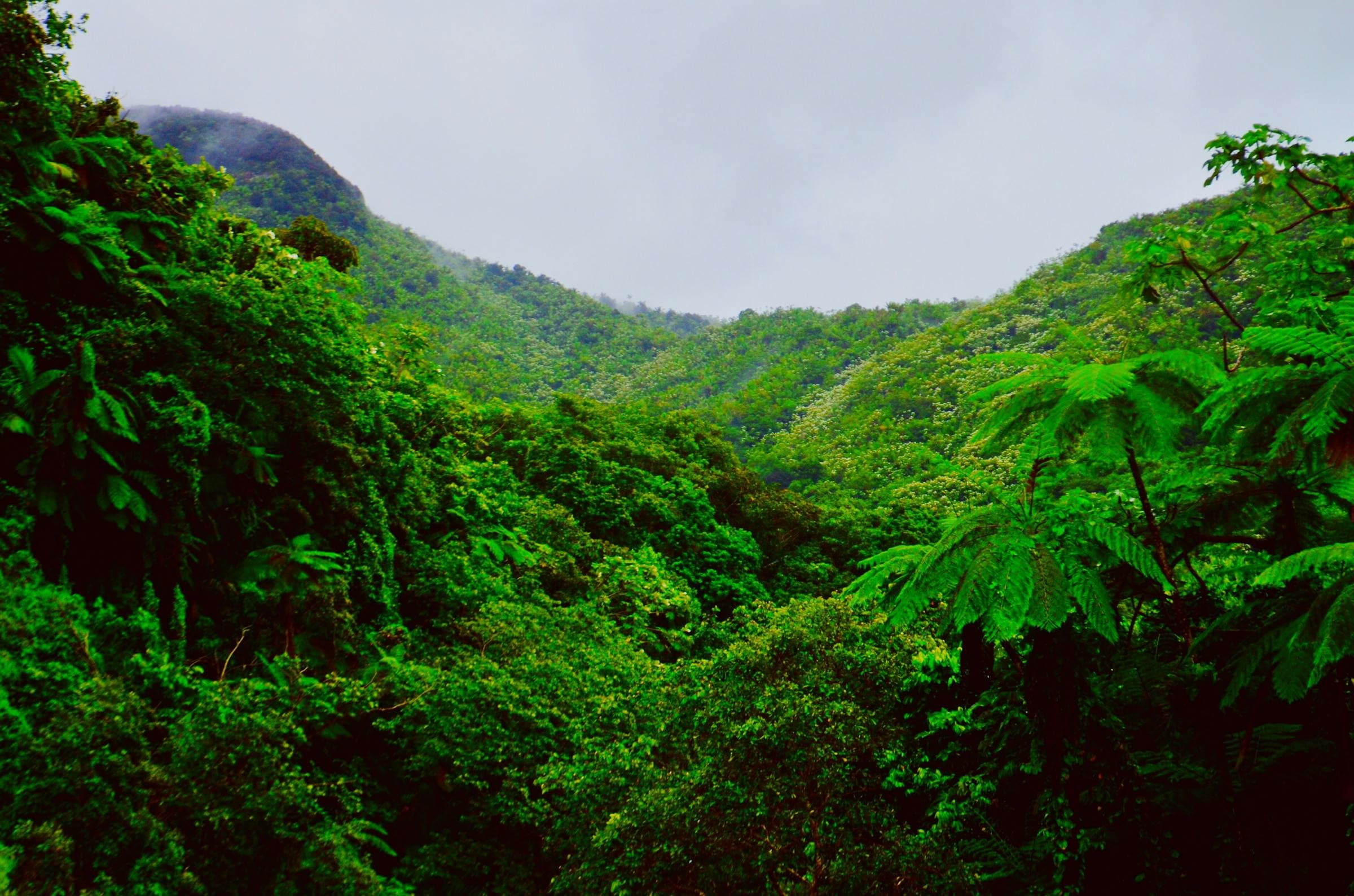
Canovanas and the nearby El Yunque rainforest sit in a region with a long history of UFO sightings. In the months before the Chupacabra appeared, locals reported unusual lights and craft over the area. Some witnesses connected the two directly, suggesting the creature was not a native animal at all but something that arrived, an organism dropped, escaped, or sent. The El Yunque forest in particular accumulated rumors of secret facilities and experiments, the kind of folklore that attaches itself to any large protected wilderness with restricted zones.
There is no documentation that proves any of this, and the prudent reader will hold it loosely. But it is part of the case, and it captures something about why the Chupacabra took hold so fast. It did not arrive in a vacuum. It arrived in a place already primed to believe that strange things came from the sky over the rainforest, and the creature slotted neatly into a story the island was already telling itself.
The Cultural Shadow
Whatever the Chupacabra is or is not, its reach is undeniable. In under thirty years it went from a Moca farm rumor to one of the most recognized cryptids on Earth, the rare modern monster with a documented birthday. It is studied by folklorists as a near-perfect case of a legend forming in real time, its mutation from biped to quadruped traceable through the historical record.
Some researchers read the timing as significant. The Chupacabra emerged in 1995, in a Puerto Rico anxious about its relationship with the United States, about pollution, about secret experiments, and the creature became a vessel for those anxieties: a predator that drained the lifeblood of the working farmer, that may have come from a government project or a fallen craft. That reading explains the legend's appeal without explaining the dead animals. The folklore is real. So were the carcasses.
Frequently Asked Questions
What is the Chupacabra supposed to be? That depends entirely on where the question is asked. In 1995 Puerto Rico, it was an upright, spine-backed, big-eyed creature that hopped like a kangaroo and drained livestock of blood. In modern Texas and Mexico, it is a hairless, doglike quadruped. The same name covers two creatures that share almost nothing but a habit of killing animals strangely, and no one has reconciled the two descriptions into a single thing.
Have any Chupacabra bodies been found? Yes, but only of the four-legged Texas type. Multiple carcasses have been recovered and DNA tested, and they come back as canids, mostly coyotes and dogs suffering from severe mange. No physical specimen of the original Puerto Rican biped has ever been produced. The creature that started it all has never left so much as a confirmed footprint.
Does it really drain blood? Necropsies of tested carcasses generally found blood still present, and attributed the small wounds to ordinary teeth. Yet farmers across multiple countries have independently insisted their animals were bloodless and unnaturally light. The clinical findings and the eyewitness accounts have never fully agreed, and the gap between them is exactly where the mystery lives.
Is mange the answer? For the Texas Chupacabra, the evidence for mange is strong. A coyote in late-stage sarcoptic mange genuinely looks like a monster. But mange explains a sick coyote, not a five-foot hopping biped with quills down its spine. It answers the second Chupacabra and leaves the first one wide open.
Why did the creature's description change so much? No one knows for certain. One view holds that the original sighting was a one-off misperception that later gave its name to an unrelated wave of manged coyotes. Another holds that we have been tracking two separate phenomena all along. The shape-shift itself, one monster becoming another as it crossed a continent, is among the strangest features of the entire case.
Where is the Chupacabra now? Reports have slowed but never stopped. Drained or mutilated livestock still surface periodically across the Americas, still occasionally blamed on the goat sucker. The El Yunque rainforest where it began remains dense, wet, and largely impenetrable, the kind of place that does not give up its secrets easily.
The Question That Lingers
Strip the Chupacabra down and you are left with two things that refuse to fit together. On one side, a coyote with mange, a creature science can name, test, and explain, the answer to the hairless thing trotting down a Texas road. On the other, a woman at a window in Canovanas in August 1995, describing a five-foot creature with quills and black eyes that hopped away into the dark, and the dozens of farmers in Moca months earlier standing over animals that had been killed without being eaten.
Mange explains the body in the freezer. It does not explain the thing at the window, and it never tried to. The original Chupacabra was never caught, never photographed, never reduced to a carcass on an examination table. It exists only in the accounts of the people who saw it, and those accounts have stayed stubbornly consistent for three decades.
So the goat sucker keeps its secret. Somewhere between a sick coyote and a creature from the sky, between settled blood and drained bodies, between one monster and another wearing its name, the Chupacabra is still out there in the space we have not managed to close. The animals are real. The wounds are real. What made them is the part no one has been able to account for.
Further Reading
This article contains affiliate links. If you buy through them we may earn a small commission at no extra cost to you.
Want to explore more mysteries?
We've got plenty more rabbit holes to go down.