The Shag Harbour Incident: Canada's Documented UFO Crash
In October 1967, witnesses watched a 60-foot object with four lights dive into the sea off Nova Scotia. The Navy searched for days and found nothing.
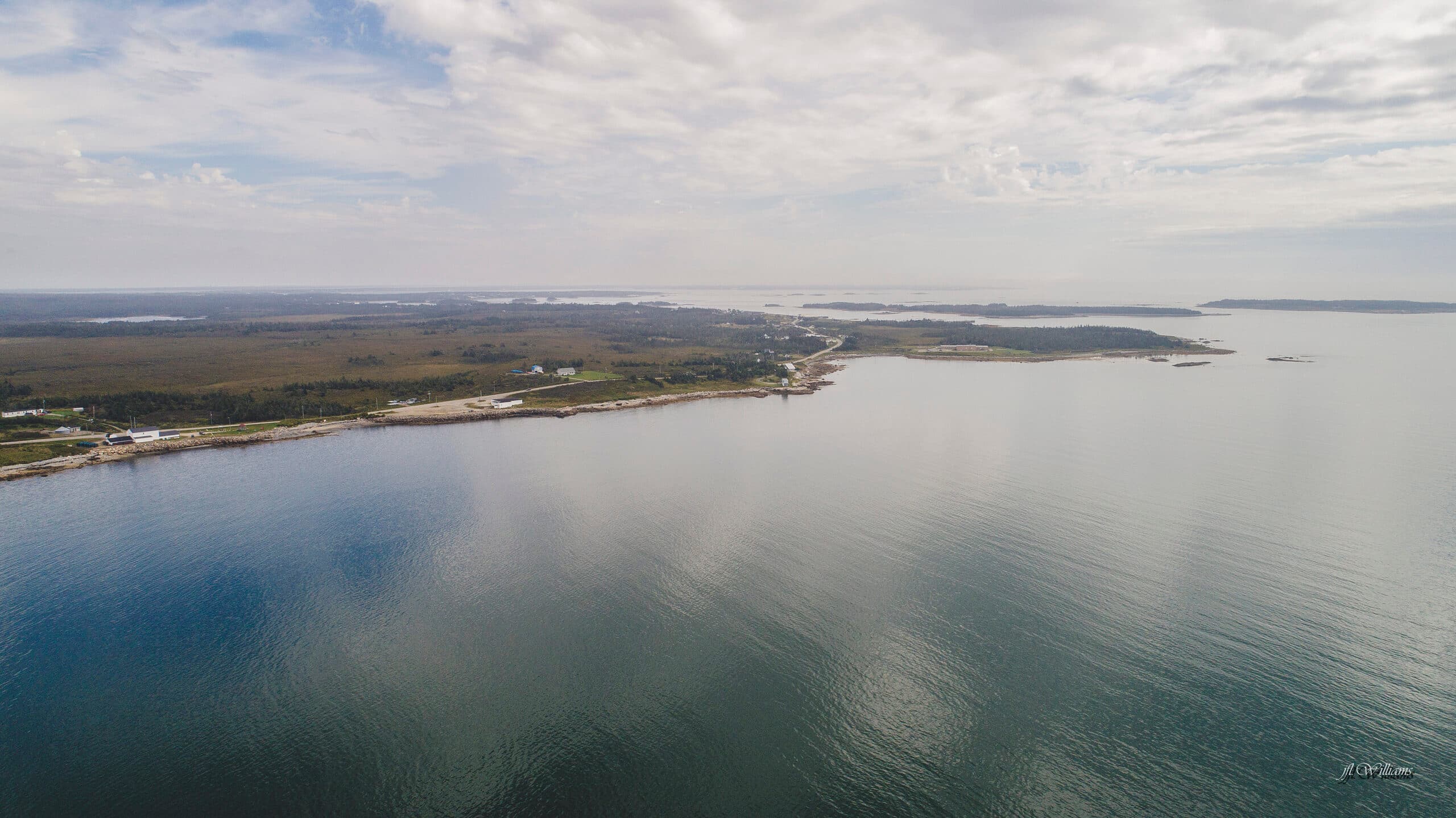
Just after 11:00 PM on October 4, 1967, a car full of teenagers was driving the coastal highway near Shag Harbour, a fishing village on the southern tip of Nova Scotia. Laurie Wickens, at the wheel, watched a row of four bright lights drop out of the sky toward the black water ahead. They flashed one after another in sequence, then tilted downward and slid toward the harbour at a shallow angle. Somewhere out over the strait there was a whistling sound like a falling bomb, a whoosh, and then a heavy thump against the sea.
Wickens was sure he had just watched an airliner go down. He raced to a phone and called the Royal Canadian Mounted Police detachment at Barrington Passage to report a plane crash off Shag Harbour. He was not the only person calling that night. By the time the constables reached the shore, a single pale light was still floating on the water half a mile out, drifting slowly, before it slipped beneath the surface and left only a wide patch of yellowish foam behind.
What followed was a search by fishermen, the Coast Guard, and the Royal Canadian Navy that turned up no plane, no bodies, and no wreckage. What it did produce is rare in the annals of the unexplained: a paper trail. The Canadian government logged the event, in its own files, as a UFO.
This article contains affiliate links. If you buy through them we may earn a small commission at no extra cost to you.
What You'll Learn
- •A Line of Lights Over the Water
- •Who Saw the Object?
- •A Search That Found Only Foam
- •When the Navy Came to Dig
- •The File That Made It Official
- •The Second Object at Government Point
- •What Could It Have Been?
- •Why Shag Harbour Still Matters
- •Frequently Asked Questions
A Line of Lights Over the Water
The object did not streak across the sky the way a meteor does. Witnesses that night consistently describe something that moved with intention. Four lights, spaced evenly in a line, flashed in a fixed sequence as the shape carried them along. It came down not straight but on a glide, dropping toward the harbour at roughly a forty-five degree angle, the way a plane descends toward a runway.
Then it hit the water. People on shore heard a whistle, a whoosh, and a bang, and saw the object come to rest on the surface about half a mile from land. It floated. For a stretch of minutes it sat there showing a light, drifting on the tide, plainly solid and plainly there. Estimates of its size cluster around sixty feet long, larger than a small plane, closer to the length of a bus.
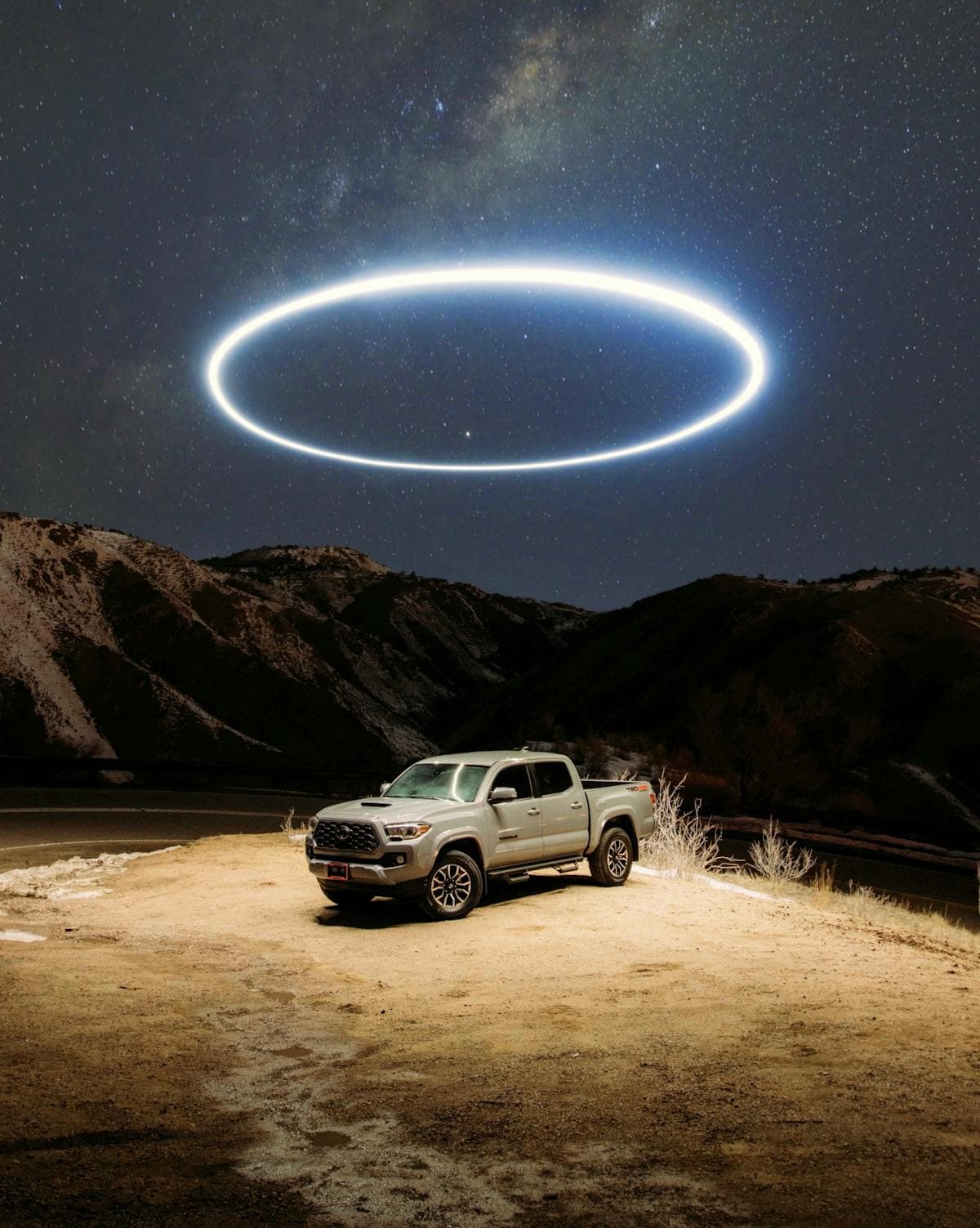
Nobody who was there described a crash in the ordinary sense: no fireball, no burning fuel, no scream of tearing metal, just a controlled descent, a splashdown, and a floating object that went under on its own. By the time the RCMP reached the shoreline, the light was still visible on the water. Then it sank, leaving a slick of foam that witnesses described as pale yellow and roughly eighty feet across.
Who Saw the Object?
The strength of the Shag Harbour case is not one dramatic account. It is the number of separate, unconnected people who saw pieces of the same thing, over a stretch of coast and sky, on the same night.
Laurie Wickens and four friends watched the lights from Highway 3 and were the first to report a crash to the RCMP. Their instinct, that an aircraft had gone into the sea, is what set the entire official response in motion.
Constable Ron Pound of the Barrington Passage RCMP detachment responded to Wickens's call. Driving toward the harbour, he saw the lights himself. He reached the shore in time to watch the pale glow still floating on the water before it submerged. Two other officers joined him, and the RCMP were on the scene within about fifteen minutes of the first call.
The fishermen of Shag Harbour and Clark's Harbour put boats in the water almost immediately, expecting to pull survivors out of the cold Atlantic. Local skippers knew these waters in the dark better than anyone. They reached the spot where the object had gone down and found the foam, but no one to rescue.
The sightings that night were not confined to the harbour. Earlier in the evening, the crew of the Air Canada flight and other observers across Nova Scotia had reported strange lit objects in the sky, and residents as far away as the Halifax area and Mahone Bay described lights that did not behave like aircraft. Captain Leo Howard Mersey, aboard a fishing vessel offshore, logged a sighting near the Sambro light that same night, an account that ended up filed with the RCMP report. Whatever crossed the Nova Scotia coast on October 4 was seen from the road, from the water, and from the air.
These were not thrill-seekers looking for a story. They were fishermen, police officers, and working people who called the authorities because they believed lives were at stake. Like the trained military witnesses at the Rendlesham Forest incident, their credibility is exactly what has kept the case alive.
A Search That Found Only Foam
The rescue effort came together fast. Within roughly an hour of the sighting, a Canadian Coast Guard cutter had arrived from nearby Clark's Harbour to join the local fishing boats already circling the spot. They worked the area through the night, searchlights sweeping the black water for anyone who might have survived a crash.
What they found was the foam. It sat on the surface in a band that witnesses estimated at around eighty feet wide, pale and yellowish, described by some as glittering in the light of the boats. It was the only physical trace the object left behind. There was no oil slick, which a downed aircraft leaks almost at once. There were no seat cushions, no luggage, no fuel sheen, no wreckage of any kind. And there were no bodies, then or ever.
Meanwhile, the Rescue Coordination Centre in Halifax was working the problem from the other direction. If an aircraft had gone into the sea off Shag Harbour, someone would be missing one. The centre checked with civilian air traffic control, with the military, and with private aviation. Every airplane was accounted for. No commercial flight, no military craft, no private plane had been lost or was even overdue anywhere near the Nova Scotia coast that night. Whatever went into the water, no one on the entire eastern seaboard was looking for it.
That is the first hard fact of Shag Harbour, and it resists every easy answer. A large object came down into the sea in front of multiple witnesses, including a police officer, and the machinery built to track every aircraft insisted that nothing was missing.
When the Navy Came to Dig
When the surface search came up empty, the matter moved up the chain to the Royal Canadian Navy. Two days after the sighting, divers from the Navy's Fleet Diving Unit Atlantic arrived to search the seafloor where the object had gone under. Seven divers from HMCS Granby worked the site through the daylight hours, combing the bottom of the harbour for anything that would explain what so many people had watched sink.
They came up with nothing. No hull, no fragments, no debris field, no scar on the seabed to mark where a sixty-foot object had settled. After several days of diving, Maritime Command called off the operation on October 9, five days after the sighting. The official word on the search was blunt: nil results.
This is where Shag Harbour separates itself from a sighting that could be waved off as distant lights. A national navy does not deploy a dive team to the ocean floor over a trick of the light. The people running the operation believed something real had gone into the water, and then that something was not there at all.
The absence is the evidence. Something behaved like a solid craft, floated on the surface showing a light while a police officer watched, went under, and left a hole in the record where wreckage should have been.
The File That Made It Official
Most famous UFO cases live in the testimony of witnesses and the arguments of researchers. Shag Harbour is different because it lives, in part, in a filing cabinet. The reports generated that night moved through the RCMP, the Rescue Coordination Centre, and the Department of National Defence, and along the way the language shifted from "plane crash" to something no bureaucracy uses lightly.
In the paperwork that survives, held today in the collections of Library and Archives Canada, the event is described in the government's own words as a UFO report, an unidentified flying object that entered the water off Shag Harbour. It is one of the very few cases anywhere in which a national government's own documents, written at the time by the officials responsible, label an event exactly that. There was no press office spin to protect, no reason to embellish. These were internal messages between the RCMP and the military, written to figure out what had happened and whether anyone needed rescuing.
That paper trail is why researchers keep returning to Shag Harbour. You can point to the government's own record of a large lit object descending into the sea, an air-search that found every plane accounted for, and a naval dive that recovered nothing. The file does not claim the object was extraterrestrial. It refuses to name it, and that refusal, printed on official letterhead, is its own kind of remarkable.
The Second Object at Government Point
For years the Shag Harbour story ended at the water's edge, a splashdown and an empty search. Then, in the 1990s, MUFON investigators Chris Styles and Don Ledger began tracking down witnesses who had stayed quiet for decades, and the story grew a second half that they laid out in their book Dark Object.
According to the accounts they gathered, the object did not stay on the bottom of Shag Harbour. It moved. Witnesses and, the researchers argued, naval personnel described the submerged craft traveling underwater roughly twenty-five miles up the coast to a place called Government Point, at the mouth of Shelburne Harbour. That location is not incidental. Shelburne was home to a top-secret naval facility, a magnetic detection station used to track Soviet submarines during the Cold War, one of the most sensitive listening posts on the Atlantic coast.
There, the story goes, the military settled in to quietly watch the object resting on the bottom, and began planning a salvage operation to bring it up. Before they could, a second object reportedly arrived and joined the first. For a time there were two of them under the water off a base built to detect things moving beneath the sea. Then, as the account has it, the objects rose, moved off toward the open Atlantic together, and were gone before any recovery could happen. The fishing boats in the area, some witnesses said, were told to clear out.
Every part of this second chapter rests on witness testimony gathered decades later, and Styles and Ledger were careful to present it as reconstruction rather than proven fact. It cannot be confirmed the way the first night's government file can. But it reframes the whole event. If the accounts hold, Shag Harbour was not a crash at all. It was an arrival, and the sea off Nova Scotia was the last place anyone saw where the visitors went.
What Could It Have Been?
Every conventional answer has been put forward, and each one explains part of the night while leaving the rest untouched.
A meteor or fireball is the explanation most often reached for. Bright objects do fall from the sky, and one burning up over the coast could have drawn eyes upward. But a meteor arrives in seconds and is gone. It does not descend on a shallow glide, hold four lights flashing in sequence, float on the surface showing a light while an RCMP constable watches, or leave a persistent band of foam. Witnesses tracked this object moving with control, not falling.
A downed aircraft was the first and most natural assumption, which is why the Coast Guard and Navy responded at all. Yet the Rescue Coordination Centre confirmed that not a single plane was missing anywhere in the region. There was no oil slick, no floating debris, no bodies, and days of naval diving found no wreckage on the bottom. An aircraft that vanishes this completely, that no one even reports as overdue, is not much of an aircraft.
Military flares or a secret exercise have been suggested given the Cold War tension and the nearby Shelburne base. But flares drift down and burn out in the air. They do not submerge, travel underwater, or leave foam on the sea, and no exercise there was ever acknowledged, even after the reports reached the Department of National Defence.
The honest position is the one the government file itself takes. Something large, lit, and solid came down into the sea in front of many witnesses, was searched for by professionals who expected to find it, and was not there. To this day, no single explanation accounts for all of it at once. It sits in the same category as the Bloop and other ocean anomalies, where the sea keeps its answer to itself.
Why Shag Harbour Still Matters
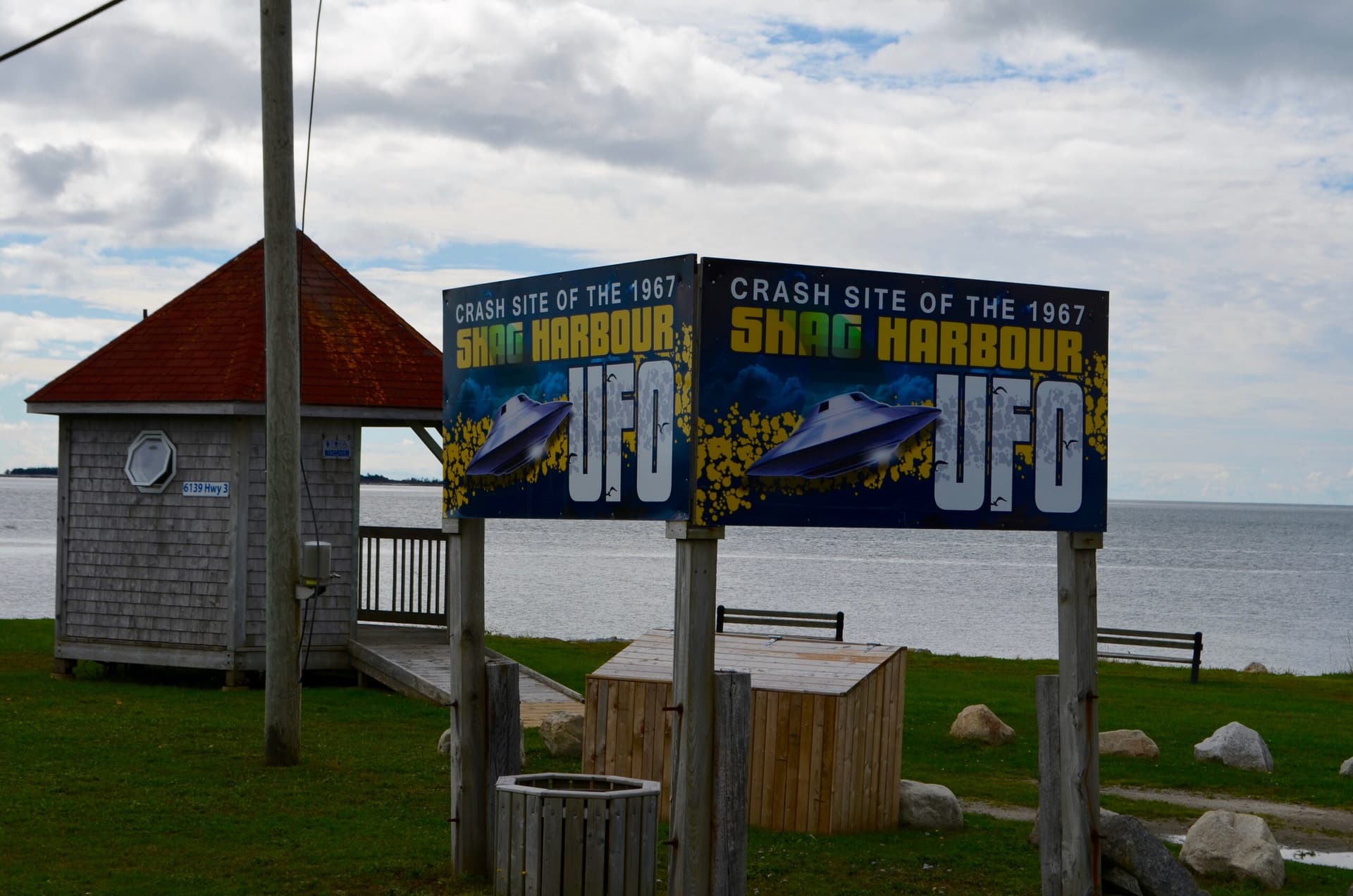
Nearly sixty years later, Shag Harbour has not faded. The village has embraced its strange night with a small interpretive centre, a memorial site, and an annual festival that draws visitors to the shore where it happened. For a community of a few hundred, the incident is part of its identity.
The reason it matters beyond the village is the same reason it mattered in 1967. This is not a blurry photograph or a lone witness whose story cannot be checked. It is a case with an official government paper trail, a documented naval search, a Coast Guard response, an RCMP officer among the witnesses, and dozens of ordinary people who saw the same thing from the road, the water, and the air. The other famous close encounters of that era leaned on human testimony above all, from Roswell two decades earlier to the Betty and Barney Hill abduction six years before. Shag Harbour added a splashdown into the open sea, watched by a policeman, followed by a military dive that found nothing, with the mystery written down in the government's own hand.
The object was never identified, never recovered, and never seen going anywhere but into the water. Whatever it was, the Atlantic closed over it and kept it.
Frequently Asked Questions
What was the Shag Harbour incident?
On the night of October 4, 1967, multiple witnesses near Shag Harbour, Nova Scotia watched a roughly sixty-foot object with four flashing lights descend at a shallow angle and splash down into the sea about half a mile offshore. Fishermen, the Coast Guard, and later Royal Canadian Navy divers searched the water and seabed and found no aircraft, no wreckage, and no bodies. Canadian government files record it as a UFO.
Was anything ever found in the water?
No. Fishing boats and a Coast Guard cutter found only a wide patch of pale yellow foam on the surface the night it happened. Two days later, seven Navy divers from HMCS Granby searched the seafloor over several days and recovered nothing. The military closed the search on October 9 with a report describing nil results, meaning no trace of the object was found.
Why is it called a "government-documented" UFO crash?
Because the reports filed that night by the RCMP, the Rescue Coordination Centre, and the Department of National Defence used the term UFO in the government's own internal records, which are now held at Library and Archives Canada. Very few events anywhere have a national government's contemporaneous paperwork describing them, in official language, as an unidentified flying object entering the water.
Could it have just been a plane or a meteor?
Both were investigated and both fall short. The Rescue Coordination Centre confirmed that no aircraft was missing or overdue in the region, and there was no oil slick or debris. A meteor does not descend on a controlled glide, float on the surface showing a light, or leave a lasting patch of foam, all of which witnesses reported. No single conventional answer accounts for everything that happened that night.
What is the story about a second object at Shelburne?
Investigators Chris Styles and Don Ledger, in their book Dark Object, gathered later testimony suggesting the submerged object traveled underwater about twenty-five miles to Government Point near Shelburne, close to a Cold War naval submarine-detection base, where a second object reportedly joined it before both moved off to sea. This second chapter rests on witnesses interviewed decades afterward and remains an account that cannot be confirmed the way the first night's official records can.
Further Reading
- •Dark Object: The World's Only Government-Documented UFO Crash by Don Ledger and Chris Styles
- •The Canadian UFO Report: The Best Cases Revealed by Chris Rutkowski and Geoff Dittman
- •UFOs Over Canada: Personal Accounts of Sightings and Close Encounters by John Robert Colombo
If you like to watch the night sky over the coast yourself, a good pair of astronomy binoculars is the simplest way to start, no crash required.
Want to explore more mysteries?
We've got plenty more rabbit holes to go down.