Area 51: Inside America's Most Secretive Military Base
What really goes on at Area 51? From Cold War spy planes to UFO conspiracy theories, here's the declassified history of the world's most famous secret base.
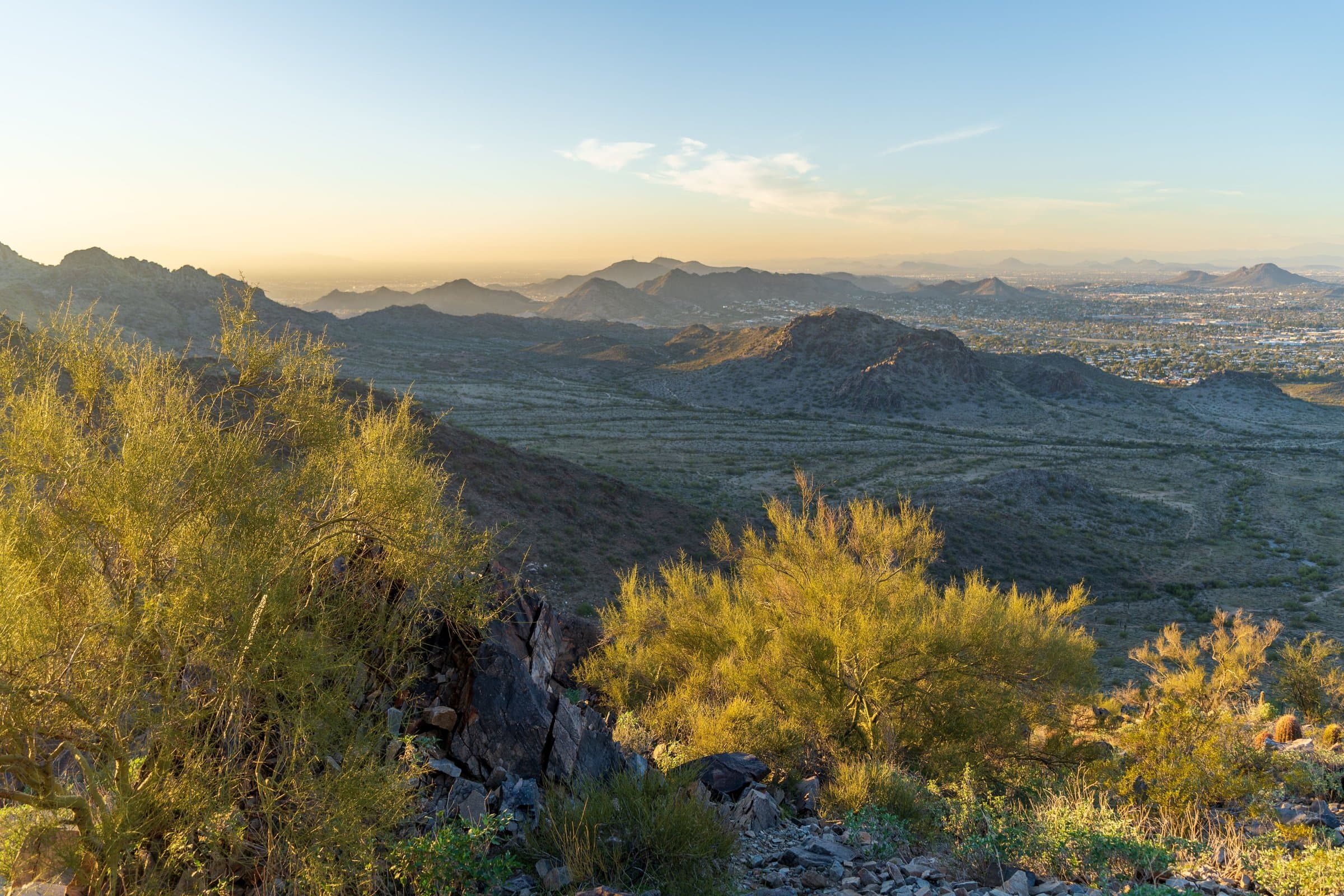
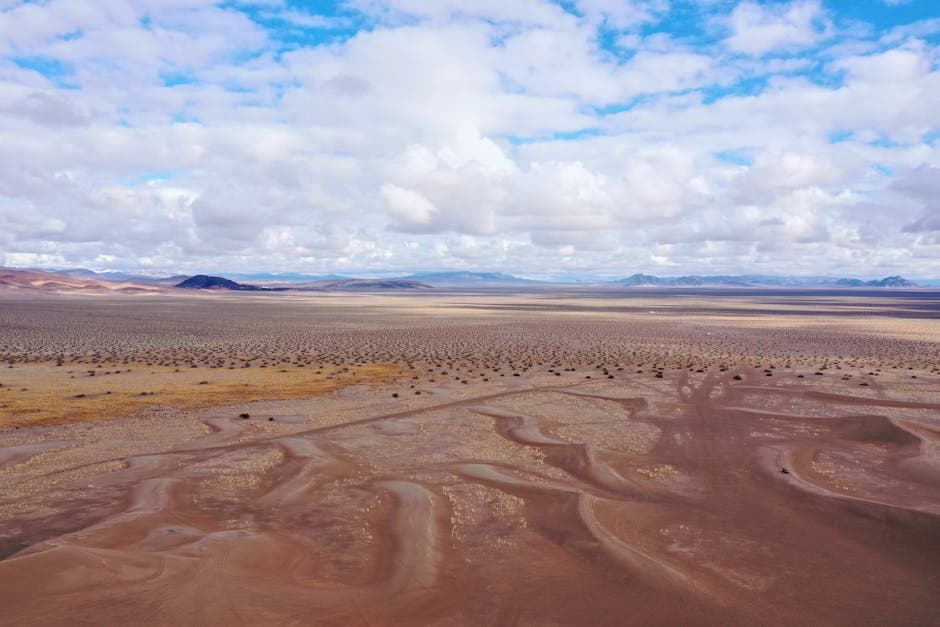
Somewhere in the Nevada desert, 83 miles northwest of the Las Vegas Strip, there's a dry lake bed surrounded by mountains and ringed with motion sensors, armed guards, and warning signs that promise prosecution for trespassing. No tours. No public access. No flying overhead. For decades, the US government wouldn't even admit it existed. This is Area 51, and it's been the world's most famous open secret since the Cold War.
The CIA didn't officially acknowledge the base until 2013, when a Freedom of Information Act request forced the release of declassified documents about its history. Those documents confirmed what aviation researchers had suspected for years: Area 51 was built to test spy planes. But the decades of extreme secrecy created a vacuum that conspiracy theories rushed to fill, turning a remote airstrip into the center of the world's most persistent UFO mythology.
So what's actually out there? The answer is more interesting than aliens, and more complicated than "just a military base."
What You'll Learn
- •Why Was Area 51 Built?
- •What Aircraft Were Tested at Area 51?
- •When Did the Government Acknowledge Area 51?
- •How Did Area 51 Become Connected to UFOs?
- •Who Is Bob Lazar and Why Does He Matter?
- •What Happened to Area 51 Workers?
- •Can You Visit Area 51?
- •What's Happening at Area 51 Today?
- •Frequently Asked Questions
Why Was Area 51 Built?
The story starts in 1955, at the height of the Cold War. The CIA needed somewhere to test its new secret weapon: the Lockheed U-2 spy plane. This wasn't a fighter jet or a bomber. It was a high-altitude reconnaissance aircraft designed to fly at 70,000 feet, well above the reach of Soviet air defenses, and photograph military installations across the USSR.
The problem was secrecy. The U-2 program, codenamed Project AQUATONE, couldn't be tested at Edwards Air Force Base or Lockheed's facility in Palmdale, California. Too many eyes. CIA project director Richard Bissell Jr. needed somewhere remote, somewhere the aircraft could fly without anyone noticing.

Lockheed's legendary aircraft designer Kelly Johnson found the spot. Flying over the Nevada Test Site (where the government was already detonating nuclear weapons), he noticed a dry lake bed called Groom Lake. "We flew over it and within thirty seconds, you knew that was the place," Johnson later recalled. "It was a perfect natural landing field, as smooth as a billiard table without anything being done to it."
The CIA asked the Atomic Energy Commission to add the land to the Nevada Test Site and designate it "Area 51" on the map. Johnson nicknamed it "Paradise Ranch" to convince workers to relocate to what the CIA internally described as "the middle of nowhere." The name stuck, shortened to just "the Ranch."
By the summer of 1955, the base had a single paved runway, three hangars, a control tower, and basic housing. The first U-2 took flight on August 1, 1955. It worked perfectly.
What Aircraft Were Tested at Area 51?
The U-2 was just the beginning. Over the next several decades, Area 51 became the primary testing ground for America's most advanced and secretive aircraft programs.
The Lockheed A-12 and SR-71 Blackbird (1960s): After the Soviets shot down a U-2 in 1960 (the famous Gary Powers incident), the CIA needed something faster and higher. The A-12 OXCART program developed at Groom Lake produced an aircraft that could fly at Mach 3.2 and altitudes above 85,000 feet. Its successor, the SR-71 Blackbird, became the fastest air-breathing manned aircraft ever built, a record it still holds.
The F-117 Nighthawk (1970s-1980s): The world's first operational stealth aircraft was developed and tested at Area 51 under the program name "Have Blue." The angular, radar-absorbing design looked so strange that test pilots joked it would never fly. It did, and it changed aerial warfare forever when it was deployed in the 1989 Panama invasion and the 1991 Gulf War.

Foreign aircraft exploitation: During the Cold War, the US acquired Soviet-built MiG fighters through defections and covert operations. These aircraft were tested at Area 51 under programs like HAVE DOUGHNUT and HAVE DRILL, allowing American pilots to learn the strengths and weaknesses of enemy planes.
Classified drone programs: More recently, unmanned aerial vehicles like the RQ-170 Sentinel (the "Beast of Kandahar") are believed to have been tested at the facility.
The common thread? Every aircraft tested at Area 51 looked strange, flew at unusual altitudes, and moved in ways that conventional aircraft couldn't. This becomes important when you consider the UFO connection.
When Did the Government Acknowledge Area 51?
For most of its history, Area 51 didn't officially exist. It wasn't on public maps. Government officials wouldn't confirm or deny it. When pressed, the Air Force would refer only to "an operating location near Groom Dry Lake."
This started to change slowly:
- •1988: Soviet satellite imagery of the base became publicly available, making denial increasingly absurd.
- •1989: Bob Lazar went public with claims about working on alien technology at the base, forcing it into mainstream conversation.
- •1994: Five former Area 51 workers and the widows of two others sued the Air Force and EPA, claiming they'd been exposed to toxic chemicals burned in open pits at the base. The case (Frost v. Perry) went nowhere because the government invoked state secrets privilege.
- •1995: President Clinton signed a presidential determination exempting Area 51 from environmental disclosure laws, essentially acknowledging its existence while keeping its operations classified.
- •2013: The CIA officially acknowledged Area 51 by name for the first time, releasing a heavily redacted 407-page history of the U-2 program that described the base's establishment and early operations.
Even after 2013, the government has only declassified information about the CIA's operational period from roughly 1954 to 1974. Everything that's happened since remains classified.
How Did Area 51 Become Connected to UFOs?
Here's where things get interesting. The UFO connection isn't just a random conspiracy theory. There's a direct, documented link between Area 51's operations and the explosion of UFO sightings in the American Southwest.
When the U-2 began flying in 1955, commercial airliners cruised at around 20,000 feet. Military aircraft topped out around 40,000 feet. The U-2 was flying at 70,000 feet, an altitude most people didn't think was possible for a manned aircraft.

According to the CIA's own declassified history, U-2 flights accounted for more than half of all UFO reports during the late 1950s and 1960s. Airline pilots and air traffic controllers would spot the silver aircraft glinting in the sun at altitudes they thought were impossible. The U-2's wings would catch sunlight long after the sun had set at lower altitudes, creating the appearance of fiery objects in the sky.
The Air Force couldn't explain the sightings without revealing the spy plane program, so they offered vague explanations about "natural phenomena" and "high-altitude weather research." This pattern of dismissal and secrecy, combined with the genuine strangeness of what people were seeing, laid the groundwork for decades of distrust.
The proximity to the 1947 Roswell incident in neighboring New Mexico only strengthened the connection in the public imagination. If the government was hiding something at Roswell, the thinking went, maybe they moved it somewhere even more remote and secure.
The Rendlesham Forest incident in Britain and the Skinwalker Ranch phenomena would later fuel similar questions about government knowledge of unexplained aerial phenomena.
Who Is Bob Lazar and Why Does He Matter?
No discussion of Area 51 is complete without Bob Lazar. In May 1989, Lazar appeared on Las Vegas television station KLAS, interviewed by reporter George Knapp, and made an extraordinary claim: he said he'd worked at a facility called S-4, located south of Groom Lake, where the US government was reverse-engineering extraterrestrial spacecraft.
Lazar described nine alien craft stored in hangars built into the mountainside. He said the propulsion system used an element called Element 115 (moscovium, which wasn't synthesized until 2003). He claimed to have read briefing documents describing alien involvement in human affairs over thousands of years.
His story was compelling and specific. It also couldn't be verified. The government denied he'd ever worked at the facility. His educational credentials couldn't be confirmed; he claimed physics degrees from MIT and Caltech, but neither school has records of his attendance. Supporters say the government scrubbed his records. Some have proposed the records never existed.
What is documented: a 1982 Los Alamos National Laboratory phone directory lists a "Robert Lazar" among its employees, and he appeared in a 1982 Los Alamos Monitor newspaper story about a jet-powered car he'd built. So he had some connection to the national security world.
Lazar's claims are unproven and widely disputed. But they transformed Area 51 from a military aviation secret into a global cultural phenomenon. His 1989 interview is essentially the origin story of modern Area 51 mythology.
What Happened to Area 51 Workers?
One of Area 51's real scandals has nothing to do with aliens. In the 1980s and early 1990s, workers at the base reported severe health problems they attributed to toxic chemical exposure.
Former workers described large open-pit trenches where classified materials, including radar-absorbing coatings from stealth aircraft, were burned without adequate safety equipment. Many developed skin rashes, respiratory problems, and liver damage. At least two workers died from illnesses their families attributed to the toxic exposure.
In 1994, five former workers and two widows filed a lawsuit against the Air Force and the Environmental Protection Agency. They didn't want money; they wanted to know what chemicals they'd been exposed to so their doctors could treat them properly.

The case was dismissed. The government invoked the state secrets privilege, arguing that revealing what was burned at Area 51 would compromise national security. Congressman Lee Hamilton, former chairman of the House Intelligence Committee, told 60 Minutes: "The Air Force is classifying all information about Area 51 in order to protect themselves from a lawsuit."
President Clinton subsequently issued an executive order exempting Area 51 from environmental disclosure laws. Every president since has renewed that exemption.
This is arguably the most troubling aspect of Area 51's secrecy. Not hidden alien technology, but a government willing to let its own workers suffer and die rather than acknowledge what happened at a facility it wouldn't admit existed.
Can You Visit Area 51?
You can't enter the base itself. The restricted zone is surrounded by sensors, cameras, and security patrols (often called "Camo Dudes" by enthusiasts) who will intercept anyone who crosses the boundary. Trespassing carries a fine of up to $1,000 and potential arrest.
But you can get surprisingly close. The area around Area 51 has become a tourist destination:
- •Rachel, Nevada is the closest town, sitting along Nevada State Route 375, officially designated the "Extraterrestrial Highway" in 1996. The town's Little A'Le'Inn (a play on "alien") is the main gathering point for UFO tourists.
- •Tikaboo Peak, about 26 miles from the base, is the closest legal vantage point from which you can see Area 51 with a good telescope.
- •The "back gate" on Groom Lake Road is a popular spot for photos of the warning signs, though you can't pass the boundary.
In September 2019, a Facebook event called "Storm Area 51, They Can't Stop All of Us" went viral, attracting over 2 million RSVPs. The actual event drew only about 150 people to the gate, and nobody attempted to breach it. But it spawned the Alienstock festival in Rachel and cemented Area 51's place in internet culture.
What's Happening at Area 51 Today?
Satellite imagery shows that Area 51 is very much still active. New construction, including hangars and facilities, has been documented over the past decade. The runway system remains operational, and aircraft spotters occasionally photograph unusual craft in the restricted airspace.

In early 2026, top-secret jets were photographed near the base, continuing the tradition of cutting-edge aircraft development. The facility likely continues to serve its original purpose: testing aircraft and weapons systems that the government doesn't want adversaries to know about.
The current wave of government interest in UAPs (Unidentified Aerial Phenomena) has renewed questions about what Area 51 might hold. Congressional hearings in 2023 and 2024 featured testimony from military whistleblowers claiming the US possesses non-human craft and biological materials. Whether any of this connects to Area 51 specifically remains unknown.
What we do know is this: the base is still classified, still active, and still generating questions that nobody in government seems willing to answer fully. That's been true since 1955, and there's no sign it's changing anytime soon.
Timeline of Key Events
| Year | Event |
|---|---|
| 1955 | CIA establishes Groom Lake facility for U-2 spy plane testing |
| 1955 | First U-2 flight on August 1 |
| 1960 | Soviet Union shoots down a U-2 piloted by Gary Powers |
| 1962 | A-12 OXCART program begins testing at Area 51 |
| 1977 | First Have Blue stealth prototype tested |
| 1981 | F-117 Nighthawk makes first flight from Groom Lake |
| 1988 | Soviet satellite photos of the base become public |
| 1989 | Bob Lazar appears on KLAS-TV claiming alien technology at S-4 |
| 1994 | Former workers file lawsuit over toxic chemical exposure |
| 1995 | President Clinton exempts Area 51 from environmental laws |
| 2013 | CIA officially acknowledges Area 51's existence via FOIA release |
| 2019 | "Storm Area 51" Facebook event goes viral; Alienstock festival held |
| 2023 | Congressional UAP hearings renew public interest in the base |
Frequently Asked Questions
What does the name "Area 51" mean?
The name comes from its designation on old Atomic Energy Commission maps of the Nevada Test Site. The exact origin is unclear; the AEC used numbered areas for different sections, though Area 51 technically sat outside their standard grid. Some believe "51" was chosen precisely because it wouldn't overlap with existing designations.
Has the US government confirmed what's at Area 51?
Only partially. Declassified CIA documents from 2013 confirmed the base was built to test the U-2 spy plane and detail its operations from 1954 to roughly 1974. Everything after that period remains classified. The Air Force describes it simply as "an open training range."
Why is Area 51 so heavily guarded?
The base tests experimental aircraft and weapons systems that represent billions of dollars in research and critical national security advantages. Even confirming what aircraft are being tested could give adversaries valuable intelligence. The extreme security is consistent with other classified military testing facilities, though Area 51's cultural fame makes it more visible.
Are there really aliens at Area 51?
There's no publicly available evidence of extraterrestrial materials or craft at the facility. The CIA's declassified documents make no mention of alien technology. However, the government's pattern of secrecy, combined with whistleblower testimony from recent congressional hearings about "non-human" materials in government possession, keeps the question alive. We simply don't have enough information to rule anything in or out definitively.
What happens if you try to enter Area 51?
You'll be intercepted by private security contractors before reaching the base. The perimeter is monitored with ground sensors, cameras, and regular patrols. Trespassing on the military installation carries fines of up to $1,000 and potential jail time. In practice, most people who wander past the signs are escorted away and given a fine by the Lincoln County Sheriff.
Further Reading
This article contains affiliate links. If you buy through them we may earn a small commission at no extra cost to you.
Want to explore more mysteries?
We've got plenty more rabbit holes to go down.