The Rendlesham Forest Incident: Britain's Roswell
In December 1980, US Air Force personnel reported strange lights and a craft in Suffolk's Rendlesham Forest. With military witnesses and physical evidence, it's the UK's most famous UFO case.
On the night of December 26, 1980, security guards at RAF Woodbridge in Suffolk, England noticed strange lights descending into the nearby forest. What happened over the next three nights would become the most documented UFO case in British history, involving dozens of US Air Force witnesses, physical trace evidence, radiation readings, and an official military memo that still hasn't been fully explained.
This wasn't a case of blurry photos or anonymous tipsters. The primary witnesses were trained military personnel stationed at a NATO air base during the Cold War. The deputy base commander himself went into the forest, recorded what he saw on tape, and later wrote an official report to the UK Ministry of Defence. Some have proposed it was all a possible interpretation as a nearby lighthouse. The witnesses say otherwise.
Here's what we actually know.
What You'll Learn
- •What Happened on the First Night?
- •Who Were the Key Witnesses?
- •What Did Lieutenant Colonel Halt See?
- •What Physical Evidence Was Found?
- •Was It Just the Orfordness Lighthouse?
- •Could It Have Been a Secret Military Craft?
- •What Does the Official Record Say?
- •Why Does Rendlesham Still Matter?
- •Frequently Asked Questions
What Happened on the First Night?
Around 3:00 AM on December 26, 1980, security guards patrolling the east gate of RAF Woodbridge spotted unusual lights apparently dropping into Rendlesham Forest. The base was one of two nearby RAF installations leased to the United States Air Force during the Cold War, making it one of the most sensitive military sites in Western Europe.
The guards initially thought they were seeing a downed aircraft. Airman First Class John Burroughs and Staff Sergeant Jim Penniston were among those sent to investigate. What they reported finding in the forest would be debated for decades.
According to Penniston, he and his team followed the lights into a clearing where they encountered a triangular craft roughly three meters across, sitting on the forest floor. It was dark metallic in color with strange markings on its surface that Penniston described as resembling hieroglyphics. He said the craft felt warm to the touch and appeared to be emitting light from its surface. After roughly 45 minutes, the object reportedly lifted off the ground and accelerated away through the trees at incredible speed.
Burroughs' account was less dramatic but still puzzling. In his original witness statement, he described following lights through the forest and eventually determining that what they were chasing seemed to be "a beacon light off in the distance." Another witness, Airman Ed Cabansag, wrote something similar: "We would see a glowing near the beacon light, but as we got closer we found it to be a lit-up farmhouse."
The discrepancy between Penniston's later, more detailed accounts and the original witness statements has been a point of debate ever since. Penniston didn't mention touching a craft or seeing hieroglyphics in his initial report. These details emerged years later, leading skeptics to question whether the story grew in the retelling.
Local police were called to the scene shortly after 4:00 AM. When they arrived, the only lights they could see were those from the Orfordness Lighthouse, visible through the trees roughly five miles to the east.
Who Were the Key Witnesses?
What makes the Rendlesham Forest incident different from most UFO cases isn't the strangeness of the claims. It's the credibility of the people making them.
Jim Penniston was a Staff Sergeant with the USAF Security Police. He'd served for several years and was considered a reliable, by-the-book NCO. He was the first to claim direct physical contact with the object, and over the years his account has become the most detailed (and most contested) of all the witnesses.
John Burroughs was an Airman First Class who accompanied Penniston on the first night's investigation. His account has remained more measured, though he's consistently maintained that something extraordinary happened. Burroughs later made headlines when he sued the US government for access to his medical records, claiming he suffered health effects from the encounter. The VA eventually granted him full medical benefits, though the specifics of his file remain classified.
Lieutenant Colonel Charles Halt was the deputy base commander of RAF Woodbridge. He didn't witness the first night's events, but when reports of further strange lights came in on December 28, he went into the forest himself with a team of airmen and a micro-cassette recorder. His audio tape of the investigation, recorded in real time, became one of the most compelling pieces of evidence in the case.
Colonel Ted Conrad, the base commander, reportedly received briefings on the incidents but never filed an official report beyond what Halt wrote. Before his death in 2023, Conrad stated publicly that he didn't think the events were extraterrestrial and believed there were conventional explanations.
These weren't anonymous civilians claiming to see lights in the sky. They were trained military personnel at a NATO base during one of the tensest periods of the Cold War. Whatever they saw, it rattled them enough to generate official documentation. And like the Wow! Signal that baffled astronomers three years earlier, it produced physical evidence that's been analyzed and argued over ever since.
What Did Lieutenant Colonel Halt See?
On the night of December 28, 1980, two nights after the initial sighting, more strange lights were reported in the forest. This time, Halt decided to investigate personally. He brought a small team, radiation detection equipment, and a handheld cassette recorder.
The "Halt Tape," as it became known, captures roughly 18 minutes of the investigation in real time. You can hear Halt and his team moving through the forest, taking radiation readings, and reacting to lights that seem to move in ways they can't explain. At one point, Halt's voice takes on genuine urgency as he describes a flashing red light among the trees.
"I see it too," Halt says on the tape. "It's back again... it's coming this way. There's no doubt about it. This is weird."
The team took radiation readings at the site where ground impressions had been found after the first night. Using an AN/PDR-27 military radiation survey meter, they recorded readings of 0.07 milliroentgens per hour in the triangular indentations. The surrounding area showed background levels of 0.03 to 0.04 milliroentgens per hour. While the elevated readings were real, they were marginal. Similar readings were found over half a mile from the site, suggesting they might not be directly related to any landing.
Later that night, Halt reported seeing three star-like objects in the sky, two to the north and one to the south, hovering about ten degrees above the horizon. The brightest one, he said, appeared to beam down a stream of light. Astronomers who've studied the case have identified these as bright stars, particularly Sirius and Vega, which can appear to flash and change color due to atmospheric scintillation, especially when low on the horizon.
Halt didn't file his official memo to the UK Ministry of Defence until January 13, 1981, more than two weeks after the events. Titled "Unexplained Lights," the single-page document summarized both nights' events in clinical, understated language. It was released to the public in 1983 through the US Freedom of Information Act and remains the only official military document directly addressing the incident.
What Physical Evidence Was Found?
When servicemen returned to the forest on the morning of December 26, they found three small impressions on the ground arranged in a roughly triangular pattern. There were also broken branches on nearby trees and what appeared to be burn marks or scrape marks on the bark.
Local police were called back to examine the impressions. Their assessment was more conventional: the indentations looked like they could have been made by an animal, possibly a rabbit. The "burn marks" on the trees, they noted, were consistent with axe cuts or natural scarring.
Georgina Bruni, author of You Can't Tell the People, published photographs of the supposed landing site taken on the morning after the first sighting. The images show a small clearing with some disturbed ground, but they're not conclusive either way.
The radiation readings present an interesting puzzle. They were slightly elevated but not dramatically so. The AN/PDR-27 meter used by Halt's team was a basic instrument designed for detecting significant radiation contamination, not subtle variations. Some researchers have argued the readings were within normal background fluctuation, while others note that even small elevations in a triangular pattern are unusual.
No soil samples were taken by military investigators at the time. No chemical analysis of the tree damage was performed. No photographs were taken by the USAF during the actual nighttime encounters. The physical evidence, while suggestive, falls short of what a rigorous scientific investigation would have produced. This gap between what happened and what was documented is one of the case's most frustrating aspects, similar to the Dyatlov Pass incident where incomplete initial investigation left essential questions unanswered.
Was It Just the Orfordness Lighthouse?
The lighthouse explanation is the most commonly cited skeptical theory, and it deserves a fair examination. The Orfordness Lighthouse was located roughly five miles east of the forest, directly in the line of sight from where the witnesses stood. At the time, it was one of the brightest lighthouses in the United Kingdom, producing a beam that swept across the area with a distinctive flash pattern.
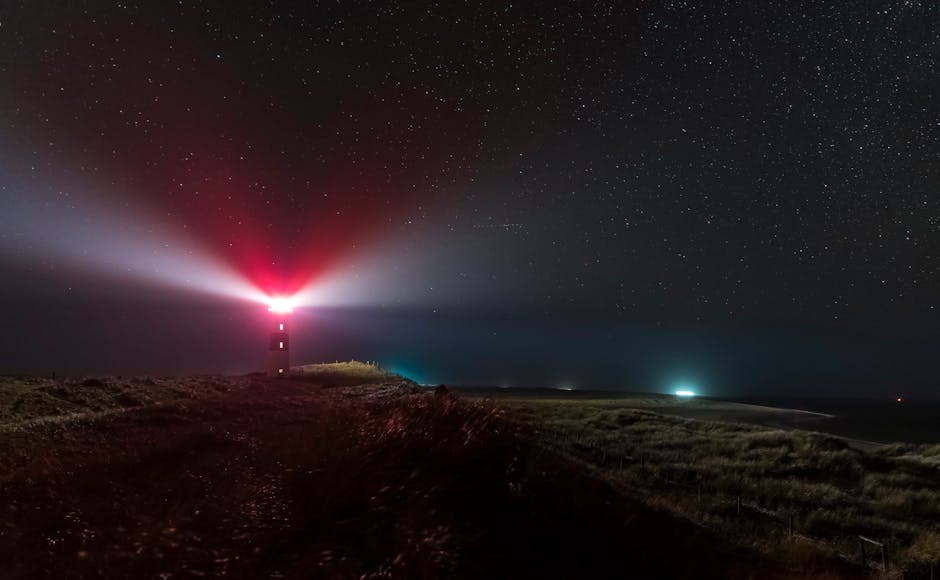
Astronomer Ian Ridpath has been the most thorough advocate for this theory. He's visited the site, mapped the sight lines, and demonstrated that the lighthouse beam is visible from within the forest, appearing as a flashing light that seems to hover among the trees. When combined with the fireball (a piece of natural debris burning up in the atmosphere was recorded over southern England that same night), the bright stars Sirius and Vega low on the horizon, and a farmhouse light in the middle distance, Ridpath argues the entire sequence of events can be explained without invoking anything unusual.
Vince Thurkettle, a local forester who lived near Rendlesham in 1980, backed up this explanation. He knew the forest intimately and had seen how the lighthouse beam could appear strange and disorienting when viewed through the trees at night.
The witnesses push back hard on this. Halt in particular has been vocal: "I've seen the lighthouse many hundreds of times," he's said. "I know what it looks like." Penniston insists what he saw was a solid, physical object on the ground, not a distant light source. And while Burroughs' original statement mentioned following a "beacon light," he's maintained that wasn't the whole story.
The lighthouse explanation accounts for some of what was reported, particularly the flashing light seen from a distance on the second night. But it doesn't easily explain the ground impressions, the slightly elevated radiation readings, or the accounts of a physical object in the clearing. It's possible, of course, that different aspects of the case have different explanations, and that what started as a genuine possible interpretation as the lighthouse snowballed into something more elaborate.
Could It Have Been a Secret Military Craft?
Given that the incident took place next to a sensitive NATO air base during the Cold War, the secret military technology hypothesis deserves consideration. RAF Woodbridge and nearby RAF Bentwaters were frontline bases in the NATO defense network, equipped to deploy tactical nuclear weapons in the event of a Soviet attack.
Some researchers have suggested that what the witnesses saw was an experimental aircraft or drone being tested, possibly without the knowledge of the personnel stationed at the base. The triangular shape described by Penniston has led to comparisons with stealth aircraft programs that were under development in the early 1980s, though the F-117 Nighthawk wasn't publicly acknowledged until 1988.
However, there are problems with this theory. Testing experimental aircraft directly over an active military base without informing the base commander would be reckless and potentially dangerous. The US and UK governments have consistently denied that any experimental craft were being tested in the area. And the behavior described by the witnesses (hovering, silent movement, instantaneous acceleration) doesn't match any known aircraft technology from that era, or from ours.
It's also worth noting that no classified documents about secret tests at Rendlesham have ever surfaced, despite decades of Freedom of Information requests in both the US and UK. If something was being tested, the cover-up has been extraordinarily thorough.
What Does the Official Record Say?
The British government's response to the Rendlesham Forest incident has been, to put it mildly, underwhelming. The UK Ministry of Defence concluded that the events "posed no threat to national security" and therefore didn't warrant investigation. This has been their consistent position for over four decades.
Dr. David Clarke, a journalist and academic who is a consultant to the National Archives, investigated the background of the Halt memo and the MoD's response. His research confirmed how cursory the investigation was. He found no evidence of any reports on the incident made by the USAF or UK government apart from Halt's single-page memo. No follow-up investigation was conducted. No interviews with witnesses were carried out by either government.
The MoD's UFO desk (which operated until 2009) received the Halt memo but apparently took no action. Nick Pope, who staffed the desk from 1991 to 1994, later wrote a book about the incident and became one of its most prominent advocates, arguing that the case represents genuine evidence of extraterrestrial visitation.
In June 2010, Halt signed a notarized affidavit stating that he believed the event was extraterrestrial and that it had been covered up by both the UK and US governments. However, researchers have noted contradictions between this affidavit and the facts as recorded at the time, suggesting that Halt's memory of events may have shifted over the decades.
Colonel Ted Conrad, Halt's superior, took a different view. In a 2010 statement, Conrad said: "We saw nothing that resembled Lt Col Halt's description either in the sky or on the ground." He attributed the sightings to "ichthyological or astronomical" phenomena (he likely meant meteorological) and stated he didn't believe anything out of the ordinary had occurred.
The absence of a serious official investigation remains one of the most puzzling aspects of the case. Either the governments involved genuinely didn't think it was important, or they investigated through channels that haven't been made public. Much like the Lost Colony of Roanoke, the incomplete historical record leaves us with more questions than answers.
Why Does Rendlesham Still Matter?
Forty-five years later, the Rendlesham Forest incident occupies a unique position in UFO history. It's not the most dramatic case, not the most heavily documented, and certainly not the most conclusive. But it combines elements that few other cases can match.
First, the witnesses were credible military personnel who had nothing obvious to gain from making extraordinary claims. Several of them have experienced professional and personal difficulties as a result of their testimony.
Second, there's a physical evidence trail, however imperfect. Ground impressions, radiation readings, the Halt tape, and the official memo all exist as tangible artifacts that can be examined and debated.
Third, the case demonstrates the tension between what witnesses report and what investigators can verify. The original witness statements are more ambiguous than the later, more dramatic accounts. This is a common pattern in UFO cases and in eyewitness testimony generally, where memories solidify and become more coherent over time, sometimes incorporating details that weren't present initially.
The lighthouse theory requires accepting that multiple trained military personnel - people responsible for guarding nuclear weapons - were fooled by a lighthouse they'd seen hundreds of times before, in a forest they patrolled regularly. That they chased it through the woods for hours. That it left physical traces in the soil. That it registered on their radiation equipment. And that they all independently described the same structured craft with the same markings. At some point, the 'rational' explanation requires more faith than the unexplained one.
What happened in Rendlesham Forest in December 1980? We still don't know for certain. What we do know is that something prompted trained military observers to file official reports, record audio evidence, and stake their reputations on claims they've maintained for over four decades. That alone makes it worth examining.
If you're interested in other cases where credible witnesses reported phenomena that defied easy explanation, check out the Mothman of Point Pleasant, where an entire community reported encounters with something they couldn't explain.
Frequently Asked Questions
What is the Rendlesham Forest incident?
The Rendlesham Forest incident refers to a series of unexplained sightings reported by US Air Force personnel near RAF Woodbridge in Suffolk, England, over several nights in late December 1980. Witnesses described strange lights in the forest, and some claimed to have encountered a physical craft. It's often called "Britain's Roswell."
Is there physical evidence from Rendlesham Forest?
Yes, though it's not conclusive. Investigators found three ground impressions in a triangular pattern, slightly elevated radiation readings at the site, and broken branches on nearby trees. Lieutenant Colonel Charles Halt also recorded an audio tape during his investigation and filed an official memo to the UK Ministry of Defence.
What did the UK government conclude about Rendlesham?
The UK Ministry of Defence determined the events posed no threat to national security and didn't conduct a formal investigation. The only official document is the "Halt memo," a single-page report filed two weeks after the events. The MoD's position hasn't changed in over four decades.
Could the Rendlesham lights have been the Orfordness Lighthouse?
Skeptics, including astronomer Ian Ridpath, argue the primary light source was the Orfordness Lighthouse, which was visible through the trees roughly five miles to the east. Combined with a meteor fireball that night and bright stars on the horizon, this theory accounts for many of the reported sightings. Witnesses maintain the lighthouse explanation doesn't cover everything they experienced.
Has anyone been harmed by the Rendlesham Forest incident?
John Burroughs, one of the primary witnesses, claimed to have suffered health effects following the encounter. He pursued legal action against the US government for access to his medical records and was eventually granted full VA medical benefits. The specific details of his case remain classified, which has fueled further speculation about what really happened.
Further Reading
This article contains affiliate links. If you buy through them we may earn a small commission at no extra cost to you.
Want to explore more mysteries?
We've got plenty more rabbit holes to go down.