The Lost Colony of Roanoke: America's Oldest Mystery
In 1590, 115 English colonists vanished from Roanoke Island without a trace, leaving only the word 'CROATOAN' carved into a post. What happened to them remains America's oldest unsolved mystery.
Three years. That's how long John White was gone. When he'd left Roanoke Island in August 1587, he'd left behind 115 colonists, including his daughter Eleanor and his newborn granddaughter Virginia Dare, the first English child born in the Americas. He'd promised to return with supplies within months. War with Spain, weather, and a series of unfortunate decisions kept him away until August 18, 1590.
When White finally stepped ashore on Roanoke Island, he found the settlement abandoned. The houses had been dismantled. His personal belongings, buried before his departure, had been looted and scattered. And carved into a wooden post at the entrance to the settlement was a single word: CROATOAN.
No bodies. No signs of violence. No graves. Just 115 people, gone without any explanation that's satisfied historians in the 436 years since.
The Lost Colony of Roanoke isn't just America's oldest mystery. It's also one of its most instructive, a case study in how little evidence, colonial politics, and centuries of speculation can turn a historical event into something approaching myth.
Who Were the Roanoke Colonists?
To understand what might have happened to the colony, you need to understand why it was there in the first place. The Roanoke venture wasn't England's first attempt to establish a foothold in the New World, and it wasn't a particularly well-planned one.
Sir Walter Raleigh had received a charter from Queen Elizabeth I to colonize the coast of North America. His first attempt in 1585, led by Ralph Lane, established a military garrison on Roanoke Island. That colony lasted about a year before the soldiers, who'd alienated the local Secotan and Croatoan peoples through violence and theft, were evacuated by Sir Francis Drake.
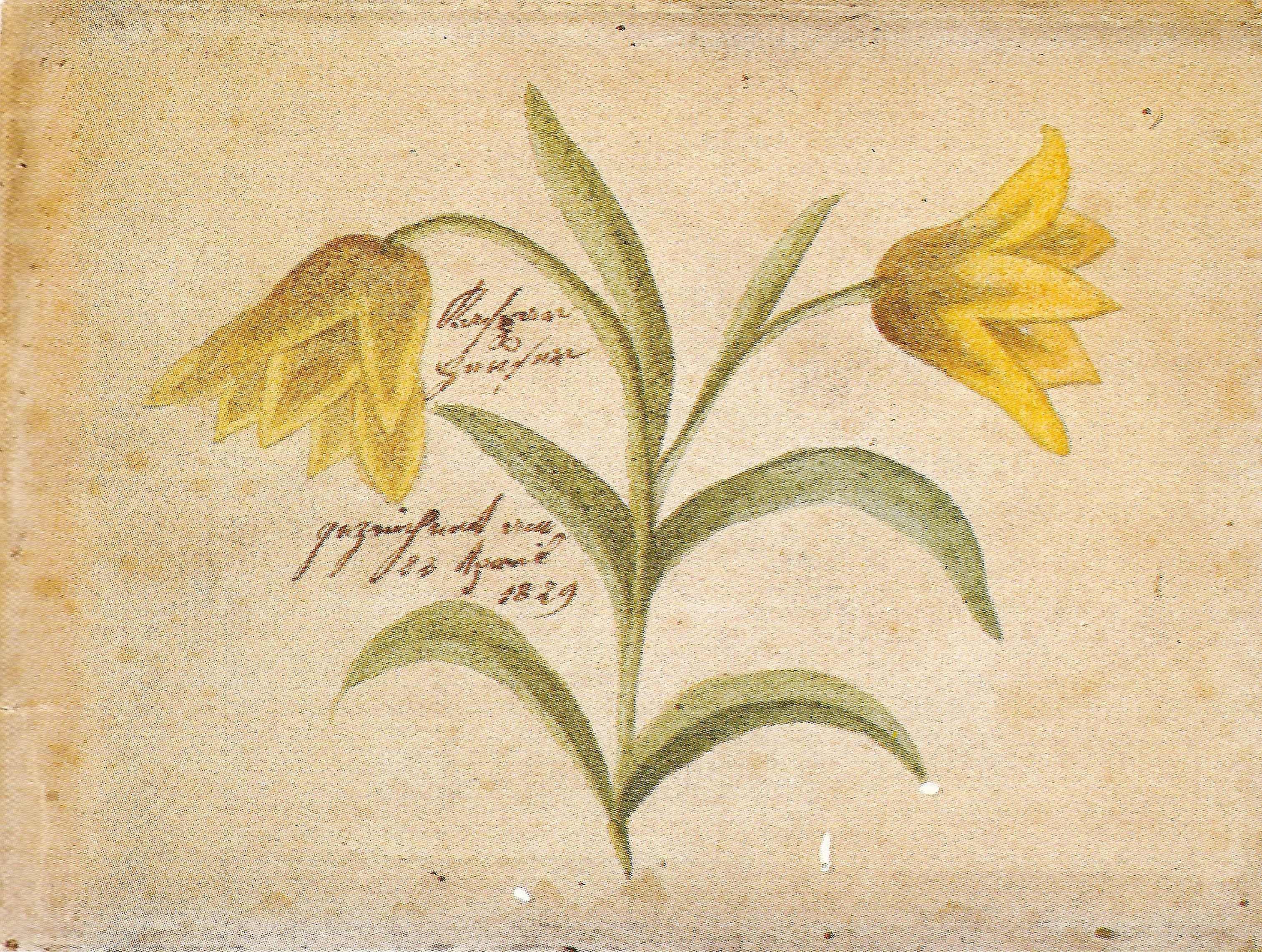
The 1587 colony was supposed to be different. Instead of soldiers, Raleigh sent families, 91 men, 17 women, and 11 children. They were led by John White, an artist who'd been part of the 1585 expedition and had created detailed watercolors of the land and its indigenous inhabitants.
The colonists weren't supposed to settle on Roanoke Island at all. Their destination was the Chesapeake Bay, about 100 miles to the north, where they'd have access to deeper harbors and more fertile land. But the ship's pilot, Simon Fernandes, refused to take them any farther than Roanoke, citing the lateness of the season. Whether this was genuine caution or something more political (Fernandes had his own agenda as a privateer) has been debated by historians.
So the colonists found themselves on a small barrier island off the coast of what's now North Carolina, trying to rebuild a settlement that the previous garrison had already proven was difficult to sustain. Their relationship with the local Secotan people was strained from the start, thanks to the violence committed by the 1585 expedition.
Within weeks, one colonist, George Howe, was killed while crabbing alone in the shallows. It was clear the colony needed more supplies, more people, and diplomatic intervention with the native population. John White reluctantly agreed to sail back to England to organize a resupply mission.
What Clues Did John White Find?
White arrived back at Roanoke three years later with a heavy heart and high anxiety. As his ship approached the island, he saw smoke rising from the north end, which gave him hope. But when he landed, the settlement was deserted.
The most significant clue was the word CROATOAN carved into a post at the palisade entrance. On a nearby tree, the letters CRO were also carved. Before leaving, White and the colonists had agreed on a system: if they moved, they'd carve their destination. If they were in distress, they'd add a Maltese cross above the carving. There was no cross.
White interpreted this to mean the colonists had relocated to Croatoan Island (now Hatteras Island), about 50 miles to the south, where the friendly Croatoan people (also called Hatteras) lived. Manteo, a Croatoan man who'd traveled to England twice and served as an interpreter, had been one of the colonists' closest allies.
White desperately wanted to sail to Croatoan to search for the colonists. But a storm was approaching, and the ship's crew refused. They'd already lost anchors and cables. The fleet sailed for the Caribbean to resupply, but more bad weather forced them back to England. White never returned to the New World.
In his journals, White expressed anguish about leaving without finding the colonists. He wrote of his "great grief" but also maintained hope that they'd survived. The CROATOAN carving, without a distress cross, suggested a planned, orderly departure.
Did the Colonists Join the Croatoan People?
This is the most widely accepted theory among modern historians, and the evidence for it has been growing steadily.
The Croatoan people of Hatteras Island had been friendly to the English from the beginning. Manteo had lived in England, spoke English, and had been formally christened and named "Lord of Roanoke" by John White. If the colonists needed to relocate, going to live among the Croatoan would have been the logical choice.
John Lawson, an English explorer who traveled through the Carolina interior in 1701, recorded meeting Hatteras people on what had been Croatoan Island. He wrote that "several of their Ancestors were white People and could talk in a Book," meaning they claimed descent from English colonists and had knowledge of literacy. Some had gray eyes, which was unusual among the indigenous population.
In the centuries that followed, multiple indigenous groups in the region claimed descent from the Roanoke colonists. The Lumbee people of Robeson County, North Carolina, have maintained this tradition for generations. Census records from the 18th and 19th centuries show English surnames among the Lumbee, including several that match names on the Roanoke colony roster: Dare, Howe, Sampson, and others.
Archaeological evidence has been emerging as well. The Croatoan Archaeological Project, which has been excavating sites on Hatteras Island since 1998, has found European artifacts mixed with Croatoan materials at sites dating to the late 16th century. These include a signet ring bearing what appears to be a lion or horse (possibly linked to the Kendall family), gun flints, copper farthings, and a slate writing tablet.
In 2020, archaeologists using X-ray imaging discovered that a patch on one of John White's original maps concealed a symbol that appears to mark an inland location near the confluence of the Chowan and Roanoke Rivers. This "Site X" has become the focus of the First Colony Foundation's research, suggesting that at least some colonists may have moved inland, perhaps splitting into groups.
What Other Theories Exist?
While integration with indigenous peoples is the most evidence-supported theory, it's not the only one that's been proposed. Several alternative explanations deserve consideration.
Disease or Famine
The Roanoke colony was established during one of the worst droughts in the region's recorded history. Tree ring data from bald cypress trees in the area, analyzed by climatologist David Stahle, shows that the period from 1587 to 1589 experienced the most severe drought in 800 years. The colonists would have struggled to grow crops, and their indigenous neighbors would have had less surplus to trade.
Disease was an equally serious threat. European illnesses devastated indigenous populations throughout the Americas, and the colonists themselves were vulnerable to unfamiliar diseases. A combination of famine and illness could have weakened the colony to the point where they had to abandon the settlement or face death.
Attack by Hostile Groups
The Secotan people, particularly the Dasamongueponke from the mainland, had hostile relations with the English after the 1585 garrison's behavior. George Howe's murder shortly after the colony's establishment showed that violence was an ongoing threat.
However, the absence of bodies, graves, or signs of conflict at the settlement argues against a massacre. The dismantled buildings suggest an orderly departure, not a sudden attack. If the colony had been destroyed by violence, some physical evidence would likely remain.
John Smith, the leader of the Jamestown colony established 20 years later, heard reports from the Powhatan people that Chief Wahunsenacah (Powhatan) had ordered the killing of English settlers living with a group near the Chowan River. Smith wrote that Powhatan "had been at the murder of that colony" and showed him English-made tools as evidence. This account, recorded around 1608, suggests that at least some Roanoke colonists survived for years after White's departure but were eventually killed in the political conflicts that preceded Jamestown's founding.
This is controversial, though. Smith was known to embellish, and the Powhatan account may have been strategic misinformation. No archaeological evidence of a massacre has been found.
Attempted Voyage or Relocation
The colonists had small boats (pinnaces) and could have attempted to sail to the Chesapeake Bay, their original destination. A partially built boat was mentioned in some accounts. If they'd tried to sail and been lost at sea or arrived in a different location, it would explain the empty settlement without signs of violence.
The "Site X" marked on White's hidden map suggests the colonists may have planned to move inland, where agriculture would be more reliable than on the sandy, storm-vulnerable barrier island. Small groups may have scattered to multiple locations, making them harder to trace.
What Has Modern Archaeology Revealed?
The past two decades have produced more physical evidence about the Lost Colony than the preceding four centuries combined.
The First Colony Foundation has been conducting systematic excavations at "Site X" near the town of Edenton, North Carolina, since 2012. They've found pottery fragments and other artifacts that suggest English habitation in the late 16th century, though definitive proof linking the site to the Roanoke colonists remains elusive.
On Hatteras Island, the work of archaeologist Mark Horton and the Croatoan Archaeological Project has been particularly revealing. Among the European artifacts found in Croatoan contexts are items that by some interpretations came from the Roanoke colony: a rapier handle, English-style pottery, and a gunlock mechanism. The mix of English and Croatoan materials at the same sites supports the integration theory.
DNA analysis has been attempted but hasn't produced definitive results. The Lumbee people have participated in genetic studies, and while some results show European admixture, the timeline and specifics are difficult to pin down given centuries of subsequent European contact.
Ground-penetrating radar surveys of the original settlement site on Roanoke Island have revealed features that may include previously unknown structures. The National Park Service, which manages the Fort Raleigh National Historic Site, has been slowly expanding its research program.
Why Can't We Solve This Mystery?
The Roanoke mystery persists for a frustratingly simple reason: timing. Nobody looked for the colonists for 20 years after White's failed return. By the time the Jamestown colonists arrived in 1607, the trail was already cold. The Smith-Powhatan accounts were secondhand at best, and the physical evidence had been exposed to two decades of weather, decay, and indigenous activity.
The 17th-century English also had a complicated relationship with the idea that colonists might have "gone native." Admitting that English settlers had integrated into indigenous societies ran counter to the colonial narrative of European superiority. There was incentive to frame the Lost Colony as victims rather than people who'd made a rational choice to survive by joining their neighbors.
Colonial-era record keeping was also inconsistent. Many documents that might have shed light on the mystery were lost to wars, fires, and simple neglect over the centuries.
What we're left with is a puzzle where most of the pieces are missing. The evidence we do have points strongly toward survival and integration, at least for some colonists. The CROATOAN carving, the Hatteras oral traditions, the archaeological artifacts, the hidden map markings, and the Powhatan accounts all suggest that the colony didn't simply vanish. They moved, they adapted, and they were eventually absorbed into the indigenous populations they lived among.
It's not the dramatic ending that the "Lost Colony" label implies. It's actually a more interesting story: one of survival, cultural exchange, and the messy reality of colonial contact that doesn't fit into neat narratives.
For more mysteries where people vanished under extraordinary circumstances, read our investigation into The Dyatlov Pass Incident. And for an anomaly that's equally hard to pin down, see our piece on The Wow! Signal.
Frequently Asked Questions
What does "CROATOAN" mean?
Croatoan was the name of both an island (now called Hatteras Island) and the indigenous people who lived there. The Croatoan people were friendly allies of the English colonists. When John White found the word carved at the abandoned settlement, it by one account indicated that the colonists had relocated to Croatoan Island to live with or near the Croatoan people.
Was Virginia Dare real?
Yes. Virginia Dare was born on August 18, 1587, to Eleanor and Ananias Dare. She was John White's granddaughter and the first English child born in the Americas. Her birth was recorded by White in his journals. What happened to her after White left for England is unknown, though legends among the Lumbee and Hatteras peoples have claimed she survived into adulthood.
Did anyone from the Roanoke colony survive?
The evidence strongly suggests yes. The orderly dismantling of the settlement, the CROATOAN carving without a distress symbol, archaeological evidence of English artifacts among Croatoan materials, and oral traditions from multiple indigenous groups all point to at least some colonists surviving by integrating with native populations. John Smith's accounts from Jamestown also reference English survivors living with indigenous groups near the Chowan River.
Why did John White leave the colony?
White left Roanoke in August 1587 to obtain desperately needed supplies from England. The colony was short on food and materials, and hostile relations with nearby indigenous groups made resupply critical. White intended to return within months, but the Anglo-Spanish War (1585-1604) diverted English ships, and weather complications delayed his return until 1590, three years later.
Where was the Roanoke colony located?
The colony was on Roanoke Island, a small barrier island in what is now Dare County, North Carolina, between the Outer Banks and the mainland. The site is preserved as Fort Raleigh National Historic Site and is open to visitors. The island sits in the Albemarle Sound region, surrounded by shallow waters and extensive marshland.
Further Reading
This article contains affiliate links. If you buy through them we may earn a small commission at no extra cost to you.
Want to explore more mysteries?
We've got plenty more rabbit holes to go down.