The Yonaguni Monument: Japan's Underwater Mystery That Divides Scientists
Discovered in 1987 off Japan's southernmost island, the Yonaguni Monument features what appear to be carved steps, terraces, and pillars beneath the sea. Is it a sunken city or a trick of geology?
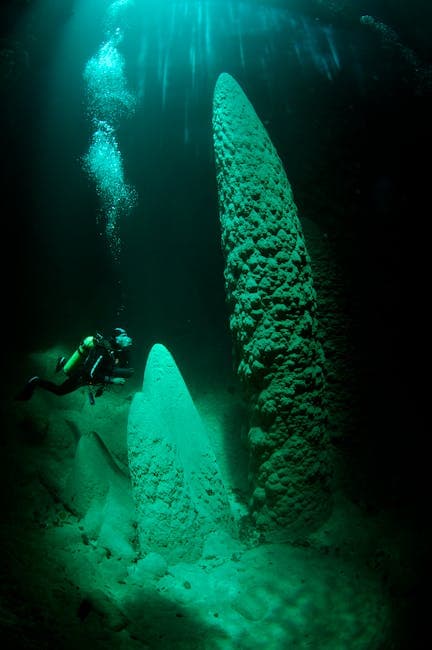
About 75 miles off the eastern coast of Taiwan, beneath the clear waters surrounding Japan's westernmost inhabited island, there's a massive stone structure that looks like it shouldn't be there. It has flat terraces, sharp right angles, what appear to be carved steps, and surfaces so smooth they look finished by human hands. It's roughly 165 feet long, 65 feet wide, and rises about 80 feet from the ocean floor to within 16 feet of the surface. If you didn't know it was underwater, you might mistake it for the foundation of an ancient building complex.
The Yonaguni Monument was discovered in 1987 by dive tour operator Kihachiro Aratake while he was scouting new dive sites for hammerhead shark viewing off the southern coast of Yonaguni Island, Okinawa Prefecture. What he found instead was a formation so unusual that it's been debated by geologists, archaeologists, and adventurers ever since. One prominent marine geologist says it's an ancient city that sank beneath the waves thousands of years ago. Another equally prominent geologist says it's attributed to natural sandstone shaped by currents and tectonics. Neither has convinced the other, and the Japanese government hasn't weighed in.
Welcome to one of the ocean's most polarizing mysteries.
What You'll Learn
- •What Does the Yonaguni Monument Look Like?
- •Was the Yonaguni Monument Man-Made?
- •Is the Yonaguni Monument a Natural Formation?
- •Could It Be Both Natural and Modified?
- •When Could It Have Been Above Water?
- •What Does the Japanese Government Say?
- •Can You Dive the Yonaguni Monument?
- •Frequently Asked Questions
What Does the Yonaguni Monument Look Like?
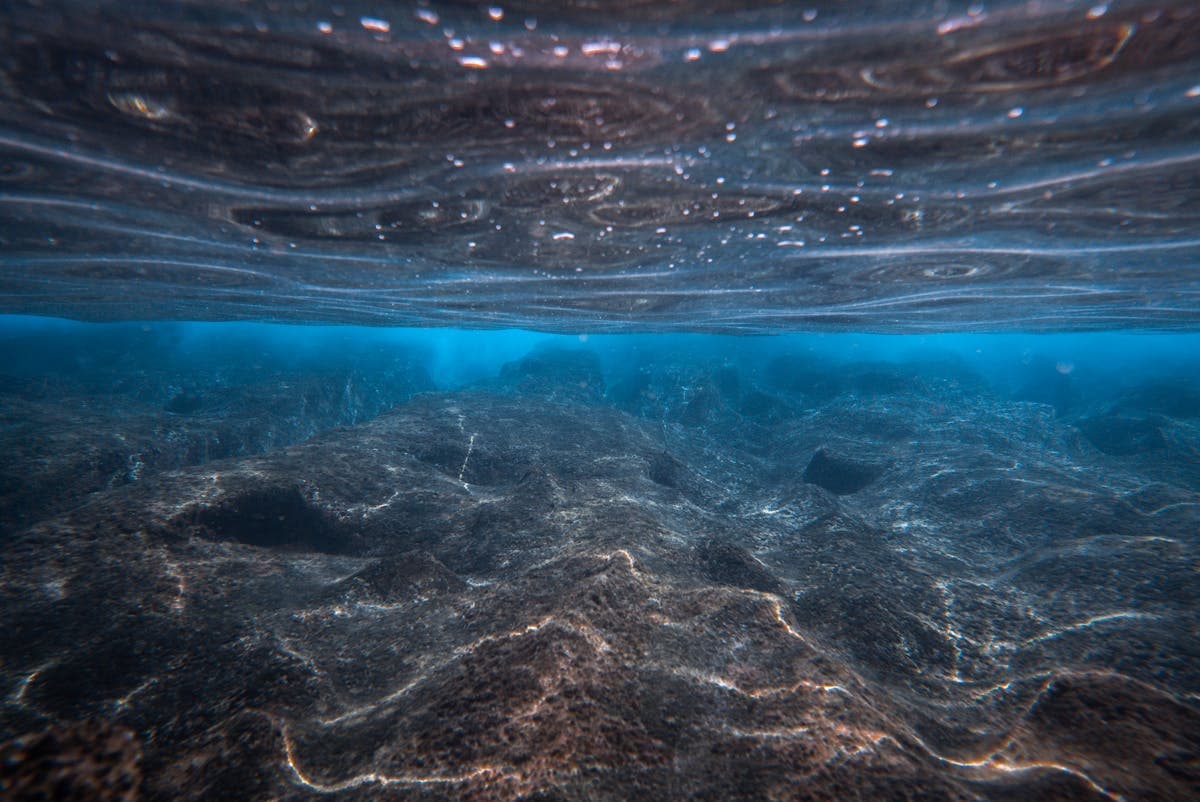
The main structure sits in about 25 meters (82 feet) of water off the southern tip of Yonaguni Island. It consists of a series of flat, broad terraces that step down from the top of the formation to the ocean floor, creating the appearance of a stepped pyramid or ziggurat viewed from the side.
Key features include:
The main terrace. A large, flat platform near the top of the structure, roughly 5 meters wide and smooth. If natural, the flatness is extraordinary. If man-made, it would have been a significant construction achievement.
The "steps." Along the sides of the monument, a series of step-like formations descend at regular intervals. Some steps are about a meter high and appear uniform in size, which is one of the strongest visual arguments for human construction. Others are irregular, which supporters of the natural theory point to.

The "twin pillars." Two upright stone features that resemble pillars or columns, standing near the base of the formation.
The "triangle pool." A roughly triangular depression in the stone that looks carved or shaped.
Apparent channels and grooves. Lines running along surfaces that could be either natural fracture patterns or deliberately cut channels.
What appear to be "post holes." Circular depressions in the stone surface that resemble holes where wooden posts might have been placed.
The formation is made of medium to fine-grained sandstone that belongs to the Yaeyama Group, dating to the Lower Miocene (roughly 20 million years ago). The rock itself is ancient; the question is whether its current shape is natural or the result of human modification.
Was the Yonaguni Monument Man-Made?
The leading proponent of the man-made theory is Professor Masaaki Kimura of the University of the Ryukyus, a marine geologist who has dived the site over 100 times and spent decades studying it. Kimura believes the monument is the remains of an ancient city that was above sea level during the last Ice Age and was submerged as sea levels rose at the end of the Pleistocene.
Kimura's evidence includes:
The right angles. The monument features numerous 90-degree angles and sharp edges that, Kimura argues, don't form naturally in sandstone. While tectonic fracturing can create straight lines, the consistency and frequency of right angles at Yonaguni goes beyond what he considers natural.
Tool marks. Kimura claims to have identified tool marks on the stone surfaces, including what he interprets as quarry marks and chisel grooves. If confirmed, these would be strong evidence of human modification.
The steps. Kimura argues the step-like formations are too regular and uniform to be natural. He's compared them to step pyramids found in other ancient civilizations.

Surrounding features. Kimura points to other underwater features near the main monument, including what he describes as a stadium, roads, a castle, and carved images of animals (a turtle, a bird). He interprets these as part of a larger built environment.
The "face." On a nearby rock, Kimura identifies what he believes is a carved human face, roughly 7 meters tall, with two eyes and a mouth clearly visible. Skeptics see this as a textbook example of pareidolia (the human tendency to see faces in random patterns).
Kimura has estimated the age of the structures at roughly 10,000 years, based on when sea levels were low enough for the site to have been above water. He's published his findings in several papers and presented them at conferences.
Is the Yonaguni Monument a Natural Formation?
The natural formation theory is championed primarily by Robert Schoch, a geologist at Boston University who holds a PhD in geology and geophysics. Schoch has dived the site multiple times and published detailed analyses.
Schoch's argument rests on several key points:
Sandstone naturally fractures this way. The type of sandstone at Yonaguni has well-defined bedding planes (horizontal layers) and vertical joints (fractures perpendicular to the bedding). When these two natural fracture systems intersect, they create the appearance of steps, right angles, and flat surfaces. This is a well-documented geological process called orthogonal joint fracturing.
Similar formations exist on land nearby. This is perhaps Schoch's strongest argument. On the surface of Yonaguni Island itself, at a coastal area called Sanninudai, there are exposed sandstone formations that display the exact same step-like patterns, flat surfaces, and right angles as the underwater monument. These onshore formations are universally acknowledged as natural. If the same rock type produces the same shapes above water through known geological processes, the simplest explanation is that the underwater formations are natural too.

No artifacts have been found. Despite decades of diving and investigation, no pottery, tools, inscriptions, or other human artifacts have been recovered from the site. A genuine ancient settlement would be expected to have left some material evidence beyond the architecture itself.
The monument is a single piece of rock. The structure isn't built from separate blocks stacked together (like a pyramid or wall). It's carved from or formed out of a single mass of bedrock. This is more consistent with natural erosion shaping existing rock than with human construction.
The "post holes" match natural formations. Schoch found identical circular depressions on the surface of Yonaguni's coastal rocks, formed by natural weathering. They're not unique to the underwater site.
Strong underwater currents. The waters around Yonaguni have powerful currents that could shape sandstone over thousands of years, particularly along existing fracture planes and bedding surfaces.
Geologist Wolf Wichmann of Germany reached the same conclusion after studying the formations in 1999 and 2001, noting their consistency with natural sandstone erosion patterns.
Could It Be Both Natural and Modified?
A middle-ground position has gained traction: the Yonaguni Monument may be a natural formation that was modified or utilized by humans when it was above water during the Ice Age.
Even Schoch acknowledges this possibility. In his published analysis, he writes that the structures are "primarily the result of natural geological and geomorphological processes at work" but allows that some features could have been "used or modified by humans in the past."
This compromise theory is appealing because it respects the geological evidence while acknowledging features that seem unusually regular. Humans have a long history of modifying natural rock formations for their own purposes: think of rock-cut temples in India, cliff dwellings in the American Southwest, or the rock churches of Lalibela in Ethiopia. It's not hard to imagine ancient people finding a naturally stepped rock formation above the waterline and enhancing it for ceremonial or practical use.
Evidence for the hybrid theory:
- •The geological explanation for the basic structure is strong.
- •Some features (particularly certain grooves and the "post holes") are ambiguous enough to suggest possible modification.
- •The site would have been above water during the last Ice Age, when humans were present in the region.
- •Modifying existing rock is vastly easier than building from scratch, making it plausible for a small population.
Evidence against:
- •No tools, pottery, or other artifacts to confirm human presence at the site.
- •Natural erosion and biological activity underwater could create features that merely look modified.
- •Without clear tool marks that can be distinguished from natural erosion, the modification claim is speculative.
When Could It Have Been Above Water?
This is a essential question. If the monument was man-made or modified by humans, it had to be above sea level when those humans were working on it.
During the last Ice Age (the Last Glacial Maximum, roughly 20,000 years ago), sea levels were about 130 meters (425 feet) lower than today. The Yonaguni Monument sits in about 25 meters of water. This means the site would have been well above sea level during the Ice Age and would have been submerged as glaciers melted and sea levels rose, a process that occurred gradually between roughly 15,000 and 6,000 years ago.
If the monument was in use as a human structure, it would by one account date to between 10,000 and 6,000 years ago, the period when sea levels were rising but the site was still above or near the waterline. This places it in the early Jomon period of Japanese prehistory, when people in the Japanese archipelago were living as sophisticated hunter-gatherers, making some of the world's earliest pottery and building semi-permanent settlements.

The Jomon people were certainly capable of modifying rock and building structures. But no Jomon-era construction remotely approaching the scale of the Yonaguni Monument has been found on land, which raises questions about whether they would have built something this elaborate underwater (or rather, before it went underwater).
What Does the Japanese Government Say?
Nothing official. Neither the Japanese Agency for Cultural Affairs nor the government of Okinawa Prefecture recognizes the Yonaguni Monument as an important cultural artifact. Neither agency has conducted research or preservation work at the site.
This is significant. Japan is careful about preserving archaeological sites; the country has over 400,000 registered archaeological sites. If there were strong evidence that the Yonaguni Monument was man-made, it's likely the government would have investigated and designated it for protection. The lack of official interest suggests that the geological establishment in Japan leans toward the natural formation explanation.
Yonaguni Island has, however, designated the monument as a local landmark. The site is a popular diving destination, attracting visitors year-round who want to see the formations for themselves and make up their own minds.
For other debates about whether ancient structures are natural or man-made, see our articles on Stonehenge, Göbekli Tepe, and Easter Island. The Bimini Road in the Bahamas presents a similar underwater mystery. The SS Ourang Medan offers another maritime puzzle from the same region.
Can You Dive the Yonaguni Monument?
Yes, and it's one of the most popular dive sites in Japan. The monument is accessible to certified divers through local dive operators on Yonaguni Island. The site sits at a depth of about 5 to 25 meters, making it accessible to recreational divers with appropriate certification.
The best diving season is November through June, when visibility is good and hammerhead shark season (December to February) adds an extra attraction. Currents around the site can be strong, so the dive is recommended for experienced divers.
Yonaguni Island is accessible by air from Naha (Okinawa's capital) or by ferry from Ishigaki Island.
Timeline of Key Events
| Year | Event |
|---|---|
| ~20 million years ago | Sandstone of the Yaeyama Group deposited |
| ~20,000 years ago | Last Glacial Maximum; site well above sea level |
| ~10,000-6,000 years ago | Sea levels rise; site gradually submerged |
| 1987 | Kihachiro Aratake discovers the formation while scouting dive sites |
| 1997 | Masaaki Kimura publishes first major study arguing man-made origin |
| 1999 | Wolf Wichmann studies site; concludes natural formation |
| ~1999-2000 | Robert Schoch dives site; publishes analysis supporting natural origin |
| 2001 | Graham Hancock features Yonaguni in "Underworld" |
| Present | Site remains undeclared by Japanese government; debate continues |
Frequently Asked Questions
Is the Yonaguni Monument man-made or natural?
There's no scientific consensus. Marine geologist Masaaki Kimura of the University of the Ryukyus believes it's a man-made structure dating to roughly 10,000 years ago. Geologist Robert Schoch of Boston University argues it's a natural sandstone formation shaped by tectonic activity and underwater currents. A middle-ground position suggests it may be a natural formation that was modified by humans when it was above water during the Ice Age.
How old is the Yonaguni Monument?
The rock itself is roughly 20 million years old (Lower Miocene sandstone). If it was modified by humans, that work would have been done when the site was above sea level, by one account between 10,000 and 6,000 years ago. If it's entirely natural, it's been shaped by geological processes over millions of years.
Why doesn't the Japanese government recognize it as an archaeological site?
Neither the Japanese Agency for Cultural Affairs nor Okinawa Prefecture recognizes the monument as a cultural artifact. No official research or preservation work has been conducted. This likely reflects the geological establishment's assessment that the formation is natural, combined with the absence of any artifacts (pottery, tools, inscriptions) that would confirm human involvement.
Are there similar formations on land at Yonaguni?
Yes, and this is one of the strongest arguments for the natural theory. At Sanninudai, on Yonaguni Island's coast, exposed sandstone formations display the same step-like patterns, flat surfaces, and right angles as the underwater monument. These onshore formations are universally acknowledged as natural results of sandstone fracturing and erosion.
Can anyone dive the Yonaguni Monument?
The site is open to certified divers year-round through local dive operators on Yonaguni Island. The dive ranges from about 5 to 25 meters depth, making it accessible to recreational divers with Open Water or Advanced certification. However, currents can be strong, so experience with drift diving is recommended. The island is accessible by air from Naha, Okinawa.
Further Reading
This article contains affiliate links. If you buy through them we may earn a small commission at no extra cost to you.
Want to explore more mysteries?
We've got plenty more rabbit holes to go down.