The Franklin Expedition: 129 Men Lost in the Arctic Ice
In 1845, two British ships and 129 men sailed to find the Northwest Passage and vanished. The Inuit said what happened. Nobody believed them for 150 years.
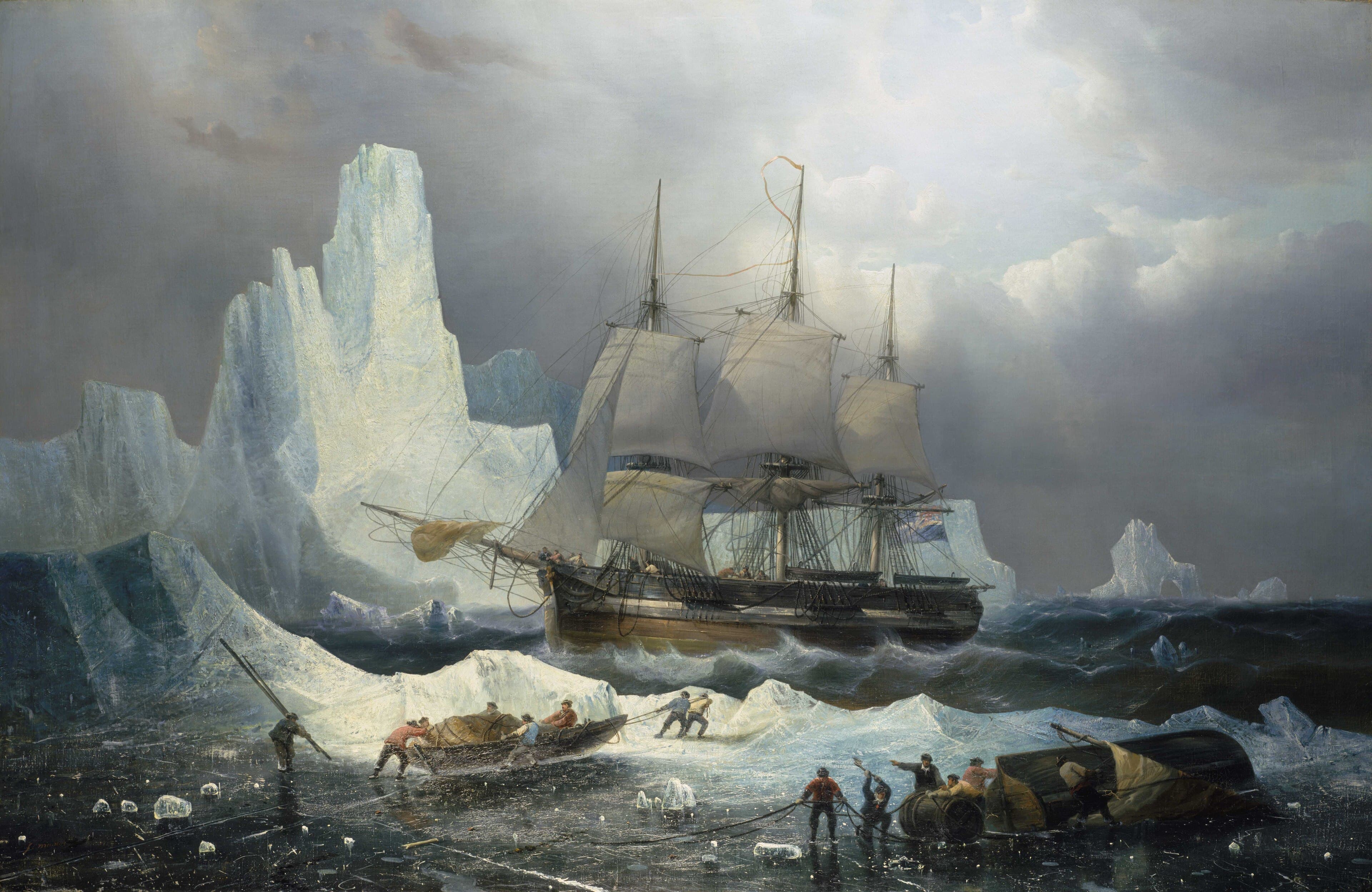
In the summer of 1845, two of the best-equipped ships the British Empire had ever sent to sea slipped out of the Thames and turned north. They carried 129 officers and men, three years of food, a library of more than a thousand books, and the quiet confidence of a nation that had decided the Arctic was a thing to be finished off. Their orders were simple on paper: sail into the maze of islands at the top of North America, find the last unmapped stretch of the Northwest Passage, and come home through it. Nobody aboard thought they would not return.
Not one of them did. The ships, HMS Erebus and HMS Terror, sailed into the ice west of Greenland and were never again seen by European eyes. What followed was the longest and most expensive search in the history of exploration, decades of expeditions crawling across the frozen archipelago, and a silence so total that for years people simply refused to accept the men were gone.
The strange thing, the thing that still sits uneasy at the center of this story, is that the answer was there all along. People who lived on that ice knew roughly what had happened almost from the start. They told anyone who asked. And for a century and a half, the people who had sent the ships decided those witnesses could not be trusted. Only when two wrecks were finally found, in 2014 and 2016, resting almost exactly where that testimony had placed them, did the scale of the mistake become clear.
This article contains affiliate links. If you buy through them we may earn a small commission at no extra cost to you.
What You'll Learn
- •Two Ships Built to Beat the Ice
- •The Last Time Anyone Saw Them
- •The Note Beneath the Cairn
- •What the Inuit Already Knew
- •The Novelist Who Called Them Liars
- •The Frozen Men of Beechey Island
- •The Lead Theory Comes Apart
- •Found Exactly Where They Said
- •A Captain Named by a Single Jaw
- •What Is Still Out There on the Ice
- •Frequently Asked Questions
Two Ships Built to Beat the Ice
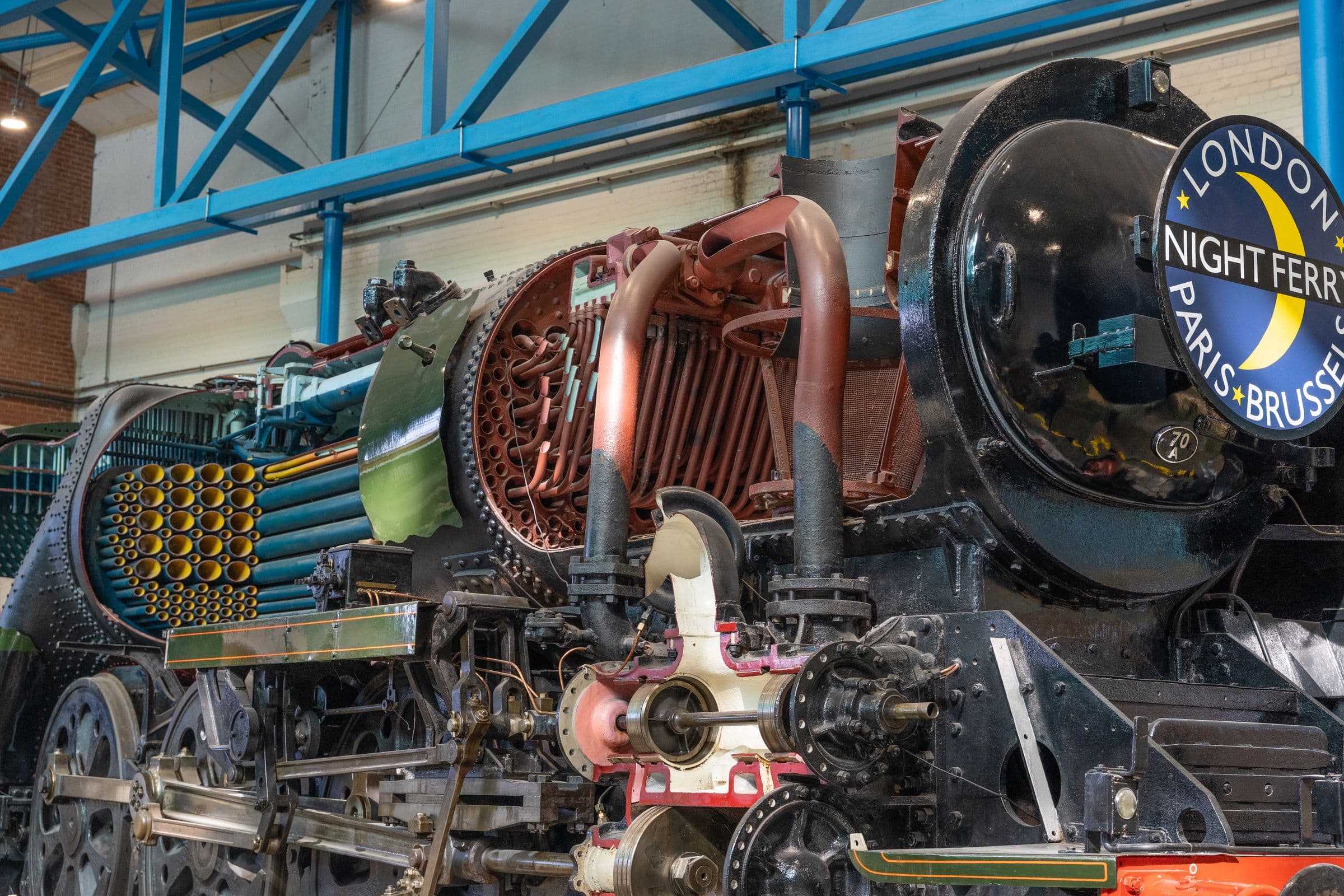
Erebus and Terror were not ordinary vessels. They had begun life as bomb ships, squat and heavily built to absorb the recoil of enormous mortars, which made them unusually strong in the hull. The Royal Navy reinforced them further for the Arctic, plating the bows with iron and cross-bracing the timbers. Then came the touch that made them feel, for 1845, almost futuristic: each ship was fitted with a steam engine lifted from a railway locomotive, driving a screw propeller that could be hauled up out of harm's way when the ice closed in. They could burn coal to push through calm or to force a lead in the pack. They had internal heating, a system for distilling fresh water, and provisions, much of it in the newly fashionable tinned cans, meant to last three years.
In command was Sir John Franklin, a 59-year-old veteran of earlier Arctic voyages who had very nearly died on one of them, reduced on an overland march in the 1820s to eating lichen and, by grim legend, the leather of his own boots. He was not the Admiralty's first choice, and some thought him too old. But he was respected, and his wife, Lady Jane Franklin, was a formidable force in London who wanted the command for him. His second, aboard Terror, was Captain Francis Crozier, an Irishman and one of the most experienced ice sailors alive, who had already been to both ends of the earth.
The expedition carried everything a Victorian naval mind thought it might need, down to the fine china and the cut-glass stemware and that thousand-book library. What it did not carry, and this is the quiet fault line running under the whole enterprise, was any real intention of learning how the people who actually lived in that country survived there.
The Last Time Anyone Saw Them
Erebus and Terror left Greenhithe on the Thames on 19 May 1845. They crossed to Greenland, where final supplies were loaded and five men were judged unfit and sent home, bringing the complement to the 129 who would sail on. From Disko Bay they pushed up into Baffin Bay, the long cold water between Greenland and the Canadian Arctic.
There, in late July 1845, two British whaling ships, the Prince of Wales and the Enterprise, met them. The expedition was moored to an iceberg, waiting for conditions to let them cross into Lancaster Sound, the doorway to the passage. The whalers reported the crews in high spirits. Then the ships cast off, sailed west into the sound, and the ice swallowed them.
That was it. The last confirmed European sighting of any member of the Franklin expedition. Everything else, every scrap of what came after, had to be reconstructed from objects left on the ground, from a single piece of paper, from bones, and from the testimony of people the Admiralty had no interest in believing.
The Note Beneath the Cairn
For years there was nothing. By 1848 the silence had grown alarming enough that search parties began going out, and Lady Franklin spent much of her own fortune and a great deal of public pressure keeping them going. Over the following decade more than thirty expeditions, British and American, combed the Arctic. As a strange and unintended consequence, they mapped most of the archipelago that Franklin had sailed in to chart. The search for the lost men did more for the map than the men themselves ever could have.
Only one written record from the expedition has ever been found, and it is a single sheet of a standard Admiralty form, the kind left in cairns to be collected by the next party through. It was recovered in May 1859 by Lieutenant William Hobson, part of an expedition led by Francis Leopold McClintock and funded by Lady Franklin, at a place on King William Island now called Victory Point.
The paper carries two messages written months apart, and the gap between them is one of the most chilling things in the whole story. The first, dated 28 May 1847, is cheerful and routine. It reports that the ships had wintered in the ice, that a party had been out, and it ends with two words: "All well."
Then, scrawled around the margins of the same sheet eleven months later, dated 25 April 1848 and signed by Crozier and by Commander James Fitzjames of Erebus, is the catastrophe. Franklin was dead, it reads, having died on 11 June 1847, only days after the cheerful note was written. By April 1848, nine officers and fifteen men had died, 24 in all. Erebus and Terror had been trapped in the ice since September 1846 and were now being abandoned. The 105 survivors, under Crozier, were going ashore. "And start," the note ends, "on tomorrow, 26th, for Back's Fish River."
Back's Fish River, now the Back River, drains south toward the Canadian mainland, hundreds of miles of frozen tundra away. A hundred and five weakened men were going to try to walk it. Almost nothing certain is known about what happened to any of them after they set that note down and started south. They simply walked off the edge of the record.
What the Inuit Already Knew
Except that they did not vanish without a trace, and people saw them go.
In 1854, a Hudson's Bay Company surveyor named John Rae was mapping the coast of the Boothia Peninsula. Rae was unusual among British explorers in that he had bothered to learn Arctic survival from the Inuit themselves, traveling light, building snow houses, living off the land. While surveying, he met Inuit who told him about a party of around forty white men they had encountered years earlier, dragging a boat and sledges south along the coast near the mouth of a large river. The men had been thin and struggling. Later, the Inuit said, bodies were found scattered along the route and on an island, dozens of them, dead of starvation and cold.
And there was a detail Rae reported honestly and at enormous cost to himself. From the state of the bodies and the contents of the kettles found with them, the Inuit told him, it was clear the last survivors had been driven to eat their dead. Rae wrote it down plainly: the men had been driven to "the last resource."
Rae bought relics from the Inuit to carry home as proof: silver forks and spoons engraved with officers' crests, a small plate marked with Franklin's name, a medal, pieces of watches and instruments. These were not vague rumors. They were the physical property of named officers, recovered from people who had seen where the men died. Rae sent his report to the Admiralty. It was, in every particular that could later be checked, correct.
The Novelist Who Called Them Liars
London did not thank him. When Rae's report leaked to the press in the autumn of 1854, the part that caught fire was the cannibalism, and the reaction was fury, not grief. The idea that British naval officers, Christian gentlemen, could have eaten one another was treated as an insult to the nation. And the easiest way to dismiss it was to dismiss the witnesses.
The most famous voice in that dismissal belonged to Charles Dickens. In his weekly journal Household Words, in December 1854, Dickens published essays defending the lost men and tearing into the reliability of Inuit testimony. He argued that the word of what he called a "savage" people counted for nothing, that they were as likely to have murdered the weakened sailors as helped them, and that no English seaman would ever have done such a thing. Lady Franklin, desperate to protect her husband's name, encouraged the campaign. It worked. Rae, who had delivered the truth, was frozen out of the honors that went to lesser men. He received the reward money for determining the expedition's fate, but never the knighthood, and he died with his reputation under a cloud for having believed the people who were there.
The point worth sitting with is not simply that the Victorians were cruel to Rae. It is that they had, in 1854, a substantially accurate account of what had happened to the Franklin expedition, delivered by eyewitnesses, backed by the engraved silver of the dead officers. And they chose, for reasons of pride and prejudice, not to believe it. The mystery did not stay open because the evidence was missing. It stayed open because the evidence was rejected.
The Frozen Men of Beechey Island
The hard science came much later, and it began with three graves.
On a bleak spit called Beechey Island, where the expedition had spent its first winter of 1845 to 1846, lie the bodies of three of Franklin's men: John Torrington, a 20-year-old stoker who died on New Year's Day 1846; John Hartnell; and the marine William Braine. In 1984 and 1986, a Canadian forensic team led by the anthropologist Owen Beattie of the University of Alberta exhumed them. The permafrost had kept the men almost perfectly, their faces recognizable, their eyes open, more than a century and a quarter after they died. The photographs that resulted are among the most haunting images in the history of exploration.
Beattie's analysis of the preserved tissue and bone turned up something striking: extremely high levels of lead. The theory that grew from it, laid out in Beattie and John Geiger's 1987 book Frozen in Time, pointed a finger at the expedition's own supplies. The tinned food, a cutting-edge technology in 1845, was sealed with lead solder, and the theory held that the men had been slowly poisoned by their own provisions, the lead clouding their judgment and weakening their bodies as scurvy and disease did the rest. For a generation, this became the standard explanation, the neat answer to how a well-supplied modern expedition could fall apart so completely. It was clean, it was scientific, and it had a villain.
The Lead Theory Comes Apart
It has not held up as cleanly as it once seemed to.
Over the past decade, researchers have gone back to the bones with sharper tools and come away doubting that lead was the killer. A 2014 reanalysis published in the journal Polar Record, by the researchers Keith Millar, Adrian Bowman, and William Battersby, argued that while the men's lead levels look alarming by modern standards, they were not unusual for nineteenth-century Britons, who absorbed lead from water pipes, pewter, paint, and glazes all their lives. Lead sickness, on this reading, may have afflicted some of the crew without being the thing that doomed the expedition.
Other teams went further. High-resolution studies of bone and nail samples suggested that the lead was spread through the men's bodies in a pattern that did not match a sudden, acute poisoning during the voyage, implying much of it was a lifelong burden carried from home rather than a dose delivered by the cans. One analysis argued the tinned food was not even the main source. The researcher Keith Carney proposed instead that the ships' own freshwater system, which melted and distilled water through lead-bearing apparatus, could have been the environmental source that mattered.
Strip the lead theory of its certainty and the real cause of death opens back up. Scurvy, the slow collapse that comes when the body runs out of vitamin C, was almost certainly at work in men hauling sledges for months on failing rations. Tuberculosis and pneumonia were present. Starvation and cold did the obvious. Some researchers have examined whether nutritional deficiencies crippled the men's immune systems. The honest summary, after forty years of forensic work, is that no single cause has been shown to account for the disaster. A well-equipped expedition of 129 trained men died, over two or three years, in a country where a far smaller number of Inuit were living through the same winters, and we still cannot say exactly why.
Found Exactly Where They Said
For a century and a half the ships themselves stayed lost, and with them any hope of a fuller answer. Then, within two years, both were found. The way they were found is the quiet vindication at the heart of this whole account.
In September 2014, a Parks Canada team located HMS Erebus in the shallow water of eastern Queen Maud Gulf, off the Adelaide Peninsula, well to the south of where the Victory Point note said the ships had been abandoned. That location was itself a mystery solved by the people the Victorians had dismissed. Inuit testimony, gathered over generations, had long spoken of a ship that drifted or was sailed south and settled in those waters, with a body found aboard. The wreck sat in an area Inuit hunters knew and had described. The ship had not simply been left to rot where the note said. Someone, it seems, had gone back aboard and taken her south before the end.
Two years later came the second, and the story of the Terror is almost too neat. In 2016, a Canadian Ranger from the hamlet of Gjoa Haven named Sammy Kogvik mentioned to a search team that years earlier, traveling by snowmobile, he had seen what looked like a mast sticking out of the sea ice in a bay on the south side of King William Island. The team's leader, Adrian Schimnowski of the Arctic Research Foundation, took the account seriously enough to divert the research vessel Martin Bergmann away from the area the official search plan favored and into that bay. On 3 September 2016, in Terror Bay, they found HMS Terror, sitting upright and almost perfectly preserved on the seabed, hatches closed, windows intact.
Towering over both discoveries is the figure of Louie Kamookak, an Inuit oral historian from Gjoa Haven who spent decades collecting the stories of elders and matching them against the written search records, insisting that the local knowledge pointed where the ships actually were. He did not live to see all of it play out, but both wrecks were found in the waters his people's memory had always described. The map that the Royal Navy had spent lives and fortunes drawing had been held, the whole time, in Inuit heads.
A Captain Named by a Single Jaw
The dead have begun to get their names back, one at a time, from DNA.
Scattered across King William Island and the little islands of Erebus Bay are the bones of men who fell on that long march south. For generations they were anonymous. Then, in 2021, a team including the archaeologist Douglas Stenton, Robert Park of the University of Waterloo, and Stephen Fratpietro of Lakehead University's ancient-DNA laboratory announced that they had put a name to one of them. Genetic material from the remains matched a living descendant, a great-great-great-grandson traced to South Africa, identifying the man as John Gregory, an engineer who had sailed aboard Erebus. He was the first member of the expedition ever identified by DNA.
In 2024 the same kind of work delivered a far heavier blow. The team identified a second man, and not a minor one: Captain James Fitzjames, the commander of Erebus, one of the two officers who had signed the Victory Point note. His DNA came from a tooth in a jawbone recovered on King William Island. And the jawbone carried cut marks, the unmistakable traces of a knife used to remove flesh. Fitzjames had been cannibalized by his own starving crewmates. A senior officer, a man who had written "the ships deserted" in his own hand, had ended as food for the men he commanded.
It was, among other things, the final physical confirmation of exactly what the Inuit had told John Rae in 1854 and what Dickens had spent his considerable talent denying. The roster of identified men has kept growing since, with further names recovered from the same sites and a genetic database now being built so that more of the dead can one day be matched to descendants who never knew where their ancestor lay. Each name is a small restoration. None of them answers the largest question.
What Is Still Out There on the Ice
Because the ships being found has not closed the case. If anything it has reopened it, and sharpened it.
HMS Terror sits intact on the floor of Terror Bay, her interior sealed. Divers working short Arctic seasons have begun to explore her, and somewhere inside that cold, dark, preserved hull there may be the thing the whole 170-year search has most wanted: written records. Logbooks. Letters. Franklin's own papers. Expeditions kept meticulous journals, and in a ship this well-sealed, in near-freezing water, paper and ink can survive. There is a real chance that the full story, in the men's own words, is still down there waiting to be read, if it can be recovered before the slow work of the sea destroys it.
And the oldest questions remain open. Why did the men abandon the ships in April 1848 and strike out on a doomed march, only for at least one ship to be moved south afterward? Who went back aboard, and why, and where were they trying to go? Where is Sir John Franklin's body? He died in June 1847 aboard a ship still trapped in the ice, and his grave has never been found. Why did 129 men with three years of supplies, steam heat, and a thousand books die in a place that had sustained human life for thousands of years?
The witnesses were telling the truth the entire time. The map was in their memory. The ships were where they said. And still, standing over two wrecks and a handful of named bones, no one can fully account for what happened to the men of the Erebus and the Terror after they walked off that gray island into the snow. Like Amelia Earhart and Percy Fawcett, they left a trail that gets clearer the closer you look and never quite reaches an end.
Frequently Asked Questions
What was the Franklin Expedition trying to do? It was sent in 1845 to complete the Northwest Passage, the sea route through the Canadian Arctic that would in theory let ships pass from the Atlantic to the Pacific across the top of North America. Sir John Franklin, with HMS Erebus and HMS Terror and 129 men, was to sail into the archipelago, chart the last unmapped stretch, and come out the other side. The ships entered the ice and never emerged, and the search that followed ended up mapping most of the Arctic the expedition had been sent to explore.
Did the Franklin crew really resort to cannibalism? Yes, and it is no longer in doubt. The Inuit told John Rae as much in 1854, describing bodies and kettles that showed the last survivors had eaten their dead. Victorian London refused to believe it. But cut marks found on the bones of the crew, including on the jawbone of Captain James Fitzjames identified by DNA in 2024, confirm that starving men did exactly what the Inuit said they had done. The witnesses were right, and were disbelieved for a hundred and fifty years.
Have HMS Erebus and HMS Terror been found? Both have. Erebus was located in 2014 in Queen Maud Gulf off the Adelaide Peninsula, and Terror in 2016 in Terror Bay off King William Island, the latter found after a local Inuit Ranger, Sammy Kogvik, reported seeing a mast in the ice years earlier. Both wrecks lay in waters that Inuit oral history had long described. Terror in particular sits almost perfectly preserved, and divers are only beginning to explore what may still be sealed inside her.
What actually killed the men? That is the part still argued over. For decades the leading theory was lead poisoning from the expedition's tinned food, based on high lead levels found in three preserved bodies on Beechey Island in the 1980s. Recent reanalyses have cast serious doubt on lead as the decisive cause, suggesting the men's lead burden may have come largely from home. Scurvy, starvation, tuberculosis, pneumonia, and the sheer brutality of the march all played a part. No single explanation has been shown to account for the whole disaster.
Why has Franklin's body never been found? The one written record recovered, the note at Victory Point, says Franklin died on 11 June 1847 while the ships were still trapped in the ice, nearly a year before the survivors abandoned them. What his crew did with his body, whether he was buried on the ice, on land, or left aboard a ship that later sank, is unknown. Despite the discovery of both wrecks and a growing number of identified crewmen, the grave of the expedition's commander remains somewhere out on King William Island or beneath the water around it, unfound.
Further Reading
For readers who want to stay with this one, a few genuinely good books. Owen Beattie and John Geiger's Frozen in Time is the firsthand account of the Beechey Island exhumations that launched the lead theory, and it remains gripping even as the science around it has shifted. Ken McGoogan's Fatal Passage tells the story of John Rae, the explorer who learned the truth from the Inuit and was punished for it, and does more than any other book to restore his name. And Paul Watson's Ice Ghosts carries the story through to the modern discoveries of the wrecks, with real attention to the Inuit knowledge that found them. For the ship itself, Michael Palin's Erebus: The Story of a Ship follows one of the two vessels from its launch to the seabed.
Want to explore more mysteries?
We've got plenty more rabbit holes to go down.