Michael Rockefeller: The Heir Who Vanished Off New Guinea
In 1961 Michael Rockefeller vanished off the swampy coast of New Guinea. The verdict was drowning, but the Asmat coast keeps a darker account.
The last thing anyone saw of Michael Rockefeller was a young man tying two empty gasoline cans to his body and pushing off from an overturned boat into the Arafura Sea. It was the morning of November 19, 1961. He was twenty-three years old, the son of the governor of New York, heir to one of the largest fortunes on earth, and he was about eight to ten miles off a coastline made of mud and mangrove where almost no one from his world had ever set foot. His companion, a Dutch anthropologist named René Wassing, begged him to stay with the boat. Michael looked at the low green line of the shore and said, by Wassing's account, "I think I can make it." Then he slipped into the water and started to swim.
He was a strong swimmer. The current was with the tide. The distance was long but not impossible for a fit young man with flotation, and Michael had both. And yet from the second he left that hull, he passed out of the record entirely. No body. No cans. No scrap of clothing. The largest search operation the territory had ever mounted, funded by a family that could fund anything, turned up nothing at all. The official file says he drowned. The coast he was swimming toward has been telling a different story ever since.
This article contains affiliate links. If you buy through them we may earn a small commission at no extra cost to you.
What You'll Learn
- •A Boy, a Boat, and Two Empty Cans
- •The Rockefeller Who Wanted the Real Thing
- •The Art He Came to Collect
- •The Coast That Swallowed Him
- •The Official Word: Drowned
- •What the Water Does Not Explain
- •Otsjanep and the Debt of 1958
- •The Report That Was Set Aside
- •Why the File Will Not Close
- •Frequently Asked Questions
A Boy, a Boat, and Two Empty Cans
To understand how a Rockefeller ended up alone in the open sea off Dutch New Guinea, you have to picture the boat. It was not a boat so much as an improvisation: two long dugout canoes lashed together with a wooden platform between them, driven by a small outboard motor. On board were Michael, René Wassing, and two young Asmat men serving as guides, and behind them, piled on the platform, the reason for the whole trip: carvings, poles, and shields collected from villages up the coast.
They were crossing the mouth of a wide river the day the sea turned on them. Where the river current met the incoming tide, the water stood up in a chop that the overloaded catamaran could not take. Waves came over the platform. The outboard drowned and quit. The twin hulls swung broadside, filled, and rolled, and the four men found themselves clinging to the underside of their own boat as it began to drift away from land on the outgoing tide.
The two Asmat guides made a decision that probably saved their lives: they slipped into the water and swam for shore to bring help. They made it. Michael and Wassing stayed with the hull, expecting rescue by morning. Morning came, and the shore was farther away, not closer. The boat had drifted through the night. That was when Michael made his own decision, tied on the gas cans, and left. Wassing stayed. Late that afternoon a search plane spotted the drifting wreck and a boat pulled Wassing off it, exhausted but alive, roughly twenty-two miles from where they had capsized. Michael, by then, had been in the water for hours and was gone.
The Rockefeller Who Wanted the Real Thing
Michael Clark Rockefeller was born on May 18, 1938, the youngest of Nelson Rockefeller's five children and a fraternal twin to his sister Mary. He grew up inside a name that opened every door in America, and by every account he spent his short life trying to walk through the ones that led away from it. He went to Harvard, graduated in 1960, did a stretch in the Army, and then did the thing that fascinated him more than banking or politics ever could: he went to the far edge of the map.
In 1961 he joined the Harvard Peabody Expedition to the highlands of Netherlands New Guinea, a research trip that produced the landmark ethnographic film "Dead Birds," a documentary about ritual warfare among the Dani people of the Baliem Valley. Michael worked as the expedition's sound recordist and still photographer, hauling a tape machine and cameras through a world of stone tools and spears. Something in it took hold of him. When the highland work was done, he did not go home. He turned south and west, to the coast, to a swampy region called the Asmat, because the Asmat made the most extraordinary art he had ever seen and he had decided he was going to save it.
The Art He Came to Collect
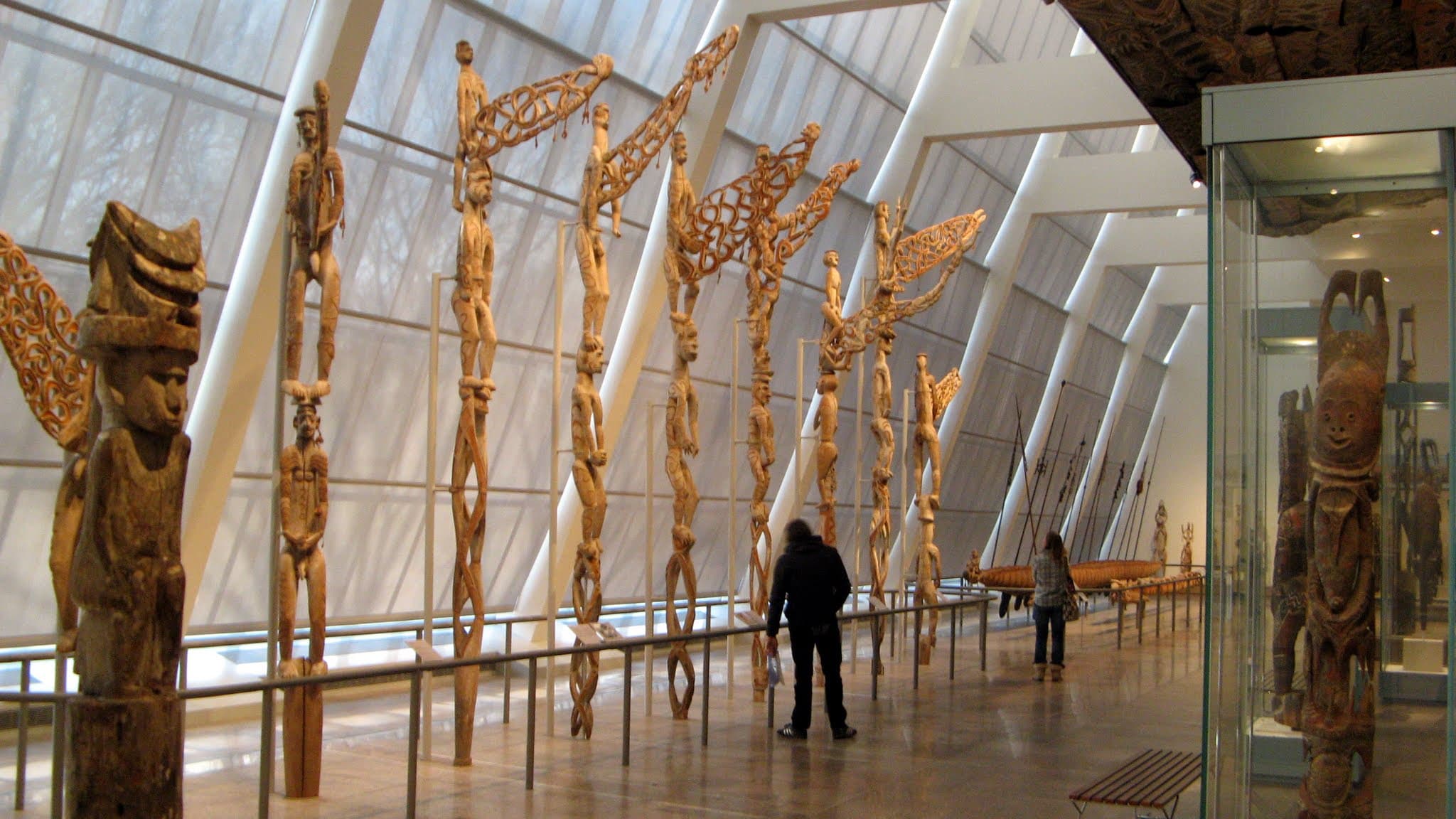
The Asmat are woodcarvers of a kind the world has few equals for. Their masterpieces are bisj poles, towering ancestor poles cut from a single mangrove trunk with the buttress root left on and carved upward into a stack of human figures, an openwork prow of dead relatives reaching toward the sky. The poles are not decoration. They are commissioned when a member of the community has been killed, and they carry an obligation: the dead are owed a response, and the pole is part of settling that account. To an outsider they are among the most powerful objects ever made by human hands. To the Asmat of 1961 they were a live wire running straight into a cycle of death and reciprocity that the arrival of a Dutch colonial administration had interrupted but not ended.
Michael understood the aesthetic value completely and the second meaning barely at all. He moved village to village by boat, trading steel axes and tobacco and cloth for carvings, filling his catalog, photographing everything. He was collecting for the Museum of Primitive Art in New York, an institution his father had founded, and the pieces he gathered on that final trip now form the heart of the Michael C. Rockefeller Wing at the Metropolitan Museum of Art. He was, in the most literal sense, buying the sculpted record of Asmat killings and shipping it to Manhattan. He did this with enthusiasm and good faith and almost no grasp of what the objects had cost the people who carved them.
The Coast That Swallowed Him
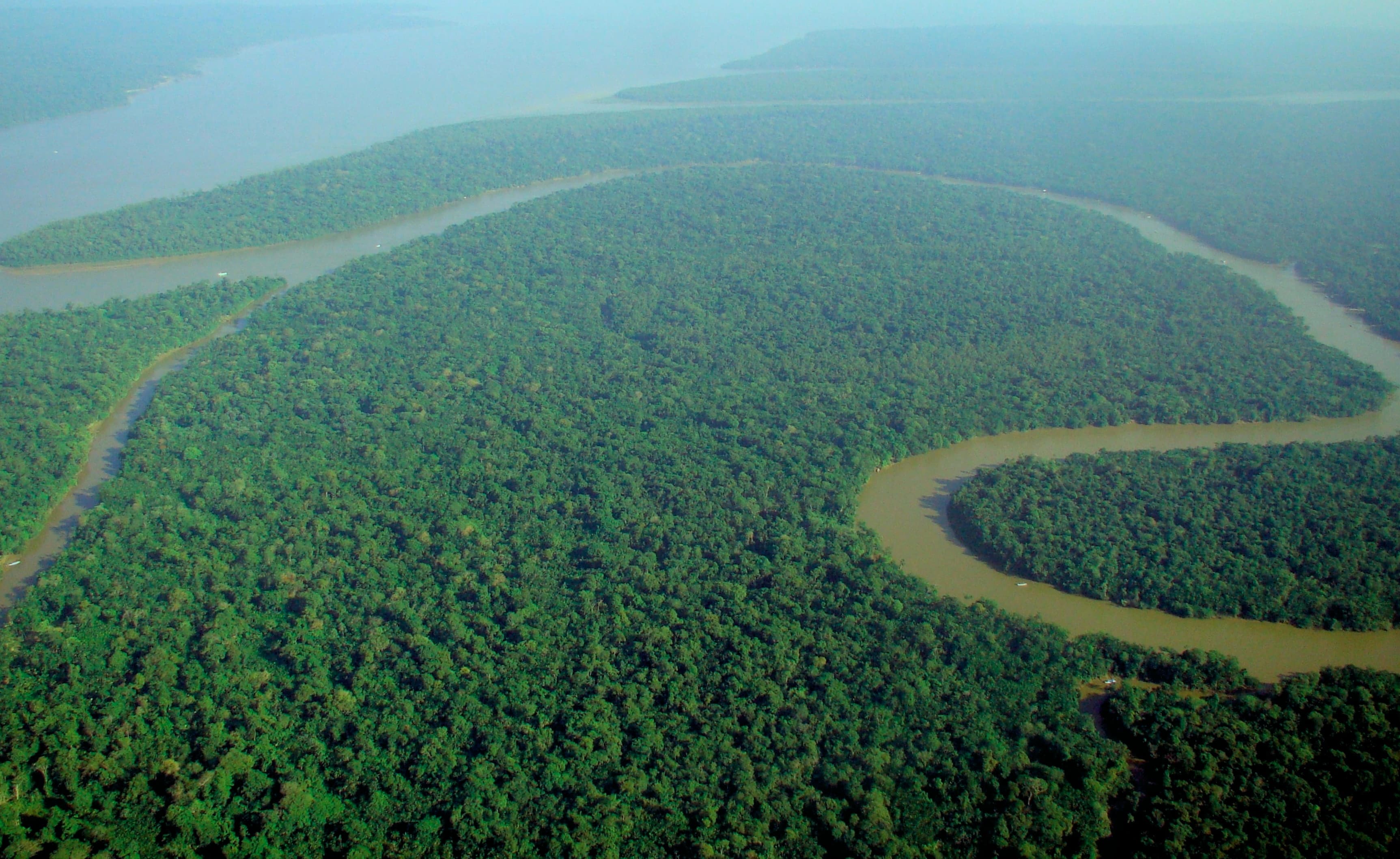
The Asmat coast is one of the strangest environments on the planet to lose a man in. There is no beach in the ordinary sense. The land is a vast tidal swamp where the rivers, the sea, and the mangroves blur into one another, where the tide can run for miles inland and the water is the color of strong tea. Saltwater crocodiles patrol the river mouths. Sharks work the shallows. The mud can hold a body or take a boat apart, and the whole shifting margin is laced with channels that a stranger cannot read.
This is the country Michael was trying to swim across. The estimates of how far he had to go vary from a few miles to more than ten, because no one is certain exactly where the boat was when he left it or how the currents moved him afterward. What is certain is that he was heading for a specific stretch of shore, and that the villages nearest that stretch were not neutral ground. The most significant of them was a place called Otsjanep, and Otsjanep had a reason to remember white men in boats.
The Official Word: Drowned
The search that followed was enormous and, in its way, sincere. The Dutch colonial government threw ships, aircraft, and thousands of local people into a sweep of the coast and the sea. Nelson Rockefeller boarded a plane in New York and flew to the other side of the world, bringing Michael's twin sister Mary with him, and stood on that swamp coast waiting for word. Missionaries, patrol officers, and villagers combed the shoreline for days. Nothing surfaced. Not the body, not the flotation cans, not a shred of the khaki clothing he had been wearing.
After the family finally went home, the verdict settled into place by default: Michael Rockefeller had drowned, or had been taken by a shark or a crocodile in the water, somewhere in that long swim. He was declared legally dead in 1964. It is a clean, sad, self-contained ending, and it has one great virtue as an explanation. It requires nothing further to be looked into. It is also the version that a colonial government about to hand the entire territory over to Indonesia had every reason to prefer.
What the Water Does Not Explain
The drowning verdict rests on a young man losing a fight with the sea, and the trouble is that Michael was equipped to win it. He was a strong swimmer in good condition. He had two empty cans strapped to him for buoyancy, which is exactly what you would want. The tide, by most reconstructions, was carrying water toward the land he was aiming for, not away from it. Wassing, who stayed with the boat and did nothing but hang on, survived. The man who took the more active gamble and struck out for shore is the one who vanished without a trace.
And it is the tracelessness that no one has ever fully accounted for. Drowned bodies in that region do sometimes wash up. Debris comes ashore. Yet a search with effectively unlimited money and total government cooperation produced not one physical object connected to Michael Rockefeller. The sea kept everything, or the sea never had him. Those who lived along that coast and were asked, then and for decades afterward, did not describe a drowning. They described an arrival. They said an exhausted white man dragged himself out of the water near the villages at the river mouth, and that what happened next was not an accident.
Otsjanep and the Debt of 1958
To make sense of the coast's version, you have to go back three years before Michael ever set foot in the swamp. In 1958 a Dutch colonial patrol reached Otsjanep, and something went badly wrong. The details are contested and the accounts differ, but the core of the episode is not in dispute: a Dutch patrol officer opened fire on the villagers, and several of Otsjanep's leading men, its "big men," were shot dead. In the ledger of the outside world, this was an unfortunate incident on a punitive patrol. In the ledger of the Asmat, it was something else entirely. It was a debt.
Asmat life ran on reciprocity. A death demanded a death in answer. Headhunting was not random savagery; it was the mechanism by which the cosmic books were balanced, by which a village that had lost members reclaimed spiritual standing. When the Dutch killed the men of Otsjanep in 1958 and then, being the colonial power, could not themselves be answered, they left a debt open and unpaid. The village carried it. And then, one morning in November 1961, a white man came crawling out of the sea alone and defenseless within reach of exactly the community that was owed a white man's death. To the men of Otsjanep, according to the testimony later gathered from the coast, this was not a tragedy. It was the account being settled.
The Report That Was Set Aside
For years this remained coastal rumor, the kind of thing that circulated among missionaries and traders and got dismissed as the lurid gossip that always attaches itself to a rich man's death. Then people started going back to look. In 1969 the writer Milt Machlin traveled to the region and dug into the case, publishing his findings in "The Search for Michael Rockefeller." Decades later the journalist Carl Hoffman went further than anyone, living in the Asmat, learning the setting, and, crucially, tracing the paper.
What Hoffman documented in his 2014 book "Savage Harvest" is the part that turns rumor into something colder. He found that a Dutch missionary stationed in the area had, within months of the disappearance, gathered detailed local accounts naming Otsjanep men and describing how Rockefeller had come ashore and been killed. That information reached the Dutch authorities. And it went nowhere. The territory was in the middle of a fraught political handover, the last thing the Netherlands wanted on the front pages was a story about cannibalism and a murdered Rockefeller on their watch, and the drowning verdict was already tidy and public. The material that pointed the other way was not pursued. It sat, effectively buried, while the official version hardened into fact.
Hoffman's own conclusion, drawn from the oral testimony he collected and the documents he unearthed, is that Michael reached the shore and was killed near Otsjanep. He does not claim to have found the smoking proof, because there is none to find. What he found is that the story the coast has told for sixty years is consistent, specific, rooted in a real and documented act of colonial violence, and was known to the people whose job was to investigate.
Why the File Will Not Close
Here is the honest shape of it. There is no body. There is no confession that ever stood up in a court, because there was never a court. There is no photograph, no relic, no bone that anyone has produced and proven. The Rockefeller family accepted the drowning finding and, understandably, has never wanted the alternative aired. The Dutch records are thin where they matter most. The men who could have told the whole thing firsthand are long dead, and the accounts that survive were gathered years after the fact, in translation, from a culture whose relationship to the outside world gives it every reason to be careful about what it says to visitors with tape recorders.
So both endings float, and neither sinks. Maybe a strong swimmer with two flotation cans simply lost to a coast that eats everything, and the total absence of any physical trace is just the cruelty of that particular sea. Or maybe he made the shore, as the coast has always said, and swam directly into a debt that had been waiting three years for someone exactly like him. What is not really in dispute anymore is that the tidy official story was chosen partly because it was convenient, and that information cutting against it existed and was left alone. Michael Rockefeller went into the water certain he could make it. That certainty is the last fact anyone can vouch for. Everything after it belongs to the swamp.
Frequently Asked Questions
What is the official explanation for Michael Rockefeller's disappearance?
The official finding is that he drowned during his attempt to swim to shore on November 19, 1961, possibly taken by a shark or crocodile, and he was declared legally dead in 1964. It is a self-contained explanation that closes the case cleanly. It also happens to be the version a colonial government in the middle of a political handover had every reason to prefer, and it has never accounted for why a search with unlimited resources recovered nothing at all.
Was Michael Rockefeller really killed and eaten by the Asmat?
That is what people along the Asmat coast have said, in specific and consistent detail, for more than sixty years, and it is the conclusion the journalist Carl Hoffman reached after living in the region and tracing the documents. It fits an Asmat logic of reciprocal killing and a real, documented act of Dutch violence against the village of Otsjanep in 1958. What is missing is physical proof, and in that swamp physical proof of anything is the one thing almost impossible to hold.
Why would the village of Otsjanep have wanted to kill him?
Because in 1958 a Dutch patrol had shot and killed several of Otsjanep's leading men, and in Asmat belief a death demands a death in answer. The colonial power itself could not be struck back at, which left the account open. When a lone, defenseless white man came out of the sea near that same village three years later, the coast's account holds that he was seen not as a person in distress but as the balancing of a debt.
Did the Dutch government know more than it admitted?
A Dutch missionary gathered local accounts naming Otsjanep men within months of the disappearance, and that information reached the authorities, who did not pursue it. Carl Hoffman documented this trail in his book "Savage Harvest." Whether it amounts to a cover-up or simply a government declining to chase an unprovable and deeply inconvenient story, the effect was the same: the material pointing away from drowning was set aside while the drowning verdict became the record.
Where is the art Michael Rockefeller collected now?
The carvings, poles, and shields he gathered on the Asmat coast, including the objects from his final trip, form the core of the Michael C. Rockefeller Wing at the Metropolitan Museum of Art in New York. Every visitor who stands before those bisj poles is looking at the sculpted record of Asmat deaths, collected by a young man who did not fully understand what they meant, on the trip that ended his life.
Sitting With It
Michael Rockefeller had almost everything a person can have, and he spent his last months chasing the one thing the fortune could not buy him, which was contact with a world entirely outside his own. He got it, in the end, more completely than he ever intended. He crossed a line that runs somewhere out in that brown water between the drifting boat and the mangroves, and on the far side of it the story stops being his and becomes the coast's. The Metropolitan hangs his poles in a bright, hushed gallery on the other side of the planet, and they say nothing about where he is. The people who might know have kept their own counsel for sixty years. And the swamp, which took either his body or his life, has never once given a piece of him back.
Further Reading
If this case has hold of you now, three books go deep into the man, the coast, and the culture at the center of it:
- •Savage Harvest: A Tale of Cannibals, Colonialism, and Michael Rockefeller's Tragic Quest for Primitive Art by Carl Hoffman. Find it on Amazon. The most thorough modern investigation, built on living in the Asmat and following the documents everyone else let sit.
- •The Search for Michael Rockefeller by Milt Machlin. Find it on Amazon. The earlier account by a writer who went to the region himself while witnesses were still alive.
- •Where the Spirits Dwell: An Odyssey in the Coral Sea by Tobias Schneebaum. Find it on Amazon. A firsthand immersion in Asmat life by an artist who lived among them and could read the world Michael walked into blind.
Want to explore more mysteries?
We've got plenty more rabbit holes to go down.