Percy Fawcett: The Explorer Who Vanished Hunting a Lost City
In 1925 Colonel Percy Fawcett walked into the Amazon to find a lost city he called Z, and was never seen again. Decades later, archaeology found the city.
The last anyone reliably heard from Colonel Percy Harrison Fawcett came on a scrap of paper carried out of the jungle by native runners. It was dated May 29, 1925, and headed with the name he had given to a clearing where a pack animal had once died: Dead Horse Camp. He was somewhere in the Mato Grosso, in the tangle of green between the headwaters of the Xingu and the country no map had properly touched. With him were two young men: his own son Jack, twenty-one years old and built like an athlete, and Jack's boyhood friend Raleigh Rimell. Ahead of them lay the place Fawcett had spent twenty years and most of his reputation chasing, a ruined stone city he would not name for anyone. He called it only Z.
In that final letter to his wife Nina, he was, as always, certain. He told her not to worry. A line from his last dispatches has been quoted ever since: "You need have no fear of any failure." Then the three men shouldered their loads, sent the runners back, and walked east into the forest. No one who could be believed ever saw them again. What followed was not one disappearance but a slow chain reaction of them, as expedition after expedition marched in after Fawcett and some never marched out. And the strangest part of the whole affair is not how the story ends. It is that the lost city he died looking for turned out to be real.
This article contains affiliate links. If you buy through them we may earn a small commission at no extra cost to you.
What You'll Learn
- •The Man Who Believed in a City
- •Manuscript 1753 and the Legend of Z
- •The 1925 Expedition
- •The Last Dispatch from Dead Horse Camp
- •The Order He Left Behind
- •The Rescuers Who Followed
- •The Bones the Kalapalo Kept
- •Three Ways to Vanish
- •What They Found in the Xingu
- •Why Fawcett Still Pulls People In
- •Frequently Asked Questions
The Man Who Believed in a City
Fawcett was not a crank who wandered into the jungle on a rumor. He was a decorated officer of the Royal Artillery and one of the finest surveyors the Royal Geographical Society ever put in the field. Born in Torquay, Devon, in 1867, trained at Woolwich, he learned to fix a position on the earth with a theodolite and a chronometer to a degree of accuracy that made him invaluable. In 1906 the RGS and the Bolivian government sent him into the Amazon basin to map the disputed border between Bolivia and Brazil, a job that at the height of the rubber boom was worth killing over. He would return to that country again and again over the next eighteen years.
What those expeditions did to him is the interesting part. Fawcett went into the Amazon as a professional cartographer and came out convinced that the forest was hiding something enormous. He survived rapids, disease, starvation rations, and encounters with peoples no European had contacted. He was, by every account, physically extraordinary, able to march on when stronger men collapsed. Somewhere along the rivers he stopped seeing only wilderness. He began to see the ruins of an old world underneath it, the remnants of a civilization the textbooks of his day insisted had never existed, because everyone knew the Amazon was too poor and too hostile to have ever held one.
Manuscript 1753 and the Legend of Z
The seed of the obsession has a paper trail, and it is a genuinely strange document. In the National Library of Rio de Janeiro sits an eighteenth-century manuscript, catalogued as Document 512 and known to Fawcett as Manuscript 1753. It is the report of a band of Portuguese bandeirantes, backwoods fortune hunters, who claimed that in the year 1753 they stumbled on the ruins of a dead city deep in the interior of Brazil. They described stone arches, a paved plaza, a broad street, fallen columns, and carved inscriptions in a script none of them recognized. Then they left it, and the exact location was lost.
Historians still argue over what that manuscript actually records. However you read it, it lodged in Fawcett's mind and would not leave. He fused it with the indigenous accounts he had gathered himself, with fragments of legend, and with his own conviction, and out of all of it he built the idea of a specific lost city he could go and find. He gave it a placeholder letter so that no rival could steal the target from his notes. Z was partly a real archaeological hypothesis and partly, by the end, an article of faith. Fawcett had absorbed some of the mystical currents of his era, and he came to speak of Z not just as ruins but as the surviving heart of an ancient, advanced people. To his backers it was a discovery waiting to happen. To Fawcett, increasingly, it was a destiny.
The 1925 Expedition
By 1925 he had been trying to reach it, in one form or another, for years, and the world had almost run out of patience for him. This time he raised the money by selling the story before it happened. A consortium of backers that included the North American Newspaper Alliance bought the rights to his dispatches, so that readers on two continents could follow the hunt for the lost city in near real time. It made Fawcett, at fifty-seven, a kind of live serial, an aging explorer marching toward glory with the presses waiting.
He chose to travel light and travel small, and he chose his companions for loyalty rather than experience. Jack, his elder son, had trained for the trip for years, learning languages and toughening his body for exactly this. Raleigh Rimell came along as Jack's closest friend. Fawcett believed a tiny party of trusted men could slip through country that would swallow a large, noisy expedition, and there was hard logic in it: big columns needed more food, made more enemies, and moved too slowly. Whether three men were enough to survive what he was walking into is a question the jungle would answer for him.
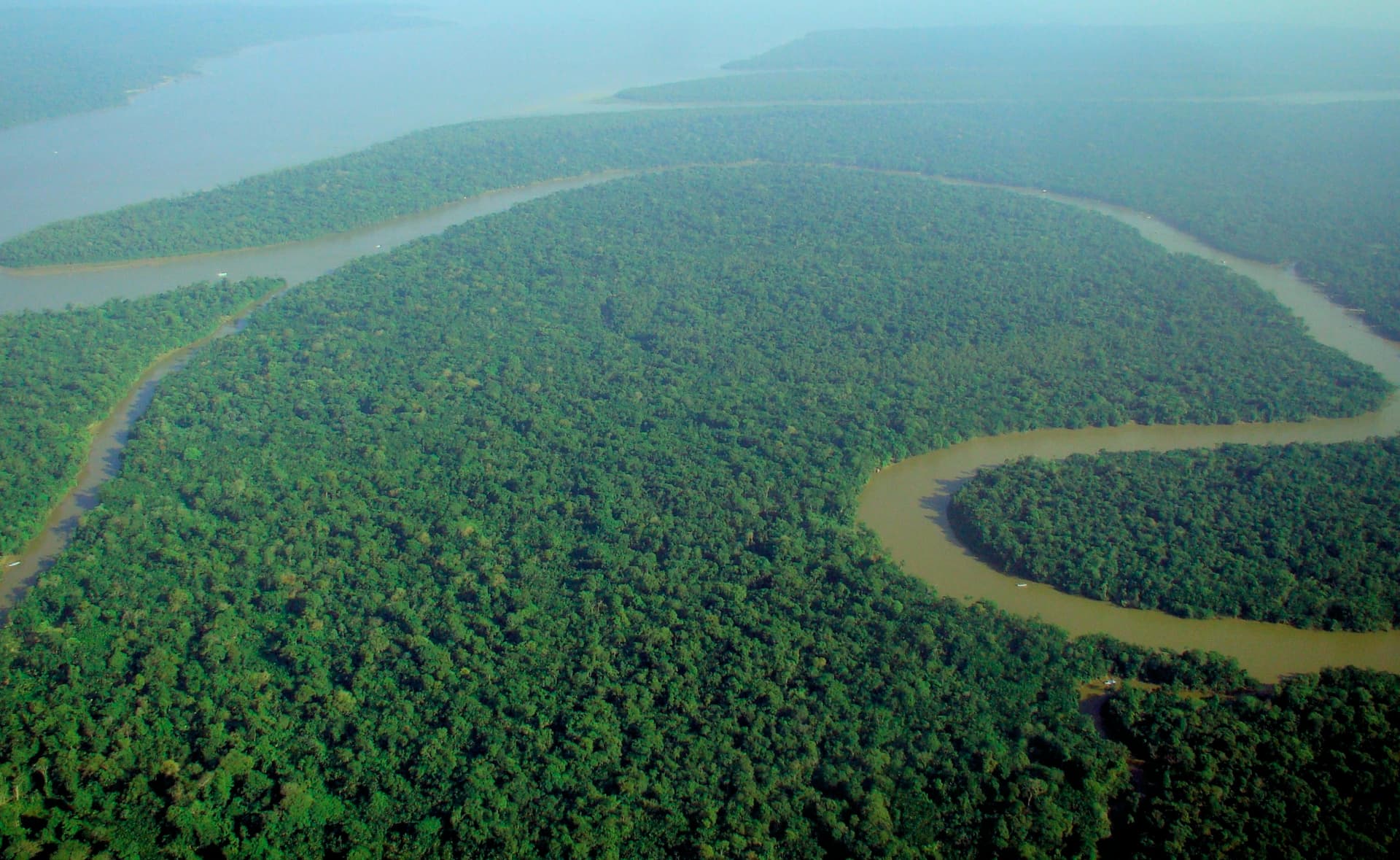
They gathered their gear and their pack animals and set out in April 1925 from Cuiabá, the frontier town at the edge of the Mato Grosso. From there the road ran out and the forest began. The plan, as far as anyone outside the party understood it, was to strike northeast toward the upper Xingu, cross into unmapped ground, and find the city. Fawcett kept the real route deliberately vague. He did not want to be followed, and he did not want to be rescued.
The Last Dispatch from Dead Horse Camp
For a few weeks the dispatches kept coming, carried back down the trail by indigenous porters he then sent home so that the three white men could go on alone. The tone of them was buoyant. He wrote about the country, the insects, the heat, his confidence. And on May 29, 1925, from the clearing he called Dead Horse Camp, at a position he gave as roughly eleven and a half degrees south of the equator, he wrote the letters that turned out to be the last.
The final one to Nina carried that famous reassurance, that she need have no fear of any failure. He said the going was hard but that they were well and pressing on. He expected to be out of contact for a long stretch as they entered the unknown, and he had warned everyone of exactly that in advance, which is part of why no alarm was raised for so long. Silence had been planned. The runners turned back toward Cuiabá with the mail. Fawcett, Jack, and Raleigh faced east. And then the planned silence never ended. Weeks became months. Months became a year. The dispatches that the newspapers had paid for stopped arriving, and the serial had no final installment.
The Order He Left Behind
There is a detail here that shapes everything that came after, and it is easy to miss. Fawcett had left explicit instructions, repeated to his family and his backers, that if he failed to return, no one was to come looking for him. He knew better than anyone what the country would do to a search party. He believed that any rescue expedition would only add its own bodies to the forest without ever finding his, and that the humane thing, the sane thing, was to let the silence stand and assume he had chosen his own end.
The world could not do it. A man who had sold his adventure to the newspapers of two continents could not be allowed to vanish off the last page. The public wanted a rescue. The papers wanted a story. And so, against the dead man's own stated wishes, the expeditions began to form up and head into the Mato Grosso to find Colonel Fawcett, or his bones, or his city. His order not to follow him became one of the most thoroughly ignored instructions in the history of exploration, and the cost of ignoring it was exactly what he had predicted.
The Rescuers Who Followed
The first major attempt came in 1928, when the explorer George Miller Dyott led a well-equipped party, backed by the same newspaper alliance, up the rivers toward the Xingu. Dyott reached indigenous villages where he heard secondhand accounts of three white men who had passed through and, he was told, been killed. He came home convinced Fawcett was dead, though he had no bodies and no proof, and much of what he reported was contested almost as soon as he said it.
Others kept going. In 1932 a party that included the young Peter Fleming, brother of the man who would later create James Bond, went in after the trail and came out with a sharp, funny, disillusioned book about how little any of them had actually found. Fleming's account is one of the most honest things written about the whole business: a rescue expedition that gradually realized it had no idea where it was going and less idea of what it was looking for. Other searchers were not so lucky. Amateurs, adventurers, and glory hunters vanished in their turn. Albert de Winton, an actor turned explorer, went in to find Fawcett in the 1930s and was himself never seen again. By some counts, over the decades, as many as a hundred would-be rescuers died trying to solve the disappearance of a man who had begged them not to try. Fawcett had been right about that much. The forest took the searchers exactly as he said it would.
The Bones the Kalapalo Kept
The most concrete lead came in 1951. Orlando Villas-Bôas, one of the celebrated brothers who spent their lives defending Brazil's indigenous peoples, announced that the Kalapalo people of the Xingu had confessed that their ancestors killed Fawcett, and he produced a set of bones said to be the colonel's. For a moment it looked like an ending. Then the bones were examined. The teeth did not match Fawcett's dental records. The skeleton was reportedly too short to be the tall Englishman. Whatever Villas-Bôas had recovered, forensic analysis could not make it into Percy Fawcett.
But the Kalapalo had a story, and it did not go away. In their oral history, three white strangers came through their territory heading east. The Kalapalo, who knew the country, warned them not to go that way, into the land of peoples who would not welcome them. The strangers went anyway. For a few days the Kalapalo could see the smoke of the travelers' cooking fires rising in the east each evening. On the fifth day, the smoke did not rise. It never rose again. It is a haunting account precisely because it explains nothing and fits everything: the smoke that stopped could mean an ambush, or a fever, or a river, or a decision. The Kalapalo saw only that it ended.
Three Ways to Vanish
Strip the legend away and three broad possibilities remain, and none of them can be closed. The first is that the party was killed by an indigenous group whose land they entered uninvited, which matches the Kalapalo account of the fires going dark and the warnings unheeded. Yet no remains that can be tied to the three men have ever been confirmed, and the one set of bones offered up failed the test.
The second is that they died of what the jungle kills quietly: infection, starvation, fever, exhaustion. Raleigh Rimell was reportedly struggling with an infected leg before the last camp, and a small party with one injured man moves slowly and grows weak. A death like that leaves no drama and no monument, only three bodies the forest folds back into itself within a season. The third possibility is the one that refuses to die in the retelling: that Fawcett was not killed at all. Rumors of a white man living among remote tribes surfaced for decades. Some suggested he had found something and stayed, or lost his mind and stayed, or meant to disappear all along and used the lost city as his cover story. A pale child called the "White God of the Xingu" drew explorers deep into the interior in the belief he might be Fawcett's grandson, until he was found to be an albino boy of the local people. Every version of the vanishing-on-purpose theory has been chased down and none has ever produced Colonel Fawcett. It survives anyway, because a man who spent his life insisting on a hidden city is exactly the sort of man you can imagine choosing to become hidden himself.
What They Found in the Xingu
For most of the twentieth century, the polite verdict on Fawcett was that he had been a brave man ruined by a fantasy. There was no ancient city in the Amazon. The rainforest could not have supported one. The soil was too thin, the environment too punishing, and the scattered peoples living there were all it had ever held. Z was a mirage, and Fawcett had marched three men to their deaths chasing it.
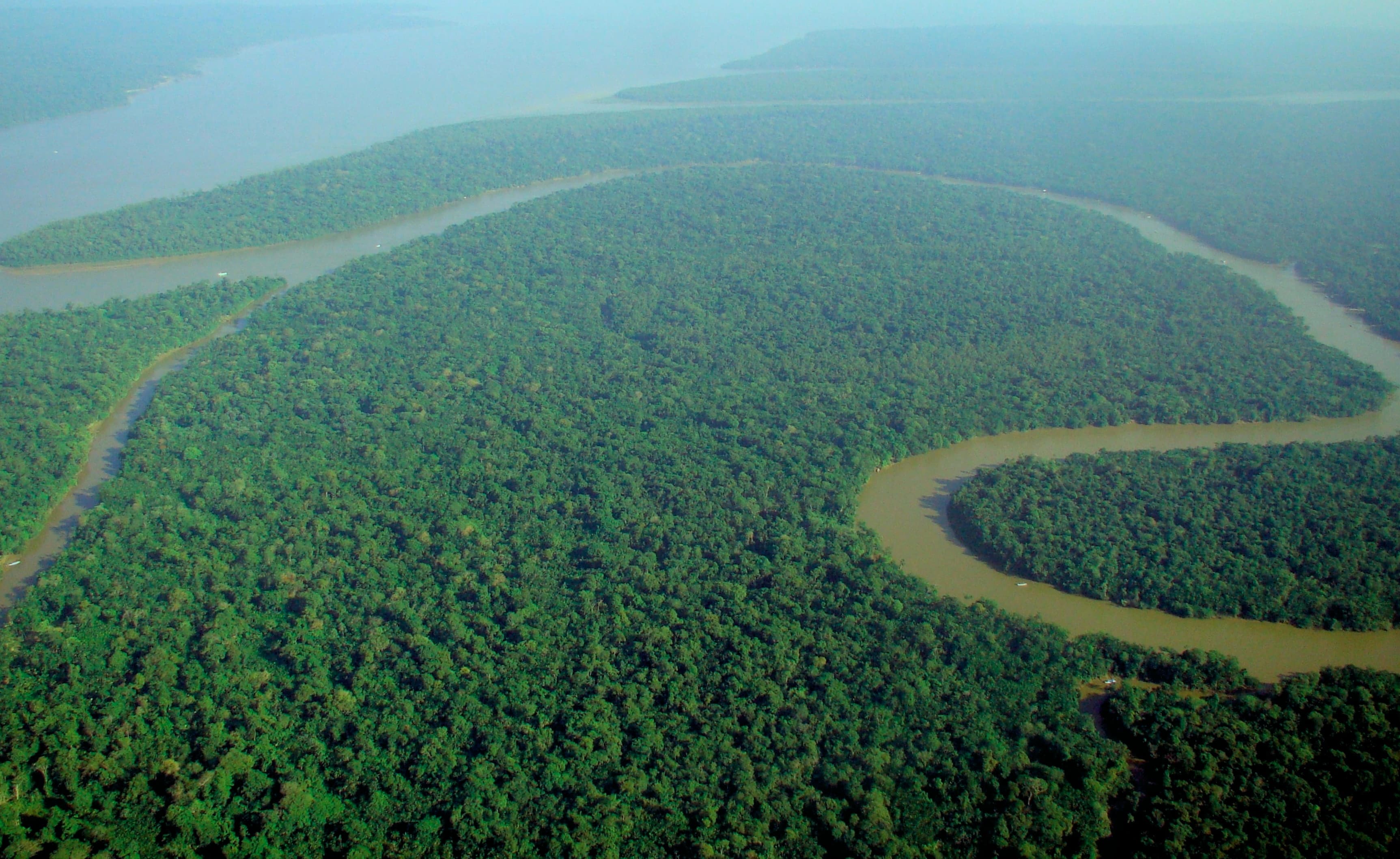
Then the archaeologists arrived. Beginning in the 1990s, Michael Heckenberger of the University of Florida spent years living and working with the Kuikuro people in the Upper Xingu, the same region Fawcett had been walking toward. What he mapped there, and published in the journal Science in 2003 and again in 2008, rewrote the story. Beneath the forest lay the traces of a large, organized, pre-Columbian society: clustered towns linked by wide, dead-straight causeways, ringed by defensive ditches, fronted by open plazas, surrounded by managed orchards and worked earth. These were not stray villages. They were planned settlements that once held thousands of people, part of a network that collapsed after European contact when the diseases arrived faster than the explorers did, emptying the land generations before outsiders came to call it pristine. The name locals and researchers attach to one such cluster is Kuhikugu. It is not a fairy tale carved from marble. But it is, unmistakably, a lost civilization in the exact stretch of Amazon that Fawcett swore was hiding one. He had the details wrong and the instinct right. The city he could not prove was there all along, waiting under the trees for a technology that could finally see it.
Why Fawcett Still Pulls People In
That reversal is what keeps the case alive a century later. Fawcett is usually filed under the great deluded, the men who died for something that was not real. But the ground he died looking for gave up its secret in the end, and the secret was close to what he claimed. He was not chasing nothing. He was a lifetime early, equipped with a theodolite where he needed ground-penetrating radar and satellite survey. The mystery is no longer whether an advanced society once stood in the southern Amazon. We know it did. The mystery is only what happened to the three men who walked toward it in 1925, and the record still ends where the cooking smoke did, on the fifth evening, with nothing rising in the east.
Frequently Asked Questions
Did anyone ever find Percy Fawcett's body? No confirmed remains of Fawcett, his son Jack, or Raleigh Rimell have ever been recovered. Bones offered in 1951 as the colonel's failed to match his dental records and physical description. A century of expeditions has produced stories, warnings, and secondhand accounts, but not one verifiable piece of the three men who left Dead Horse Camp.
Was the lost city of Z real? Archaeology has confirmed that large, planned, pre-Columbian settlements existed in the Upper Xingu region Fawcett was heading toward, complete with roads, plazas, and defensive works. He was wrong about the marble ruins of legend and right about the core claim everyone mocked: that a complex civilization had once flourished in the Amazon and been swallowed by the forest.
Why did so many rescuers die looking for him? Fawcett had warned that any search party would only add to the death toll without finding him, and the record suggests he understood the country better than the people who ignored him. By some counts as many as a hundred would-be rescuers lost their lives over the following decades. The forest that hid Z did not distinguish between the man who sought it and the men who sought him.
Could Fawcett have survived and chosen to stay? Rumors of a white man living among remote tribes circulated for years, and the idea that Fawcett meant to vanish into his own legend has never been fully killed off. Every specific lead has come up empty. What remains is only the shape of a man who spent his life certain that something was hidden in the Amazon, and who, one way or another, joined it.
Where exactly did he disappear? His last known position was Dead Horse Camp, roughly eleven and a half degrees south of the equator in Brazil's Mato Grosso, near the headwaters of the Xingu. From there the party went east into unmapped country. The precise point where the trail goes cold has never been fixed, in part because Fawcett deliberately obscured his route so that no one could follow him to the city.
Further Reading
- •The Lost City of Z: A Tale of Deadly Obsession in the Amazon by David Grann. The definitive modern account, built on Fawcett's own papers and the author's trip into the Xingu, and the book that connects the disappearance to Heckenberger's discoveries.
- •Exploration Fawcett compiled by Brian Fawcett from his father's manuscripts and logbooks. As close to Fawcett's own voice as the record allows, obsession and all.
- •Brazilian Adventure by Peter Fleming. A witty, clear-eyed memoir by a member of a 1932 expedition sent to find the colonel, and one of the most honest books ever written about how little the searchers actually knew.
Want to explore more mysteries?
We've got plenty more rabbit holes to go down.