The Yuba County Five: A Wrong Turn Into the Snow
In 1978, five men drove home from a basketball game and vanished into the California mountains. What searchers found months later only deepened the mystery.
On the night of February 24, 1978, five men from Yuba City, California climbed into a turquoise and white Mercury Montego and drove home from a college basketball game. They never arrived. Four days later the car turned up on a snowbound logging road high in the Plumas National Forest, some seventy miles from where any of them lived and pointed in exactly the wrong direction. The engine still worked. There was gas in the tank. And the five men were gone, walking, it seemed, straight up into the mountains in the middle of a winter storm.
Four of them would be found in June, after the snow melted. The fifth has never been found at all. And the more you learn about what searchers discovered in those woods, the less any of it makes sense.
This article contains affiliate links. If you buy through them we may earn a small commission at no extra cost to you.
This is one of the strangest disappearances in American history, and one of the least talked about. It has been called the American Dyatlov Pass, and the comparison is earned. Five men who had every reason to hurry home instead drove into the wilderness, abandoned a working car, and walked nineteen miles uphill through the snow toward nothing. One of them survived for weeks inside a shelter stocked with food, fuel, and blankets, and died anyway. To this day, no explanation satisfies everyone.
Table of Contents
- •Five Men Who Should Have Been Home by Midnight
- •The Last Confirmed Sighting
- •The Car on the Mountain
- •The Man Who Was Already Up There
- •What the Snowmelt Revealed
- •The Trailer Where Ted Weiher Died
- •The Can Opener Nobody Can Explain
- •The Uphill Problem
- •What the Investigators Concluded
- •The Dyatlov Comparison
- •Gary Mathias, Still Missing
- •Frequently Asked Questions
- •Where the Mystery Rests
- •Further Reading
Five Men Who Should Have Been Home by Midnight
The five were Ted Weiher, 32, Jack Madruga, 30, Bill Sterling, 29, Gary Mathias, 25, and Jack Huett, 24. Friends called the youngest Jackie. Four of them had mild intellectual disabilities. The fifth, Gary Mathias, was an Army veteran who had been discharged after psychiatric problems and a diagnosis of schizophrenia, though by 1978 he was stable, taking his medication, living with his parents, and working in his stepfather's landscaping business. One of his doctors described him as one of their success stories.
The men knew each other through a program at a Yuba City rehabilitation center, and they played together on a recreational basketball team called the Gateway Gators. That detail matters, because it explains where their heads were the night they vanished. The Gators had a tournament game the very next morning, February 25. The winners were promised a free trip to Los Angeles. The men had already laid out their team uniforms at home before they left. They wanted to win, and to win they needed to be up early.
So this was not a group of thrill seekers heading off on an adventure. These were men with a reason to be in bed by a reasonable hour, excited about a game, driving a route two of them knew well. Jack Madruga, who owned the Montego and did the driving, was known for being careful with his car. He disliked rough roads. He would not, by every account of the people who knew him, have willingly taken his coupe up a snow-packed mountain track that could tear the underside apart.
That is the first thing that does not fit, and the case is built out of things that do not fit.
The Last Confirmed Sighting
That evening the men drove roughly fifty miles north to Chico to watch a UC Davis basketball game at what was then California State University, Chico. Afterward, shortly before ten o'clock, they stopped at Behr's Market in Chico and bought snacks, sodas, and milk. The clerk remembered them. They were in good spirits. There was nothing wrong.
From Behr's, the drive home to Yuba City was a straightforward run south down the valley. Familiar road, no mountains, no reason to deviate. Instead, the Montego turned east and began to climb.
That is the last time anyone can say for certain where all five men were. Everything after Behr's Market is reconstruction, inference, and the testimony of a single stranger who happened to be stranded on the same mountain that night.
The Car on the Mountain
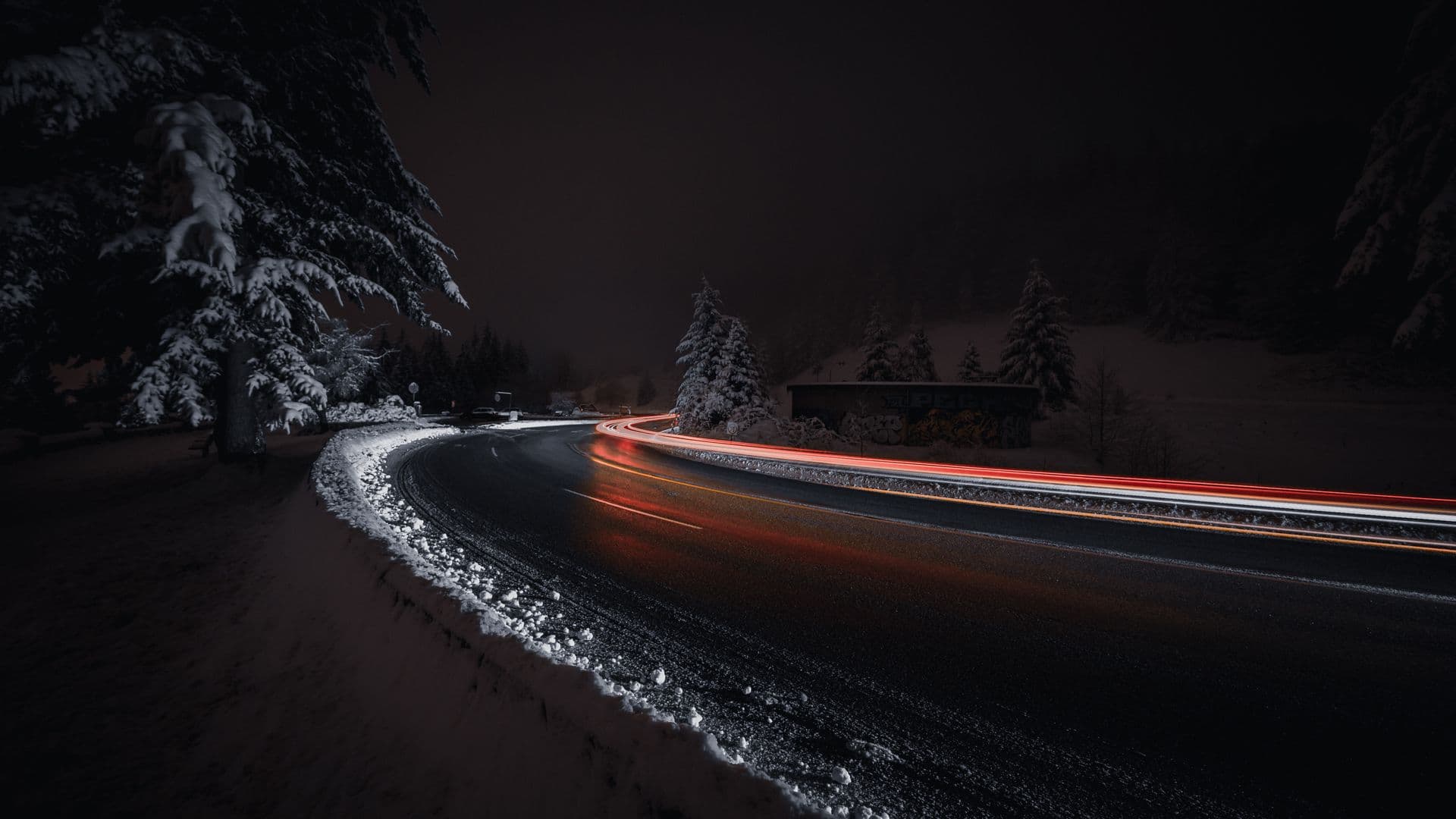
On February 28, the Montego was found abandoned on the Oroville-Quincy Highway, a remote road winding through the Plumas National Forest at around 4,400 feet of elevation. It was roughly seventy miles from home, in the wrong direction, deep in the kind of terrain none of these men had any connection to.
Here is what makes the car itself so strange. It was not wrecked. It was not out of fuel. When investigators later got to it, the engine started. The tank held about a quarter of a tank of gas. The undercarriage showed no serious damage, which means whoever drove it up that snowy, rutted road did so slowly and carefully, threading it up the mountain rather than bouncing over rocks in a panic. The car was lightly stuck in snow, the kind of stuck that a few minutes of rocking or a push could have solved.
In other words, the men did not crash and flee. They did not run out of gas and get stranded. They drove a working car most of the way up a mountain, stopped, got out, and walked away from it into a winter night, leaving behind their surest means of warmth, shelter, and escape. And they walked uphill.
No note. No sign of struggle. Two maps were reportedly left in the car. The men simply left.
The Man Who Was Already Up There
There is one witness to that night, and his account is as unsettling as the rest of the case.
Joseph Schons, a Sacramento man in his fifties, had driven up the same road that evening to check conditions for a planned trip with his family. His car became stuck in the snow. As he tried to free it, he began to feel the crushing symptoms of what turned out to be a mild heart attack. He climbed back into his vehicle to rest and stay warm.
Sometime around 11:30 that night, Schons saw headlights come up the road and stop behind his own car. He saw what he took to be several people, and he heard voices. In some tellings he described whistling and even the cry of what sounded like a baby, though that particular detail has been retold and embellished so many times over the decades that it is hard to know what he actually said. What is consistent is this: when Schons called out for help, when he shouted toward the lights and the figures, the response was not what you would expect. The talking stopped. The headlights went dark. The people, whoever they were, went quiet and disappeared.
Schons drifted in and out through the night, in serious physical distress, and by morning he made his way down the mountain and eventually to a hospital. When he later heard about the missing men and the car found near where he had been, he believed the lights he saw belonged to them.
Sit with that for a moment. Five men, if it was them, drove up a freezing mountain, saw another stranded car with a man inside who called out for help, and rather than approaching, rather than accepting the obvious rescue of a fellow traveler, they killed their lights and melted into the dark. Men who, if lost and cold, had every reason to run toward another human being. Instead they hid from one.
What the Snowmelt Revealed
The winter buried whatever happened. For months the mountain gave up nothing. Then, in June 1978, as the snowpack finally retreated, the bodies began to appear.
On June 4, a motorcyclist riding through the forest came upon a U.S. Forest Service trailer, a shelter left stocked for firefighting crews, sitting about 19.4 miles from the abandoned car. Inside was the body of Ted Weiher.
The next day, searchers found the remains of Jack Madruga and Bill Sterling along the road, roughly 11.4 miles from the car, on opposite sides of it. Both had been extensively scavenged by animals, and both appeared to have died of hypothermia. On June 7, the backbone of Jack Huett was found beneath a manzanita bush about two miles northeast of the trailer. His skull was recovered the following day, some three hundred feet away. His father identified him in part by his clothing.
That accounted for four of the five. The men had spread out across many miles of rugged, frozen wilderness, walking away from the road, away from the car, away from every direction that led back toward town. And the condition of the one found in the trailer opened a whole new set of questions.
The Trailer Where Ted Weiher Died
Ted Weiher had made it nearly twenty miles from the car to that Forest Service trailer. What happened to him there is the heart of the mystery.
When his body was found, Weiher had a full beard. On the night he vanished he had been clean-shaven. His body had lost close to a hundred pounds from a starting weight of around two hundred. His feet were severely frostbitten, blackened toward gangrene. He was lying on a bed, wrapped in as many as eight bedsheets. Everything about his physical state pointed to one conclusion: he had survived in that trailer not for hours or days, but for weeks, quite possibly as long as two or three months, slowly starving and freezing to death.
And that is where it stops making sense, because the trailer was not a death trap. It was, if anything, a place designed to keep people alive.
There was a fireplace, with matches and paperback books that could have served as kindling sitting right there. Weiher never lit it. There was heavy forestry clothing stored inside, warm gear he could have put on. It went unworn. There was a butane tank that could have powered the trailer's heating system. Untouched. And there was a locker of dehydrated food, by some accounts enough to have fed all five men for a year. It was never opened.
A man froze to death, over a period of weeks, feet rotting, inside a heated shelter full of food and fuel and clothing, and used almost none of it. Why?
Some have suggested the men, childlike in certain respects, may have been afraid they would get in trouble for breaking into a government building and did not want to make it worse by burning its firewood or eating its stores. Perhaps. But that theory asks us to believe a starving man watched his own feet turn black rather than light a fire that was already inside the room with him. It explains the caution and leaves the horror untouched.
The Can Opener Nobody Can Explain
There is one more detail inside that trailer, and it may be the most important clue in the entire case. It rarely makes the headlines, and it should.
Weiher did not eat from the year's worth of dehydrated food in the locker. But outside the trailer, in a shed, there were cases of military C-rations. And roughly three dozen of those ration cans had been opened and eaten.
The cans were opened with a P-38, the small folding can opener issued to American soldiers. It is a simple tool once you know how to use it, and completely baffling if you don't. Of the five men, only two had the military background to know a P-38 on sight and work it without instruction: Gary Mathias and Jack Madruga, both veterans.
Now layer that against the rest of the scene. Weiher was found wrapped in eight sheets, as if someone had tried to keep him warm. He was fed, at least for a while, on rations that someone knew how to open. His feet were frostbitten in a way that suggests his shoes were gone, and his shoes were, in fact, missing from the trailer. Sitting nearby were a pair of leather shoes belonging to Gary Mathias.
Read one way, it is unbearably sad and almost tender: someone stayed with Ted Weiher, wrapped him against the cold, opened cans to feed him, and then, at some point, took his shoes and left to find help, never to be seen again. Read another way, it raises a colder question. If a capable person was in that trailer, opening rations and tending the dying, why did that person never light the fire? Why did Ted Weiher die of exposure with a caretaker beside him and a butane heater in the same room?
The Uphill Problem
Strip away everything else and one fact remains that no theory has fully tamed. Lost people go downhill. It is almost a law of survival psychology. Disoriented, cold, and frightened, human beings drift toward lower ground, toward water, toward the lights of civilization. Roads lead somewhere. Down leads out.
The Yuba County Five did the opposite. They abandoned a road that would have taken them back down the mountain, and they climbed. They walked miles into higher, colder, emptier terrain, scattering across the forest as they went. Madruga and Sterling made it about eleven miles before they lay down in the snow. Weiher pushed on nearly twice that far to reach the trailer. Huett wandered off into the brush.
Nothing was up there for them. No town, no cabin they could have known about, no reason. They walked away from the one road that led home and kept climbing until the cold took them one by one. Whatever sent them up that mountain, on foot, in the dark, in a storm, overrode the deepest instinct a lost person has.
What the Investigators Concluded
The official reconstruction goes roughly like this. The men, for reasons unknown, drove toward the mountains, perhaps confused, perhaps under the impression they were taking a shortcut or looking for a friend of Mathias who lived out toward Forbestown. They got the Montego stuck in the snow. Believing shelter was near, possibly following snowcat tracks they mistook for a sign of a nearby camp, they set off on foot. Madruga and Sterling, exhausted, died of hypothermia along the way. Huett went off the road and perished in the brush. Weiher reached the trailer and survived there for weeks. Mathias, the most physically capable and mentally oriented of the group, may have taken Weiher's shoes and struck out to find help, dying somewhere the searchers never thought to look.
It is a reasonable narrative, and it collapses the instant you press on any single joint.
It does not explain why five men who were racing to get home for a basketball game drove seventy miles the wrong way into the mountains. It does not explain why careful, car-proud Jack Madruga drove his beloved Montego up a road that should have destroyed it, and did so gently enough to leave the undercarriage intact. It does not explain why they abandoned a running car with gas in the tank. It does not explain why they walked up instead of down. It does not explain why, when a stranded man called out for help in the night, they went dark and silent and vanished. And it does not explain why Ted Weiher died of cold and hunger surrounded by heat, food, and blankets, tended, it seems, by a companion who never lit the fire.
The Dyatlov Comparison
The parallel to the Dyatlov Pass incident is why this case haunts the people who find it. In 1959, nine experienced hikers in the Russian Urals cut their way out of their tent and fled, half-dressed, into lethal cold, away from their only shelter, and died scattered across a mountainside for reasons still argued about today. You can read our full account of that case in the Dyatlov Pass incident.
The Yuba County Five are the mirror image. At Dyatlov, the group fled downhill, away from the tent. In California, the group climbed uphill, away from the car. In both cases, ordinary people made a sequence of choices that look, from the outside, like the choices of people driven by something. A panic without a visible cause. A flight from a threat no one else can see. Both groups walked away from warmth and safety and into the killing cold, and in both cases the physical evidence tells a clear story about how they died while telling us almost nothing about why they went.
The difference is that Dyatlov is famous and the Yuba County Five are not. Nine hikers in Cold War Russia became a global legend. Five men from a small California town, four of them disabled, slipped quietly into the footnotes. Their case is every bit as strange, and in the matter of the trailer, arguably stranger.
Gary Mathias, Still Missing
Four bodies came out of those mountains. Gary Mathias never did.
Search teams combed the area repeatedly. His leather shoes sat in the trailer where Weiher died, suggesting he left it wearing Weiher's, walking on into the snow toward some destination only he understood. No trace of him has ever been confirmed. His family kept his memory and his questions alive for decades. His mother went to her grave not knowing what happened to her son, the one the doctors had called a success story, the veteran who took his medication and went to work and played basketball on a team called the Gators.
Because Mathias had a psychiatric history, it became easy for some to pin the group's fatal detour on him, to imagine an episode that sent the men into the mountains. But there is no evidence he was unwell that night, and the theory conveniently ignores that four other men, of sound if simple mind, went with him willingly and quietly, bought their snacks, and climbed into the dark without protest. Whatever happened on that road happened to all five. Mathias is simply the one the mountain kept.
Frequently Asked Questions
Were the Yuba County Five ever officially solved? No. The deaths were ruled to be from exposure, and a working theory exists about how the men ended up in the forest. But the central questions, why they drove into the mountains, why they abandoned the car, why they walked uphill, and what happened inside that trailer, have never been answered to anyone's satisfaction. The case remains open in every way that matters.
Why didn't Ted Weiher use the food and heat in the trailer? No one knows. The most repeated suggestion is that the men were afraid of getting in trouble for entering a government shelter. But this asks us to accept that a man starved and froze for weeks beside a butane heater, a fireplace, warm clothing, and a locker of food rather than use any of it. The C-ration cans that were opened only deepen the puzzle, because opening them took know-how the disabled men in the group did not have.
Could Gary Mathias still be found? It is possible. The terrain is vast, rugged, and thick with brush, and Jack Huett's remains were only found because searchers stumbled on a backbone under a bush. Mathias walked off into that same wilderness wearing another man's shoes. Somewhere in the Plumas National Forest, the last chapter of this case may still be waiting under the pines.
Is the Yuba County Five really like Dyatlov Pass? The resemblance is real. Both involve a group of people abruptly abandoning their shelter and fleeing into deadly cold, away from safety, for reasons the physical evidence cannot supply. If anything, the Yuba County case adds a layer Dyatlov lacks: a survivor who lived for weeks in a stocked shelter and died anyway, and the question of who opened those ration cans.
What was Joseph Schons doing on the mountain that night? Schons had driven up to scout conditions for a family trip and became stranded when his car stuck in the snow, suffering a heart attack as he tried to free it. His account of headlights, voices, and figures that fell silent and went dark when he called for help is the only near-witness testimony in the case, and it is one of its most chilling elements.
Where the Mystery Rests
Almost fifty years later, the Yuba County Five sit in a strange kind of quiet. There is a book, a documentary, a scattering of podcasts, and a small, devoted community of people who cannot let the questions go. But for a case this bizarre, the silence is remarkable. Five men drove home from a basketball game and drove instead into the snow. Four of them died in the mountains. One of them is out there still.
We can trace the route of the Montego. We can map where each body was found. We can measure the miles they walked and the pounds Ted Weiher lost and count the ration cans that someone with a soldier's training opened one by one. We can lay every fact side by side on the table. And when we are done, we are left staring at the same thing the searchers stared at in the summer of 1978: a shelter with the fire unlit, a pair of shoes that walked away, and a mountain that has never once explained why five men climbed it in the dark, or what they thought they were walking toward.
Further Reading
For a full, carefully researched account of the case, the standout is Things Aren't Right: The Disappearance of the Yuba County Five by Tony Wright, the most thorough book written on the subject and a good place to start if this story has taken hold of you.
To understand the sister case this one keeps getting compared to, Dead Mountain: The Untold True Story of the Dyatlov Pass Incident by Donnie Eichar is the definitive narrative account of nine hikers who also fled their shelter into the cold.
And for the deeper question underneath both cases, why people who are lost make choices that look impossible from the outside, Deep Survival: Who Lives, Who Dies, and Why by Laurence Gonzales is a genuinely unsettling look at the psychology of survival and the strange things the human mind does when it believes it is in danger.
Want to explore more mysteries?
We've got plenty more rabbit holes to go down.