The Falcon Lake Incident: The UFO That Left a Scar
In 1967 a Manitoba prospector touched a landed craft and walked out with a grid of burns seared into his chest. Canada's best UFO case is still open.
On the Saturday morning of the Victoria Day long weekend in May 1967, a man walked into the bush east of Winnipeg to look for silver and quartz, and walked back out with a burn on his chest that would still be flaring up years later. His name was Stefan Michalak, an industrial mechanic by trade and a prospector on his days off, the kind of methodical man who carried a hammer, a magnifying glass, and paper to write things down. He was no mystic or thrill seeker. He had gone into the Whiteshell to chip at rock, expecting to come home with nothing more exciting than a few samples.
Instead he came home with a story that Canada has never been able to close. A craft, he said, had landed on the flat granite in front of him. He had waited beside it for half an hour, walked up to it believing it was an American test vehicle, put his head inside, and been scorched by a blast of hot gas from a grille of small holes in its side. The pattern of that grille printed itself onto his skin in a grid of burns, and when a civilian investigator photographed his torso three days later, the pattern was still there. Most encounters leave behind only a witness and his word. Falcon Lake left a wound, a radioactive patch of ground, and a stack of government files that grew for years without ever reaching an answer.
This article contains affiliate links. If you buy through them we may earn a small commission at no extra cost to you.
What You'll Learn
- •A Long Weekend in the Whiteshell
- •Two Objects Over the Treeline
- •Thirty Minutes Beside a Landed Craft
- •The Man Who Thought It Was One of Ours
- •The Grid That Burned Him
- •The Sickness That Would Not Leave
- •The Radioactive Ground
- •Canada's Most Investigated UFO Case
- •What Could It Have Been?
- •Why Falcon Lake Still Matters
- •Frequently Asked Questions
A Long Weekend in the Whiteshell
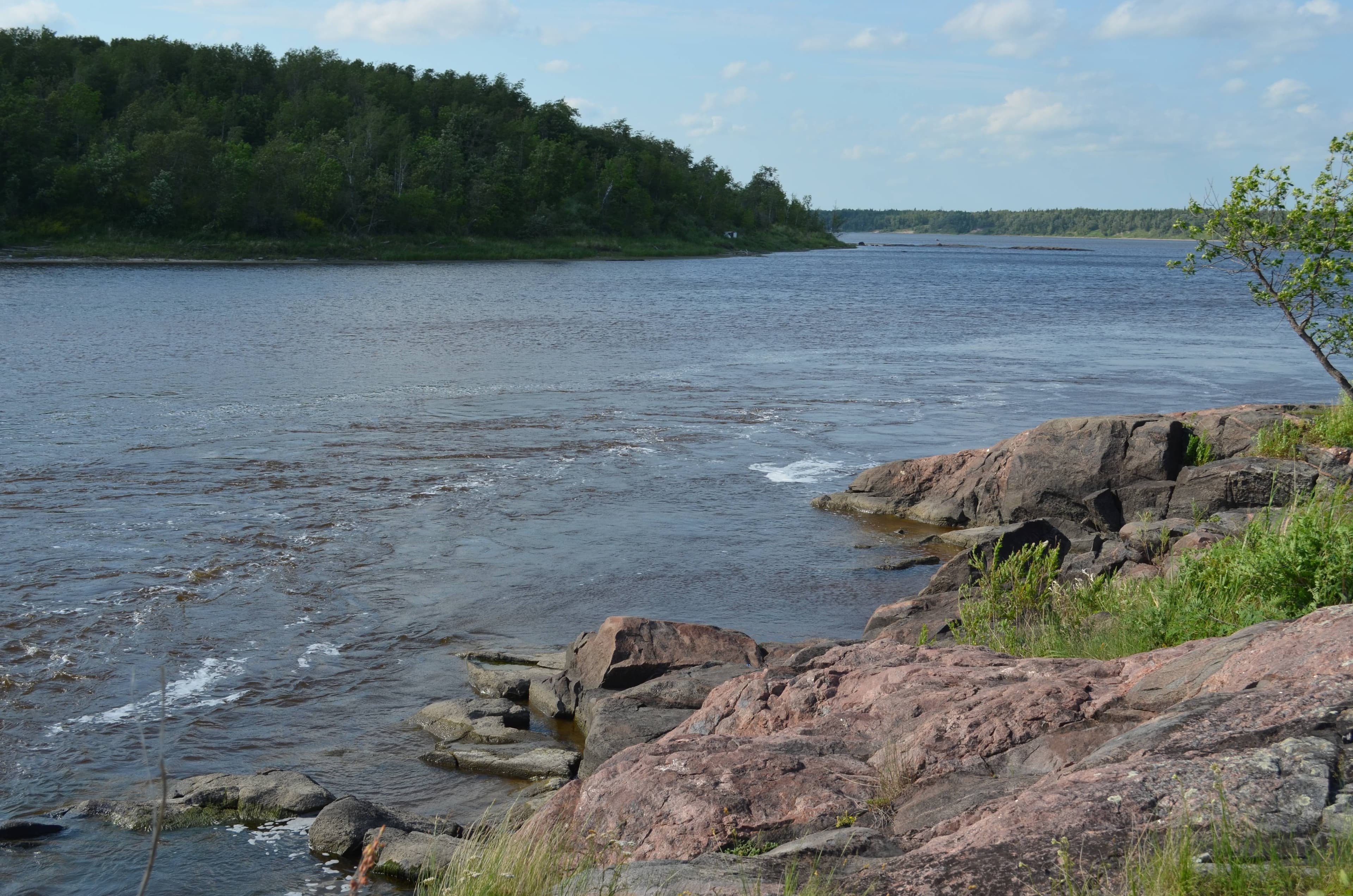
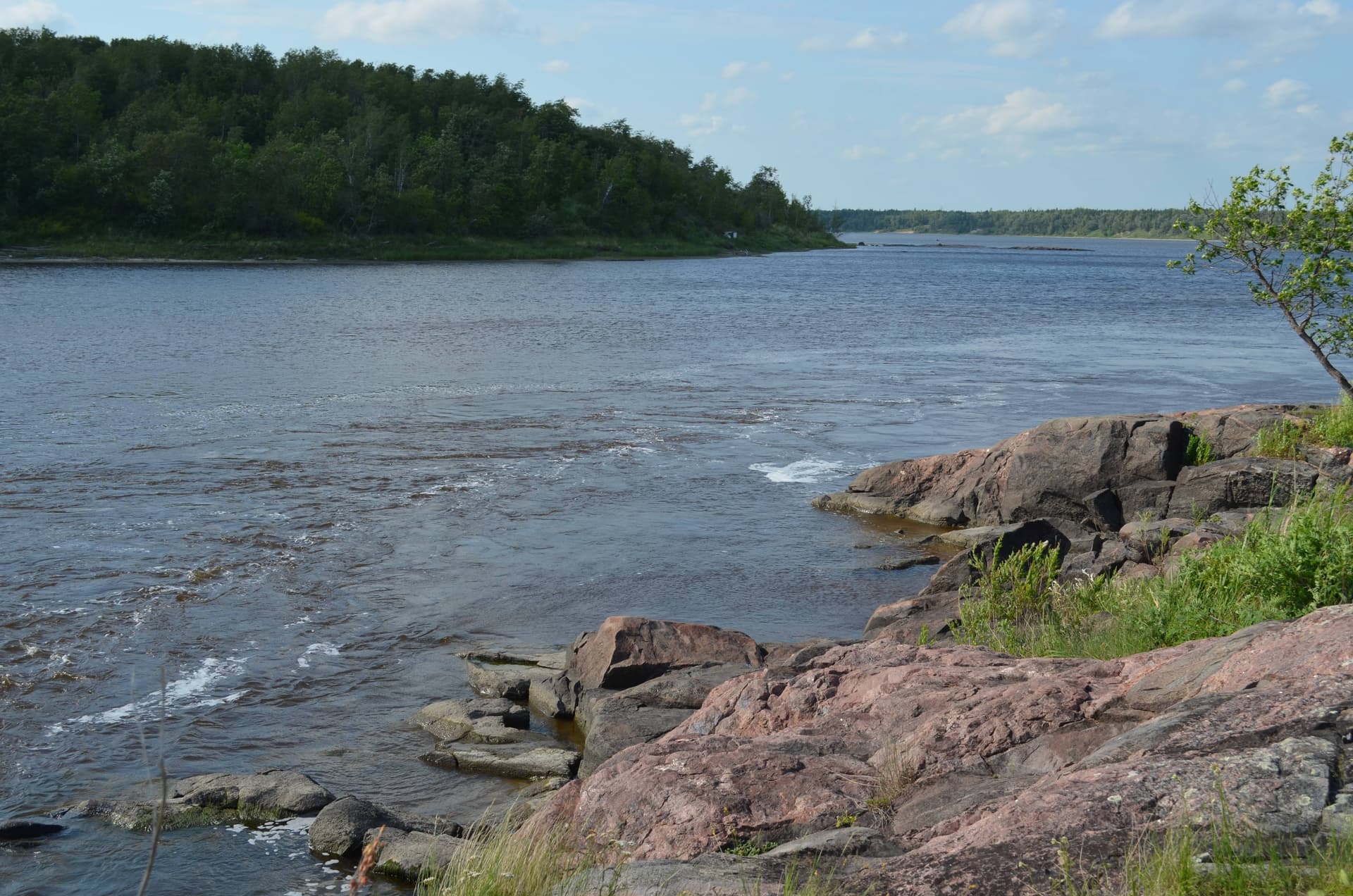
Whiteshell Provincial Park sits about 150 kilometres east of Winnipeg, where the flat prairie gives way to the rugged Precambrian rock of the Canadian Shield. It is a country of black spruce and balsam fir, of granite that surfaces in bare grey slabs between the lakes, and of the kind of quiet that swallows sound whole. For an amateur geologist it was a natural hunting ground, and Michalak had prospected the area before.
He set out early that Saturday, following a vein of quartz he had marked on an earlier trip, working his way toward a spot near a small stream. By late morning he was crouched over an outcrop, chipping at rock, absorbed in the ordinary work of a man who knows what he is looking at. The day was clear and warm. There was nobody else around. And then, a little after noon, the geese changed everything.
Two Objects Over the Treeline
A flock of geese exploded into panic somewhere nearby, honking and beating the air. Michalak looked up to see what had frightened them, and what he saw was not a hawk. Two objects were descending out of the sky, glowing a hot reddish colour, moving with a purpose that no bird and no aircraft he knew of could match. He would later describe them as roughly cigar or disc shaped, brilliant against the daylight.
One of them hovered, then climbed back into the sky and vanished into the west, its red glow fading to nothing. The other kept coming down. It settled onto a broad, flat shelf of rock perhaps 45 metres from where Michalak stood, and there it stayed. He did not run. A careful man to the end, he pulled a pencil and paper from his pack and began to sketch it, noting the colours as they shifted. It is one of the details that has always given the case its odd credibility. Faced with the impossible, Michalak reached for his notebook.
Thirty Minutes Beside a Landed Craft
By his account he watched the thing for close to half an hour. As it cooled from red to a bright silver, it took on the look of polished stainless steel, a mirror surface that threw back the light of the sky. He estimated it at roughly 12 metres across and a few metres high, a shallow disc sitting on the rock. Warm air rolled off it. There was a smell he compared to sulphur or burning electrical insulation, and a soft whirring or hissing, like air drawn through a vent.
Then a hatch opened in the upper part of the craft, and light poured out, an intense purple and blue glow so bright it hurt to look at directly. From inside came sounds he took to be voices, muffled, like two people talking. For a man standing alone on a rock in the middle of the Whiteshell, that was the moment the encounter stopped being a light in the sky and became something with a door, an interior, and, apparently, occupants.
The Man Who Thought It Was One of Ours
Here is the part of the case that sets it apart from almost every famous encounter that came after, and it is the part most retellings rush past. Stefan Michalak did not think he was looking at a spaceship. He thought he was looking at a secret American military project, and the assumption is telling, because a witness who goes looking for airmen rather than aliens is not behaving like a man building a legend.
The reasoning was not unreasonable for 1967. The Cold War was at full boil, experimental aircraft were a matter of open speculation, and a mirror-bright disc with a hatch and voices inside read, to a practical mechanic, as hardware. So he did what a helpful Canadian might on stumbling across a downed U.S. test craft: he walked toward it and called out an offer of assistance. When no one answered in English he tried again in the other languages he knew, Russian, German, Italian, French, and Ukrainian. Nobody answered in any of them. The stranger the encounter became, the harder he worked to fit it into an ordinary frame, and that resistance to the extraordinary is exactly what an inventor of tall tales tends not to build in.
He stepped up to the opening and put his head partway inside. What he saw, he said, was a maze of lights, a panel of coloured beams and flashing bulbs arranged in patterns he could not read. He saw no crew. He drew back out, and reached up to touch the surface of the craft with his gloved hand. The tips of his rubber-and-cloth glove scorched and melted at the contact. The machine was hot enough to burn.
The Grid That Burned Him
Then, he said, the craft shifted. It rotated slightly, or a section of it moved, so that a new part of the hull now faced him. Directly in front of his chest was a panel covered in a grid of small, uniform holes, an array like a ventilation grille or an exhaust screen. Without warning a blast of hot gas shot out through that grid and struck him full in the chest.
His shirt and the undershirt beneath it burst into flame. Michalak tore the burning clothing off his body and threw it to the ground, beating at the fire, his chest and stomach seared. The object lifted off the rock, rushed a wave of warm air over him, and rose back into the sky, glowing again as it went, until it too was gone.
He was alone on the outcrop, gasping, nauseated, his chest laid out in a pattern of burns. And that pattern is the physical heart of the whole case. The burns did not form a random splash. They formed a grid, a checkerboard of scorched dots and squares across his torso that matched the shape of the grille he said had been aimed at him. When Michalak eventually got himself out of the bush and back toward the highway, staggering and sick, he was carrying the impression of the machine on his own skin.
The Sickness That Would Not Leave
Michalak made his way back to the Falcon Lake townsite, was refused a ride by at least one passing motorist who wanted nothing to do with a sweating, vomiting man reeking of sulphur, and eventually reached Winnipeg and a hospital. Doctors treated him for burns to the chest and abdomen. But the injury did not behave like a simple burn.
Over the days and weeks that followed he suffered a cascade of symptoms: nausea and repeated vomiting, headaches, diarrhoea, cold sweats, and a marked loss of weight. The grid of raised welts across his chest healed and then, disturbingly, reappeared, flaring up periodically over the following years as though the encounter were being replayed on his body. By his own account he was examined by more than two dozen physicians in Canada and the United States, as he and his family searched for someone who could explain what had happened and, more urgently, stop it.
No one ever fully could. The pattern that his doctors and later investigators described, burns combined with gastrointestinal distress, weight loss, and blood changes, echoed the general signature of exposure to radiation layered over intense heat. This is the quality that lifts Falcon Lake out of the ordinary file of sky lights and into a small, unsettling category of its own. It is not a story about what a man saw. It is a story about what happened to his flesh.
The Radioactive Ground
If the burns were the first piece of physical evidence, the second came from the ground itself. Some weeks after the encounter, on returning to the landing site, Michalak and investigators found a scene that matched his account: a roughly circular patch on the rock shelf where the moss and soil looked disturbed, swept clean, as though something had sat there and scorched it.
He gathered up soil and debris from the spot, along with the remnants of his burnt shirt, and turned samples over to authorities. When the soil was tested, it came back radioactive, radioactive enough that the site was treated with real caution and part of the area was roped off. Later searches of the rock reportedly turned up small silver-coloured metal fragments wedged into a crack, some of them also carrying traces of radioactivity. For a case that began with a lone man's word, the physical inventory had become remarkable: a patterned burn, a contaminated landing site, and bits of unexplained metal.
The most common conventional reading is that the radioactivity came from a natural radium vein in the Shield rock, or from contamination by luminous radium paint of the kind once used on dials and instruments. It is a fair thing to raise. But it strains to explain why that radioactive signature would happen to sit precisely on the circular patch Michalak identified as the landing spot, aligned with a man whose chest carried a matching burn, in a place he had prospected before without incident. A natural vein does not choose that day, that rock, and that story to reveal itself. The conventional explanation accounts for a reading on an instrument. It does not account for how the reading, the burn, and the scorched circle all point at the same half hour.
Canada's Most Investigated UFO Case
What happened next is why Falcon Lake endures. The case did not vanish into a fringe newsletter. It went into the machinery of the Canadian state. The Royal Canadian Mounted Police took statements. The Royal Canadian Air Force investigated. The Department of National Defence built a file. Health authorities and radiation specialists were drawn in by the contaminated soil. Michalak was interviewed, re-interviewed, examined, and doubted, and through all of it his account of the core events did not materially change.
Investigators searched hard for the seam in his story. They questioned whether a man could invent such a thing, whether the burns could be self-inflicted, whether the radioactive soil could have been planted, and found no motive and no mechanism. Michalak sought no money and courted no fame; he self-published a modest booklet about his experience and otherwise wanted to be left to recover. The official files, now held among the Canadian government's UFO records at Library and Archives Canada, describe a case the investigators could neither confirm as anything ordinary nor dismiss. In 2017, marking the fiftieth anniversary, CBC News summarized the verdict of that half century plainly, calling Falcon Lake "Canada's best-documented UFO case." Best-documented is not the same as solved. It means only that of all the country's mysteries in the sky, this is the one with the thickest folder and the emptiest conclusion.
What Could It Have Been?
Strip the case down and three broad readings remain, and each one leaves something on the table.
The first is that Michalak invented it. This runs immediately into the physical evidence and his own behaviour. A hoaxer does not typically burn a grid into his own chest, produce burns that recur for years, contaminate a patch of provincial parkland with radioactive material, and then decline to profit from any of it. Nor does a hoaxer build in the most awkward possible detail, that he believed the craft was a human-made American machine and tried to help its crew. The lie would be more convincing without that. Its presence reads like memory, not invention.
The second reading takes Michalak at his own first word: that the object really was terrestrial, a secret prototype from some Cold War program, and that he stumbled onto a test gone wrong. This fits his practical instincts and the hardware-like description, and it would explain the exhaust that scorched him. What it cannot explain is the silence in the decades since. No declassified file, no memoir, no budget line has ever surfaced describing a mirror-bright disc under test in the Manitoba bush in 1967, and no aircraft of that era matches what he described.
The third reading takes the whole account as it stands: an unidentified craft that landed, was approached, and injured a man before leaving physical traces on his body and on the ground. It keeps every reported fact intact, and pays for that by leaving the largest question wide open.
There is a fourth thing worth noticing, and it is a pattern rather than an explanation. Thirteen years after Falcon Lake, on a dark road in Texas, three people met a fiery object and came away with burns, nausea, and hair loss that filled hospital charts, the case now remembered as the Cash-Landrum incident. Different country, different decade, different craft, and yet the same eerie residue: a close encounter that behaves less like a vision and more like a dose. Whatever these objects are, a handful of the most physical cases seem to share a signature, and Falcon Lake set it down first.
Why Falcon Lake Still Matters
Most famous sightings ask you to weigh one person's sincerity against your own doubt. Falcon Lake asks something harder. It hands you a patterned burn a doctor photographed, a radioactive patch of ground a lab measured, metal fragments from a crack in the rock, a booklet by a man who never grew rich from any of it, and a government file that thickened for years without ever closing, and it asks you to make all of them agree on an ordinary answer. They do not.
Stefan Michalak died in 1999, still carrying the marks and the memory. He never claimed to know what the machine was. He only ever claimed to have touched it, and to have the scar to prove that something had touched him back. Decades later his son Stan and the researcher Chris Rutkowski gathered the family papers and the official records into a single account, so that the fullest version of the story could finally be read in one place. It is a thorough book. It is not, and cannot be, a closed one. Somewhere on a slab of Precambrian rock in the Whiteshell, on a bright Saturday in May, something landed, waited, and left a man marked for life. To this day, no explanation satisfies everyone. The question that lingers is the same one Michalak carried out of the bush: what was it that he walked up to, so certain it was one of ours?
Frequently Asked Questions
What did Stefan Michalak say he saw at Falcon Lake?
He described two glowing, disc-like objects descending from the sky. One flew off; the other landed on a flat rock about 45 metres from him. He watched it cool to a mirror-bright silver, saw a hatch open with intense purple light, heard voices inside, and approached believing it was an American test craft. When he touched it his glove scorched, and a blast of hot gas from a grille of small holes set his shirt on fire and burned his chest.
Were his injuries actually documented?
Yes, and that is what keeps the case alive. Michalak was hospitalized for burns to his chest and abdomen, and a civilian investigator photographed the injuries days later. The burns formed a distinct grid pattern matching the grille he described, and they reportedly recurred over the following months and years, alongside nausea, weight loss, and other symptoms that echoed the general signature of radiation exposure combined with heat.
Was the landing site really radioactive?
Soil and debris that Michalak collected from the spot he identified as the landing site tested radioactive, enough that part of the area was cordoned off, and later searches reportedly recovered faintly radioactive metal fragments from a crack in the rock. A natural radium vein or radium-paint contamination has been offered as an explanation, but it does not easily account for why the radioactivity sat exactly on the scorched circle he pointed to, aligned with his matching burn.
Did Michalak think he had seen an alien spacecraft?
Not at first, and this is one of the most telling details of the case. As a practical mechanic in the Cold War, he assumed the craft was a secret American military project and even offered its unseen crew help in several languages. He never grew wealthy from the story and never claimed to know for certain what the object was, only that it was real and that it had injured him.
Why is Falcon Lake called Canada's best-documented UFO case?
Because it drew a full official investigation. The RCMP, the Royal Canadian Air Force, the Department of National Defence, and radiation specialists all examined it, and the resulting records now sit among the government's UFO files at Library and Archives Canada. Investigators searched for a hoax or an ordinary cause and found neither, leaving the thickest file in Canadian ufology attached to one of its emptiest conclusions.
Further Reading
Want to explore more mysteries?
We've got plenty more rabbit holes to go down.