JAL Flight 1628: The UFO the FAA Confirmed, Then Erased
In 1986 a Japan Airlines 747 was shadowed over Alaska by an object twice the size of an aircraft carrier. The FAA's radar caught it, then unsaw it.
At 5:11 on the evening of November 17, 1986, a Japan Airlines cargo jumbo was crossing the top of Alaska in full darkness when its captain saw two sets of lights swing into place off his left wing and stop, as if something had pulled alongside to look at him. Kenji Terauchi was a veteran pilot with thousands of hours in the seat, ex-military, not a man given to seeing things. He watched the lights for the better part of an hour. He watched them dart and hold and vanish and return. And then, out beyond the two smaller shapes, he saw a silhouette blot out the stars, an object he would later struggle to size with any word smaller than an aircraft carrier, and struggle again because this one, he said, was roughly twice that.
Most UFO reports live and die on a single witness and his word. This one is different, and that is what has kept it alive for four decades. On the ground at Anchorage, a Federal Aviation Administration controller was watching a return on his scope in the same patch of sky Terauchi was pointing at. Voice tapes were rolling. Radar data was recording. Within weeks the agency's own division chief had carried that data to Washington and laid it in front of the FBI, the CIA, and members of President Reagan's scientific staff. Then the data went into a drawer, the meeting was declared never to have happened, and the FAA's public story about what its radar had caught began, quietly, to change.
This article contains affiliate links. If you buy through them we may earn a small commission at no extra cost to you.
What You'll Learn
- •A Freighter in the Arctic Dark
- •Two Sets of Lights That Held Formation
- •The Thing the Size of a Carrier
- •What the Ground Was Seeing
- •The Aircraft Sent to Look
- •The Man Who Kept a Copy
- •The Meeting That Never Happened
- •The Radar That Became a Ghost
- •Jupiter, Mars, and the "UFO Repeater"
- •A Report With Nowhere to Go
- •Frequently Asked Questions
- •Further Reading
A Freighter in the Arctic Dark
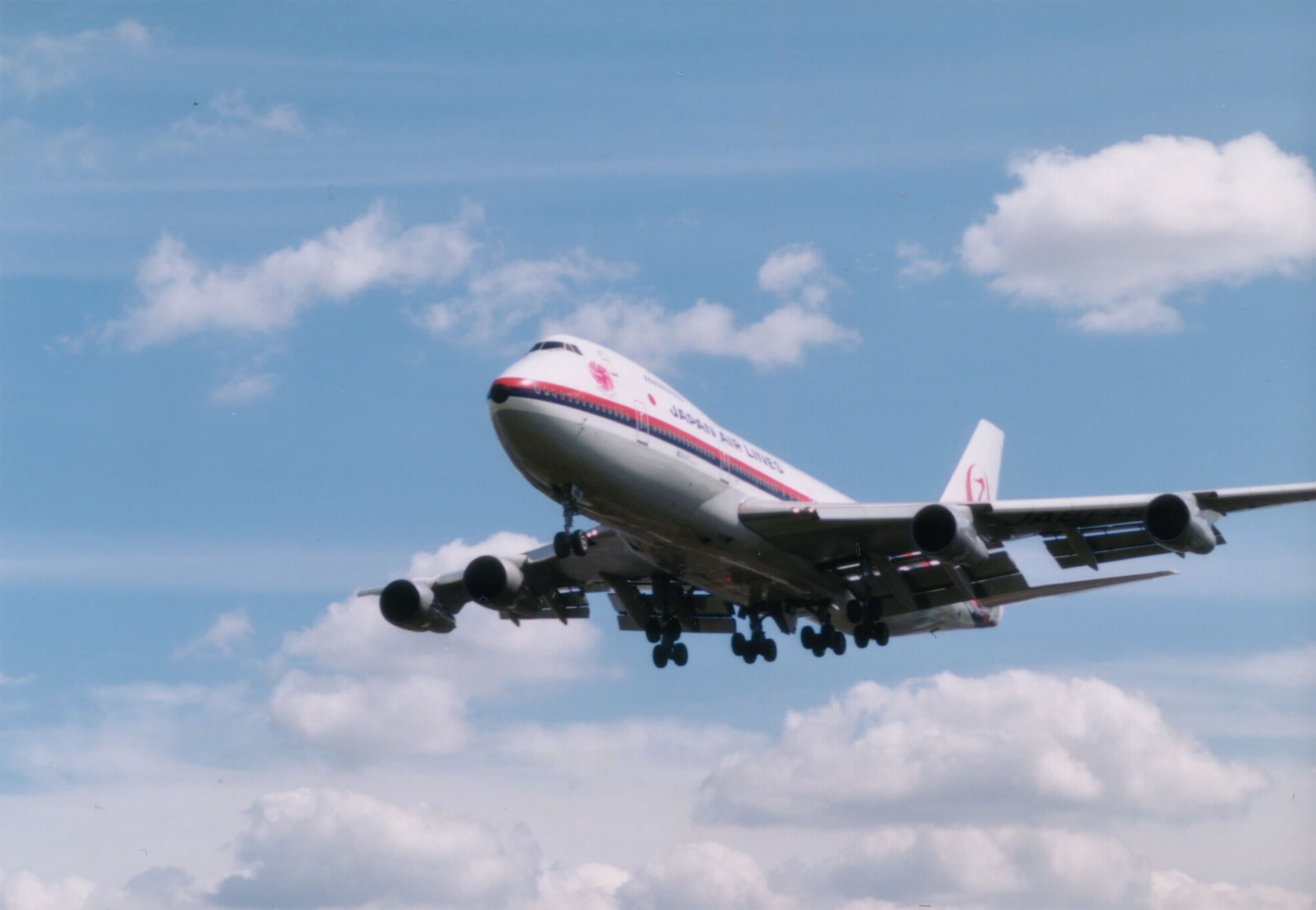
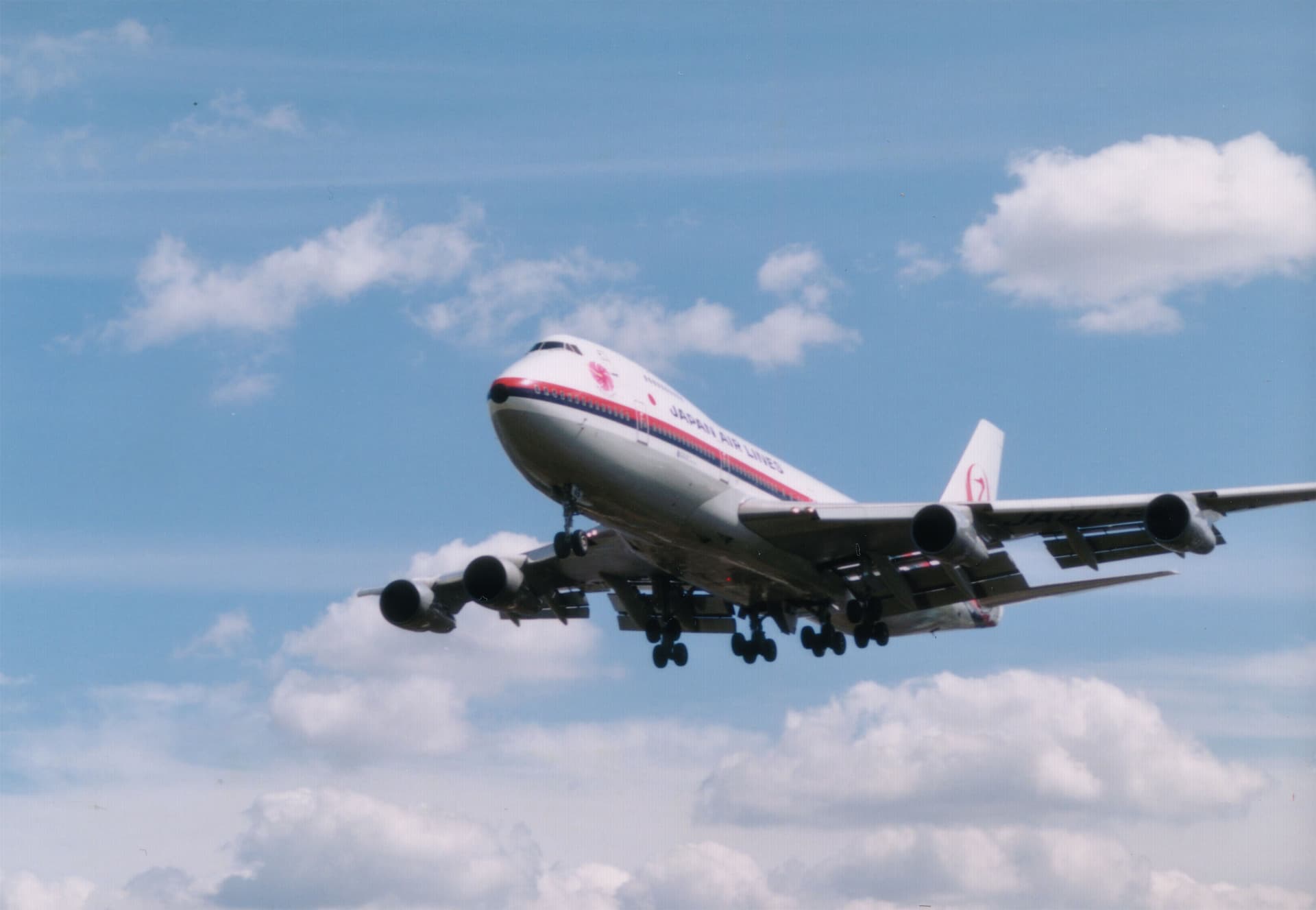
Japan Airlines Flight 1628 was a Boeing 747-200 freighter, a converted jumbo with the cargo deck where the passengers would otherwise sit. On that November evening it was hauling a load of Beaujolais wine from Paris to Tokyo, the long polar route that airlines fly to shorten the trip across the top of the world. It had already stopped in Iceland. Its next planned touchdown was Anchorage, and from there it would push on to Narita.
Three men were aboard the flight deck: Captain Kenji Terauchi, First Officer Takanori Tamefuji, and the flight engineer. Terauchi was the senior man, a former fighter pilot with something like ten thousand hours behind him. He had flown this stretch of Alaska many times. The 747 was cruising at 35,000 feet over the eastern interior of the state, somewhere in the empty country north of Fort Yukon, in the kind of clear, black Arctic air where the horizon is a guess and the stars come all the way down to meet the ground.
It was ordinary. Then, a little after five in the afternoon local time, Terauchi noticed lights below and to his left that were keeping pace with the aircraft. He took them at first for military traffic. Alaska is thick with air bases, and a fighter escort would not have been the strangest thing to find in that sky. But military jets do not do what these lights did next.
Two Sets of Lights That Held Formation
The lights climbed to the 747's altitude and moved into position ahead of it, and there they stayed. Terauchi described two objects, one above the other, each carrying an array of what looked like small jets or thrusters, rows of amber and white light that flared and shifted. When they swung into their final position, he said, they lit up the cockpit, and he felt a warmth on his face that he could not explain.
The movements were the part that stayed with the whole crew. The objects would sit dead still relative to the speeding jumbo, then jump instantly to a new spot, the way a reflection moves rather than the way an aircraft does. Nothing with mass and inertia flies like that. There was no sound anyone could hear over the engines, no wash, no exhaust trail, nothing but the light and the impossible stillness followed by the impossible snap of motion. First Officer Tamefuji, decades later, would still describe the objects moving in ways he had no language for.
For several minutes the two shapes flew formation with a Boeing 747 at cruise speed, matched it turn for turn, and then, when Terauchi banked to get a better look, slid away to his left and fell back. That was when the bigger thing revealed itself.
The Thing the Size of a Carrier
Behind and to the left of the aircraft, against the faint glow of the sky, Terauchi made out an enormous silhouette. He kept reaching for comparisons and kept discarding them as too small. Eventually he settled on an aircraft carrier, then corrected himself: twice the size of an aircraft carrier. The two smaller objects, he came to believe, had come from it.
He sketched what he saw, and his drawings show a rounded, ringed form, wider than it is tall, something between a walnut and the planet Saturn seen edge-on. As the flight neared the lights of Anchorage, the object was still there, a dark mass holding station off the jet's flank, and Terauchi grew frightened enough to ask air traffic control for help. He requested a change of course. He requested a descent. The 747 made a wide 360-degree turn to try to shake whatever was pacing it. Through the turn, the shape stayed with him.
This is the point where a lone-witness story would simply end, an interesting anecdote to be filed and forgotten. Instead, the men on the ground began to speak.
What the Ground Was Seeing
At the Anchorage Air Route Traffic Control Center, controllers had the 747 on their scopes and had been listening to Terauchi grow more agitated. When he reported traffic off his wing, they looked. And at least intermittently, on the FAA's own radar, there was something there: a return in the position the pilot was describing, close to the JAL flight, that did not belong to any known aircraft.
The controllers did what procedure demanded. They asked military radar at the regional air defense facility to take a look. They cleared the 747 for the turns and the descent it wanted. They tried to get a second, independent confirmation of the thing on the scope. And the voice loop the whole time was being recorded, along with the radar data, which is precisely why this case did not evaporate. The tapes captured a professional crew and professional controllers treating the object as real enough to maneuver a 400,000-pound aircraft around it.
For roughly fifty minutes, across something like 400 miles of Alaskan sky, the encounter went on. Then, as the 747 descended toward Anchorage, the objects were gone. Terauchi landed the aircraft without further incident and reported what he had seen. What he did not know was how quickly, and how high, his report was about to travel.
The Aircraft Sent to Look
One detail is cited by skeptics and believers alike, and it deserves to be laid out plainly rather than spun. Anchorage vectored other aircraft toward the 747 to try to corroborate the sighting. A United Airlines passenger jet in the area was asked to look. So was a United States Air Force C-130. Neither crew reported seeing anything unusual, on radar or out the window, by the time they got close.
There are two honest ways to read that. One is that there was never anything solid there to see, and the returns and the lights were some combination of instrument error and misperception. The other is timing: by the time another aircraft could be maneuvered into position, the objects that had held formation for the better part of an hour had already broken off and left, exactly as Terauchi reported. What the negative sightings cannot do is erase the fifty minutes that came before them, the recorded controller reactions, or the radar returns the FAA itself would first confirm. A thing that is gone by the time the witness arrives has not been proven never to have existed.
The Man Who Kept a Copy
Here the story leaves the cockpit and becomes something rarer in this field: a documented bureaucratic paper trail. The reason we can follow it is a man named John Callahan.
In 1986 Callahan was the FAA's division chief for accidents, evaluations, and investigations, a senior official in Washington whose job was to know what the agency's data showed. When word of the Alaska encounter reached him, he had the radar records, the voice tapes, and the pilot's report pulled together. By his account, he and a technician sat down and synchronized the radar data with the voice recording, building a single continuous playback of the encounter, roughly half an hour of it, that showed the returns and the crew's reactions in step.
Callahan says he brought that playback to the FAA administrator of the day, Admiral Donald Engen, and that Engen watched the whole thing in silence before telling him to say nothing and to arrange a briefing for people from other agencies. This is not an anonymous rumor. Callahan has stated it under his own name, repeatedly, on the record, as a former senior FAA official describing events he personally handled. Whatever the objects were, the fact that the nation's aviation authority treated the data as a real event worth briefing to the intelligence community is not in serious dispute.
The Meeting That Never Happened
The briefing, Callahan says, took place in Washington early in 1987. Around the table were people he identified as being from the FBI, the CIA, and President Reagan's scientific study group. He ran the synchronized radar-and-voice playback for them. He describes them watching it closely and asking sharp questions.
And then, according to Callahan, when it was over, the officials collected all of the material, the tapes and the data, and told the room that the meeting had never happened and that they had never been there. It was, in his telling, being treated as classified from that moment on.
What Callahan did next is the reason any of this can be checked. He says he kept a copy. Before the originals were swept up, he held back a set of the materials, the video of the data playback and supporting documents, and stored them. Years later, in May 2001, he walked into the National Press Club in Washington and told the whole account in public as part of a large gathering of former military and government witnesses. He has never wavered from it. A former FAA division chief, standing behind his own name, saying the agency recorded a UFO encounter, took the data to the CIA, and was told to pretend the meeting never occurred, is not the sort of testimony this subject usually produces.
The Radar That Became a Ghost
The public record from the FAA is where the mystery sharpens rather than resolves. In the days right after the incident, an agency spokesman named Paul Steucke acknowledged to reporters that FAA radar had shown a target near the Japan Airlines flight. The wire services carried it: a controller had confirmed a UFO sighting.
Then the story began to shift. As the weeks passed and the case drew attention, the FAA's position moved from a confirmed unidentified target toward something far more deflating. The return, the agency came to suggest, may have been a coincidental split image of the 747 itself, a radar artifact in which the plane's own echo appears twice on the scope and the second blip is mistaken for a nearby object. The military radar returns, on review, were described as clutter. And Terauchi, who had reported unusual sightings before, was characterized as a "UFO repeater," a phrase that does more to color a witness than to explain a radar target.
Each of those reframings is possible. A split image is a real radar phenomenon. Clutter is real. Pilots who report one strange thing do sometimes report others. But notice what the revised explanation asks you to accept: that the artifact appeared in the exact bearing the pilot was independently pointing at, that it behaved consistently enough for controllers to maneuver a jumbo jet around it, and that the same agency that first confirmed a target quietly walked the confirmation back only after the case grew inconvenient. The explanation that dissolves the radar return does not account for why the FAA's own division chief thought the data was solid enough to carry to the CIA. A ghost on a scope does not usually get its own classified briefing.
Jupiter, Mars, and the "UFO Repeater"
The best-known conventional explanation for the lights themselves came from Philip J. Klass, the aviation journalist who spent decades as the field's most relentless skeptic. Klass argued that Terauchi had mistaken the planets Jupiter and Mars for spacecraft. Jupiter, he noted, was unusually bright that night and sat only about ten degrees above the horizon, low enough that a pilot at altitude might read it as a light near his own height rather than a point in deep space.
It is a tidy idea, and for a distant, steady glow it might even hold. What it does not cover is most of what the crew actually described. Jupiter does not climb to your altitude and pull into formation. It does not split into a paired array of thrusters that lights the inside of a cockpit and puts warmth on a pilot's face. It does not snap from one position to another and then fall back when you bank. And it certainly does not present, against the glow of a city, a ringed silhouette that a fighter-trained captain sizes against an aircraft carrier. A planet is a fixed lamp on the sky. The report is of things that moved with intent.
The physicist Bruce Maccabee, a US Navy optical scientist, obtained the FAA's documents through public-records requests and worked through the case in detail. His reading is that the planetary explanation cannot be stretched to fit the maneuvers, the paired objects, and the large structured shape all at once. That does not tell us what the objects were. It tells us that the neat answer leaves the strangest parts of the night untouched, which is where this case has sat ever since: too documented to dismiss, too strange to file.
A Report With Nowhere to Go
There is a structural reason JAL 1628 became so tangled, and it is easy to miss. By November 1986, the United States government had no official home for a report like this. Project Blue Book, the Air Force study that had logged UFO reports for more than twenty years, had been shut down at the end of 1969 after the Condon Report concluded that further study was not warranted. For most of the following half-century there was, on paper, no agency whose job it was to investigate an unidentified object pacing a civilian airliner.
So when a 747 came down at Anchorage with a story like this, the report fell into a vacuum. The FAA is an aviation safety agency, not a UFO bureau. It could confirm a radar target, and then it had every institutional reason to want the whole thing to become someone else's problem, or no one's. Callahan's account of a briefing that was ordered classified and then erased is, seen this way, less a movie-style conspiracy than the predictable behavior of a bureaucracy handed something it has no box for and no desire to keep.
The irony is sharp in hindsight. Decades later the same government would stand up a formal office to catch exactly these reports, and Navy pilots describing objects that dart and stop with no visible means of propulsion would be taken seriously enough to reach Congress. Read the JAL 1628 file next to those modern accounts and the resemblance is uncomfortable. In 1986, a professional crew and professional controllers described the same impossible physics, on the record, with the tapes running, and the system's response was to make the meeting never have happened.
Frequently Asked Questions
Did the FAA really confirm a UFO on radar? In the first days after the encounter, an FAA spokesman told reporters that agency radar had shown a target near the Japan Airlines flight. That confirmation is on the historical record. What happened afterward is the strange part: the agency's public account shifted toward calling the return a coincidental double image of the 747 itself. The initial confirmation was never quite un-said so much as quietly outgrown.
Who was John Callahan and can his account be trusted? Callahan was a genuine FAA division chief responsible for accidents and investigations, and his credentials have been verified. He has told the same story for decades under his own name: that he compiled the radar and voice data, briefed the FAA administrator, and then presented it to CIA, FBI, and White House science staff who took the material and told the room the meeting never occurred. He says he kept a personal copy. Whether every detail is remembered perfectly after all these years is a fair question. That a senior official said it publicly, repeatedly, and on video is not.
Could it just have been Jupiter and Mars? That was the skeptic Philip Klass's explanation for the lights, and Jupiter was indeed bright and low that night. But a planet does not change altitude to match a jet, break into a paired array of thrusters, warm a cockpit, or dart and hold. And no planet accounts for the large ringed silhouette Terauchi drew against the lights of Anchorage. The planetary answer explains a glow. It does not explain the hour.
What happened to Captain Terauchi? Terauchi reported the encounter through proper channels, and when he later spoke to the press about it, he was, by widely reported accounts, taken off flying duty and given a desk assignment for a period before eventually returning to the cockpit. He never recanted. He stood by what he and his crew had seen over Alaska for the rest of his career.
Why does a case from 1986 still matter? Because it is one of the very few UFO encounters backed by a real-time paper trail: recorded controller voice loops, radar data, a documented internal FAA response, and a named senior official willing to describe what became of the evidence. Strip away the theories and you are left with a set of records that the modern era of official UAP investigation makes look less like a curiosity and more like a warning that was filed and forgotten.
The Question That Lingers
Forty years on, the tapes exist, the drawings exist, the men who were on that flight deck told and retold the same account, and a senior FAA official carried the data to Washington and watched it disappear into a room that then insisted it had never met. Every piece of the ordinary explanation, the planet, the split image, the clutter, the repeater, can be argued for. None of them, laid end to end, covers the full fifty minutes that a Boeing 747 spent turning circles over the Arctic to get away from something it could see and its controllers could track.
What paced Flight 1628 across the top of Alaska that November night has never been named. The likeliest thing about the case is not any single answer. It is that the answer was in a drawer in Washington by January, and that we were told the drawer was never opened.
Further Reading
For readers who want to follow the documented cases and the officials who have gone on the record, these are three of the most reputable books in the field:
- •UFOs: Generals, Pilots, and Government Officials Go on the Record by Leslie Kean. Kean's book gathers first-person testimony from credentialed witnesses, John Callahan among them, and is the natural starting point for the JAL 1628 story.
- •UFOs and the National Security State: The Cover-Up Exposed, 1973 to 1991 by Richard M. Dolan. A dense, heavily sourced history that sets the Alaska encounter in the context of its era.
- •The UFO Enigma: A New Review of the Physical Evidence by Peter A. Sturrock. A Stanford physicist's sober assessment of the cases where instruments, not just eyes, recorded something.
Want to explore more mysteries?
We've got plenty more rabbit holes to go down.