The Cash-Landrum Incident: The UFO That Left Medical Records
In 1980, three Texans met a flaming diamond craft escorted by 23 helicopters. Their radiation injuries were documented. The government owned nothing that could explain it.
On the evening of December 29, 1980, three people were driving home through the pine forest northeast of Houston when the sky in front of them caught fire. Betty Cash was at the wheel. Beside her sat Vickie Landrum, and in the back was Vickie's seven-year-old grandson, Colby. The road was FM 1485, a narrow farm-to-market two-lane cutting through dense woods near the towns of Huffman and Dayton. It was cold, dark, and empty. And then, above the treeline ahead, there was a light so bright it turned the night to daylight.
What they drove toward was a diamond-shaped object the size of a water tower, hovering over the road and shooting flame from its underside. What arrived a few minutes later was a swarm of military helicopters. And what all three of them carried home that night was not a story anyone believed at first, but a set of injuries that doctors could measure: burns, blisters, hair loss, and the wasting sickness of people who had stood too close to something radioactive. The Cash-Landrum incident is the rare UFO case that came with a paper trail. Hospital charts. A federal lawsuit. An Army inquiry. And at the center of all of it, a question the United States government answered in court by insisting it owned nothing that could have done this.
This article contains affiliate links. If you buy through them we may earn a small commission at no extra cost to you.
What You'll Learn
- •A Quiet Drive Home on FM 1485
- •The Thing Above the Road
- •A Swarm of Helicopters
- •The Sickness That Followed
- •A NASA Engineer Takes the Case
- •Suing a Government That Owned Nothing
- •The Helicopters That Weren't There
- •What Could It Have Been?
- •Why Cash-Landrum Still Matters
- •Frequently Asked Questions
A Quiet Drive Home on FM 1485
There was nothing remarkable about the trip. Betty Cash ran a restaurant and a small store; Vickie Landrum worked for her. On the evening of December 29 the two women had gone out with Colby, looking for a bingo hall that turned out to be closed, and had stopped for dinner instead. Around nine o'clock they were heading back toward Dayton along FM 1485, a road they both knew well, through the kind of East Texas pine country where the trees close over the shoulders and the only light comes from your own headlights.
Vickie noticed it first: a light in the sky ahead, low, and getting brighter. At a distance they took it for an airplane on approach, maybe a jet coming down toward one of the airfields around Houston. But it did not move like an aircraft coming in to land. It hung there, over the road, and as they came closer it resolved into something with a shape and a size and a heat that none of them had a name for.
Betty slowed the car. Then she stopped it. Getting closer felt like a mistake, and turning around on that narrow road with the thing directly ahead did not feel like an option either. So they sat, three people in a stopped car on an empty road, and looked at it.
The Thing Above the Road
The witnesses described a large object shaped like a diamond or an upright cone, standing on end above the roadway at roughly treetop height. Down its sides ran a band of small blue lights. From its base came a roaring column of flame, a fire that shot downward in rhythmic bursts, and each time it did the object seemed to lift a little higher, as if the flame were the only thing holding it up. When the fire cut off, it sank back toward the trees.
The heat reached them inside the car. It came through the windshield in waves, uncomfortable, then genuinely painful. Betty had stepped out of the vehicle to look; Vickie stayed near the open door with Colby, who by now was crying and trying to climb into the front seat. Vickie, a religious woman, reportedly told the boy not to be afraid, that the light might be Jesus coming back, and that if it was, it would not hurt them. It is the kind of detail no one invents: a grandmother on a dark road reaching for the only frame she had for something that did not fit any frame at all.
When Betty tried to get back into the car, the door handle was too hot to grip with a bare hand. The dashboard was hot to the touch. By some accounts the vinyl had softened enough to take an impression where a hand pressed into it. The metal, the glass, the interior, all of it had absorbed heat from an object the three of them could not identify, sitting over a public road within sight of their car. And it was at about this point, as the fire-breathing thing began to drift upward and away over the trees, that the helicopters arrived.
A Swarm of Helicopters
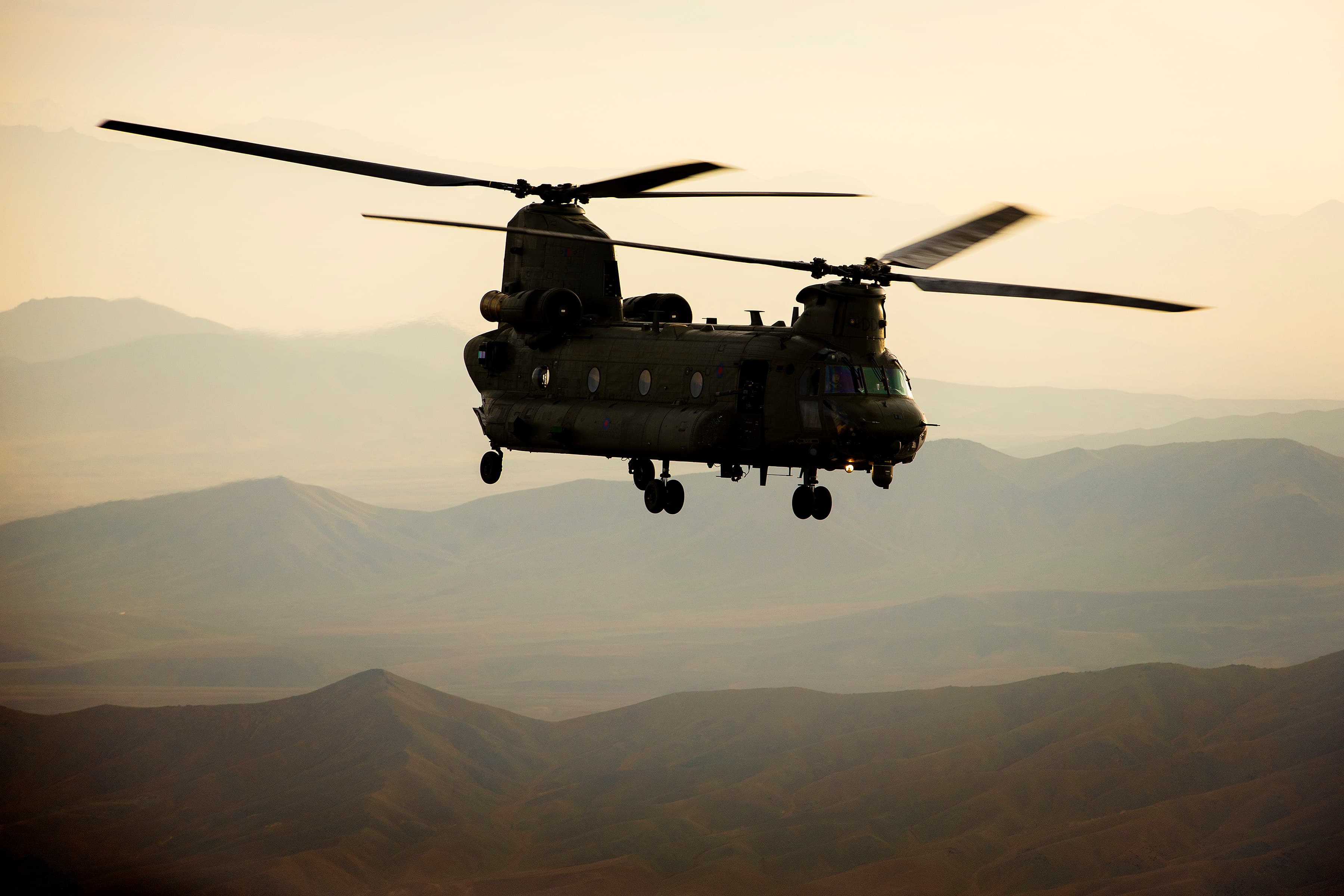
They came in from several directions at once, and there were a lot of them. Betty Cash later put the number at 23. They were not distant specks. They roared in low over the forest, converging on the object as though escorting it, or herding it, or trying to box it in. Among them the witnesses described large tandem-rotor aircraft, the double-bladed shape of a CH-47 Chinook, the heavy-lift workhorse of the U.S. Army.
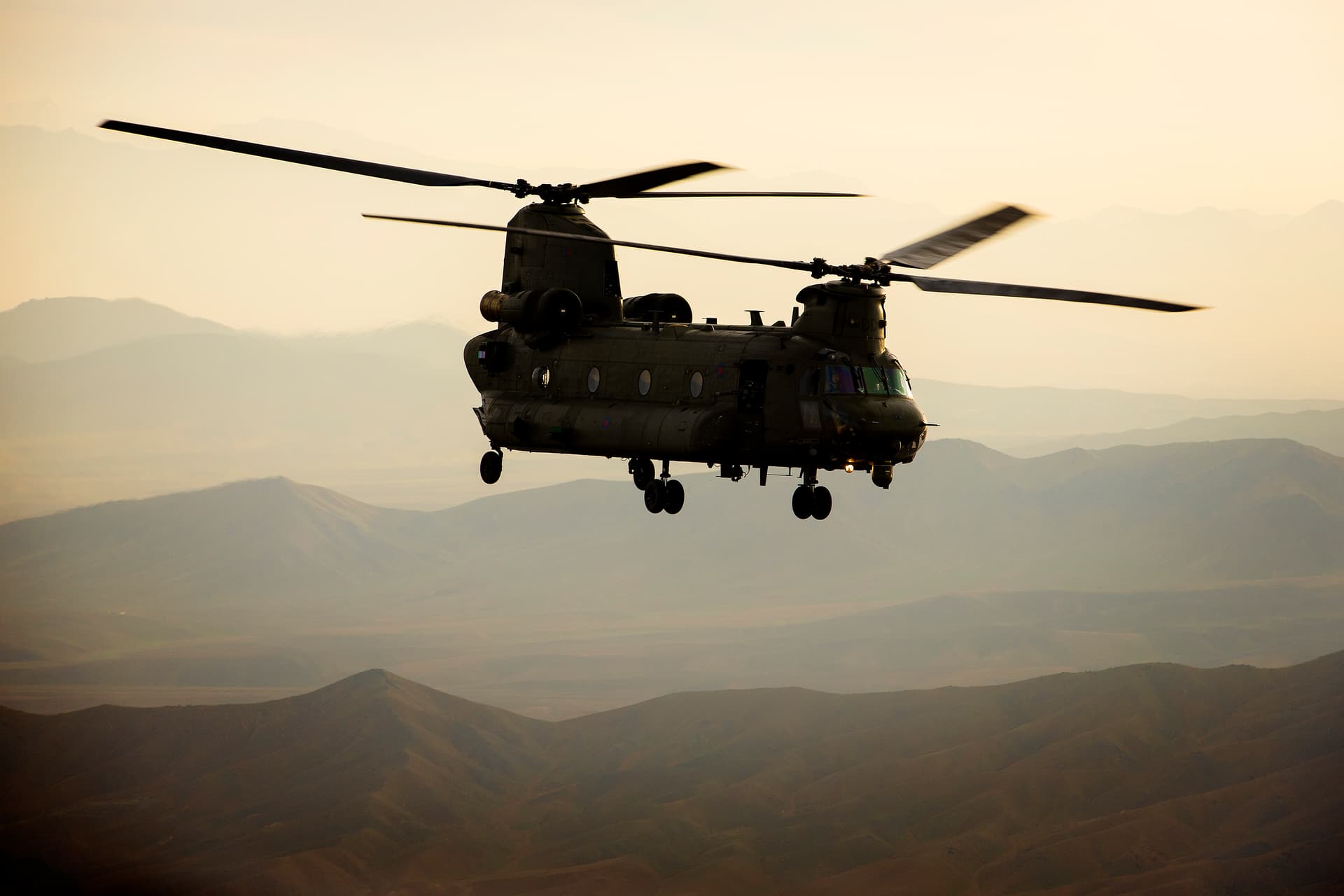
This is the detail that lifts Cash-Landrum out of the ordinary catalog of lights in the sky. A diamond of flame over a country road is one witness's word against the dark. Two dozen military helicopters thundering over the treetops of suburban-adjacent Texas is a formation that hundreds of people should have heard, that air traffic control should have tracked, that some base somewhere should have logged. The object and its escort moved off together toward Houston, and the helicopters filled the sky with the sound of engines as they went. Betty got the car moving again. As they drove, they could still see the aircraft in the distance, wheeling around the fading glow. Other residents of the area, questioned later, reported the same swarm of helicopters passing over that night. Whatever the diamond was, it did not travel alone, and it did not travel quietly.
The Sickness That Followed
Within hours, all three were ill. Betty Cash, who had spent the most time outside the car and closest to the object, was the worst. Overnight she developed a pounding headache, nausea, and vomiting. Her neck and face swelled. Blisters rose on her skin. Over the following days her symptoms worsened until she was hospitalized, at first treated as a burn victim, her skin peeling, welts breaking open, and clumps of her hair coming out. She would spend weeks in and out of the hospital.
Vickie and Colby were sick too, though less severely: nausea, diarrhea, weakness, burning eyes that watered and reddened, patches of skin that felt scorched. Vickie's hair thinned. Colby, the child, developed sores. Taken together, the pattern that physicians and later investigators described looked less like an ordinary burn and more like the signature of exposure to ionizing radiation combined with intense heat and ultraviolet light. This is what makes the case so unusual in the literature. Most UFO reports leave nothing behind but testimony. This one left three human beings whose bodies recorded the encounter, and medical files that documented the damage as it unfolded.
Betty Cash never fully recovered. Her health declined over the following years through a series of serious illnesses, including cancer. She died in 1998, and as those who followed the case have often pointed out, the date of her death fell on December 29, the anniversary of the night on FM 1485. Vickie Landrum lived longer but carried her ailments for the rest of her life. Two grandmothers and a small boy, on their way home from a canceled bingo game, paid a physical price that the rest of the story never fully explained.
A NASA Engineer Takes the Case
The person who did the most to keep Cash-Landrum from vanishing into rumor was John F. Schuessler. Schuessler was not a tabloid figure. He worked as an aerospace engineer on the U.S. manned spaceflight program, spending years in mission operations for the Space Shuttle, and he served for decades as a leading investigator and administrator for the Mutual UFO Network, or MUFON. He had the training to read a technical account skeptically and the patience to chase paperwork.
Schuessler interviewed the witnesses at length, tracked down their medical records, logged their symptoms against the profile of radiation injury, and eventually laid the whole case out in his book, "The Cash-Landrum UFO Incident." What he assembled was not proof of anything alien. It was something harder to wave away: a documented sequence in which three ordinary people encountered an unidentified object, showed up in emergency rooms with injuries consistent with radiation and thermal exposure, and were then unable to get any branch of the government to acknowledge that the object, or its helicopter escort, had ever been there. Schuessler's files turned a roadside story into a case with a spine.
Suing a Government That Owned Nothing
Betty Cash and the Landrums did not think they had met a spaceship. They thought they had been injured by something the government was flying, and they wanted the government to pay for the harm. Represented by attorney Peter Gersten, who worked with the group Citizens Against UFO Secrecy, they filed a claim and then a lawsuit against the United States seeking around 20 million dollars in damages. The legal theory was straightforward: those were military helicopters, that was a government craft in trouble, and its operators had recklessly exposed civilians to a dangerous device.
Here the case turned strange in a way that no one on the witness side expected. To win, the plaintiffs had to prove the object belonged to the United States. And the United States, through the Army, the Air Force, the Navy, and NASA, stated flatly that it did not. No branch owned an aircraft matching the description. No branch had a fleet of 23 helicopters operating in that area that night. In August 1986, a federal judge in Houston dismissed the case, on the grounds that the plaintiffs had failed to show the object was a U.S. government vehicle, because the government maintained it possessed nothing of the kind.
Read that again slowly. The government's successful defense was not that the encounter never happened. It was that whatever burned those three people and darkened the sky with helicopters was not ours. The victims lost precisely because the object was, officially, unidentified. The one institution in a position to explain the injuries won its case by disowning the craft entirely.
The Helicopters That Weren't There
Under pressure from members of Congress responding to constituent inquiries, the Army did look into it. The Inspector General assigned an officer, Lt. Col. George Sarran, to investigate the helicopter question. Sarran interviewed the witnesses and canvassed military units that might have had aircraft in the region. His conclusion, reported back through official channels, was that he could find no evidence that any U.S. military helicopters had been flying in that area on the night of December 29, 1980.
On its face that sounds like closure. In practice it deepens the hole. Because the helicopters were not a private hallucination shared by three people in one car. Betty Cash counted them. Vickie and Colby saw them. Other people in the area reported them. Twenty-three low-flying military helicopters are among the least deniable objects in the sky, and yet the Army's own inquiry could not attach them to a single squadron, base, or flight log. Either two dozen aircraft flew a coordinated nighttime operation over populated East Texas and left no trace in the records, or the records exist and were not shared. Neither reading is comfortable. Both leave the central fact untouched: multiple witnesses watched a fleet of helicopters that, officially, was never there.
What Could It Have Been?
Set the alien question aside for a moment, because the most unsettling explanations for Cash-Landrum are entirely terrestrial.
The theory that has always drawn the most attention is that the diamond was an experimental craft in distress, possibly one testing an exotic propulsion or power source, and that the helicopters were a recovery and containment operation scrambled to shepherd a malfunctioning prototype back to safety. The radiation-style injuries fit uneasily but suggestively with the idea of a device leaking something it should have contained. It would explain the escort, the secrecy, and the government's refusal to claim the object: you do not admit ownership of a black program that just irradiated three taxpayers on a county road. What it does not explain is why no such craft, in more than four decades since, has ever surfaced in any declassified file, memoir, or budget line, and why the Army's investigation would deny the helicopters at all rather than simply classify them.
A second reading takes the witnesses fully at their word and the government fully at its word: the object was genuinely unidentified, and the military helicopters were doing exactly what the witnesses thought they were doing, chasing or escorting something the Army itself did not control. That version keeps every reported fact intact and pays for it with the largest mystery of all.
And there is the flat conventional attempt, that the sighting was a misperceived industrial flare or aircraft and the illness a coincidence or a reaction to something unrelated. It runs aground on the medical records. Three people do not develop the overlapping signature of radiation and thermal injury from watching a distant gas flare. The burns were real. The hair loss was real. The hospital stays were real. No account that treats the injuries as imaginary is describing the same case the doctors were.
Why Cash-Landrum Still Matters
Most famous UFO encounters ask you to weigh a witness's sincerity against your own doubt. Cash-Landrum asks something else. It hands you a diamond of flame you can disbelieve, a helicopter fleet that hundreds should have heard, a lawsuit in the federal record, an Army inquiry, and three sets of medical charts, and it asks you to make all of them agree. They do not.
The witnesses were not seeking fame; they were seeking a diagnosis and, later, a defendant, and they got neither satisfaction. The government did not deny that something happened; it denied only that the something was its own. And the injuries sit there in the middle of the argument, unmoved by any of the explanations offered on either side. Whatever rose over FM 1485 that night, breathing fire and trailed by two dozen helicopters, it left three ordinary people marked for the rest of their lives, and it left the rest of us a case that no one has ever fully accounted for.
Frequently Asked Questions
What exactly did Betty Cash and the Landrums see?
They described a large diamond or cone-shaped object hovering over the road at treetop height, shedding a band of blue lights and firing a roaring column of flame downward in bursts that seemed to lift it. It gave off intense heat and, within a few minutes, was joined by a swarm of military helicopters. All three witnesses gave consistent accounts of the same object, and their stories never materially changed in the years afterward.
Were their injuries actually documented?
Yes, and that is what sets the case apart. All three sought medical treatment, Betty Cash most extensively. Their symptoms, including nausea, skin blistering, hair loss, and eye damage, were recorded in medical files and matched the general profile of exposure to ionizing radiation combined with heat. Investigator John Schuessler compiled these records as the backbone of his study of the case.
Did the government ever admit involvement?
No. The Army, Air Force, Navy, and NASA all denied owning any craft matching the description or operating a fleet of helicopters in the area that night. When the witnesses sued for damages, their case was dismissed in 1986 specifically because they could not prove the object belonged to the United States, since the government insisted it did not.
If 23 helicopters were there, why is there no record?
That is the question that keeps the case alive. The helicopters were seen by all three witnesses and reported by others in the area, yet an Army Inspector General investigation concluded it could find no evidence that U.S. military helicopters were flying there that night. Either an unlogged nighttime operation left no paper trail, or the paper trail was never released. Neither answer explains the aircraft away.
Could it have been a secret experimental aircraft?
Many researchers suspect the diamond was a prototype in trouble and the helicopters a recovery team, which would neatly explain the escort and the secrecy. But in more than forty years, no such craft has appeared in any declassified document, and no official explanation has ever been offered for the injuries. The idea fits the shape of the mystery without ever filling it in.
Further Reading
Want to explore more mysteries?
We've got plenty more rabbit holes to go down.