Ettore Majorana: The Physicist Who Decided to Disappear
In March 1938 one of Europe's most brilliant physicists withdrew all his money, boarded a night ferry, and vanished. In 2015 Italy ruled he had lived on.
Enrico Fermi did not hand out praise. He was the most formidable physicist in Italy, the man who would soon win a Nobel Prize and then help build the first nuclear reactor, and he measured his colleagues with a cool, exact eye. Yet when Fermi spoke about one of his young researchers, the caution fell away. There were ordinary scientists, he said, and there were first-rate ones who made discoveries of lasting importance. And then, rarely, across whole centuries, there were geniuses like Galileo and Newton. Ettore Majorana, he told anyone who asked, was one of these. Majorana had something, Fermi added, that no one else in the world had.
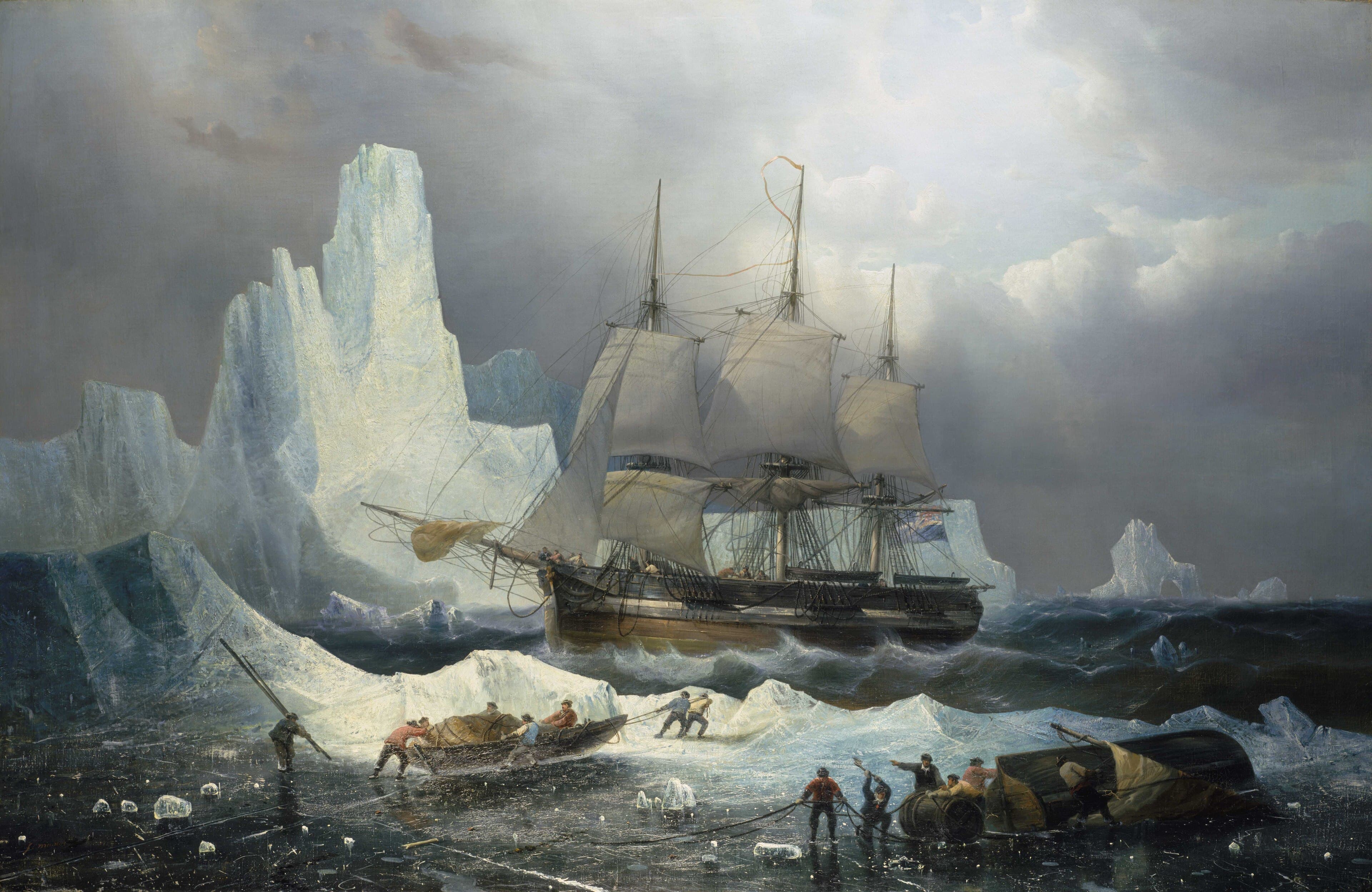
On the night of March 25, 1938, that man walked onto a steamer crossing from Palermo to Naples and was never reliably seen again. He had drawn every lira from his bank account a few days earlier. He had written two letters pointing in opposite directions, one announcing an irreversible decision, the other taking it back. He was thirty-one years old, newly appointed to a professorship he had been handed on the strength of pure brilliance, and he vanished so completely that it would take Italy another eighty-six years to formally declare him dead. The strangest part is not that he disappeared. It is that a mind capable of seeing further into matter than almost anyone alive chose, for reasons no one has ever settled, to erase himself from the world.
This article contains affiliate links. If you buy through them we may earn a small commission at no extra cost to you.
What You'll Learn
- •The Boy from Catania
- •The Via Panisperna Boys
- •The Discovery He Refused to Publish
- •The Neutrino That Is Its Own Antiparticle
- •The Professor Who Withdrew Into Silence
- •The Night Crossing
- •Two Letters, Pointing Opposite Ways
- •Five Ways to Vanish
- •The Photograph from Valencia
- •The Particle That Vanishes Too
- •Frequently Asked Questions
The Boy from Catania
Ettore Majorana was born in Catania, on the eastern coast of Sicily, on August 5, 1906, into a family where ability ran like a current. His uncle Quirino Majorana was an established experimental physicist. The household was prosperous, intellectual, and devoutly Catholic, and the boy stood out even among relatives used to clever children. He did arithmetic in his head the way other children hummed songs, running long calculations under a table and announcing the answer before anyone had reached for a pencil.
He began studying engineering at the University of Rome in 1923, following the sensible path for a gifted young man who would need a profession. But in 1928 a fellow student named Emilio Segrè, who would later win his own Nobel Prize, pulled him into Fermi's orbit. Majorana walked into the physics institute, listened to the kind of problems Fermi's group was wrestling with, and switched fields almost on the spot. Within a year he was not a promising recruit. He was, by the quiet consensus of the most talented physicists in the country, the sharpest person in the room.
The Via Panisperna Boys
Fermi's team worked in a building on Via Panisperna in Rome, and they became known to history as the Via Panisperna boys. They gave each other nicknames drawn from the Church they had grown up inside. Fermi was "the Pope," infallible on matters of physics. Franco Rasetti was "the Cardinal Vicar." Majorana they called "the Grand Inquisitor," and the name fit him better than anyone perhaps intended. He was the one who found the flaw. He could listen to a colleague lay out a result, see straight through it to the weakness underneath, and dismantle it with a few sentences. He held his own work to the same merciless standard, which is a large part of why so little of it ever reached print.
He was not an easy man. He was shy to the point of pain, physically slight, dark, and private, more comfortable with a problem than with a person. He published only a handful of papers in his entire life, a thinness of output that would have ended most academic careers. In Majorana's case it did the opposite. Each paper, when it finally appeared, was so far ahead of its moment that colleagues spent years catching up. The shortage of pages was not a shortage of ideas. It was a surplus of standards.
The Discovery He Refused to Publish
In early 1932, physics was circling a mystery at the heart of the atom. Experiments in Paris by Irène Joliot-Curie and Frédéric Joliot had produced a strange, penetrating radiation that no one could quite name. Majorana, reading the results, worked out what it meant before almost anyone. According to his colleagues, he sketched a model of the atomic nucleus built from protons and a new neutral particle, complete with the forces binding them together, and showed it to Fermi.
Fermi was electrified and told him to publish at once. Majorana refused. He thought the work was not ready, not important enough, not sufficiently finished to put his name on. He let it sit. A few months later James Chadwick in England confirmed the neutron's existence, and later in 1932 Werner Heisenberg published a nuclear model strikingly close to the one Majorana had already drawn and buried in a drawer. When his friends pointed this out, Majorana was reportedly untroubled, even amused. He had been right. That he had let someone else announce it seemed, to him, beside the point. It is one of the most telling anecdotes in the history of modern physics: a man who could have claimed one of the era's great insights and simply chose not to bother.
The Neutrino That Is Its Own Antiparticle
The paper that secured his immortality came in 1937, and it was his last. In it, Majorana reworked the mathematics describing how fundamental particles behave, and he uncovered a possibility hidden inside the equations that Paul Dirac had written a decade earlier. Dirac's theory predicted that every particle has an antiparticle, a mirror twin with opposite charge. The electron has the positron. For a charged particle, the two are clearly different things.
But Majorana asked what happens to a particle with no electric charge at all. For such a particle, he showed, there is no reason the mirror twin has to be a separate entity. The particle could be its own antiparticle, identical to its own reflection. Physicists now call such an object a Majorana fermion, and the leading candidate to actually be one is the neutrino, the ghostly, nearly massless particle that streams through the earth and through our bodies in uncountable numbers every second. Whether the neutrino is truly its own antiparticle remains, to this day, one of the open questions of physics. Entire underground experiments exist to answer it, one of them named the Majorana Demonstrator in his honor. He wrote down the idea in 1937 and walked away from physics forever a few months later, leaving the rest of us to spend the next century finding out whether he was right.
The Professor Who Withdrew Into Silence
After returning from a 1933 research trip to Leipzig, where he met Heisenberg and impressed him deeply, Majorana changed. He had worked abroad, published a dense and admired paper on nuclear theory, and then, back in Rome, he slowly drew the shutters. For roughly four years he withdrew from the institute almost entirely. He stopped appearing at the lab, kept to his family's home, let his health and his appearance slide, and worked, when he worked at all, in private on problems he showed to no one. His colleagues worried. No one could reach whatever had closed over him.
In November 1937 he re-emerged just enough to accept a position. The University of Naples appointed him full professor of theoretical physics, and the appointment was extraordinary: he was given the chair without the usual competitive examination, on the grounds of his exceptional and acknowledged fame. He moved to Naples in January 1938 and began to lecture, though to only a handful of students. He was, by every account, courteous, remote, and somewhere else. In the weeks before he vanished he handed a folder of his personal scientific notes to one of his students, Gilda Senatore, as if setting his papers in order. At the time it meant nothing. Afterward it read like a man quietly closing accounts.
The Night Crossing
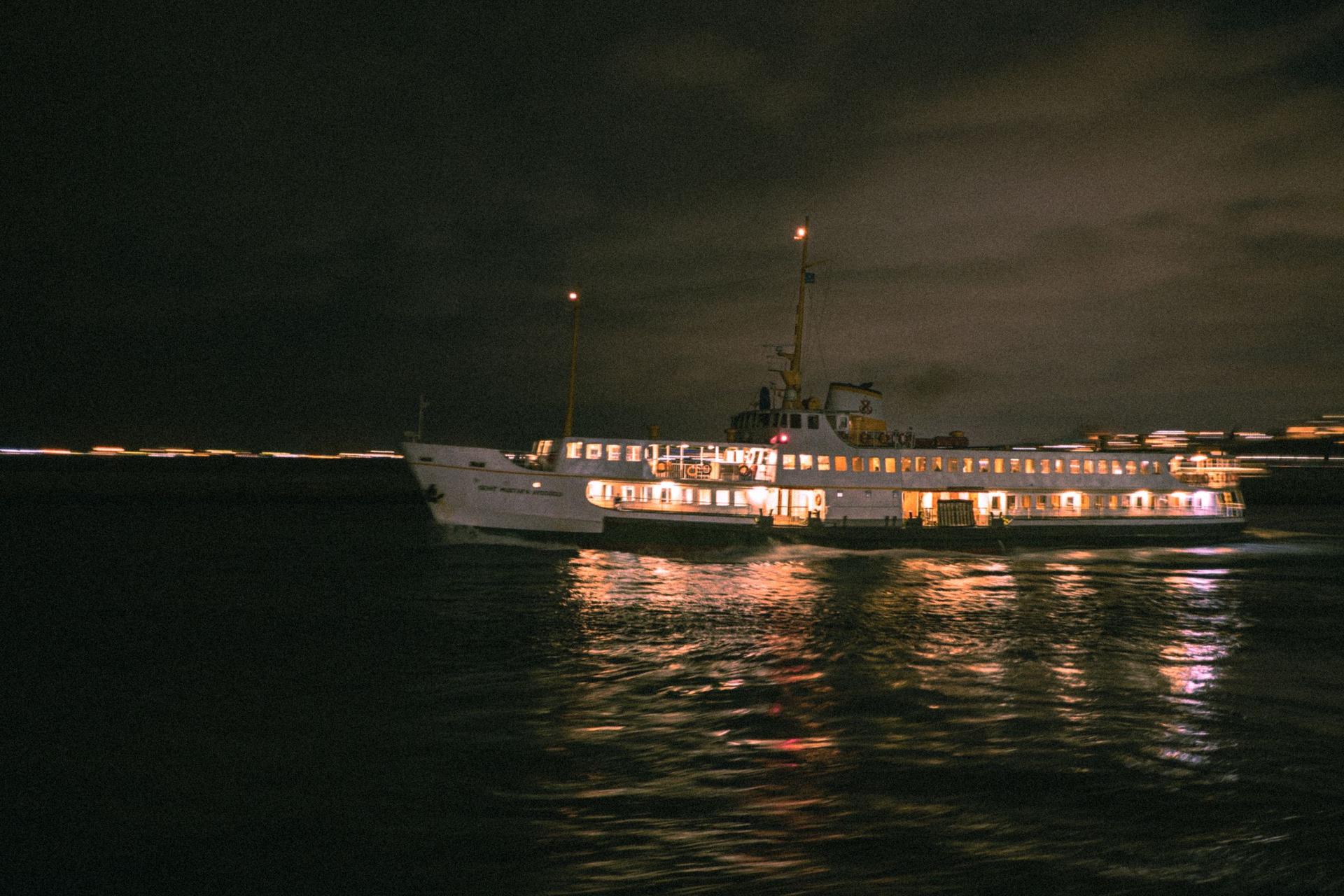
What happened next can be assembled almost hour by hour, and the sequence only deepens the puzzle. In the days before March 25, Majorana withdrew all the money from his bank account and gathered his passport. On the evening of March 25, 1938, he boarded a steamer from Naples bound for Palermo, the long way around the Tyrrhenian Sea to the Sicily he had come from. He may have intended to visit Segrè, though Segrè was in California and could not have been there to meet him.
Before he left, he mailed a letter to Antonio Carrelli, the director of the Naples physics institute and a colleague he respected. Its tone was final. He wrote that he had made a decision that had become unavoidable, apologized for the trouble his disappearance would cause, and asked to be remembered warmly to the people he had known. There was no mistaking what a letter like that, from a reclusive and unhappy man carrying all his money toward the sea, appeared to mean. Carrelli read it with alarm. And then, the very next morning, the story turned inside out.
Two Letters, Pointing Opposite Ways
A telegram arrived from Palermo, sent by Majorana, telling Carrelli not to be alarmed, that a letter would follow. The letter came too. In it, writing now from the far side of the crossing, Majorana took back everything the first letter had said. He had changed his mind. The sea, he suggested, had not given him what he went looking for. He asked Carrelli to disregard the earlier message, said he intended to return to Naples, and worried, almost absurdly for a man in his state, about the inconvenience his absence might cause to his teaching. He was, the second letter insisted, coming back.
He then bought a ticket for the return steamer from Palermo to Naples and, on the night of March 25 going into the 26th, apparently boarded it. Here the trail dissolves. A professor of mathematics from Palermo, Vittorio Strazzeri, who shared the crossing, later recalled a young man answering Majorana's description on board, seeming ordinary enough. But when the ship reached Naples, Majorana was not among the passengers who came ashore. No struggle, no outcry, no body. The phrase most often repeated in retellings, that the sea had "refused" him, has hardened into legend, yet what the surviving letters actually say is stranger and more ambiguous than any clean story of a man stepping over a railing. He announced an ending, retracted it, booked passage home, and then became nothing. Carrelli alerted the university and, by the end of March, the police. The search found a great deal of worry and not one solid trace.
Five Ways to Vanish
Nearly ninety years later, the disappearance still refuses a single answer, and the theories sort into a few distinct shapes, each explaining part of the evidence and tripping over the rest.
The first is suicide at sea. This is the reading his closest colleagues, Edoardo Amaldi and Emilio Segrè among them, found hardest to escape: the withdrawn money, the farewell letter, the night water. What it cannot absorb is the second letter, the telegram, the return ticket, and the testimony that he boarded the ship home. A man determined to drown himself does not wire ahead to say he is fine and buy passage back.
The second is the monastery. The writer Leonardo Sciascia, who turned the case into a small masterpiece of investigation, rejected suicide outright. Majorana was a devout Catholic, and self-destruction sat wrong against everything in his character. Sciascia suspected he had withdrawn into religious life, perhaps the Carthusian charterhouse of Serra San Bruno in the Calabrian mountains, a silent order where a man could truly disappear while still drawing breath. There were later stories of monks who turned away visitors asking after a brilliant stranger. None was ever confirmed.
The third is flight to South America. A new identity, a ship across the Atlantic, a life rebuilt under another name far from Europe and the war everyone could feel coming. This theory would wait decades for its strongest evidence, and when it arrived it would come with a photograph.
The fourth is darker: that he was taken. Some have argued that Majorana understood, earlier and more clearly than his peers, where nuclear physics was heading, and that he removed himself, or was removed, to keep that knowledge out of the hands of a regime building toward war. He had seen the neutron and the structure of the nucleus before the field caught up. The idea that he glimpsed the bomb coming and recoiled is seductive, and it rests on motive rather than any document.
The fifth is the quietest and in some ways the most haunting: that he simply became no one. In Sicilian tradition there lingers the figure of the "omu cani," the dog man, a wanderer who gives up name and station to live as a beggar. A handful of researchers have wondered whether Italy's most gifted physicist spent his remaining years anonymous and unhoused, a silent man on the margins, carrying an intellect no one around him would ever guess at. None of the five accounts for everything. Each leaves a loose thread hanging in the dark.
The Photograph from Valencia
For most of a century the case sat cold. Then, in 2008, a witness came forward on the Italian television program Chi l'ha visto? ("Who Has Seen Him?"), and in 2011 the Rome Attorney's Office opened a formal inquiry. The witness was Francesco Fasani, a man who had emigrated from Italy and said that in the 1950s, in South America, he had befriended a reclusive, learned Italian who went by the name Bini. This Mr. Bini, Fasani said, was Ettore Majorana. He had a photograph: an image of himself with Bini, and a postcard the man had sent, marked with the name Bini-Majorana and dated June 1955.
Investigators took the claim seriously enough to subject the photograph to forensic analysis. The RIS, the scientific branch of the Carabinieri, compared the face of the man in the 1950s image with known photographs of Majorana from the 1930s and reported finding ten points of correspondence between them. The accounts tangle on geography, with some pointing to Buenos Aires in Argentina and the prosecutors settling on the Venezuelan city of Valencia, a knot the investigation never fully untied. But on February 4, 2015, the Rome Attorney's Office issued a conclusion that rewrote the entire story. Majorana, it stated, had been alive and living in Valencia, Venezuela, between 1955 and 1959, seventeen years and more after he was supposed to have drowned. Finding no evidence of a crime and judging the disappearance a matter of personal choice, the office closed the case.
It was not a courtroom verdict, and it did not pretend to be proof. It rested on an old man's memory and a comparison of faces across two decades of aging. But it meant that the official position of the Italian state became, formally, that the night crossing of 1938 was not a death at all. It was a vanishing act, and it worked. Only on December 19, 2024, nearly nine decades after he walked onto that ship, did a Rome court finally issue a decree declaring Ettore Majorana presumed dead, backdating the death to the day he disappeared. The law had to pretend to a certainty that the evidence never supplied.
The Particle That Vanishes Too
There is a final strangeness to this story, and it belongs to physics rather than police files. The Majorana fermion, the self-mirroring particle he conjured out of pure mathematics in 1937, has itself proven almost impossible to pin down. For decades it existed only on paper. Then physicists realized that under exotic conditions, in superconducting wires chilled to near absolute zero, collective behavior might appear that mimics a Majorana particle, a so-called Majorana zero mode. These objects became the great hope of topological quantum computing, prized because such a state could, in theory, store information in a form shielded from the noise that wrecks ordinary quantum bits.
In 2018 a prominent research group published, in the journal Nature, what it presented as strong evidence for Majorana zero modes. The result made headlines. By 2021 the paper had been retracted, after scrutiny revealed that the signal could be produced by more ordinary states and that the data had been handled in ways that overstated the case. When Microsoft announced a chip named Majorana 1 in February 2025, declaring a milestone toward topological qubits, much of the physics community responded with open skepticism, noting that the hardest part is not building the device but proving the elusive particle is really there at all. The problem, as one account put it, is that no one is entirely sure how to spot one.
Sit with that for a moment. The man saw something no one had seen, wrote it down, and disappeared so thoroughly that his own country could not declare him dead for eighty-six years. The particle he imagined does precisely the same thing: it hovers at the edge of detection, seems to appear, and dissolves the instant anyone tries to confirm it. The Grand Inquisitor who demanded proof before he would publish left behind a creation that may be fundamentally resistant to proof. Ettore Majorana and the Majorana fermion share one defining trait. The closer you look, the more certain you become that something is there, and the less able you are to ever quite lay hands on it.
Frequently Asked Questions
Did Ettore Majorana kill himself on the night ferry? It is the oldest and most intuitive theory, supported by the withdrawn money and the farewell letter, and his closest colleagues leaned toward it. But it collides with everything that happened next: the telegram telling Carrelli not to worry, the second letter retracting his decision, the return ticket he bought, and the witness who placed a man matching him on the ship back to Naples. Suicide explains the beginning of that night and none of its ending.
What did the 2015 Italian investigation actually conclude? The Rome Attorney's Office stated that Majorana had been alive in Valencia, Venezuela, between 1955 and 1959, living under the name Bini, and it closed the case on the view that his disappearance was a deliberate personal choice rather than a crime or a death. The conclusion rested largely on the testimony of a witness, Francesco Fasani, and on a forensic comparison of a 1950s photograph with Majorana's known features that reported ten points of similarity. It was an investigative finding, not a proven fact, and the geography of the sightings never fully resolved between Venezuela and Argentina.
Was Majorana really as brilliant as people claim? Enrico Fermi, who was not generous with praise, placed him in the company of Galileo and Newton and said Majorana had something no one else in the world had. He conceived a model of the atomic nucleus before the field confirmed the neutron, then declined to publish it, and his 1937 paper predicted a particle, now called the Majorana fermion, that physicists are still hunting for in underground laboratories today. The reputation is not sentiment. It is the judgment of the people best equipped to measure him.
Could he really have lived for decades without anyone recognizing him? He was intensely private, published rarely, avoided photographs and public life, and carried his passport and all his money when he vanished. A man that withdrawn, determined to stay hidden and willing to take another name, would have been far easier to lose than a public figure. Whether he spent those years as a quiet émigré in South America, a monk in a silent order, or an anonymous wanderer on Sicily's roads, every version of his survival turns on the same quality that defined him in life: an almost total unwillingness to be seen.
Why did Italy take until 2024 to declare him dead? Because the evidence never allowed a clean conclusion. With no body, contradictory letters, and a 2015 state finding that he had been alive in the 1950s, there was nothing to anchor a death to. The Rome court decree of December 2024 that finally declared him presumed dead, backdated to the day of his disappearance, was a legal formality imposed on a mystery that has never actually closed. On paper the case is settled. In every way that matters, it is exactly as open as it was on the morning Carrelli opened two letters that could not both be true.
Further Reading
For readers who want to follow the full case and the world that produced it, three books stand out:
- •The Moro Affair and the Mystery of Majorana by Leonardo Sciascia, the elegant literary investigation that revived the case and argued against the suicide theory.
- •A Brilliant Darkness: The Extraordinary Life and Mysterious Disappearance of Ettore Majorana by João Magueijo, a physicist's deeply researched account of both the man and the physics.
- •The Pope of Physics: Enrico Fermi and the Birth of the Atomic Age by Gino Segrè and Bettina Hoerlin, which brings the Via Panisperna world and Majorana's place in it to life.
For more vanishings that were never truly solved, see our accounts of Louis Le Prince, the inventor of the movie camera who disappeared from a train, and Percy Fawcett, the explorer swallowed by the Amazon, or browse our roundup of the best books on famous disappearances.
Want to explore more mysteries?
We've got plenty more rabbit holes to go down.