The Westall UFO: 200 Witnesses and a School Told to Forget
On a 1966 morning, hundreds of students and staff at a Melbourne school watched a silver object drop behind the trees. Sixty years on, nobody has explained it.
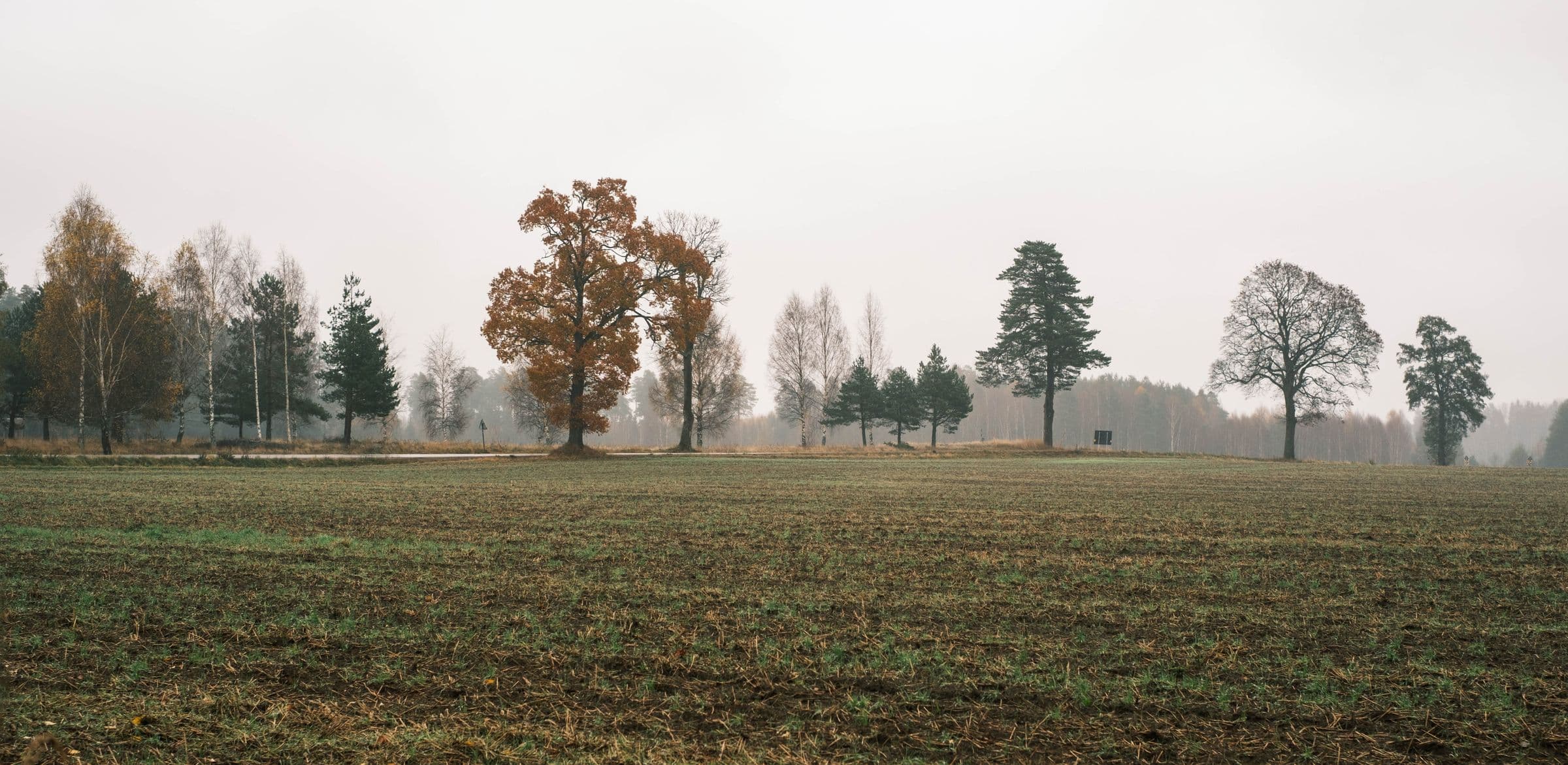
The morning was flat and grey over Clayton South, the kind of overcast suburban Wednesday that promises nothing. Then a girl on the oval looked up. On April 6, 1966, during the mid-morning break at Westall High School in the southeastern suburbs of Melbourne, students playing sport on the field stopped and pointed at a round object with a domed top, silver or grey against the dull sky, dropping toward the open ground of The Grange just south of the school. Within minutes the oval had emptied of its games and filled with children all staring at the same thing. By the time it was over, by some counts more than two hundred people, students, teachers, and a few neighbors, said they had watched a solid object descend, sit on the far grass, and climb away.
What happened next is almost stranger than the sighting. There was a newspaper story, a burnt circle in a field, and then a long institutional silence that settled over the whole thing like a lid. The students were told, in various accounts, to say nothing. No Australian government file on the event has ever been produced. And for nearly forty years, the largest mass UFO sighting in Australian history was something a few hundred middle-aged Australians carried privately, each half-wondering whether the others remembered it the same way. When someone finally asked them, in the early 2000s, they did.
This article contains affiliate links. If you buy through them we may earn a small commission at no extra cost to you.
What You'll Learn
- •A Wednesday Morning in Clayton South
- •What the Children Said They Saw
- •The Science Teacher Who Went on the Record
- •The Aircraft That No One Could Account For
- •The Ground at The Grange
- •"School Silent": The One Newspaper That Ran It
- •The Men Who Told Them to Forget
- •The Balloon That Might Explain Part of It
- •The Memory Problem
- •Two Schoolyards, Two Hemispheres
- •The Town That Built a Monument
- •Frequently Asked Questions
A Wednesday Morning in Clayton South
Westall High School sat in a working suburb southeast of Melbourne, next door to Westall State School and backing onto The Grange, a stretch of open grassland and scrub that ran down toward a pine plantation and the Grange Reserve. In 1966 this was the edge of the city, half paddock and half new brick houses, the sort of place where children still crossed open ground to get home.
The sighting happened in daylight, during a break when the ovals were full. That detail matters. This was not a light in the night sky glimpsed by one or two people. It was a solid-seeming object in broad daylight, seen by children who were outside precisely because it was recess, with teachers close enough to be pulled out to look. Estimates of the crowd vary from "over a hundred" to the Herald Sun's later figure of more than three hundred children and staff. Whatever the exact number, it was large enough that the problem has never been finding witnesses. The problem has been explaining what so many of them saw at once.
What the Children Said They Saw
The core description is consistent across the accounts gathered both at the time and decades later: a round object, flattened, with a slight dome on top, colored somewhere between silver, grey, and white. Several students said there were three objects rather than one, though the single descending craft dominates the retellings. Shaun Matthews, who was at The Grange, described an object with a faint purple tint, roughly twice the size of a family car.
Witnesses said it descended behind a stand of trees into The Grange, out of direct sight for a stretch, which is why the accounts split over whether it fully landed, touched down briefly, or hovered just above the grass before rising. Then, by most tellings, it climbed steeply and fast and was gone over the horizon to the northwest.
Children do not usually agree in a crowd. They embellish, they compete, they contradict. What investigators who reached these witnesses noticed, both in 1966 and again forty years on, is how little the central image drifted: round, domed, metallic, low over the far field, gone in minutes. The disagreements are at the edges, the kind of edges real memories have.
The Science Teacher Who Went on the Record
The most valuable witness, from the standpoint of anyone trying to pin the event down, was not a child. Andrew Greenwood was a young science teacher at the school, and unlike the students he could be pressed for detail by adults who knew how to ask. He gave an interview to the local Dandenong Journal in April 1966, and the following year, in 1967, he spoke with Professor James E. McDonald, the University of Arizona atmospheric physicist who had become one of the few credentialed scientists in the world taking UFO reports seriously and interviewing witnesses directly.
To McDonald, Greenwood described a round, silver object about the size of a car, with a kind of metal rod or protrusion sticking up from it. He said it was circled by light aircraft, and that at one point it moved in a way he could not reconcile with any plane, finally vanishing by accelerating away at a speed he had no reference for. His account does not match the students' in every particular, which is itself worth sitting with: if this were a rehearsed story or a schoolyard contagion, the adult closest to it would be expected to echo the children, not diverge from them. He diverged, and he kept diverging in the same direction for the rest of his life.
That McDonald bothered to interview a suburban Melbourne science teacher at all tells you something. McDonald spent the late 1960s building the most rigorous witness-interview record anyone had assembled, and he did not waste his time on cases he could wave away. He never published an explanation for Westall.
The Aircraft That No One Could Account For
The planes are the detail that refuses to fit any tidy story. Multiple witnesses, Greenwood among them, described light aircraft in the sky around the object, as many as five, flying low and circling it. Greenwood characterized it as a "cat and mouse" game, the planes seeming to pursue or shadow the thing while it moved among and away from them.
Here is the hole. When the event was later checked, no commercial pilot, no private pilot, and no Royal Australian Air Force pilot had filed any report of an unusual object over Clayton South that morning. So either several aircraft independently chose to circle a weather balloon in formation over a suburb and then all declined to mention it, or the planes were there for the object and the fact of their being there was something nobody wanted written down. Neither reading is comfortable. The planes are real in the testimony and absent from the paperwork, and that gap has never closed.
The Ground at The Grange
After the object lifted away, students went to the spot where it had seemed to come down. What they found, in accounts that again vary at the edges, was a patch of grass that looked wrong: flattened, pressed, described by some as scorched or "boiled," arranged in a rough circle. Reports range from a single ring to as many as three. One student, more cautiously, remembered only a vague circular area that could have been laid down by wind.
On April 9, three days later, air force personnel and civilian UFO investigators came out to look at the field. By then there was reportedly little to see, and the official visit turned up nothing of interest. Shortly afterward the landowner burned the field off, a practical move to stop the stream of curious visitors tramping across private grass, but one that also meant that whatever physical trace had been there was gone for good within days, examined by almost no one with the training or the inclination to take a sample.
"School Silent": The One Newspaper That Ran It
In April 1966 the Dandenong Journal put the event on its front page under a headline that has aged into something ominous: "Flying Saucer Mystery, School Silent." The same week, The Age offered the earliest conventional explanation, running a short item headed "Object Perhaps Balloon" that pointed to a Weather Bureau balloon released at Laverton at 8:30 that morning as a candidate for what had drifted over Clayton South.
The telling thing is the smallness of the coverage. A daylight event witnessed by two or three hundred people in a major city should have been a sensation. Instead it got a local front page and a quick metropolitan brush-off, and then it dropped out of the news almost entirely. For an event of that scale, the quiet is itself part of the record. The headline said the school was silent. It does not say who told the school to be.
The Men Who Told Them to Forget
This is where Westall moves from an unexplained sighting into something colder. A recurring thread in the witness accounts, strongest in the recollections gathered decades later, is that people in the days after April 6 were visited and warned. Students described men in suits at the school telling them not to talk about what they had seen, framing it as a secret exercise. Some witnesses later said reputations were threatened and material was confiscated. The filmmakers who revisited the case reported that film footage shot by a local television crew had gone missing, and that military personnel who came to the field were, in their account, American rather than Australian.
Honesty requires flagging what these claims are and are not. They are testimony and secondhand reporting, not declassified orders. No document has surfaced naming an officer, an agency, or an operation. What can be verified is the shape of the silence: a very large daylight sighting, almost no contemporary press, no Australian government file ever produced despite the event's fame, and a cohort of witnesses who describe, independently, having been made to feel they should keep quiet. You can read that as the residue of an official hush, or as the ordinary way a frightening rumor gets talked down in a conservative suburb in 1966. The witnesses, by and large, read it the first way, and they were the ones who were there.
The Balloon That Might Explain Part of It
The most serious conventional explanation did not arrive until an Australian researcher, Keith Basterfield, dug into Cold War weather-and-radiation programs decades later. Basterfield pointed to HIBAL, a joint Australian and American high-altitude balloon program that flew silvery balloons with trailing parachutes and gas-sampling gear to monitor radiation in the wake of the British nuclear tests at Maralinga. Documents suggest a HIBAL balloon launched from Mildura came down somewhere in the Clayton South area, and the balloons were white-silver with a parachute and a gas tube, which could fit a round, metallic, dome-topped shape with a rod sticking up.
It is a genuinely strong lead, and it is the reason Westall cannot simply be filed as inexplicable. A runaway radiation-monitoring balloon that officials would rather not discuss in 1966 would also explain the hush, the quick "perhaps balloon" line in The Age, and the missing file, without any craft at all. The skeptic Brian Dunning has extended this, suggesting the first part of the event was a balloon and the second part a nylon target drogue towed by a plane of the kind the RAAF used then.
What the balloon does not carry is the rest of the morning. A descending balloon does not get pursued by five low-flying aircraft playing cat and mouse. It does not climb away at the speed Greenwood and others described, against the wind. It does not leave students arguing for sixty years about whether it landed or hovered. The balloon may well be the silver object at the start. It is a poor fit for what the silver object then did.
The Memory Problem
The hardest challenge to Westall is not a balloon. It is the clock. The witnesses were not interviewed systematically until the early 2000s, nearly forty years after the fact, when the researcher Shane Ryan began tracking down the former students and staff and eventually gathered well over a hundred accounts. Psychologists who have looked at the case, among them Richard Saunders, point out that human memory is reconstructive and suggestible, that decades of retelling and conversation among witnesses can harmonize a crowd's recollections into a cleaner, more unified story than any of them actually held at the time. Memory contagion is real, and a reunion of people who all "remember the UFO" is exactly the setting where it operates.
This cuts both ways, and the site's whole reason for existing is to say so plainly. The late interviews weaken the forensic value of the consensus, yes. But the earliest records are not late: the Dandenong Journal ran it in 1966, Greenwood spoke on the record in 1966 and again to a skeptical scientist in 1967, and the field was visited within three days. The memory critique explains how a story could tighten over forty years. It does not explain why the oval emptied on a Wednesday morning in the first place, or what the aircraft were circling. Something happened at 11 in the morning in front of a few hundred people. The argument is only about how much the retelling added.
Two Schoolyards, Two Hemispheres
Westall does not sit alone. Twenty-eight years later and most of a world away, on September 16, 1994, as many as sixty-two pupils at the Ariel School in Ruwa, Zimbabwe stopped during morning break and described a silver craft settling into the scrub beyond their playing field, and a figure near it. The parallels are uncomfortably exact. Both events happened in daylight, at school, during a break, with children as the primary witnesses and most adults indoors. Both were met with institutional discomfort and a push, gentle or otherwise, to let the matter drop. And in both, the witnesses who can still be found describe the same thing decades on, in their forties, fifties, and sixties, without the money or the motive that would make a lie worth maintaining for a lifetime.
You can argue that schoolyards are simply where you get large groups of imaginative young witnesses with time on their hands, which is true. But the pattern also raises a question that neither the balloon nor the memory critique touches: why does the same scene, a silver object low over the far edge of a school field in the middle of a school morning, keep recurring across continents and generations, told by people who had never heard of each other? The daylight mass sighting with official dismissal is a pattern Westall shares with the later Phoenix Lights as well, where thousands watched and the explanation offered never fit the first hour of what was seen.
The Town That Built a Monument
There is a coda to Westall that most mysteries never get. The people who were there did not forget, and eventually the place stopped pretending it had. On April 8, 2006, the fortieth anniversary, witnesses held a reunion at the Westall Tennis Club hall, grown adults comparing a childhood morning they had each kept half to themselves. In the years that followed, the City of Kingston turned the Grange Reserve into a small public park themed to the event, complete with a silver UFO play structure with red slides, built on or near the ground where students once ran to find the pressed grass.
It is easy to read that as kitsch, a council having fun with local folklore. Read it another way and it is a town putting a monument on the exact spot where something it cannot explain came down, in full daylight, in front of its children. The slide is a joke that is also a historical marker. Kingston does not know what the object was either. It just declined to let the field stay silent.
Frequently Asked Questions
How many people actually saw the Westall object? Estimates run from "over a hundred" to more than three hundred students and staff, with a figure of around two hundred used most often. Even the low end makes Westall the largest mass UFO sighting in Australian history, and one of the largest daylight sightings anywhere. The exact count is unknown because no one took a register that morning, and by the time anyone counted, the witnesses had scattered across forty years of adult life.
Was it just a weather or radiation balloon? A runaway HIBAL high-altitude balloon is the strongest conventional candidate for the silvery object itself, and it would neatly explain the official quiet. What it does not explain is the object being circled and pursued by several light aircraft, its reported climb and acceleration, and the pressed or burnt ground. The balloon may account for the first glimpse. It struggles with the whole event.
Why is there no Australian government file on it? No one knows, and that absence is one of the case's most persistent puzzles. For an event this large and this famous, researchers have repeatedly sought official records and come up empty, while witnesses describe being warned off by men they took to be officials. Whether the file never existed or simply never surfaced is itself unresolved.
Did the witnesses' stories hold up over time? The central image, a round, domed, metallic object low over the far field, has stayed remarkably stable from 1966 to the accounts gathered in the 2000s. The disagreements are at the margins: one object or three, landed or hovering, one circle or several. Critics note that four decades of retelling can smooth a crowd's memory into false unity. Supporters note that the earliest records, from days and months after the event, already carry the core story.
What was the metal rod Greenwood described? The science teacher Andrew Greenwood told Professor James E. McDonald in 1967 that the object had a kind of rod or protrusion rising from it. Skeptics point out that a HIBAL balloon trailed a gas tube and gear, which could read as a rod. Whether that explains a car-sized object that then outran five aircraft is the question that will not go away.
Sitting With It
Sixty years on, the Westall file is a strange object in its own right: enormous in witnesses, tiny in documents. We have hundreds of people who agree on a round silver shape low over a Melbourne field on an April morning, a science teacher who told the same story to a newspaper and a physicist and never changed it, aircraft that everyone saw and no pilot reported, a field burned clean within three days, and a government record that should be thick and is instead missing. The balloon explains the glint. It does not explain the chase. The memory researchers explain the tidiness. They do not explain the oval emptying.
The children who ran to the fence that morning are in their seventies now. Most of them never made a cent from it and never wanted to. They just saw something come down out of a grey sky, and were told to be quiet, and were not. The town finally built them a silver slide on the spot, which is as close to an answer as anyone has managed. The object itself has never been identified, and the question it left on that oval still stands: what circles a field at eleven in the morning in front of a whole school, and leaves no file behind?
Further Reading
- •The OZ Files: The Australian UFO Story by Bill Chalker. The standard history of Australian UFO investigation by the country's most careful researcher, Westall included, grounded in documents rather than legend. Find it on Amazon.
- •UFOs: Generals, Pilots, and Government Officials Go on the Record by Leslie Kean. A reputable, source-driven look at mass and official sightings worldwide, useful for weighing why so many large daylight cases end in silence. Find it on Amazon.
- •UFOs and the National Security State by Richard M. Dolan. A chronology of how official bodies handled UFO reports in the Cold War decades, the context in which a suburban school was told to forget what it saw. Find it on Amazon.
Want to explore more mysteries?
We've got plenty more rabbit holes to go down.