Terminal Lucidity: Why Some Minds Wake Just Before Death
Dementia patients who haven't spoken in years turn lucid hours before death. What terminal lucidity reveals about the mind remains unexplained.
She had not spoken a full sentence in years. The woman lay in a German care institution, her mind emptied by disease, her body kept alive by the patient work of nurses who had long since stopped expecting her to know them. Then, on the last afternoon of her life, she sat up. She sang. For roughly half an hour she sang dying songs, in a clear voice, present and aware, as if the person everyone assumed was gone had simply been waiting somewhere out of reach. When the singing stopped, she died.
The physician who witnessed it, Wilhelm Wittneben, was not a man given to sentiment. Neither was the institution's director, Friedrich Happich, who wrote the account down because he could not explain it and did not want it forgotten. What they had seen violated everything medicine understood about a brain that damaged. And it was not a singular event. It happens often enough that it has a name, a body of research, and, in the last few years, funding from the United States National Institutes of Health. It is called terminal lucidity, and no one has been able to fully account for it.
This article contains affiliate links. If you buy through them we may earn a small commission at no extra cost to you.
What You'll Learn
- •What Is Terminal Lucidity?
- •The Woman Who Sang Before She Died
- •A Pattern Hiding in the Records
- •How Often, and How Close to the End?
- •The Paradox Inside the Brain
- •The Dying-Brain Surge
- •Two Names, Two Agendas: Terminal vs Paradoxical Lucidity
- •What the Explanations Leave Out
- •Why It Matters
- •Frequently Asked Questions
What Is Terminal Lucidity?
The term was coined in 2009 by the German biologist Michael Nahm, who defined it as the unexpected return of clear, coherent mental function in a patient whose mind had been severely impaired, arriving in the days or hours before death. The patients in question are not people having a good afternoon. They are people who, by every clinical measure, should no longer be capable of recognition, memory, or conversation: those in the final stages of Alzheimer's disease, patients with brain tumors, people with lifelong developmental disabilities, and those with chronic schizophrenia who had spent decades adrift.
And then, near the end, the fog lifts. A mother who has not known her children in years looks up and says their names. A man who has not formed a sentence in a decade asks, calmly, for the people he loves. The lucidity is usually brief. It is almost always followed, within a short window, by death. Families describe it as a goodbye. Researchers describe it as a phenomenon that the current model of the brain cannot comfortably contain.
What makes this case remarkable is not that it is rare and strange. It is that it is not rare at all. Ask hospice nurses, and many will tell you they have seen it. Ask the families of dementia patients, and a surprising number have a story. The strangeness is that something so widely witnessed sat for so long outside the reach of science, treated as folklore rather than data.
The Woman Who Sang Before She Died
The case recorded by Friedrich Happich has become the anchor story of the entire field, and it is worth telling carefully, because the details are what unsettle. The patient, identified in the literature as Käthe, had suffered brain damage in early childhood following meningitis. By the accounts of those who cared for her, she had never in her life spoken meaningfully, never shown signs of recognizing the people around her, and had lived in a state of profound disability for decades inside the Hephata institution at Treysa, in the German region of Hesse.
Happich was the director. Wittneben was the chief physician, a man who had examined Käthe's brain function repeatedly and knew exactly how little of it remained available to her. That is why what he witnessed on her final day stayed with both men for the rest of their lives. Käthe, dying, began to sing. Not sounds, but songs, sustained and lucid, for around half an hour. Then she was gone.
Wittneben, according to Happich's account, said that if anyone else had described such a thing to him, he would have dismissed it as impossible. He had seen it himself. There was no room left for dismissal. The problem the case poses is blunt: the neural machinery that would let a person sing coherently, hold a melody, and remain present had been considered destroyed for decades. Where, on that last afternoon, did the singer come from?

A Pattern Hiding in the Records
When Nahm went looking, he found that the phenomenon had been noticed for a very long time, and then quietly forgotten by each new generation of physicians. Accounts stretch back centuries, scattered through old medical texts, asylum records, and the memoirs of doctors who had watched the dying and been startled by what they saw.
The American physician Benjamin Rush, a signer of the Declaration of Independence and one of the founders of American psychiatry, wrote in his 1812 work on diseases of the mind about patients whose reason returned to them shortly before death, after years of madness. Nineteenth-century alienists, the doctors who ran the asylums, recorded the same thing: inmates who had been incoherent for years becoming calm, clear, and rational in their final days. Because these observations kept appearing and then vanishing from the literature, Nahm described the field as one that had to be rediscovered again and again, each observer assuming they were seeing something new.
Together with the psychiatrist Bruce Greyson of the University of Virginia, Nahm published a survey of the phenomenon in 2009 in the Journal of Nervous and Mental Disease, focused on cases of chronic schizophrenia and dementia. It was one of the first times the modern medical literature had treated terminal lucidity as a subject worth studying rather than an anecdote worth ignoring. What the survey made clear is that witnesses across very different eras, cultures, and diseases keep describing the same arc: long decline, sudden clarity, quick death.
How Often, and How Close to the End?
In 2012, Nahm, Greyson, and colleagues published a review and case collection in Archives of Gerontology and Geriatrics, gathering historical accounts to look for structure in the reports. The timing that emerged is the detail that turns a collection of touching stories into a genuine puzzle.
The great majority of the documented episodes occurred within a week of death. A striking share happened within the final day of life. In other words, the return of lucidity was not random. It clustered hard against the moment of dying, as if it were bound up with the process of death itself rather than being a chance good spell in a long illness. Whatever switches the mind back on appears to do so in tight coordination with the body shutting down.
The frequency is harder to pin down, and the honesty of the researchers on this point is worth respecting. No one knows how common terminal lucidity is, because for most of history no one was counting. It went unrecorded because it did not fit, and because a grieving family telling a nurse that grandmother "came back" for an hour is not the sort of thing that lands in a medical chart. When researchers finally did ask caregivers directly, the answers suggested the phenomenon is far more common than its absence from the textbooks would imply. The Austrian researcher Alexander Batthyány, who has studied end-of-life cognition, surveyed caregivers of dementia patients and found that a notable share had personally witnessed at least one episode of unexpected, clear-minded return. The stories were not in the journals. They were in the rooms.
The Paradox Inside the Brain
To see why terminal lucidity resists easy explanation, look at what advanced Alzheimer's disease does to the physical brain. This is not a matter of chemistry going temporarily awry. It is structural demolition. Neurons die in enormous numbers. The tissue atrophies and shrinks. Protein plaques and tangles accumulate through regions responsible for memory, language, and recognition. On a scan, the late-stage Alzheimer's brain shows cavities where structure used to be. The damage is considered irreversible, and it is understood to be the reason the patient can no longer speak or recognize a spouse.
That is the standard, well-supported model. Now set the phenomenon beside it. A person whose brain has been hollowed out by years of this destruction sits up, recognizes their daughter, uses her name, and speaks in full sentences about shared memories from decades earlier. Then, hours later, they die, and the brain is no less damaged than it was that morning. Nothing was repaired. No plaque dissolved. No lost neuron regrew. The hardware that was declared incapable of producing a coherent self produced one anyway, on demand, at the end.

This is the hole that every conventional explanation has to climb out of, and it is a steep one. A widely discussed essay for TIME magazine by the physician Scott Haig described a patient whose brain scans showed the organ overtaken by cancer, a man who had been unreachable, and who nonetheless woke and spoke clearly with his family in his last minutes before dying. Haig, a working doctor, admitted he had no mechanism to offer. The pattern he described is the same one that unsettled Wittneben in Germany a century earlier: lucidity arriving through a brain that, on paper, could not deliver it.
The Dying-Brain Surge
The most concrete conventional lead comes from what happens electrically in the brain as it dies. In 2013, a research team led by the neuroscientist Jimo Borjigin at the University of Michigan reported that rats, in the moments after cardiac arrest, showed a brief but powerful surge of organized, high-frequency brain activity, the kind of coordinated gamma-wave signaling associated in a healthy brain with conscious processing. The dying brain, far from simply fading to static, appeared to flare.
Human echoes followed. In 2022, a team reported the accidental recording of a dying man's brain activity: an 87-year-old patient on an EEG monitor when he died, whose readings showed rhythmic gamma oscillations around the moment of death, the same signature linked to memory retrieval and vivid recall. Later work from Borjigin's group examined dying human patients and again found surges of coherent, gamma-band activity in the dying brain. The suggestion is that as oxygen and normal regulation collapse, the brain can enter a transient state of intense, organized activity.
It is a genuine and important finding. It is also not, on its own, an explanation for terminal lucidity, and it is worth being clear about the gap. A surge of electrical coherence is not the same as a restored personality. Gamma waves flaring across a dying rat's cortex do not tell you how a human brain riddled with Alzheimer's plaques suddenly accesses a specific memory of a specific daughter, retrieves her name, organizes language, and holds a warm, appropriate conversation. Electrical activity is the medium. The content is the mystery. A radio surging with power still needs a station to play music, and the question terminal lucidity asks is where, in a demolished brain, the music was kept.
Two Names, Two Agendas: Terminal vs Paradoxical Lucidity
Here is a wrinkle that most write-ups miss, and it reveals something about how uncomfortable science is with this subject. There are two names for roughly the same event, and they belong to two different camps.
Nahm's term, "terminal lucidity," ties the phenomenon explicitly to dying. It sits close to end-of-life research, to the study of near-death experiences, and to a set of harder questions about what the mind is. The second term, "paradoxical lucidity," was favored by the mainstream neuroscience establishment when it finally engaged. In 2019, a group led by the anesthesiologist and consciousness researcher George Mashour, working with Batthyány and others, published a paper in the journal Alzheimer's & Dementia calling paradoxical lucidity a potential paradigm shift for understanding severe dementia. Around the same period, the United States National Institute on Aging, part of the National Institutes of Health, began funding research into it and treating it as a legitimate scientific target.
The choice of "paradoxical" over "terminal" is not cosmetic. It quietly widens the phenomenon to include episodes of unexpected lucidity that are not necessarily right before death, and it strips out the association with dying that Nahm's term carries. It reframes a mystery about the mind at the edge of death into a research problem about dementia that might, one day, have a treatment. Both camps are looking at the same startling event. One sees a window into what consciousness is. The other sees a mechanism that, if understood, might be switched back on. That the establishment needed a new, more neutral word before it could study the thing at all says a great deal about why terminal lucidity stayed in the dark for so long.
What the Explanations Leave Out
Every conventional theory offered so far explains a piece and stumbles on the whole.
The dying-brain surge accounts for a burst of activity but not for organized memory and personality emerging from destroyed tissue. Ideas about a final flood of stress hormones or shifting brain chemistry near death might explain a brief lift in arousal, but they do not explain how the same phenomenon appears across conditions as different as Alzheimer's, brain cancer, meningitis damage, and schizophrenia, each of which harms the brain in an entirely different way. A single mechanism that works through all of them has not been found. And none of these ideas explains the timing, the way lucidity clusters in the last hours rather than appearing at random across years of illness.
The deepest problem is the one the field circles without landing on, because landing on it means questioning an assumption. Modern neuroscience treats the self, the memories, and the personality as stored in the physical structure of the brain, so that when the structure is destroyed, the self is destroyed with it. Terminal lucidity presents case after case in which the structure is gone and the self returns anyway, intact enough to name a daughter and say goodbye. Either those memories were somehow still encoded in tissue we had written off as dead, and we do not understand how the dying brain reaches them, or the relationship between the mind and the brain is not as settled as the textbooks present it. Neither option is comfortable. Both are open.
Why It Matters
It would be easy to file terminal lucidity under gentle mystery, a comfort for grieving families and nothing more. The researchers now studying it do not see it that way, and their reasons are practical.
If a brain that has lost the ability to recognize and communicate can, under the right internal conditions, do both again even briefly, then the capacity was never fully gone. It was inaccessible, not erased. For millions of families living with dementia, that distinction is enormous. The entire premise of late-stage care is that the person is, in the ways that matter, no longer reachable. Terminal lucidity is evidence, arriving at the worst possible moment for acting on it, that the door is not always locked. The unspoken hope behind the National Institute on Aging's interest is that if researchers could understand what unlocks the mind in the final hours, they might learn to unlock it earlier, and on purpose.
That is a staggering thought, and it may be out of reach. But it reframes the phenomenon from a curiosity into a question with weight. The dying are showing us something about the mind that the living, with all our instruments, have not been able to produce on command. To this day, no explanation satisfies everyone, and the people best positioned to explain it are, by the nature of the event, gone within hours of providing the evidence.
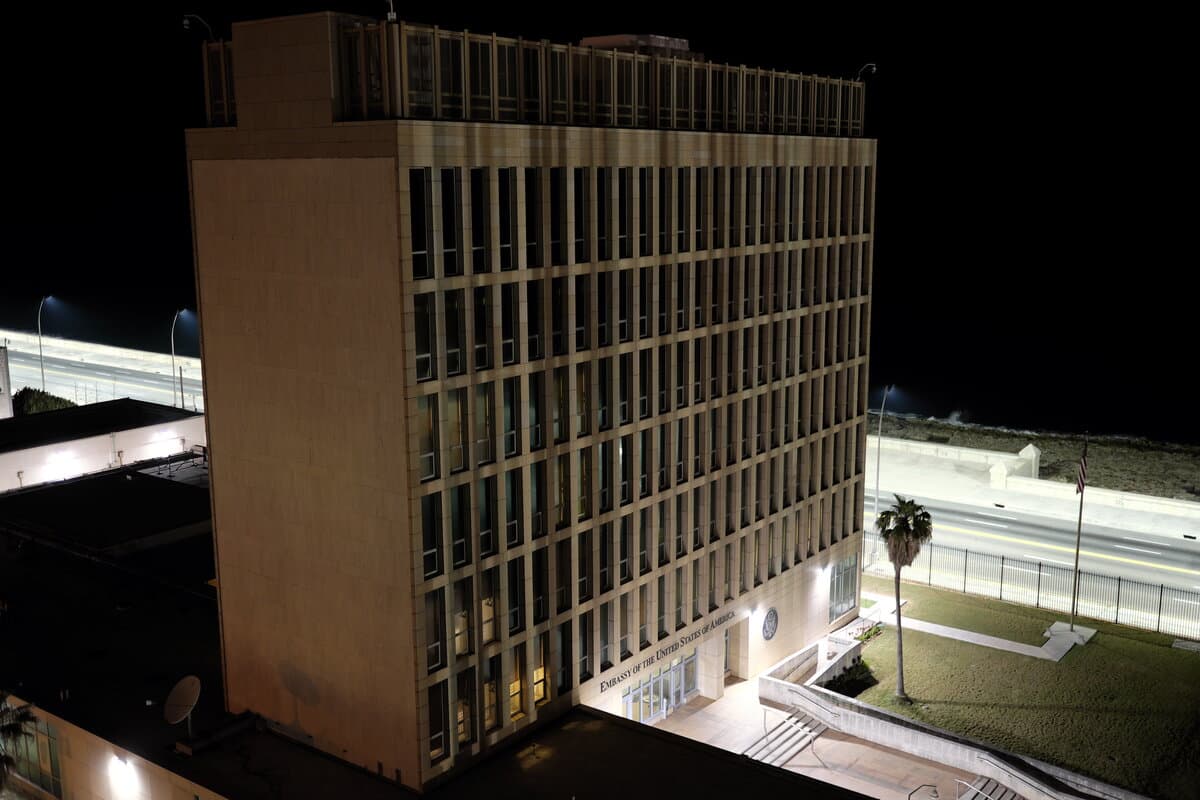
For more on the strange border between mind and matter, the Havana Syndrome case shows how hard it is to separate what the brain experiences from what the world does to it. The Dyatlov Pass Incident sits with a different kind of unanswered question at the edge of survival, and the Voynich Manuscript offers a puzzle that, like this one, has resisted every expert who has approached it.
Frequently Asked Questions
Is terminal lucidity a real, documented phenomenon?
Yes. It has been recorded by physicians for centuries and is now the subject of peer-reviewed research, including studies by Michael Nahm and Bruce Greyson and a 2019 paper in the journal Alzheimer's & Dementia. The United States National Institute on Aging has funded research into it. What remains unresolved is not whether it happens, but how a severely damaged brain produces it.
How common is terminal lucidity?
No one knows the true rate, because for most of history it was never systematically recorded. When researchers finally surveyed caregivers of dementia patients directly, a notable share reported having witnessed at least one episode. The stories, it turned out, were far more numerous than the medical literature suggested. They had simply gone unwritten.
Does terminal lucidity mean the person is getting better?
No, and that is the heartbreak of it. The lucidity is not recovery. The underlying disease is unchanged, the brain damage is not repaired, and death almost always follows within hours to a few days. Families often experience it as a final, clear goodbye rather than a sign of improvement.
What causes terminal lucidity?
There is no accepted explanation. A surge of organized electrical activity has been recorded in the dying brain, which may play a part, but it does not account for how coherent memories and personality reappear through destroyed tissue, or why the phenomenon spans such different diseases. The question of where a restored self comes from, when the brain that supposedly held it is gone, remains open.
Is terminal lucidity the same as a near-death experience?
They are related areas of study but not the same thing. A near-death experience is reported by a person who survives a close brush with death. Terminal lucidity is witnessed from the outside, by families and caregivers watching a dying patient briefly return to clarity. Both press on the same unresolved question of what consciousness is doing at the edge of life.
Further Reading
- •Irreducible Mind: Toward a Psychology for the 21st Century by Edward F. Kelly, Emily Williams Kelly, Adam Crabtree, Alan Gauld, Michael Grosso, and Bruce Greyson
- •The Self Does Not Die: Verified Paranormal Phenomena from Near-Death Experiences by Titus Rivas, Anny Dirven, and Rudolf H. Smit
- •Consciousness Beyond Life: The Science of the Near-Death Experience by Pim van Lommel
Want to explore more mysteries?
We've got plenty more rabbit holes to go down.