The Dancing Plague of 1518: When Hundreds in Strasbourg Couldn't Stop Dancing
In July 1518, a woman in Strasbourg began dancing in the street and couldn't stop. Within weeks, 400 people had joined her. Some danced until they collapsed or died.
On July 14, 1518, a woman known to history only as Frau Troffea stepped onto the narrow cobblestone street outside her half-timbered home in Strasbourg and began to dance. There was no music. No celebration. No obvious reason. She just danced, twisting and turning with a fervor that alarmed her neighbors. By nightfall, she was still going. By morning, she hadn't stopped.
She danced for nearly a week straight. And then other people started joining in.
Within a month, somewhere between 50 and 400 residents of Strasbourg were dancing uncontrollably in the streets. They didn't look happy about it. Witnesses described vacant eyes, thrashing arms, bodies drenched in sweat. Blood pooled in their swollen feet and soaked through their shoes. Some cried out for help. Some collapsed from exhaustion, dehydration, or heatstroke. Contemporary accounts suggest as many as 15 people were dying per day at the outbreak's peak, though the actual death toll remains disputed.
The Dancing Plague of 1518 is one of the strangest events in European history, and after more than 500 years, nobody's entirely sure what caused it.
What You'll Learn
- •What Actually Happened in Strasbourg?
- •How Did Authorities Respond?
- •The Cult of Saint Vitus
- •Was It Ergot Poisoning?
- •The Mass Hysteria Theory
- •What Was Life Like in Strasbourg in 1518?
- •Was This the Only Dancing Plague?
- •How Did It End?
- •What Modern Science Says
- •Frequently Asked Questions
What Actually Happened in Strasbourg?
The evidence that this really happened is surprisingly strong. It doesn't come from a single questionable chronicle or a folk legend passed down through generations. The Dancing Plague of 1518 is documented in physician notes, cathedral sermons, local and regional chronicles, and official records issued by the Strasbourg city council itself. Multiple independent sources confirm the same basic story.
Frau Troffea started dancing on July 14. Within days, more than 30 people had joined her. By August, the number had swollen to as many as 400, though the exact count varies between sources. The dancers didn't appear to be enjoying themselves. Descriptions are consistent: spasmodic movements, convulsions, expressions of distress, cries for help. This wasn't a festival. It looked more like a seizure that happened to involve rhythmic movement.
The victims danced until their bodies gave out. Some suffered strokes. Some had heart attacks. Many collapsed from sheer exhaustion, only to resume dancing when they regained consciousness. The episode lasted roughly two months, from July through early September 1518.

There's some scholarly debate about the death toll. John Waller, a historian at Michigan State University who's written extensively about the event (including the book A Time to Dance, a Time to Die), notes that the claim of 15 deaths per day comes from later accounts rather than contemporaneous records. The city council documents from 1518 don't specifically mention fatalities. That doesn't mean nobody died; it may simply mean the deaths weren't recorded in the surviving documents. But it does mean we should treat the most dramatic casualty figures with some caution.
What's not in dispute is that a large number of people danced involuntarily, for extended periods, in obvious distress, and that the city government took the outbreak seriously enough to intervene.
How Did Authorities Respond?
The Strasbourg city council's response went through several phases, and some of their decisions made things considerably worse.
Initially, the council deferred to local physicians, who diagnosed the condition as "hot blood," a natural excess of heat in the body. Their prescribed remedy was more dancing. The logic, rooted in the medical thinking of the time, was that the afflicted needed to dance the fever out of their systems.
To facilitate this, the council reportedly opened guild halls for the dancers. They hired musicians to provide accompaniment. They even brought in strong men to help keep the dancers on their feet when they started to collapse. The idea was to encourage the dancing to run its course.
It backfired spectacularly. Instead of burning out, the epidemic grew. More people started dancing. The music seemed to attract new victims rather than cure existing ones.
The council reversed course. They banned public dancing. They banned music. And then they turned to the Church.

The Cult of Saint Vitus
To understand why the council turned to religion, you need to understand a belief that was widespread in the Rhine region during the medieval period. People believed that Saint Vitus, a Christian martyr from the 4th century, had the power to curse sinners by compelling them to dance. If you'd angered Saint Vitus (or God, acting through the saint), involuntary dancing was your punishment.
This belief wasn't fringe. It was mainstream enough that the dancing plague was widely understood, by victims and observers alike, as divine retribution. Many of the dancers reportedly joined in not because they were physically compelled but because they feared they were being punished and hoped that submitting to the dancing would bring absolution.
The council's solution was to send the afflicted to a mountaintop shrine dedicated to Saint Vitus. The dancers wore red shoes sprinkled with holy water, with crosses painted on the tops and soles. They carried small crosses in their hands. Incense was burned and Latin incantations were recited.
According to the chronicles, it worked. Word spread that Saint Vitus had "forgiven" the dancers, and the epidemic faded. By September, the remaining affected individuals were taken to the shrine for a final ritual, and the plague ended.
Whether the religious intervention actually cured anything or whether the episode simply ran its natural course is, of course, impossible to determine from this distance.
Was It Ergot Poisoning?
One of the most commonly cited explanations is ergot poisoning. Ergot is a fungus (Claviceps purpurea) that grows on grain, particularly rye, and produces a cocktail of psychoactive alkaloids. Ergotamine, the primary active compound, is structurally related to LSD. Ergot poisoning (ergotism) has been blamed for other historical anomalies, including the Salem witch trials.
The theory is straightforward: Strasbourg's residents ate contaminated bread, the ergot alkaloids caused convulsions and hallucinations, and the "dancing" was actually involuntary spasming.
There are serious problems with this explanation, though. John Waller has argued persuasively against it in The Lancet. First, ergot poisoning typically causes constriction of blood flow to the extremities, not sustained rhythmic movement. People poisoned by ergot would have trouble standing, let alone dancing for days. Second, it's unlikely that so many people would react to the psychoactive compounds in exactly the same way. Third, and perhaps most damaging, the ergot theory doesn't explain why nearly every major dancing plague occurred along the Rhine and Moselle rivers. These areas had different climates and different crops, making a single fungal explanation hard to sustain.
Ergot also tends to cause gangrene (known historically as "Saint Anthony's fire") rather than mania. The symptoms described by eyewitnesses in 1518, including the rhythmic quality of the movement, the vacant expressions, and the prolonged duration, don't match typical ergotism.

The Mass Hysteria Theory
The leading modern explanation, championed by Waller and supported by most scholars who've studied the event, is stress-induced mass psychogenic illness (MPI), sometimes called mass hysteria.
MPI is a well-documented phenomenon in which groups of people develop real physical symptoms with no organic cause, typically under conditions of extreme psychological stress. The symptoms spread through social contact and shared belief. Modern examples include episodes where schoolchildren develop nausea, fainting, or seizures with no identifiable pathogen, often during periods of heightened anxiety.
The key insight of the MPI theory is that the Dancing Plague wasn't random. It occurred in a very specific cultural context where people genuinely believed that Saint Vitus could curse them with involuntary dancing. When Frau Troffea started dancing, the community already had a framework for understanding what was happening: she'd been cursed. That belief, combined with extreme stress, may have created the psychological conditions for others to develop the same symptoms.
Waller describes it as "stress-induced psychosis" on a mass level. The dancers weren't choosing to dance. They weren't pretending. They were experiencing a genuine psychosomatic episode, a dissociative state in which their bodies acted independently of their conscious will. This would explain the vacant expressions, the cries for help, and the inability to stop.
It would also explain why the religious intervention appeared to work. If the dancing was driven by belief in Saint Vitus's curse, then a convincing ritual of forgiveness could address the underlying psychological cause. The dancers believed they'd been absolved, and the dancing stopped.
What Was Life Like in Strasbourg in 1518?
If mass hysteria was the cause, the follow-up question is obvious: what were these people so stressed about?
The answer is: almost everything. The years leading up to 1518 were catastrophic for Strasbourg and the broader Alsace region, even by the brutal standards of the early 16th century.
Famine. A series of harsh winters and failed harvests had left the population malnourished. Food prices had skyrocketed. The poor, who made up the majority of Strasbourg's residents, were struggling to feed their families.
Disease. Smallpox, syphilis, and other epidemics swept through the region repeatedly in the years before 1518. The population was weakened and fearful.
Poverty and inequality. Strasbourg was technically a "free city" within the Holy Roman Empire, but that freedom didn't extend to most of its inhabitants. Wealth was concentrated among a small merchant class, while the majority lived in grinding poverty. Social unrest was building.
Spiritual anxiety. This was just one year after Martin Luther nailed his Ninety-Five Theses to the door at Wittenberg. The religious landscape was in turmoil. For ordinary people, the fear of divine punishment was very real and very immediate.
Put all of this together, and you have a population that was starving, sick, impoverished, and terrified of God's wrath. In that context, the idea that stress could trigger a mass psychogenic episode isn't just plausible; it's almost predictable.

Was This the Only Dancing Plague?
Not even close. The 1518 outbreak is the most famous, but at least seven other episodes of dancing mania were recorded in the Rhine-Moselle region during the medieval period.
1021, Cölbigk, Saxony: One of the earliest recorded cases. A group of people reportedly danced uncontrollably outside a church on Christmas Eve. The episode was attributed to divine judgment.
1247, Erfurt, Germany: Over a hundred children danced from Erfurt to Arnstadt, a distance of about 12 miles. Many collapsed from exhaustion. The event may have inspired the legend of the Pied Piper.
1374, Aachen, Germany: A major outbreak in which thousands of people danced through the streets of multiple cities along the Rhine. Dancers reportedly experienced visions and hallucinations.
15th century, Apulia, Italy: A different but related phenomenon. People who'd been bitten (or believed they'd been bitten) by tarantulas danced frenziedly as a "cure." This is the origin of the tarantella dance.
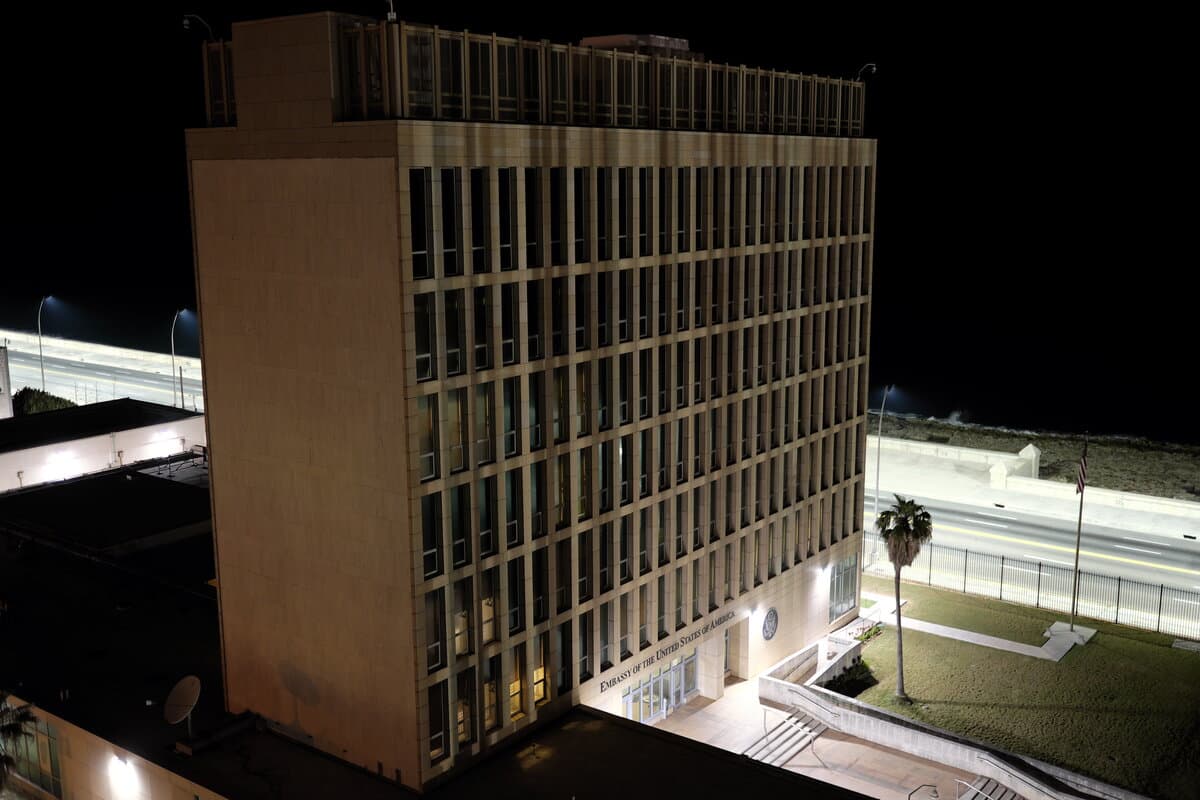
The pattern is always similar: involuntary movement, distress rather than joy, and a cultural framework that made dancing mania a recognized (if feared) phenomenon. For more on how belief systems can produce physical symptoms, see our coverage of the Taos Hum, where only 2% of the population can hear a sound that no instrument has ever detected. The relationship between Havana Syndrome and mass psychogenic illness is also being actively debated.
How Did It End?
The combination of banning music, closing the dance halls (which the council had unwisely opened), and the religious pilgrimage to the Saint Vitus shrine appears to have broken the cycle. By early September 1518, the dancing had largely stopped.
But "how" and "why" are different questions. If the MPI theory is correct, then the religious ritual worked because it addressed the psychological root of the problem: the dancers believed they'd been cursed, and the ritual convinced them they'd been forgiven. Remove the belief, remove the symptom.
If something else was at work (environmental, neurological, or spiritual), then the epidemic may have simply burned itself out, as most outbreaks do. The timing of the shrine visit could be coincidental.
What we can say with confidence is that the outbreak didn't end because anyone figured out what was actually causing it. The city council tried multiple approaches, from encouraging the dancing to banning it to praying it away, and only the last one appeared to work. Whether it worked because of divine intervention, psychological relief, or random timing, we'll never know for certain.
What Modern Science Says
Modern neuroscience and psychology offer frameworks that medieval physicians didn't have. Mass psychogenic illness is now well-documented and relatively well-understood. It occurs when a group shares a common stressor and a common belief system that provides a "template" for symptoms. One person develops symptoms, others observe them, and the brain, under extreme stress, produces the same symptoms in the observers.
The key factor isn't weakness or gullibility. It's stress combined with belief. The dancers of 1518 lived in a world where Saint Vitus's curse was as real as smallpox. Their brains were primed, by famine, disease, poverty, and spiritual terror, to convert psychological distress into physical symptoms. Frau Troffea provided the template, and the cultural belief system did the rest.
This doesn't make it less real. The dancers weren't faking. They weren't choosing. Their suffering was genuine. MPI is a medical phenomenon with measurable physical effects. It just happens to originate in the mind rather than in a pathogen or a toxin.
The Dancing Plague of 1518 remains a powerful reminder that the line between mind and body is far blurrier than we'd like to believe. Five centuries later, we still live with that ambiguity. We've just gotten better at naming it.
For more on unexplained phenomena tied to the human mind, explore our coverage of the Overtoun Bridge dog leaps in Scotland and the Dyatlov Pass Incident, where psychological explanations compete with environmental ones.
Frequently Asked Questions
Did people really die from dancing in 1518?
Possibly. Later accounts claim up to 15 people died per day at the outbreak's peak, but the original Strasbourg city council documents don't mention specific death counts. Historians like John Waller believe deaths likely occurred from stroke, heart attack, and exhaustion, but the exact toll is unknown.
What caused the Dancing Plague of 1518?
The leading theory is stress-induced mass psychogenic illness. The population was suffering from famine, disease, and poverty, and they lived in a culture where involuntary dancing was understood as a curse from Saint Vitus. This combination of extreme stress and shared belief likely triggered a mass dissociative episode.
How many people were affected by the Dancing Plague?
Estimates range from 50 to 400 people over the roughly two-month period from July to September 1518. The wide range reflects inconsistencies between different historical sources. Most scholars place the number in the dozens to low hundreds.
Could the Dancing Plague happen today?
Mass psychogenic illness still occurs in the modern world, though it typically manifests as fainting, nausea, or seizure-like episodes rather than dancing. The specific form it takes depends on cultural expectations. A dancing plague in the medieval Rhine region made sense within that culture's belief system; a modern outbreak would likely look different.
Is the Dancing Plague related to ergot poisoning or LSD?
Ergot, a grain fungus that produces LSD-like compounds, has been proposed as a cause, but most historians reject this theory. Ergot poisoning typically causes blood flow restriction and gangrene, not sustained dancing. The psychoactive effects also don't match the specific, consistent symptoms described by witnesses.
Further Reading
This article contains affiliate links. If you buy through them we may earn a small commission at no extra cost to you.
Want to explore more mysteries?
We've got plenty more rabbit holes to go down.