Havana Syndrome: The Mysterious Illness That Shook the US Intelligence Community
What is Havana Syndrome? Explore the strange symptoms, competing theories, GRU links, and a secret Pentagon device in this deep dive into anomalous health incidents.
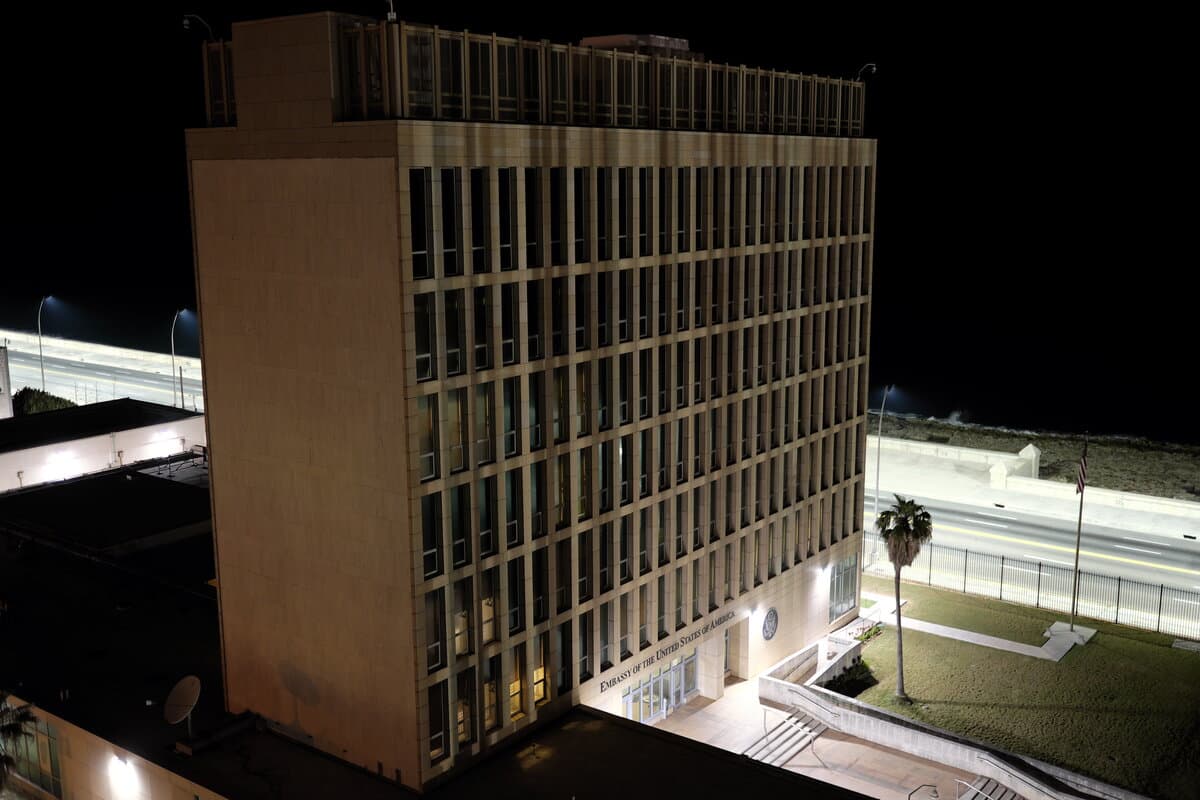
Late 2016. Havana, Cuba. An American diplomat is lying in bed at home when a sudden, piercing noise fills the room. It seems to come from a single direction, almost like a beam of sound aimed directly at them. The sensation is intense: pressure in the skull, a vibrating feeling behind the eyes, immediate vertigo. Within minutes, the sound stops. But the headache, the confusion, the ringing in their ears? Those don't stop. Not for weeks. Not for months.
They weren't the only one. Over the following year, at least 26 American and Canadian government personnel stationed in Havana reported nearly identical symptoms. The US government called it an "attack." Cuba denied everything. And a medical mystery with geopolitical implications began unfolding that, nearly a decade later, still hasn't been solved.
This is Havana Syndrome, and it's one of the strangest and most contentious mysteries of the 21st century.
What You'll Learn
- •What Are the Symptoms of Havana Syndrome?
- •Timeline: How Havana Syndrome Spread Worldwide
- •Is Havana Syndrome Caused by a Directed Energy Weapon?
- •The Russia Connection: GRU Unit 29155
- •The Pentagon's Secret Device
- •Could It Be Mass Psychogenic Illness?
- •What Have Official Investigations Concluded?
- •The NIH Brain Studies
- •Why Is Havana Syndrome Still Unsolved?
- •Frequently Asked Questions
What Are the Symptoms of Havana Syndrome?
The symptoms reported by affected personnel are consistent, which is part of what makes this case so unusual. Most people describe an acute onset tied to a perceived localized sound, variously described as screeching, chirping, clicking, or a high-pitched piercing noise.
The immediate symptoms include:
- •Intense pressure or vibration in the head
- •Ear pain and hearing loss
- •Severe headaches
- •Dizziness and loss of balance
- •Visual disturbances (blurred vision, light sensitivity)
- •Cognitive problems (forgetfulness, difficulty concentrating)
- •Nausea

What's particularly alarming is the chronic phase. Many affected individuals reported symptoms lasting months or longer: persistent balance problems, cognitive difficulties, insomnia, and headaches that didn't respond to normal treatment. Some described it as feeling like a permanent concussion.
Two-thirds reported visual disturbances. More than half experienced intense head pressure and cognitive impairment. One-third suffered tinnitus and hearing loss. One-quarter had persistent dizziness or unsteady gait.
These aren't vague or subjective complaints. A 2018 study published in JAMA by researchers at the University of Pennsylvania found that affected diplomats showed measurable differences in brain function compared to healthy controls, particularly in connectivity between the cerebellum and the rest of the brain.
Timeline: How Havana Syndrome Spread Worldwide
The phenomenon didn't stay in Havana.
Late 2016: The first cases emerge among US Embassy personnel in Havana. Diplomats report strange sounds and immediate neurological symptoms while at home or in hotel rooms.
August 2017: The story goes public. The US expels two Cuban diplomats. Cuba denies involvement and calls the accusations "science fiction."
September 2017: The State Department pulls non-essential staff from the Havana embassy and issues a travel warning for Cuba.
April 2018: A US diplomat in Guangzhou, China reports identical symptoms. More cases follow at the consulate.
2018-2019: Reports surface from US personnel in Russia, Austria, Serbia, Colombia, Uzbekistan, and other countries. The total rises to over 40 confirmed cases.

2020-2021: Cases accelerate dramatically. An incident reportedly occurs on the grounds of the White House. By May 2021, the count reaches 130 affected individuals. By September 2021, it's over 200. CIA Director William Burns makes investigating the syndrome a priority, appointing a senior officer who previously led the hunt for Osama bin Laden.
Early 2022: The total reportedly exceeds 1,000 complaints. Not all are confirmed as Havana Syndrome, and some are later attributed to ordinary medical conditions.
March 2023: Seven US intelligence agencies release an assessment concluding it's "very unlikely" that a foreign adversary is responsible for most cases. But one agency dissents, and the debate intensifies.
April 2024: A joint investigation by The Insider, CBS's 60 Minutes, and Der Spiegel publishes evidence linking the incidents to Russia's GRU military intelligence unit.
January 2026: CNN reports that the Pentagon acquired a device through an undercover operation that produces pulsed radio waves and may be capable of reproducing Havana Syndrome symptoms. The device was purchased for an eight-figure sum and has been under testing for over a year.
Is Havana Syndrome Caused by a Directed Energy Weapon?
The directed energy theory has been the most persistent and the most debated explanation since the beginning.
In 2020, the National Academies of Sciences, Engineering, and Medicine (NASEM) published a report concluding that "directed, pulsed radio frequency energy" was the most plausible explanation for the symptoms. This was significant because NASEM is one of the most respected scientific advisory bodies in the United States, and their report lent credibility to what had previously been treated as speculation.
The theory works like this: a device emitting focused, pulsed microwave or radio frequency energy could, in principle, cause the "Frey effect," a phenomenon first described by American neuroscientist Allan Frey in 1961. Frey demonstrated that pulsed microwaves could produce an audible clicking or buzzing sensation perceived inside the head, without any sound actually passing through the ears. This is consistent with the localized, directional sounds that Havana Syndrome patients describe.
Pulsed microwave energy at sufficient power could theoretically cause tissue heating and neurological effects. The symptoms, particularly the combination of perceived sound, head pressure, dizziness, and cognitive disruption, line up with what you'd expect from this kind of exposure.
Critics of the theory point out several problems:
- •No device capable of producing these specific effects has been publicly demonstrated (though the January 2026 Pentagon acquisition may change this)
- •The energy levels required would be difficult to deliver through walls at a distance
- •Some physicists have argued the physics don't work for a portable, covert weapon
- •The Intelligence Community's own assessment calls a foreign weapon origin "very unlikely"
The Russia Connection: GRU Unit 29155
In April 2024, a year-long joint investigation by The Insider (a Russian investigative outlet), CBS 60 Minutes, and German outlet Der Spiegel published findings directly linking Havana Syndrome incidents to Russia's GRU military intelligence agency, specifically Unit 29155.
Unit 29155 is the same covert operations group implicated in the poisoning of former Russian spy Sergei Skripal in the UK in 2018 and the attempted assassination of Bulgarian arms dealer Emilian Gebrev. They specialize in destabilization operations across Europe and beyond.

The investigation found:
- •Senior members of Unit 29155 received awards and bonuses for developing "non-lethal acoustic weapons"
- •A research institute in St. Petersburg closely linked to the GRU had documented interest in studying the effects of ultra and infrasound on the human brain
- •A medical facility linked to this institute had conducted research on a rare neurological condition called Minor syndrome, which was observed among a subset of Havana Syndrome victims
- •Travel records of GRU officers overlapped with locations and timing of reported incidents
Christo Grozev, the lead investigator, testified before the US House Homeland Security Committee in May 2024. He stated that "the totality of the evidence uncovered by our team has proven that Russia had the motive, means, and opportunity" to conduct these attacks.
The Russian government has denied any involvement.
The Pentagon's Secret Device
In January 2026, CNN reported a development that reignited the entire debate. The US Department of Defense, through an undercover operation conducted by Homeland Security Investigations (HSI), acquired a portable device that produces pulsed radio-frequency energy. The Pentagon paid an eight-figure sum for the device and has been testing it for over a year.
According to multiple sources, Pentagon investigators believe the device may be capable of reproducing the effects described by Havana Syndrome victims. CBS News reported that it's small enough to fit in a backpack.
The acquisition is significant for several reasons. If the device can genuinely produce the reported symptoms, it would validate the directed energy theory that the Intelligence Community's own assessment had largely dismissed. It would also raise the question: if such a device exists, who built it, and who's been using it?
As of early 2026, the CIA declined to comment on the device. The Intelligence Community's official assessment, updated through December 2024, still maintains that it's "very unlikely" a foreign actor caused the incidents. But an official with the Office of the Director of National Intelligence acknowledged there are cases that remain unexplained.
Could It Be Mass Psychogenic Illness?
The alternative theory, and the one that the majority of the Intelligence Community has leaned toward, is that Havana Syndrome isn't caused by any weapon at all. Instead, it could be a form of mass psychogenic illness (MPI), sometimes called "mass hysteria," though that term is considered outdated and misleading.
A 2023 review by Robert Bartholomew and Robert Baloh argued that Havana Syndrome was "erroneously classified as a novel entity" due to several factors:
- •A moral panic driven by fear of foreign attacks
- •Over-interpretation of ambiguous medical data
- •Widespread misconceptions about how psychogenic illness works
- •Media coverage and government leaks that amplified anxiety
The argument isn't that the symptoms are fake. People experiencing mass psychogenic illness have real, measurable symptoms. The claim is that those symptoms originate from stress, anxiety, and social contagion rather than from an external physical cause.

Supporting this theory: the symptoms aren't unique to Havana Syndrome. Headaches, tinnitus, dizziness, and cognitive problems are among the most common complaints in general medicine. The number of reported cases surged dramatically after media coverage intensified, which is consistent with psychogenic spread. And some reported cases, after investigation, turned out to have ordinary medical explanations.
Working against the theory: the earliest cases in Havana involved people who didn't know about each other's symptoms, making social contagion less likely for the initial cluster. The acute onset tied to a perceived directional sound is unusual for psychogenic illness. And the measured brain differences found in the JAMA study are harder to explain through psychological mechanisms alone.
What Have Official Investigations Concluded?
An extraordinary number of agencies have investigated Havana Syndrome, and they haven't agreed with each other.
FBI Behavioral Analysis Unit (2018): Investigated the initial Cuba cases. Their findings remain classified.
University of Pennsylvania (2018): Published the JAMA study finding measurable brain differences in affected diplomats, particularly in cerebellar connectivity.
JASON Advisory Group (2018, 2022): The elite scientific advisory panel reportedly found the directed energy theory plausible but couldn't confirm it.
National Academies of Sciences (2020): Concluded "directed, pulsed radio frequency energy" was the most plausible mechanism. The most favorable official assessment for the weapon theory.
CIA (2022): An internal investigation found it "unlikely" that a foreign power was behind the incidents, though about two dozen cases couldn't be explained.
ODNI / Seven Intelligence Agencies (2023): Five agencies assessed it "very unlikely" a foreign adversary was responsible. One assessed it "unlikely." One dissented, finding it was "about evenly split" between a weapon and other causes.
NIH (2024): The National Institutes of Health published studies finding no consistent brain injuries or biomarkers in affected individuals, though the study faced criticism for its methodology and patient selection.
GAO (2024): Focused on the care gap, reporting that 334 people had qualified for treatment in the military health system.
The contradictions are telling. The scientific advisory body most respected for its independence (NASEM) endorsed the weapon theory. The intelligence agencies, which have access to classified information, largely rejected it. Neither side has been able to definitively prove their case.
The NIH Brain Studies
In 2024, the National Institutes of Health published the results of a multi-year study of Havana Syndrome patients. Using advanced brain imaging, cognitive tests, blood analyses, and other measures, the NIH team compared affected individuals to carefully matched controls.
Their conclusion was that they could not identify consistent, objective biomarkers that distinguished Havana Syndrome patients from healthy controls. No structural brain damage, no unique blood markers, no consistent pattern of injury.
This was widely reported as debunking the directed energy theory. But the study had important limitations. Many patients were examined years after their initial symptoms, when acute effects may have resolved. The patient group was heterogeneous, including people from different locations and time periods. And some researchers argued the imaging techniques used weren't sensitive enough to detect the kind of subtle tissue damage that pulsed microwave energy might cause.
The NIH findings didn't end the debate so much as add another layer to it.
Why Is Havana Syndrome Still Unsolved?
After nearly a decade, multiple investigations, and thousands of pages of reports, we still don't know what's causing Havana Syndrome. That's worth sitting with for a moment.
Part of the problem is classification. Much of the relevant evidence is classified. The intelligence agencies' assessments are based on information that researchers and journalists can't access. The Pentagon's testing of the acquired device hasn't been made public. The FBI's initial findings remain sealed.
Part of the problem is politics. Acknowledging that a foreign adversary attacked US government personnel on a large scale would demand a significant response. Some analysts have suggested that institutional incentives push toward minimizing the threat rather than confirming it.
And part of the problem is genuinely scientific. The symptoms of Havana Syndrome overlap with many common medical conditions. Distinguishing between a novel weapon effect, environmental exposures, stress-related illness, and ordinary coincidence requires the kind of controlled investigation that's nearly impossible to conduct in the field.
What we can say: something happened to those first diplomats in Havana. Their symptoms were real, acute, and in some cases debilitating. Whether that something was a directed energy weapon, a psychological phenomenon, environmental exposure, or some combination remains one of the most important unsolved questions in modern intelligence history.
For another mystery that blurs the line between mind and environment, explore the Dyatlov Pass Incident, where nine hikers died under bizarre circumstances in the Ural Mountains. The Wow! Signal presents a different kind of signal mystery, one that came from deep space rather than a hotel room. And for more on how the ocean hides its secrets, the Bermuda Triangle offers another enduring puzzle.
Frequently Asked Questions
What is Havana Syndrome?
Havana Syndrome refers to a set of unexplained neurological symptoms first reported by US and Canadian diplomats in Havana, Cuba in late 2016. Symptoms include sudden hearing loss, dizziness, headaches, cognitive problems, and a perceived directional sound. The condition has since been reported by over 1,000 government personnel worldwide, though many cases remain unconfirmed.
Has anyone been charged with causing Havana Syndrome?
No. As of early 2026, no individual or government has been officially charged. Investigative journalists have linked incidents to Russia's GRU Unit 29155, and the Pentagon has acquired a device that may replicate the effects, but the Intelligence Community's official position is that a foreign adversary attack is "very unlikely."
Is Havana Syndrome real or psychosomatic?
The symptoms are real and measurable. A 2018 JAMA study found brain connectivity differences in affected diplomats. The debate isn't about whether people are sick, but about what's causing it: a directed energy weapon, mass psychogenic illness, environmental factors, or some combination. Both physical and psychological explanations have credible scientific support.
What is the Frey effect?
The Frey effect, discovered by neuroscientist Allan Frey in 1961, is the perception of audible clicks or buzzing caused by pulsed microwave radiation interacting with brain tissue. It doesn't involve sound waves passing through the ears. Some researchers believe this mechanism could explain the directional sounds reported by Havana Syndrome patients.
Where has Havana Syndrome been reported?
Cases have been reported in Cuba, China, Russia, Austria, Serbia, Colombia, Uzbekistan, and other countries, as well as on the grounds of the White House. The affected individuals include CIA officers, military personnel, State Department diplomats, and their family members.
Further Reading
This article contains affiliate links. If you buy through them we may earn a small commission at no extra cost to you.
Want to explore more mysteries?
We've got plenty more rabbit holes to go down.