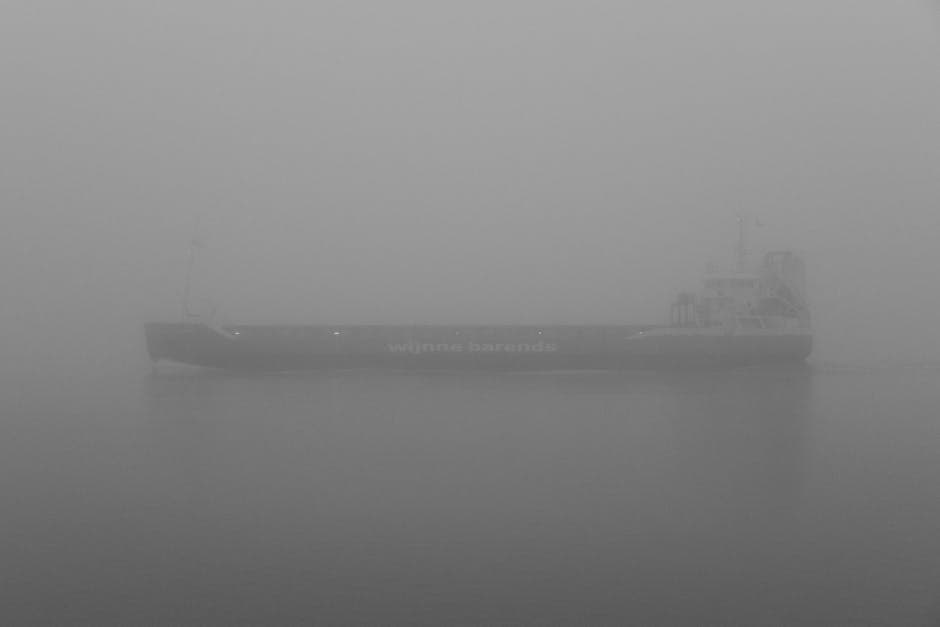
The Bermuda Triangle: Why Do Ships and Planes Keep Vanishing?
Over 75 ships and aircraft have vanished in the Bermuda Triangle since 1900. From Flight 19 to the USS Cyclops, here's what we know and what we don't.
On December 5, 1945, five Navy torpedo bombers took off from Fort Lauderdale, Florida for a routine training exercise. They never came back. The rescue plane sent to find them vanished too. Six aircraft, 27 men, gone without a trace. No wreckage. No bodies. No explanation that satisfied everyone. This wasn't the first time the patch of ocean between Florida, Bermuda, and Puerto Rico had swallowed something whole, and it wouldn't be the last. The Bermuda Triangle has been claiming ships and planes for over a century, and we're still arguing about why.
What You'll Learn
- •What Is the Bermuda Triangle?
- •The Most Famous Disappearances
- •What Happened to Flight 19?
- •The USS Cyclops: Biggest Loss of Life in Navy History
- •Is the Bermuda Triangle Actually More Dangerous?
- •Scientific Theories: Methane, Rogue Waves, and Compass Anomalies
- •The Fringe Theories: UFOs, Time Warps, and Atlantis
- •Timeline of Major Incidents
- •Frequently Asked Questions
What Is the Bermuda Triangle?
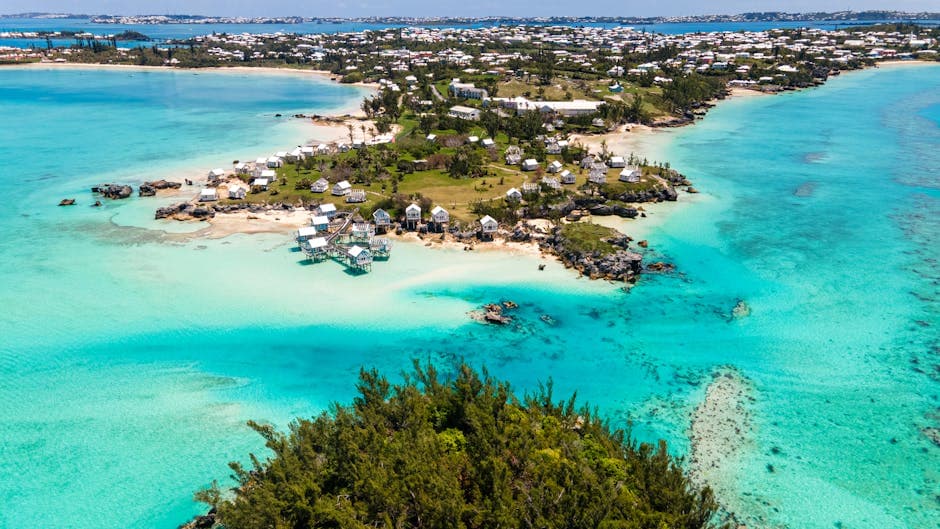
The Bermuda Triangle (sometimes called the Devil's Triangle) is a loosely defined region in the western North Atlantic Ocean. Its three points are generally considered to be Miami, Bermuda, and San Juan, Puerto Rico. That gives it roughly 500,000 square miles of open ocean, though the U.S. Board on Geographic Names doesn't recognize it as an official region and you won't find it on any nautical charts.
The name itself didn't exist until 1964, when writer Vincent Gaddis coined "The Bermuda Triangle" in a magazine article for Argosy. But reports of strange occurrences in the area go back much further. Christopher Columbus noted in his ship's log that his compass behaved erratically in this part of the Atlantic, and he reported seeing strange lights on the water during his 1492 voyage.
The Triangle's mystique really took off in the 1970s when Charles Berlitz published The Bermuda Triangle, a bestseller that cataloged dozens of disappearances and leaned heavily into paranormal explanations. It sold 20 million copies worldwide. Larry Kusche's rebuttal, The Bermuda Triangle Mystery: Solved, came out the following year, arguing that Berlitz had exaggerated, fabricated details, and ignored conventional explanations. The debate hasn't stopped since.
The Most Famous Disappearances
Dozens of incidents have been attributed to the Bermuda Triangle over the past century. Some are genuinely puzzling. Others, when you dig into the records, have fairly straightforward explanations that got lost in the retelling. Here are the cases that defined the legend.
Ellen Austin (1881)
The Ellen Austin, an American schooner, reportedly encountered a derelict ship adrift in the Triangle. The captain sent a prize crew aboard to sail it to port. According to the story, the ship vanished, reappeared days later with no crew aboard, and then disappeared a second time after another crew was sent over. The tale has been repeated in virtually every Bermuda Triangle book, but historical shipping records from that era don't confirm the more dramatic versions of events.
Star Tiger and Star Ariel (1948-1949)
Two British South American Airways Tudor IV aircraft disappeared on similar routes within a year of each other. The Star Tiger vanished on January 30, 1948, with 31 people aboard while en route from the Azores to Bermuda. The Star Ariel disappeared on January 17, 1949, carrying 20 people from Bermuda to Kingston, Jamaica. Neither aircraft sent a distress signal. Investigators noted that the Tudor IV had known design issues with its heating system, and both planes were flying over deep ocean where wreckage would be nearly impossible to find.
SS Marine Sulphur Queen (1963)
This tanker was carrying 15,000 tons of molten sulphur from Beaumont, Texas to Norfolk, Virginia when it disappeared on February 4, 1963, with all 39 crew members. The Coast Guard investigation revealed the ship had a history of structural issues and had been converted from a World War II-era tanker. Investigators determined that the volatile cargo, combined with the vessel's poor condition, likely caused an explosion or structural failure. Still, the lack of any distress signal kept it on the Bermuda Triangle mystery lists.
What Happened to Flight 19?
Flight 19 is the incident that launched the Bermuda Triangle into the public consciousness, and it's worth looking at closely because it shows how a real tragedy gets transformed into mythology.
On December 5, 1945, five TBM Avenger torpedo bombers departed Naval Air Station Fort Lauderdale at 2:10 PM for a routine navigation training mission called "Navigation Problem No. 1." The flight leader was Lieutenant Charles Taylor, an experienced pilot with about 2,500 flight hours. The mission called for them to fly east, practice bombing runs over Hens and Chickens Shoals, then continue east and north before returning to base.
Things went wrong about 90 minutes in. Taylor's compasses malfunctioned, and radio transmissions indicate he became convinced the flight was over the Florida Keys rather than the Bahamas. He turned the flight northeast, believing he was heading back toward the Florida mainland. In reality, he was flying further out over the open Atlantic.
Radio logs, which the Navy preserved, show increasing confusion among the pilots. At one point, other pilots in the flight suggested turning west, but Taylor overruled them. The last confirmed transmission came around 7:04 PM. By then, the planes had been airborne for roughly five hours, close to their fuel capacity.
A PBM Mariner flying boat, sent to search for Flight 19, also disappeared that evening with 13 crew members. The crew of the SS Gaines Mills reported seeing an explosion in the sky and then encountering an oil slick in the area where the Mariner had been. PBM Mariners were nicknamed "flying gas tanks" for their tendency to accumulate fuel fumes, so an in-flight explosion wasn't unusual for the type.
The Navy's initial report blamed Taylor for the navigation errors, but his mother protested, and the cause was officially changed to "causes or reasons unknown." That ambiguous wording fueled decades of speculation. The truth, based on the radio transcripts, is that a compass failure combined with disorientation led Taylor to fly the wrong direction until the planes ran out of fuel and ditched in rough seas at night, a scenario with virtually zero survivability.
No wreckage from Flight 19 has ever been found, though this isn't as mysterious as it sounds. The Atlantic off the Bahamas drops to depths exceeding 15,000 feet, and five relatively small aircraft dispersed across miles of ocean would be difficult to locate even with modern technology.
The USS Cyclops: Biggest Loss of Life in Navy History
If there's one Bermuda Triangle case that remains genuinely hard to explain, it's the USS Cyclops. On March 4, 1918, this 542-foot Navy collier departed Barbados with 306 crew and passengers and a full cargo of manganese ore. It was headed for Baltimore. It never arrived, and it never sent a distress signal.
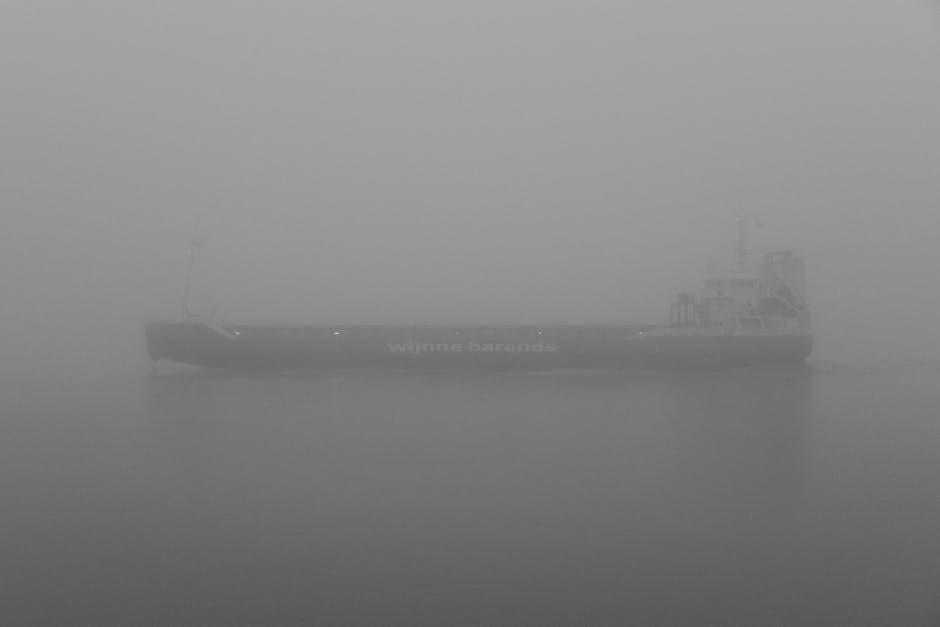
The Cyclops was one of the largest ships in the Navy at the time. Its disappearance, with all hands, remains the single largest non-combat loss of life in U.S. Navy history. The Navy conducted an extensive investigation but never determined what happened. As the official record states: "The disappearance of this ship has been one of the most baffling mysteries in the annals of the Navy."
Several theories have been proposed. The ship was heavily loaded, possibly overloaded, with manganese ore. One of its two engines was out of service. Its captain, George Worley, was known as an erratic and unpopular commander; some crew members had reportedly tried to get transferred before the voyage. War was on, and German U-boats were active in the Atlantic, though German records released after the war showed no submarine claimed the sinking.
Rear Admiral George van Deurs later suggested structural failure was the by one account cause. The Cyclops's sister ships, the USS Proteus and USS Nereus, both disappeared under similar circumstances in 1941 while carrying heavy metal ore. The I-beams running the length of these ships had corroded from years of carrying corrosive cargo. A structural failure at sea could happen so quickly that there'd be no time to send a distress signal, especially in heavy weather.
Still, no trace of the Cyclops has ever been found. For a 542-foot steel ship, that's remarkable.
Is the Bermuda Triangle Actually More Dangerous?
Here's where the story gets complicated, because the short answer is: probably not.
The National Oceanic and Atmospheric Administration (NOAA) has stated plainly: "No conclusive evidence has emerged that mysterious disappearances occur with any greater frequency in the Bermuda Triangle than in any other large, well-traveled area of the ocean."
The Bermuda Triangle is one of the most heavily trafficked shipping and flight routes in the world. Thousands of ships and planes pass through it every day without incident. When you account for the sheer volume of traffic, the number of incidents isn't statistically unusual. Lloyd's of London, the world's leading maritime insurance market, doesn't charge higher premiums for vessels transiting the Triangle, and the U.S. Coast Guard doesn't consider it a particularly dangerous area.
Larry Kusche, in his 1975 investigation, found that many of the "mysterious" disappearances attributed to the Triangle had been embellished or misrepresented. Some incidents occurred hundreds of miles outside the Triangle's boundaries. Others had known explanations that writers simply ignored because the mystery made a better story. A few vessels listed as "vanished without a trace" had actually been found.
That said, the area does have real navigational challenges. The Gulf Stream, one of the world's strongest ocean currents, runs through the Triangle and can quickly erase evidence of a disaster. The weather can turn violent with little warning. And the waters range from shallow shoals to some of the deepest trenches in the Atlantic. If you're going to have a maritime disaster, this is a particularly unforgiving place for it.
Scientific Theories: Methane, Rogue Waves, and Compass Anomalies
For those who believe there is something unusual happening in the Triangle, even if it's entirely natural, several scientific hypotheses have been proposed.
Methane Hydrate Eruptions
Massive deposits of methane hydrates exist on the ocean floor in parts of the Triangle. Laboratory experiments have shown that if a large pocket of methane gas erupted from the seabed, the resulting bubbles could reduce the water's density enough to sink a ship. The ship would lose buoyancy and drop like a stone, with no time for a distress call. Norwegian researchers have found enormous craters on the Barents Sea floor, up to half a mile wide and 150 feet deep, formed by explosive methane releases.
The problem? There's no direct evidence that a methane eruption has ever sunk a ship in the Bermuda Triangle specifically, and the methane hydrate deposits in the Triangle aren't unusually large compared to other ocean regions.
Rogue Waves
A 2016 study from the University of Southampton suggested that converging storms in the Triangle could generate rogue waves up to 100 feet tall. These freak waves, once dismissed as sailor's myths, have been confirmed by satellite data and ocean buoys. A rogue wave could snap a ship in half and sink it in minutes. Karl Kruszelnicki, an Australian scientist, has championed this explanation, arguing it combines with the area's heavy traffic to account for most disappearances.
Compass Anomalies
The Bermuda Triangle is one of two places on Earth where a magnetic compass points toward true north rather than magnetic north (the other is the Devil's Sea off Japan, which has its own history of mysterious disappearances). This phenomenon, called agonic line variation, has been documented for centuries. Columbus noted it in 1492. While modern GPS has made this less relevant, for earlier sailors and pilots relying on compasses, the discrepancy could cause serious navigational errors, especially in poor visibility.
Hexagonal Clouds and "Air Bombs"
In 2016, meteorologists analyzing satellite imagery noticed unusual hexagonal cloud formations over the Bermuda Triangle. These clouds were associated with "microbursts," powerful downdrafts of air that can hit the ocean surface at speeds up to 170 mph. They'd flatten the sea beneath them and create waves that could overwhelm vessels. The theory generated a lot of media coverage, though many scientists pointed out that hexagonal clouds and microbursts occur over many ocean regions, not just the Triangle.
Human Error and Bad Weather
The most conventional explanation, and probably the most accurate one, is that the Triangle's combination of busy shipping lanes, unpredictable weather, the Gulf Stream, and deep water creates conditions where disasters are more likely to occur and evidence is less likely to be found. NOAA has pointed out that the area is prone to sudden tropical storms and waterspouts that wouldn't show up on early weather forecasting systems. Many of the "mysterious" disappearances occurred before modern weather satellites, GPS, and emergency beacons existed.
The Fringe Theories: UFOs, Time Warps, and Atlantis
No discussion of the Bermuda Triangle would be complete without the more speculative theories, even if they don't hold up to scrutiny. They're part of the cultural history.
Charles Berlitz suggested the Triangle might sit above the lost city of Atlantis, and that ancient Atlantean technology, possibly crystals with immense energy, could be interfering with modern navigation. He connected this to the Bimini Road, an underwater rock formation near the Bahamas that some believe is a man-made structure. Geologists have identified the Bimini Road as naturally occurring beachrock, but the Atlantis theory persists in popular culture.
Others have proposed that the Triangle contains a "time warp" or portal to another dimension. Pilot Bruce Gernon claims he flew through a strange tunnel-shaped cloud in 1970 and emerged 100 miles from where he expected to be, with 30 minutes of missing time. His account has been featured in numerous documentaries, though no instrument data exists to verify the claims.
UFO theories suggest that extraterrestrial beings are capturing ships and planes for study. This connects to the broader UFO and UAP phenomenon, and some researchers have noted that military radar has detected unexplained objects over the Triangle. However, the U.S. government's recent UAP investigations haven't specifically linked anomalous aerial phenomena to the Bermuda Triangle region.
The pattern here is familiar to anyone who's studied unexplained phenomena: extraordinary claims tend to fill gaps where ordinary evidence is missing. When something vanishes without a trace, we're left with an absence that can be shaped into whatever narrative we prefer.
Timeline of Major Incidents
Here's a chronological overview of the most significant incidents attributed to the Bermuda Triangle:
1872 - The Mary Celeste is found adrift (though technically outside the Triangle's boundaries, it's often included in the legend)
1881 - The Ellen Austin reportedly encounters a derelict ship
1918 - USS Cyclops disappears with 306 people, the Navy's largest non-combat loss of life
1941 - USS Proteus and USS Nereus, sister ships of the Cyclops, vanish on similar routes
1945 - Flight 19 (five TBM Avengers) and a PBM Mariner rescue plane disappear; 27 total crew lost
1948 - Star Tiger (Tudor IV) vanishes en route to Bermuda with 31 aboard
1949 - Star Ariel (Tudor IV) disappears between Bermuda and Jamaica with 20 aboard
1963 - SS Marine Sulphur Queen vanishes with 39 crew
1964 - Vincent Gaddis coins the term "Bermuda Triangle" in Argosy magazine
1968 - The Bimini Road is discovered, fueling Atlantis theories
1970 - Pilot Bruce Gernon reports his "electronic fog" experience
1974 - Charles Berlitz publishes The Bermuda Triangle; Larry Kusche publishes his debunking the following year
2015 - SS El Faro sinks during Hurricane Joaquin near the Bahamas with 33 crew; wreckage located in 15,000 feet of water

What's the Real Answer?
The honest answer is that there probably isn't a single explanation for the Bermuda Triangle because there probably isn't a single mystery. Each disappearance has its own circumstances, its own contributing factors. The USS Cyclops likely suffered structural failure. Flight 19's crews got disoriented. The Marine Sulphur Queen was a floating hazard even before it entered the Triangle.
What the Bermuda Triangle really illustrates is how powerful pattern recognition is in the human brain. We take a collection of unrelated incidents, spread across decades and half a million square miles of ocean, and we draw a triangle around them and call it a mystery. We remember the unexplained cases and forget the thousands of safe passages that happen every day.
That doesn't mean there's nothing interesting here. The ocean is genuinely dangerous, and the Triangle's specific combination of geography, currents, weather, and traffic density does create real hazards. The cases of the USS Cyclops and the Tudor IV aircraft remain legitimately puzzling. And the broader question of what we don't know about the ocean depths is as fascinating as any paranormal theory.
Maybe the most unsettling thing about the Bermuda Triangle isn't the idea that something supernatural is happening. It's the reminder that the ocean is vast, deep, and indifferent, and that sometimes ships and planes simply disappear, and we never find out why.
Frequently Asked Questions
How many ships and planes have disappeared in the Bermuda Triangle?
Estimates vary widely depending on the source and how broadly you define the Triangle's boundaries. The most commonly cited figure is roughly 75 aircraft and several hundred ships over the past century, though Some have suggested many of these incidents occurred outside the Triangle or have known explanations. The U.S. Coast Guard doesn't keep a separate tally for the region because it doesn't consider it uniquely dangerous.
Has anyone survived a Bermuda Triangle incident?
Yes, many people have. The vast majority of ships and planes that transit the Triangle do so without any problems. Even in cases involving distress, most crews are rescued. The "mysterious disappearance" cases represent a tiny fraction of total traffic through the area. Pilot Bruce Gernon claims to have survived an unusual experience involving electronic fog in 1970, though his account hasn't been independently verified.
Is the Bermuda Triangle the most dangerous part of the ocean?
No. According to insurance data and shipping records, the Triangle doesn't rank among the most dangerous ocean regions. The South China Sea, the North Sea, the Mediterranean, and waters around the British Isles all see more shipping incidents per vessel transit. Lloyd's of London doesn't classify the Bermuda Triangle as a high-risk zone.
Why hasn't wreckage been found from some Bermuda Triangle disappearances?
The Atlantic Ocean in the Triangle region reaches depths of over 19,000 feet in the Puerto Rico Trench. The Gulf Stream, one of the world's strongest ocean currents, can scatter debris over hundreds of miles within days. Before modern satellite tracking and emergency locator beacons, a ship or plane lost at sea might leave no trace at all. Even with modern technology, the search for missing vessels in deep water remains extraordinarily difficult, as the search for Malaysia Airlines Flight 370 demonstrated.
Does the U.S. government acknowledge the Bermuda Triangle?
The U.S. Board on Geographic Names doesn't officially recognize the "Bermuda Triangle" as a designation, and NOAA's position is that natural factors explain the losses. But that raises its own question: if the disappearances are so easily explained, why do they keep happening? Why did five Navy torpedo bombers vanish on a clear day in 1945 and never be found? Why does the area keep producing cases where the wreckage, the crew, and any trace of what went wrong simply cease to exist? The government's official position is that there's nothing unusual here. The families of the missing might disagree.
Further Reading
This article contains affiliate links. If you buy through them we may earn a small commission at no extra cost to you.
Want to explore more mysteries?
We've got plenty more rabbit holes to go down.