The Isdal Woman: The Stranger Who Burned in Ice Valley
In 1970, a woman's burned body was found in a Norwegian valley with nine aliases, coded notes, and every label cut from her clothes. She has never been named.
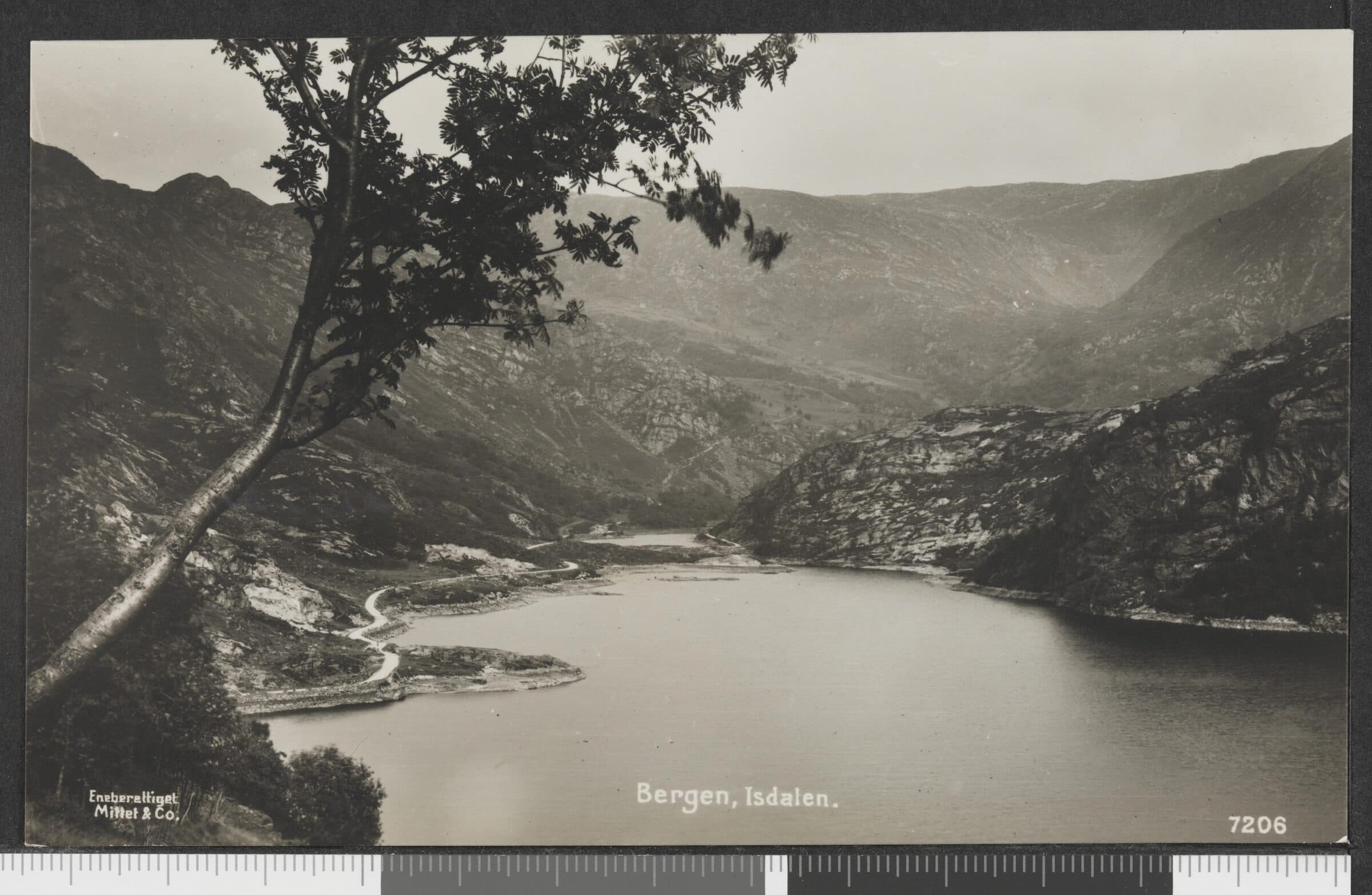
On November 29, 1970, a man was walking through Isdalen with his two young daughters. The valley sits just outside Bergen, on Norway's west coast, a narrow cleft of rock and stunted pine that locals had long called Ice Valley. It was not a place people went by accident. Legend held that those who wandered in during the dark months did not always come out.
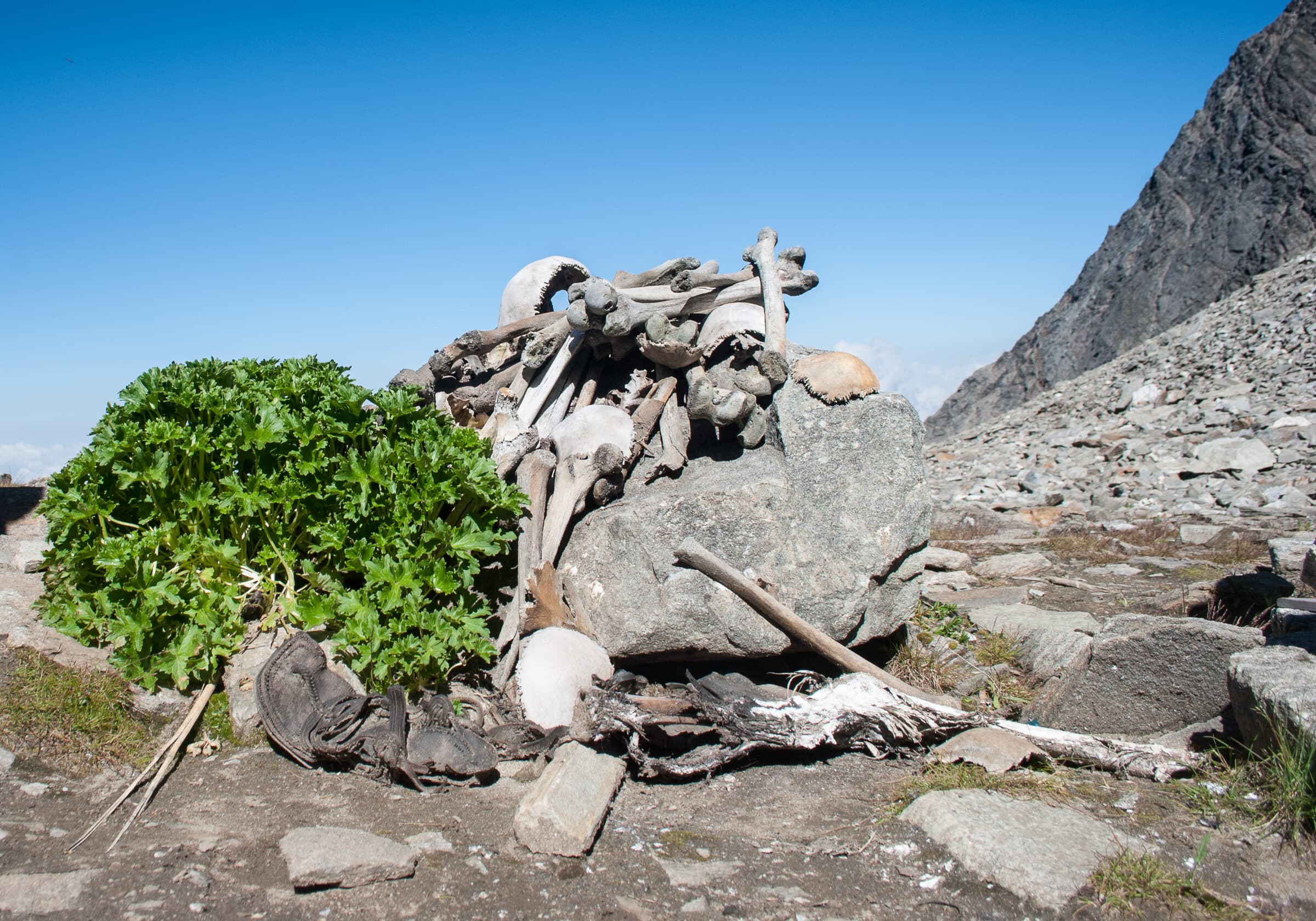
Among the scree the family found a woman. She lay on her back in a small hollow, her body burned so badly that the front of her was charred beyond recognition while, strangely, her back was almost untouched. Around her, scattered on the blackened stones, were the remains of an umbrella, rubber boots, and containers that smelled of gasoline. A dozen pink capsules lay near one hand. Someone had packed a small meal.
The police who climbed up to the site assumed, at first, that they were looking at a hiker who had died of exposure and then somehow caught fire. Within days that assumption fell apart. Every label had been cut from her clothing. Her prescription bottles had been scraped clean of any pharmacy name. And when investigators traced her final movements backward through the hotels of Norway, they found not one woman but nine, each with a different name, a different passport, and a different story.
More than fifty years later, we still do not know who she was.
This article contains affiliate links. If you buy through them we may earn a small commission at no extra cost to you.
What You'll Learn
- •The Body in Ice Valley
- •What the Autopsy Found
- •The Two Suitcases at the Train Station
- •Nine Names and No Identity
- •The Witnesses Who Met Her
- •The Diary Written in Code
- •The Spy Theory
- •The Grave the Police Filmed
- •What the Teeth Revealed
- •What the Explanations Fail to Account For
- •Frequently Asked Questions
- •Further Reading
The Body in Ice Valley
The site itself is worth sitting with. Isdalen is steep and shadowed, hemmed in by cliffs that keep the sun off the valley floor for much of the year. To reach the hollow where she was found, a person has to climb a rough path over loose rock. This was not a spot you stumbled into while lost on a stroll. Whoever brought her there, or whoever she was when she walked up on her own, had a reason to choose a place few people ever visit.
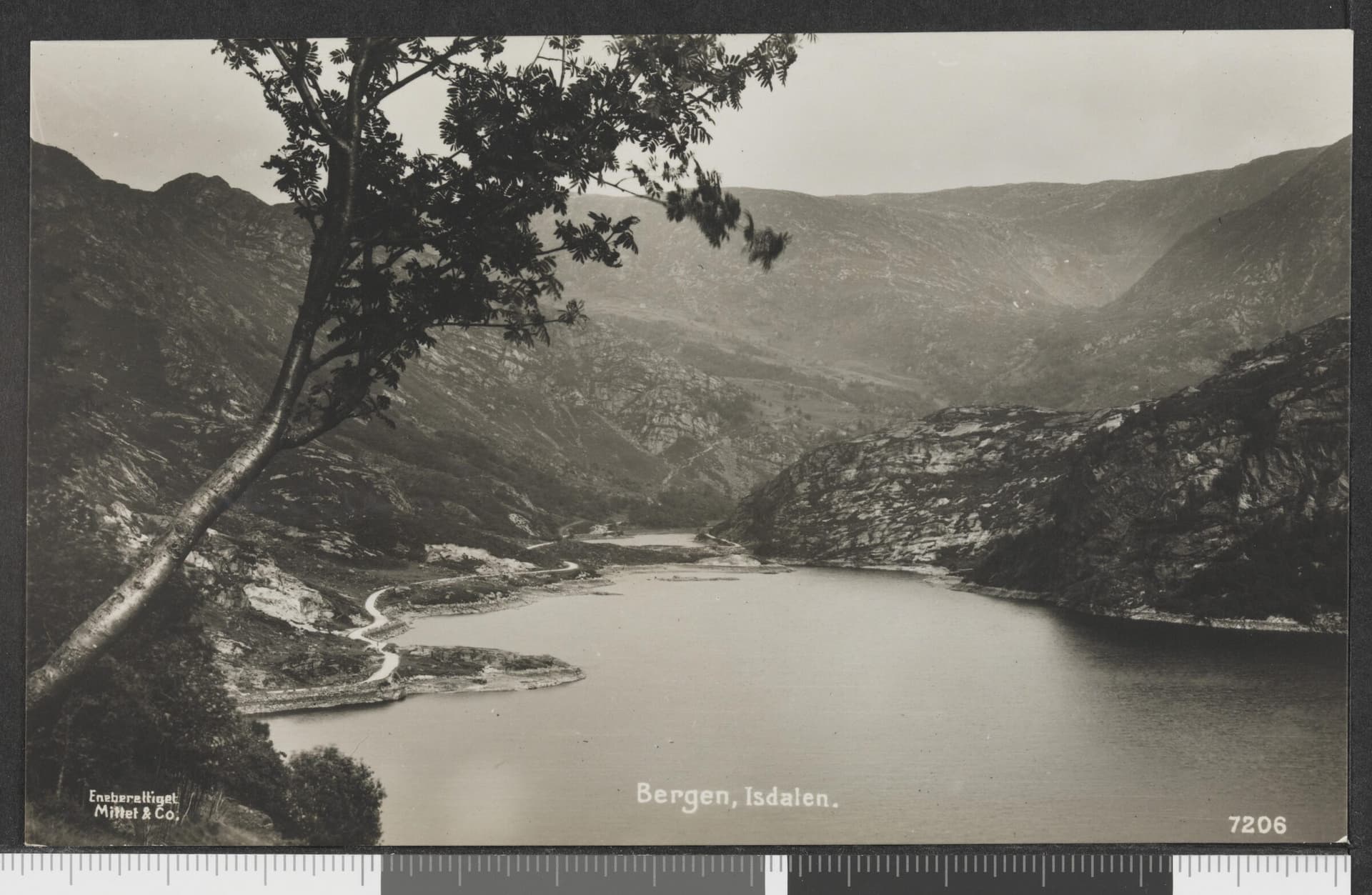
The physical scene was a study in contradictions. The fire had been intense enough to destroy her face, her hands, and the front of her torso, yet it had not spread to the surrounding brush the way an uncontrolled blaze would. Her jewelry had been removed and laid out beside her, not left on the body. A watch and rings sat nearby, wiped clean. The gasoline smell hung over everything. And around her, in a neat arrangement that no falling or convulsing person could have produced, lay the packed lunch, the pills, and the personal effects, as if someone had set the stage before striking the match.
Bergen police opened a case. What they did not know, on that first cold afternoon, was that they had just inherited the single most stubborn unsolved death in modern Norwegian history.
What the Autopsy Found
The forensic examination deepened the puzzle rather than resolving it. Soot was found in her lungs and airways. That single detail carries enormous weight: it means she was still breathing when the fire started. She did not die and then burn. She burned while alive.
At the same time, her blood carried a heavy load of carbon monoxide, and her stomach held the residue of sleeping pills. The capsules found at the scene were phenobarbital, sold in Norway under the name Fenemal. Reports on how many she had swallowed vary, but the count ran to dozens, far past a therapeutic dose. There was also a bruise on the right side of her neck, which the pathologist noted but could not fully explain. Some read it as the mark of a blow. Others as an injury from a fall.
So here is what the medical record leaves us holding. A woman ingests a massive dose of sedatives, is somehow set alight while still alive, breathes in the smoke, and dies from a combination of the poisoning and the burns. The official conclusion leaned toward suicide. But a person deep enough into a barbiturate overdose to leave that much residue in the stomach is not a person who can then douse herself in gasoline, arrange her jewelry to one side, and ignite a controlled fire on a remote hillside. The sequence does not close. It never has.
The Two Suitcases at the Train Station
The break that turned a strange death into an international mystery came from a left-luggage locker. In the days after the discovery, investigators traced the woman to two suitcases waiting in a locker at the Bergen railway station. Inside was a portrait of a person who did not want to be known.
The clothing had been stripped of every label. Not torn out in a hurry, but cut away cleanly, the work of someone patient and careful. Prescription bottles had their pharmacy labels scraped off. There were wigs. There was cash in several currencies, German, Norwegian, and others, the kind of mixed float a person carries when they cross borders often. There were sunglasses and a set of eczema cream tubes with, again, the labels removed. Someone had gone through this luggage the way a person cleans a crime scene, erasing every thread that might lead back to a real name.
One item had slipped through. A plastic bag from a shop carried a faint code that led police to a shoe seller in Stavanger, and from there to a hotel registration. It was the loose end that let investigators begin pulling on the thread of her movements. What they found when they pulled was not clarity. It was a woman who seemed to multiply.
Nine Names and No Identity
As police worked backward through hotel guest books across Norway, a pattern emerged that felt less like a life and more like a series of costumes. The woman had checked into hotels through the spring and autumn of 1970 under a string of false identities. The names that appear in the record include Genevieve Lancier, Claudia Tielt, Vera Schlosseneck, Claudia Nielsen, Alexia Zarna-Merchez, Vera Jarle, and Elisabeth Leenhouwfr. Spellings differ from register to register, which is itself telling, because it suggests names invented on the spot rather than a stable cover.
She traveled with passports to match. Some were Belgian. She spoke, by various accounts, German, English, French, and possibly Flemish, switching between them with ease. She moved through Norway in two long passes, once in the spring and again from late October until the week she died, and along the way she paid in cash, changed rooms, and left almost nothing traceable behind.
Nine names is not the behavior of a tourist, or a runaway, or a woman fleeing a bad marriage. It is tradecraft. And yet, half a century of investigation across multiple countries has never matched a single one of those faces in the register to a birth certificate, a family, or a grave with her real name on it. She used nine identities and, in the end, possessed none.
The Witnesses Who Met Her
For a woman so determined to leave no trace, she left a surprising number of impressions on the people she met. Hotel staff remembered her. She was described as attractive, well dressed, in her thirties or perhaps early forties, and unusually careful. She asked to change rooms after checking in, a habit that unsettled some who noticed it. She kept to herself. She ate simply.
More than one account suggests she seemed to sense she was being watched. In the telling that has followed the case for decades, she conveyed to at least one person that she did not have long, or that she was in some kind of danger. These recollections came years after the fact, filtered through memory and retelling, and they should be held loosely. But they are consistent in tone. The people who crossed her path did not describe a depressed or defeated woman drifting toward the end. They described someone alert, guarded, and moving with purpose, a person who behaved as though she was expecting company she did not want.
The Diary Written in Code
Among the recovered belongings was a small diary, and its pages were not written in plain language. They held lines of coded entries, sequences of letters and numbers that meant nothing on their face.
When investigators finally worked out the key, the code turned out to be a record of her travels. The entries corresponded to dates and to places she had been, a private log of her own movements across Europe and Norway written in a cipher simple enough for her to use quickly and opaque enough that no one glancing over her shoulder could read it. It was, in effect, an itinerary she did not want anyone else to follow.
That is a curious thing for a person to carry. Most travelers who keep a diary are recording where they went so they can remember it. A person who encodes that same information is recording it so that no one else can. The diary did not name her, did not explain her, and did not point to anyone waiting at the end of the route. It only confirmed the shape of a life spent in careful, concealed motion.
The Spy Theory
By the early 1970s, the coast of Norway was one of the most closely watched stretches of geography in Europe. NATO's northern flank ran along it. Soviet naval movements were tracked from it. And Norway itself was quietly developing new weapons, among them the Penguin, an anti-ship missile then under top-secret trials.
Here the case takes a turn that has never been fully explained to the public. The Bergen police were running a criminal investigation into a burned body. What they did not know at the time is that Norwegian military intelligence had quietly opened a file of its own. A declassified note from December 1970 records that the woman's movements through the country lined up with the locations and timing of those classified missile tests. She had, it seemed, been where the secrets were.
Set the pieces side by side. The multiple passports. The cash in several currencies. The wigs and the scrubbed labels. The coded travel diary. The languages. The behavior of a woman who believed she was being followed. Taken one at a time, each detail has an innocent reading. Taken together, they describe the working life of an intelligence agent, and they raise the possibility that Ice Valley was not a suicide but the closing of an operation, cleaned up by hands that knew exactly how to make a person disappear even after death.
The Norwegian authorities have never confirmed that she was a spy. They have also never produced a name, a country, or an alternative that accounts for everything the evidence contains.
The Grave the Police Filmed
There is one detail in this case that lingers longer than any other, and it belongs to the people who buried her. In February 1971, unable to identify the woman, the Bergen police laid her to rest in a zinc coffin in an unmarked plot. The zinc was a deliberate choice. It would preserve her remains, so that if she were ever identified, she could be exhumed and examined again.
And then they filmed the funeral. Officers stood among the small gathering with a camera running, recording every face, because they suspected that whoever had known her, whoever had reason to make sure she vanished, might come to watch her go into the ground. Eighteen people attended. Most of them were police.
No stranger appeared. No relative stepped forward. A woman who had passed through the world under nine names was buried without a single true one, watched over by the detectives who could not stop thinking about her. That coffin, and the reasoning behind it, is the clearest sign of how completely she had baffled the people charged with naming her. They could not solve her, so they preserved her, and they waited.
What the Teeth Revealed
For decades the case went cold. Then, in 2016, it was reopened, and this time the tools had changed. Investigators at Kripos, the Norwegian criminal investigation service, working with researchers at the University of Bergen and prompted by a reinvestigation from the public broadcaster NRK, went back to what remained of her.
Her jaw had been preserved. Teeth are a kind of chemical diary of their own. The isotopes locked into enamel while it forms carry a signature of the water a person drank and the food they ate in childhood, and that signature points to geography. The analysis suggested she had been born around 1930, give or take a few years, somewhere in or near the region of Nuremberg in Germany. It also showed movement. The enamel formed in early childhood carried a different signature from the enamel formed in her teens, which means she relocated as a girl, likely westward, toward the border country where Germany, France, Luxembourg, and Belgium meet. A child born in Germany around 1930 who moved west in the years that followed had grown up inside the machinery of the Second World War.
DNA analysis confirmed European ancestry. The character of her dental work, some of it distinctive, suggested she had at some point seen a dentist far from Scandinavia, possibly in central or southern Europe, East Asia, or South America. And NRK commissioned the American forensic artist Stephen Missal to build a set of six sketches of her face, shown to anyone who might have seen her alive. The BBC World Service and NRK later turned the reinvestigation into the podcast Death in Ice Valley, which brought thousands of new eyes to the case.
The science gave her a probable birthplace, a childhood arc, and a face. It has not, to this day, given her a name.
What the Explanations Fail to Account For
The official file leaned toward suicide, and it is worth taking that reading seriously before setting it against the evidence. A troubled woman, traveling alone, ends her life in a lonely place. It happens. If the story ended with the body and the pills, suicide would be the quiet, ordinary answer.
But the story does not end there, and the ordinary answer cannot carry the weight of what surrounds it. Suicide does not explain the labels cut from every garment or the pharmacy names scraped from her pill bottles, because a person planning to die has no reason to erase their own identity. It does not explain the nine aliases, the multiple passports, or the coded diary. It does not explain how a woman deep into a barbiturate overdose set a controlled fire on a hillside she had to climb to reach, then laid her jewelry neatly to one side. It does not explain the bruise on her neck, or the intelligence file quietly linking her route to secret missile trials, or the fact that no country in fifty years has ever claimed her.
Every conventional explanation solves one corner of the case and leaves the rest untouched. That is the mark of this mystery. It is not that we have no theory. It is that no single theory holds all the pieces at once. Somewhere there was a woman with a real name, a real childhood in the border country of a shattered Europe, and a reason to move through the world erasing herself as she went. She took that reason into Ice Valley, and the fire kept it.
Frequently Asked Questions
Has the Isdal Woman ever been identified?
No. Despite a criminal investigation in 1970, a quiet intelligence inquiry, a 2016 reopening using DNA and isotope analysis, and an international podcast that reached millions, no one has matched her to a real name. Her remains were deliberately preserved in a zinc coffin so that identification could still, in principle, happen. The offer stands, unanswered.
Was she really a spy?
Norwegian military intelligence took the possibility seriously enough to open its own file and to note that her travels coincided with secret missile tests along the coast. The passports, the wigs, the cash in several currencies, and the coded diary all fit the pattern. But no agency of any nation has ever confirmed she worked for them, which is either the strongest evidence against the theory or exactly what you would expect if it were true.
What did the coded diary say?
Once decrypted, the entries turned out to be a private record of her own movements, dates and places she had traveled, written so that no one reading over her shoulder could follow her path. It confirmed a life of concealed travel but named neither her nor anyone she was meeting.
Where was she from?
Isotope analysis of her teeth in the 2016 investigation pointed to a birth around 1930 near Nuremberg, Germany, and a childhood move westward toward the German, French, Luxembourgish, and Belgian border region. That is the closest thing to an origin anyone has produced, and it is a chemical estimate, not a birth certificate.
Why did the police film her funeral?
They believed that whoever had known her, or had a hand in her death, might come to watch her buried. So they recorded the faces of the eighteen mourners, most of whom were officers. No stranger came. It remains one of the most quietly haunting decisions in the history of the case.
Can the case still be solved?
In theory, yes. Her remains survive, the DNA has been sequenced, and forensic techniques keep improving. All that is missing is a match: a family that wondered for decades what happened to a daughter or a sister who went abroad in 1970 and never came home. Somewhere, that gap may still exist.
Sitting With Ice Valley
Some mysteries are puzzles waiting for a clever enough solution. The Isdal Woman is something else. She is a person who worked, with real skill and evident intent, to make sure this exact outcome could never be undone. The cut labels, the scraped bottles, the nine names, the cipher, the fire that took her face: these are not the residue of a crime someone failed to cover up. They are the crime, or the craft, itself. We are not looking at a case that was botched. We are looking at one that was, by someone, completed.
And so she remains in her zinc coffin outside Bergen, preserved against the day a name arrives, watched over now by strangers who read about her and cannot let her go. The valley that holds her memory is still there, still shadowed, still cold. Whoever she was, she carried the answer up that slope with her, and it is up there yet, waiting in the ice for someone who never comes.
Further Reading
For readers who want to follow this case and its Cold War backdrop further, these books are worth your time:
- •On the case itself: the reporting and case studies gathered on the Isdal Woman are the best starting point for the full timeline and the 2016 forensic reinvestigation. Browse books on the Isdal Woman.
- •On how deaths like hers are, and are not, solved: Unnatural Causes by Dr. Richard Shepherd, a leading forensic pathologist, is a clear-eyed look at what a body can and cannot tell investigators. Find it here.
- •On the world she may have moved through: The Spy and the Traitor by Ben Macintyre reconstructs real Cold War espionage in Scandinavia and shows how agents lived, traveled, and disappeared. Find it here.
Want to explore more mysteries?
We've got plenty more rabbit holes to go down.