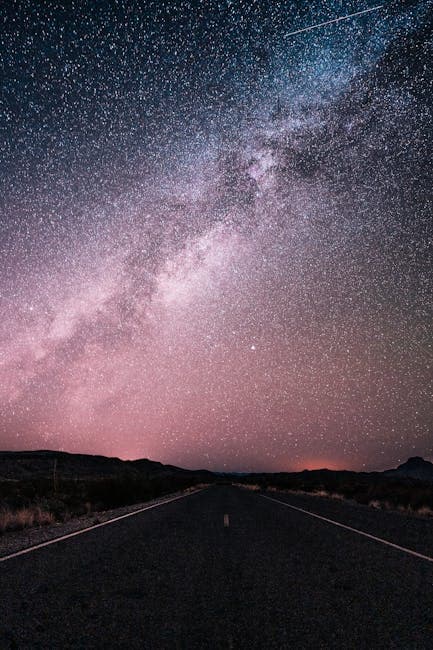
The Marfa Lights: Glowing Orbs in the Texas Desert That Nobody Can Fully Explain
Since 1883, mysterious glowing orbs have appeared near Marfa, Texas. Are they car headlights, atmospheric mirages, or something science hasn't figured out yet?
In 1883, a young cowhand named Robert Reed Ellison was driving cattle through Paisano Pass in far West Texas when he spotted a flickering light in the distance. He figured it was an Apache campfire. Other ranchers in the area told him they'd seen the same lights many times before, but whenever anyone rode out to investigate, there was nothing there. No fire. No people. No trace of anything at all.
Over 140 years later, people are still seeing the Marfa Lights, and they're still riding out to find nothing. These mysterious glowing orbs, sometimes called ghost lights, appear sporadically in the desert flats south of Marfa near the Chinati Mountains. They split, merge, hover, dart, and vanish. Texas even built an official viewing platform on U.S. Highway 90 so tourists can watch for them. And despite more than a century of observation and multiple scientific investigations, nobody's produced an explanation that accounts for everything witnesses report.
What You'll Learn
- •What Do the Marfa Lights Look Like?
- •A History of Sightings: 1883 to Today
- •The Car Headlights Theory
- •The Atmospheric Mirage Theory
- •The Piezoelectric and Geological Theories
- •James Bunnell's Decade-Long Investigation
- •Folklore and Supernatural Explanations
- •Why the Mystery Persists
- •Frequently Asked Questions
What Do the Marfa Lights Look Like?
Witnesses describe the Marfa Lights as glowing orbs, typically white, yellow, orange, or occasionally red or blue. They appear at night in the desert flatlands known as Mitchell Flat, between Marfa and the Chinati Mountains to the southwest.
The lights hover above the ground, sometimes stationary, sometimes drifting. What makes them particularly strange is their behavior. They've been reported splitting into two or more separate lights, merging back together, bouncing or bobbing, and blinking on and off. They can appear to be quite close or miles away, and they don't follow predictable patterns.
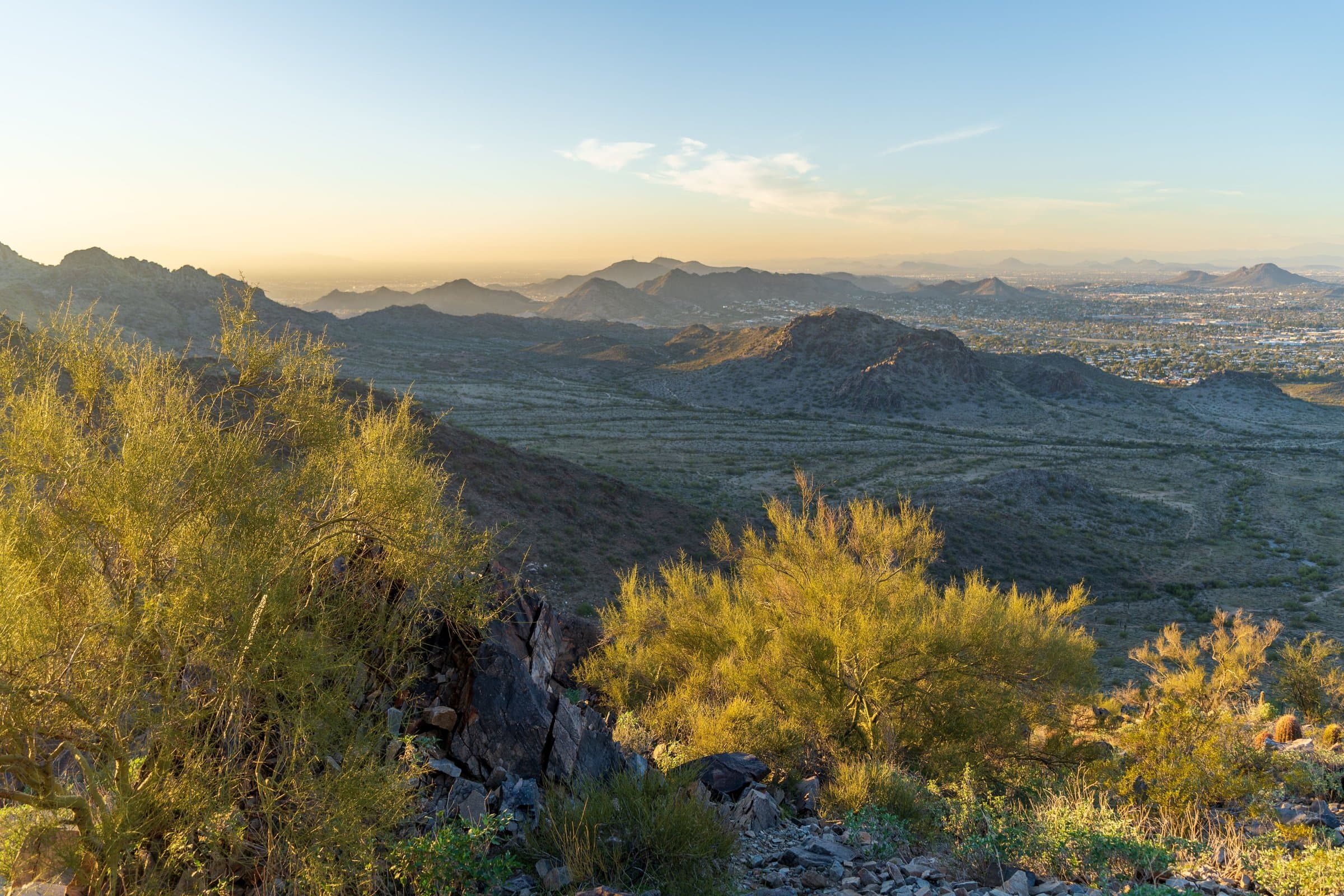
Some nights the lights are visible for hours. Other nights, nothing appears at all. They seem more common on clear, cool evenings, though sightings have been reported in various weather conditions. The viewing area sits at an elevation of about 4,688 feet (1,429 meters) above sea level, looking out across miles of flat, sparsely vegetated desert toward mountain ranges on the horizon.
The lights produce no sound. They leave no physical trace. And despite numerous attempts, nobody has ever gotten close enough to observe one at point-blank range. When you approach, they seem to retreat or simply wink out.

A History of Sightings: 1883 to Today
The Marfa Lights have a documented history stretching back well before electricity or automobiles reached this remote part of West Texas.
1883: Robert Reed Ellison's sighting while driving cattle through Paisano Pass is the earliest recorded account. Local settlers told him the lights had been appearing for years and were a known phenomenon in the area.
Pre-1900s: According to local oral history and the Texas State Historical Association, both ranchers and members of the local Apache and Comanche communities were aware of the lights. Some Indigenous accounts describe them as spirits.
World War II era: During the 1940s, pilots training at the nearby Midland Army Air Field attempted to locate the source of the lights from the air. They found nothing. Ground searches were equally unsuccessful.
1957: The lights gained wider attention when they were featured in a Coronet magazine article, sparking increased public interest.
1973: A large group of observers, including geologists and journalists, camped out on Mitchell Flat to study the lights. They witnessed them but couldn't determine their source.
1986: The Texas Department of Transportation erected a historical marker and an official viewing area on U.S. 90, about nine miles east of Marfa, effectively giving the phenomenon state recognition.
2004-2005: The most rigorous scientific investigation to date was conducted by physics students from the University of Texas at Dallas. Their findings became the basis for the car headlights theory (more on that below).
2001-2009: Retired aerospace engineer James Bunnell conducted the longest sustained individual study of the lights, using automated cameras to record them over eight years. His findings challenged the headlights explanation.
Today, Marfa hosts the annual Marfa Lights Festival every Labor Day weekend, and the viewing platform remains a popular tourist stop. The lights continue to be reported regularly, though their frequency and intensity seem to vary by season and year.

The Car Headlights Theory
The most widely cited scientific explanation came from the Society of Physics Students at the University of Texas at Dallas, who conducted a field study over four nights in 2004 and 2005.
Using telescopes, cameras, and a chase vehicle positioned along U.S. Highway 67 (which runs between Marfa and Presidio, roughly in the direction where the lights appear), the students found a strong correlation between the lights visible from the viewing platform and automobile traffic on the highway. When their chase vehicle drove along U.S. 67 with its headlights on, the lights appeared from the viewing area. When it stopped, the lights stopped. The team concluded that all the lights they observed during their study period could be reliably attributed to car headlights refracted through atmospheric layers.
This is a straightforward, testable explanation, and it's probably correct for many, perhaps most, sightings from the viewing platform. Highway 67 runs roughly 20 to 30 miles from the viewing area, and at that distance, under the right atmospheric conditions, headlights can appear as floating, bobbing orbs. The desert's extreme temperature swings (differences of 40 to 50°F between day and night are common) create temperature gradients that bend light, making distant sources appear to flicker, move, and change color.
The car headlights theory has a fundamental limitation, though: it can only explain lights that have existed since cars became common in West Texas. Robert Reed Ellison saw the lights in 1883. Automobiles didn't arrive in the Marfa area until the early 1900s. If the historical accounts are accurate, something was producing lights in this area long before there were headlights to refract.
The Atmospheric Mirage Theory
Science writer and skeptic Brian Dunning proposed in his Skeptoid podcast that the Marfa Lights are a type of superior mirage, specifically a Fata Morgana or related atmospheric refraction phenomenon.
Marfa's geography creates near-perfect conditions for atmospheric mirages. The flat desert terrain allows unobstructed sightlines of 20 to 40 miles. The high elevation means rapid cooling after sunset, creating sharp temperature inversions where warm air sits above cold air (or vice versa). These inversions bend light rays, causing distant light sources, whether headlights, ranch lights, or campfires, to appear elevated, distorted, and in unexpected locations.
This theory extends the car headlights explanation by adding a mechanism for why the lights behave strangely. Atmospheric refraction can make lights appear to split, merge, bob, and change color, all behaviors witnesses attribute to the Marfa Lights. It can also explain why the lights seem to retreat when approached: as you move, the atmospheric conditions that create the mirage shift.
The mirage theory neatly accounts for modern sightings and may explain many historical ones too (campfires, ranch lanterns, and other light sources existed in the 1880s). But it struggles with accounts of lights that appear on completely dark nights when no obvious light source exists in the direction of the sighting, and with reports of lights that move in patterns inconsistent with refracted stationary sources.

The Piezoelectric and Geological Theories
Some researchers have looked underground for answers. The Marfa area sits near the boundary of several geological formations, and the Chinati Mountains contain igneous rock and fault lines that could be geologically active.
The piezoelectric theory suggests that tectonic stress on quartz-bearing rocks can generate electrical discharges that manifest as visible light. This phenomenon, sometimes called "earthquake lights," has been documented in other geological settings. The idea is that pressure from underground movement causes rocks to release electromagnetic energy that rises to the surface and produces glowing balls of plasma.
This theory draws a natural comparison to the Hessdalen Lights in Norway, where scientists have documented similar unexplained luminous phenomena in a valley with unusual geological and electromagnetic characteristics. The Hessdalen valley contains copper and iron deposits, and researchers there have measured anomalous electromagnetic readings that may be connected to the lights.
James Bunnell, who spent nearly a decade studying the Marfa Lights, speculated that they could be "hot plasma bubbles generated deep underground by stress-induced electromagnetic anomalies." While this hypothesis lacks direct evidence, it attempts to explain something the simpler theories don't: why lights appear in this specific location and apparently have done so since before automobiles existed.
The geological theory is intriguing but unproven. No seismic or electromagnetic measurements taken in the Marfa area have directly correlated with light appearances. The theory remains speculative.
James Bunnell's Decade-Long Investigation
No one has studied the Marfa Lights more thoroughly than James Bunnell, a retired aerospace engineer from Dallas who first saw them in 2001 and spent the next eight years investigating them. His findings, published in four books including Hunting Marfa Lights (2009) and In Defense of the Marfa Lights (2021), represent the most extensive photographic and observational record of the phenomenon.
Bunnell set up multiple automated night-vision cameras positioned to capture the Mitchell Flat area from different angles. Over eight years, he recorded hundreds of light events. His key conclusions challenged the headlights theory:
Directional inconsistency. Some lights he recorded appeared in directions where no roads or structures existed. If all Marfa Lights were refracted headlights from U.S. 67, they should only appear in the direction of the highway. Bunnell documented lights appearing from multiple directions.
Behavioral complexity. His cameras captured lights that moved in ways inconsistent with any stationary source being refracted: rapid lateral movements, vertical ascents, and sudden appearances in areas where no light source was present.
Correlation with conditions. Bunnell noted that the anomalous lights (as distinct from what he agreed were refracted headlights) appeared more often under specific atmospheric and possibly geological conditions, though he couldn't identify the exact mechanism.
Critics argue that Bunnell's equipment and methodology weren't rigorous enough to rule out all conventional explanations, and that confirmation bias may have influenced his interpretations. But his sheer volume of observational data is unmatched, and his core point is reasonable: the UT Dallas study observed lights for four nights, while the phenomenon has been reported for over a century. Four nights isn't enough to explain everything.

Folklore and Supernatural Explanations
No mystery that's been around for 140 years escapes folklore, and the Marfa Lights have accumulated a rich collection of stories.
The most popular local legend attributes the lights to the ghost of a Chisos Apache chief named Alsate, whose spirit supposedly wanders the desert carrying a lantern. Another version involves the spirits of Spanish conquistadors lost in the desert. Some residents simply call them "ghost lights" without attaching a specific story.
Local Indigenous traditions reportedly associated the lights with spirits long before European settlers arrived, though detailed documentation of these accounts is limited.
In more recent years, the Marfa Lights have been folded into the broader UFO/paranormal community. Some researchers have attributed them to extraterrestrial craft, interdimensional phenomena, or even sentient energy beings. There's no evidence supporting any of these interpretations, but they illustrate how enduring mysteries tend to attract progressively exotic explanations over time.
The simplest supernatural explanation, that the lights are something natural that we just don't fully understand yet, is honestly the one that best fits the evidence. We don't need ghosts or aliens. We may just need better science.
Why the Mystery Persists
The Marfa Lights aren't unsolvable because they're supernatural. They persist as a mystery because of a combination of factors that make rigorous study genuinely difficult.
Unpredictability. The lights don't appear on command. You can't schedule an experiment around them. Bunnell's solution (automated cameras running for years) was clever, but it lacked the real-time control a proper scientific study needs.
Distance. The lights appear far from observers. The viewing platform is positioned where atmospheric effects are most pronounced, making it hard to distinguish between genuine anomalies and refracted conventional lights.
Multiple phenomena. It's almost certain that what people call "Marfa Lights" is actually several different things: car headlights on U.S. 67, atmospheric mirages of ranch lights, and possibly one or more genuinely anomalous phenomena. Lumping them all together under one name makes the mystery seem more monolithic than it is.
Limited funding. Nobody's pouring research grants into studying lights in the West Texas desert. The UT Dallas study was a student project. Bunnell was self-funded. Without sustained, well-equipped scientific attention, the lights remain in a limbo between explained and unexplained.
The Marfa Lights are a reminder that not every mystery needs an exotic answer, but not every mystery has a simple one either. Some of what people see is by some interpretations headlights. Some of it may be atmospheric tricks. And some of it, if the historical record and Bunnell's observations are accurate, might be something we don't have a name for yet.
For similar light phenomena that have attracted more scientific scrutiny, explore the Hessdalen Lights in Norway, where researchers have set up permanent monitoring stations. If mysterious lights in the sky interest you, the Phoenix Lights of 1997 represent one of the most witnessed UFO events in history. And for another case where what seems simple turns out to be surprisingly complex, the Bermuda Triangle shows how geography, weather, and human perception can combine to create enduring legends.
Frequently Asked Questions
Can you still see the Marfa Lights today?
Yes. The Marfa Lights Viewing Area is located on U.S. Highway 90, about nine miles east of Marfa, Texas. It's open 24 hours, free to visit, and includes covered shelters and informational displays. The lights don't appear every night, but clear, cool evenings tend to produce the best chances. Many visitors report seeing lights, though determining whether they're "real" Marfa Lights or distant headlights requires patience and a good vantage point.
What's the best time of year to see the Marfa Lights?
Sightings have been reported year-round, but the lights are most commonly seen on clear nights with significant temperature differences between day and night. Fall and winter evenings, when the desert cools rapidly after sunset, tend to produce the most favorable atmospheric conditions. The annual Marfa Lights Festival takes place on Labor Day weekend each September.
Are the Marfa Lights just car headlights?
Some of them by some interpretations are. The 2004-2005 UT Dallas study demonstrated a clear correlation between lights seen from the viewing platform and traffic on U.S. Highway 67. However, the lights were reported as early as 1883, decades before automobiles arrived in the area. Researcher James Bunnell also documented lights appearing from directions where no roads exist. The headlights explanation likely accounts for many modern sightings but probably doesn't explain the entire phenomenon.
Has anyone ever gotten close to a Marfa Light?
No one has documented a close encounter with a genuine Marfa Light. Multiple attempts over the decades, including WWII-era aerial searches, ground expeditions, and modern vehicle pursues, have failed to reach a light source. The lights seem to maintain their distance or disappear when approached. This behavior is consistent with atmospheric mirages (which shift as the observer moves) but hasn't been conclusively explained for all reported sightings.
Are the Marfa Lights similar to other ghost light phenomena?
Yes. Similar unexplained light phenomena have been reported worldwide, most notably the Hessdalen Lights in Norway and the Brown Mountain Lights in North Carolina. Ball lightning, St. Elmo's fire, and earthquake lights are related atmospheric or geological luminous phenomena that share some characteristics. The Marfa Lights may eventually be explained by the same mechanisms, once those mechanisms are themselves better understood.
Further Reading
This article contains affiliate links. If you buy through them we may earn a small commission at no extra cost to you.
Want to explore more mysteries?
We've got plenty more rabbit holes to go down.