The Loch Ness Monster: What's Really Lurking in Scotland's Deepest Lake?
With over 1,100 sightings since 1933, the Loch Ness Monster remains one of the world's greatest mysteries. From the surgeon's photo hoax to eDNA studies, here's what we actually know.
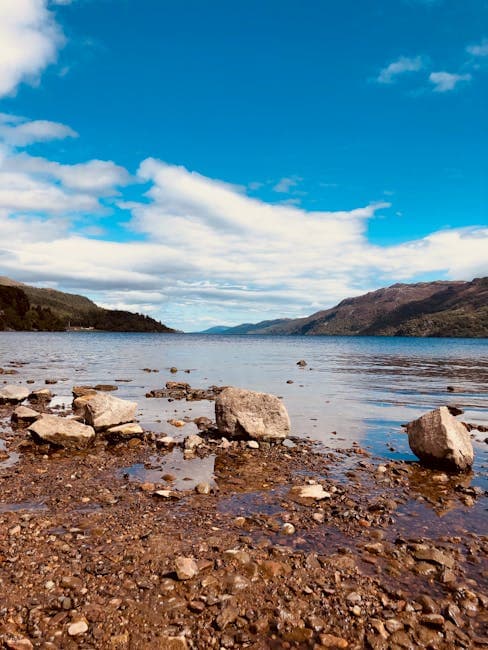
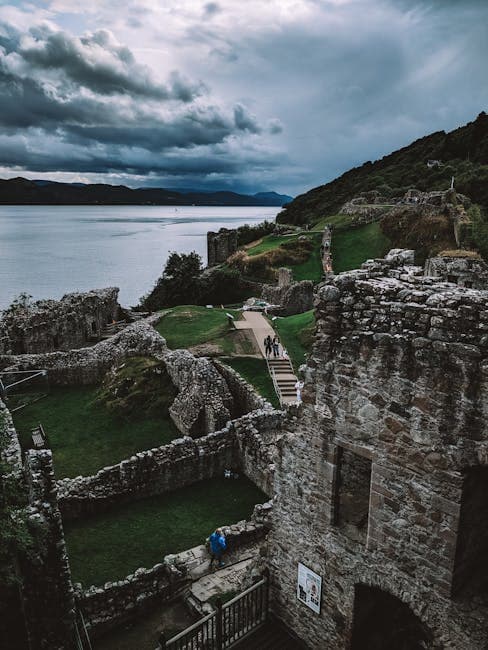
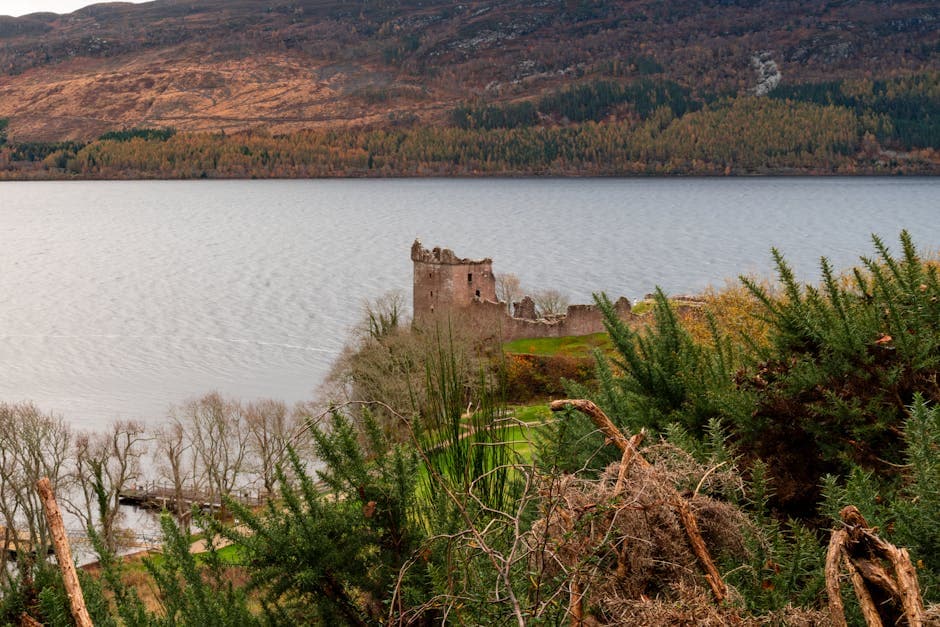
Something lives in Loch Ness. That much isn't disputed. The 23-mile-long lake in Scotland's Highlands is home to salmon, trout, eels, and pike. Its dark, peat-stained waters drop to over 700 feet deep, making it the largest body of fresh water by volume in all of Great Britain. What's disputed is whether something else is down there too. Something large. Something that's been spotted over 1,100 times since 1933. Something that, despite nearly a century of searching, nobody's been able to definitively identify or rule out.
The Loch Ness Monster, affectionately called Nessie, is probably the world's most famous cryptid. It's generated hoaxes, scientific expeditions, sonar sweeps, DNA surveys, and an estimated $80 million per year for Scotland's tourism economy. But strip away the gift shops and the sensationalism, and you're left with a genuinely puzzling question: why do people keep seeing things in this lake?
Let's walk through the evidence, the theories, and the science.
What You'll Learn
- •The Legend Before 1933: Ancient Water Beasts
- •How the Modern Nessie Craze Started
- •The Surgeon's Photograph and Other Famous "Evidence"
- •What Have Sonar Scans Actually Found?
- •The 2019 eDNA Study: What Lives in the Loch?
- •Could Nessie Be a Surviving Plesiosaur?
- •The Giant Eel Theory
- •Misidentification, Waves, and Tricks of Light
- •The 2023 Search: Largest Hunt in 50 Years
- •Frequently Asked Questions
The Legend Before 1933: Ancient Water Beasts
The idea of a monster in Loch Ness didn't begin with blurry photographs and tabloid headlines. It goes back centuries.
The earliest written account comes from Adomnan's Life of St. Columba, written in the 7th century. According to that text, the Irish monk Columba was traveling through Pictish lands around 565 AD when he encountered locals burying a man who'd been attacked by a "water beast" in the River Ness. When another man swam across and the creature approached, Columba reportedly ordered it to "go back," and it obeyed.
It's a dramatic story, but context matters. Water beast tales were common in medieval hagiographies. Saints ordering monsters around was practically a genre convention, a way to demonstrate divine authority. Scholar Christopher Cairney has argued that Columba's encounter draws more from Celtic "water beast" folklore than from any real creature, and that connecting it to the modern Nessie legend is a stretch.
The Picts, who inhabited the region centuries before Columba's visit, left behind carved stones depicting a mysterious creature with flippers. Some Nessie enthusiasts point to these carvings as evidence of a long tradition. Others suggest that the Picts carved lots of animals, real and mythological, and reading a lake monster into their art requires some imagination.
Between the medieval period and the 1930s, scattered reports trickled in. In 1871 or 1872, a man named D. Mackenzie described seeing something resembling an upturned boat "wriggling and churning up the water." In 1888, a mason named Alexander Macdonald reported a "large stubby-legged animal" near the shore and compared it to a salamander. But none of these accounts attracted widespread attention. That would change in 1933.
How the Modern Nessie Craze Started
In April 1933, a couple named John and Aldie Mackay were driving along the A82, a road that had recently been upgraded to offer clear views of the loch. Aldie reportedly shouted "Stop! The Beast!" when she spotted an enormous creature rolling and plunging in the water. Local journalist Alex Campbell wrote up the sighting for the Inverness Courier under the headline "Strange Spectacle in Loch Ness," and the word "monster" entered the conversation.
Three months later, George Spicer and his wife claimed they saw a creature cross the road in front of their car near the loch. They described it as about 25 feet long with a long, undulating neck, calling it "the nearest approach to a dragon or prehistoric animal" they'd ever seen. Spicer's account appeared in the Courier in August 1933 and triggered a media frenzy.
Here's where it gets interesting. Researchers at Columbia University later pointed out that Spicer's description closely matches a scene from the original King Kong film, which was enormously popular in London cinemas during the summer of 1933, right when Spicer reported his sighting. The film has a long-necked dinosaur rising from a lake. Coincidence? Maybe. But the timing is suspicious.
The newly improved road along Loch Ness brought more people to the area than ever before. More eyes on the water meant more sightings, and more sightings meant more newspaper coverage, which brought even more visitors. The feedback loop was in motion.
In December 1933, the Daily Mail hired big-game hunter Marmaduke Wetherell to track the creature. He found large footprints along the shore and proclaimed them evidence of "a very powerful soft-footed animal about 20 feet long." Zoologists at the Natural History Museum examined plaster casts of the prints and determined they'd been made with a single hippopotamus foot, likely an umbrella stand or ashtray base. Whether Wetherell was the hoaxer or the victim remains unclear, but the embarrassment was total.
The Surgeon's Photograph and Other Famous "Evidence"
The most iconic image of Nessie appeared in April 1934. Known as the "surgeon's photograph," it shows what looks like a small head and long neck protruding from the water. It was attributed to Robert Kenneth Wilson, a London gynecologist, and published in the Daily Mail. For decades, it was treated as the strongest photographic evidence of the monster.
Then, in 1994, the truth came out. The photograph was a hoax, orchestrated by none other than Marmaduke Wetherell, who was reportedly seeking revenge for the humiliation of the hippo-foot debacle. The "monster" was a toy submarine with a sculpted head and neck made from plastic wood. Wetherell's stepson, Christian Spurling, confessed to building it before his death.
The surgeon's photograph is far from the only alleged evidence, though. Hugh Gray took a blurry photo in November 1933 that some interpreted as a large creature. Closer analysis suggested it showed his Labrador retriever fetching a stick. Other photographs over the years have been attributed to floating logs, boat wakes, otters, swimming deer, and deliberate fakes.
Film footage hasn't fared much better. Tim Dinsdale shot a famous film in 1960 showing a dark hump moving across the loch. The Joint Air Reconnaissance Intelligence Centre analyzed it and concluded it was "probably" an animate object. But later analysis by the Royal Air Force suggested it could have been a boat. The footage remains inconclusive, which is sort of the theme with Nessie evidence.
What Have Sonar Scans Actually Found?
If something large lives in Loch Ness, sonar should be able to find it. And over the decades, several major sonar operations have tried.
In 1987, Operation Deepscan deployed a fleet of 24 boats in a line across the width of the loch, sweeping it from end to end with sonar equipment. It was the most complete underwater search to that date. The results? Three unexplained sonar contacts at depth, larger than a fish but unidentifiable. Interesting, but hardly conclusive.
Earlier sonar work in the 1970s by the Academy of Applied Science, led by Robert Rines, produced some of the most debated results in Nessie history. Rines combined sonar with underwater strobe cameras and captured images that some interpreted as showing a diamond-shaped flipper and even a plesiosaur-like body. Others saw blurry, ambiguous shapes that could be anything. Rines was so convinced by his findings that he proposed the scientific name Nessiteras rhombopteryx for the creature. Scottish politician Nicholas Fairbairn quickly pointed out that the name was an anagram for "monster hoax by Sir Peter S."
The 2003 BBC-sponsored sonar sweep used satellite navigation and 600 separate sonar beams to cover the entire loch. The conclusion: no monster. No large, unknown animal. The BBC team declared the Loch Ness Monster a myth.
But here's the thing about sonar in Loch Ness. The lake's extreme depth, cold temperatures, and peat-darkened water create challenging conditions. The loch's bottom is uneven and covered with silt. Sonar can produce false readings, and a clever creature (or a conventional one) could potentially avoid detection by staying close to the steep walls or the silty bottom. Absence of evidence isn't evidence of absence, as Nessie believers are fond of saying.
The 2019 eDNA Study: What Lives in the Loch?
In 2019, Professor Neil Gemmell of New Zealand's University of Otago published the results of the most scientifically rigorous investigation of Loch Ness to date. His team collected over 250 water samples from various depths and locations throughout the loch, then extracted and analyzed environmental DNA (eDNA), the genetic material that organisms shed into their surroundings through skin cells, waste, and other biological processes.
The results were fascinating, even if they didn't include a plesiosaur.
The eDNA survey found genetic material from over 3,000 species. There was DNA from fish (Arctic char, pike, salmon, minnows), amphibians, birds, and mammals including humans, dogs, sheep, cattle, and deer. There was no DNA from any large, unknown reptile. No plesiosaur. No prehistoric survivor.
But there was one notable finding: a significant amount of European eel DNA throughout the loch, at multiple depths. "We can't discount the possibility that what people see and believe is the Loch Ness Monster might be a giant eel," Gemmell told reporters.
The study couldn't determine the size of the eels. eDNA tells you a species is present, but not how big individual specimens are. The question of whether Loch Ness could harbor unusually large eels remains open. European eels can grow to about five feet in normal conditions. Could some grow much larger in the nutrient-rich, predator-sparse environment of Loch Ness? It's speculative, but it hasn't been ruled out.
Could Nessie Be a Surviving Plesiosaur?
This is the romantic theory. The one that captures people's imaginations. A population of plesiosaurs, somehow surviving the mass extinction 66 million years ago, living undetected in a Scottish lake. It's a beautiful idea. It's also by some interpretations wrong.
The problems are numerous. Plesiosaurs were marine reptiles that breathed air. A population living in Loch Ness would need to surface regularly, making them far more visible than a creature spotted a handful of times per year. They were also cold-blooded reptiles adapted to warm Mesozoic seas. Loch Ness averages about 5 degrees Celsius (41 degrees Fahrenheit) year-round, which would be lethal for a tropical marine reptile.
Then there's the population question. You can't sustain a species with a single individual. You'd need a breeding population, maybe 20 to 50 animals at minimum. That many large marine reptiles would need a substantial food supply. Loch Ness has fish, but probably not enough to support a population of apex predators each weighing several hundred pounds.
There's also the geological problem. Loch Ness didn't exist in its current form until about 10,000 years ago, when the last Ice Age glaciers retreated. Before that, the area was covered in ice. Any population of plesiosaurs would have needed to enter the loch after the ice melted, and there's no plausible route from the ocean that a large marine reptile could have navigated.
Oxford zoology professor Tim Coulson has called the creature a "biological impossibility." He doesn't think witnesses are lying, just mistaken about what they're seeing.
The Giant Eel Theory
If the plesiosaur theory has too many problems, the giant eel theory has just enough plausibility to be interesting.
European eels (Anguilla anguilla) are genuinely mysterious creatures. They're born in the Sargasso Sea, thousands of miles away in the North Atlantic, and migrate as larvae to European waters where they live for decades before making the return journey to spawn and die. Or at least, that's how it's supposed to work. Some eels never make the return trip. They stay in freshwater indefinitely, continuing to grow.
In normal conditions, European eels max out at about five feet. But there are historical reports of much larger specimens. If an eel failed to undergo the hormonal changes that trigger its spawning migration, it could theoretically keep growing for decades in a nutrient-rich environment like Loch Ness.
A six or seven-foot eel, surfacing briefly in dark water, could easily be mistaken for something more exotic. Its sinuous body could create the appearance of humps. Its head, breaking the surface, might look like a small head on a long neck.
The 2019 eDNA study supports this theory more than any other, though it doesn't prove it. There's plenty of eel DNA in the loch. What's missing is proof that any of those eels are abnormally large.
Misidentification, Waves, and Tricks of Light
The most boring explanation is probably the most accurate one, at least for a good chunk of the sightings.
Loch Ness is a long, narrow body of water surrounded by hills. Wind patterns can create unusual wave formations, including standing waves and seiches (oscillating waves that slosh back and forth across a lake). Boat wakes can persist long after the boat is out of sight, creating mysterious moving humps on the surface.
Wildlife misidentification accounts for many sightings too. Otters swimming in a line can look like a single large creature with multiple humps. Deer are strong swimmers and occasionally cross the loch, their antlers and head creating an unusual silhouette. Diving birds, floating logs, and even groups of fish breaking the surface have all been mistaken for monsters.
Then there's the psychological factor. When you're standing at Loch Ness, you know the legend. You're primed to see something unusual. A phenomenon called pareidolia, the tendency to perceive meaningful patterns in random stimuli, means your brain is actively trying to turn ambiguous shapes into something recognizable. At Loch Ness, "something recognizable" means the monster.
The road built along the loch in 1933 didn't just provide better views. It created an audience. And once the media coverage started, every ripple, wave, and swimming otter became potential evidence. Social contagion, where one person's report triggers others to reinterpret their own observations, is well-documented and by some interpretations played a role in the explosion of sightings during the 1930s.
Like the Mothman sightings in 1960s West Virginia, mass attention can transform ordinary phenomena into extraordinary ones. People aren't lying about what they see. They're just interpreting it through the lens of expectation.
The 2023 Search: Largest Hunt in 50 Years
In August 2023, marking the 90th anniversary of Aldie Mackay's 1933 sighting, the Loch Ness Exploration group organized what they called the largest search of the loch in over 50 years. Volunteers and researchers deployed thermal imaging drones, infrared cameras, and an advanced hydrophone system to listen for underwater sounds.
The search attracted over 100,000 online volunteers who monitored live webcam feeds from around the loch, watching for anything unusual on the surface. The event generated worldwide media coverage and reminded everyone that, nine decades later, Nessie still captures the public imagination like few other mysteries.
The results? The thermal drones detected several "anomalous" heat signatures on the loch's surface that couldn't be immediately explained. The hydrophone picked up four distinct underwater sounds that researchers described as "unusual." None of this constituted proof of a monster. But it didn't close the case either.
What the 2023 search really demonstrated is that Loch Ness remains genuinely difficult to survey comprehensively. Its depth, its murky water, and its sheer size mean that definitive answers are hard to come by. You can scan the loch with the best available technology and still walk away uncertain.
That uncertainty is what keeps the legend alive. Unlike many mysteries that get definitively solved, Nessie exists in a permanent gray zone. There's not enough evidence to prove it, and not enough certainty to dismiss it entirely. For a mystery that's fascinated the world for nearly a century, that ambiguity is part of the appeal.
Frequently Asked Questions
How many Loch Ness Monster sightings have there been?
The Official Loch Ness Monster Sightings Register has documented over 1,100 reported sightings since records began. The majority occurred during the initial media frenzy of the 1930s and 1940s, but new sightings are still reported every year. In recent years, webcams positioned around the loch have added to the count, though most webcam sightings turn out to be boats, birds, or wave patterns.
Was the famous Loch Ness Monster photo fake?
Yes. The "surgeon's photograph" of 1934, the most iconic Nessie image, was confirmed as a hoax in 1994. It was orchestrated by Marmaduke Wetherell, a big-game hunter humiliated by an earlier hoax involving hippopotamus-foot prints. His stepson, Christian Spurling, built a small model from a toy submarine and sculpted head. The photo was taken by Robert Kenneth Wilson to give it credibility through his medical credentials.
What did the DNA study of Loch Ness find?
The 2019 eDNA study led by Professor Neil Gemmell analyzed over 250 water samples and identified DNA from more than 3,000 species. The study found no evidence of plesiosaurs, large reptiles, or any unknown large animal. It did find significant quantities of European eel DNA throughout the loch at various depths, leading Gemmell to suggest that an unusually large eel could explain some sightings.
Could the Loch Ness Monster be a real animal?
Despite decades of searching with sonar, submarines, and even environmental DNA sampling, no one has definitively proven what's in Loch Ness - or what isn't. The lake is 755 feet deep, holds more water than every lake in England and Wales combined, and has near-zero underwater visibility. A 2019 eDNA study found an unusually large amount of eel DNA, suggesting something much bigger than normal eels may be down there. The deeper question isn't whether people are seeing something - thousands of witnesses over centuries say they are. The question is what.
How deep is Loch Ness?
Loch Ness reaches a maximum depth of about 755 feet (230 meters), making it one of the deepest lakes in Europe. It contains more fresh water than all the lakes in England and Wales combined. The water is so dark from peat runoff that visibility drops to zero within inches of the surface. Every sonar survey, every submarine expedition, every scientific study has covered only a fraction of this enormous body of water. We've mapped less of Loch Ness's depths than we have of the ocean floor.
Further Reading
This article contains affiliate links. If you buy through them we may earn a small commission at no extra cost to you.
Want to explore more mysteries?
We've got plenty more rabbit holes to go down.