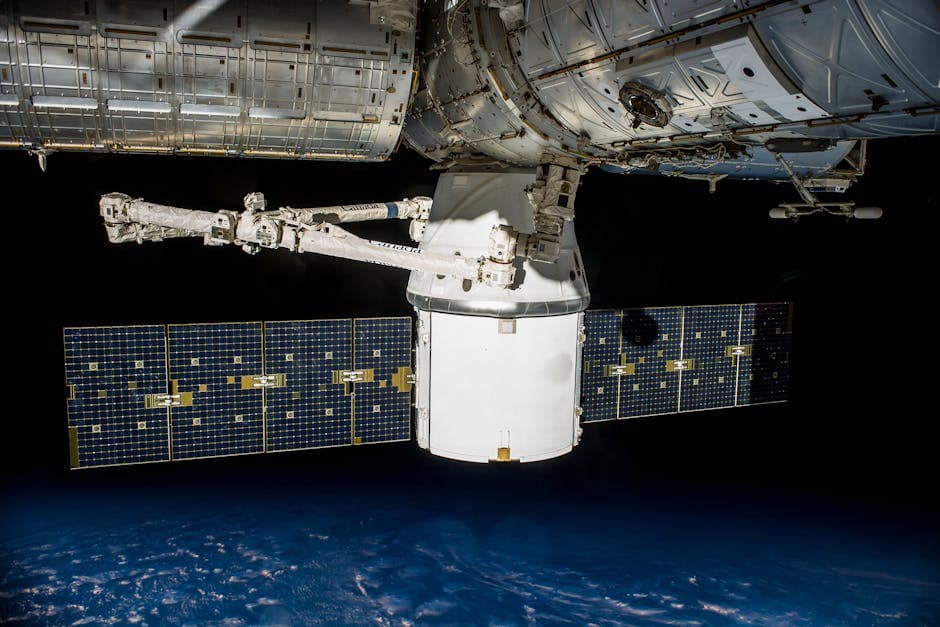
The Black Knight Satellite: A 13,000-Year-Old Object Orbiting Earth?
Since the 1890s, strange signals and unexplained objects in polar orbit have fueled the legend of the Black Knight Satellite. NASA photographed it in 1998. No one has fully explained what it is.
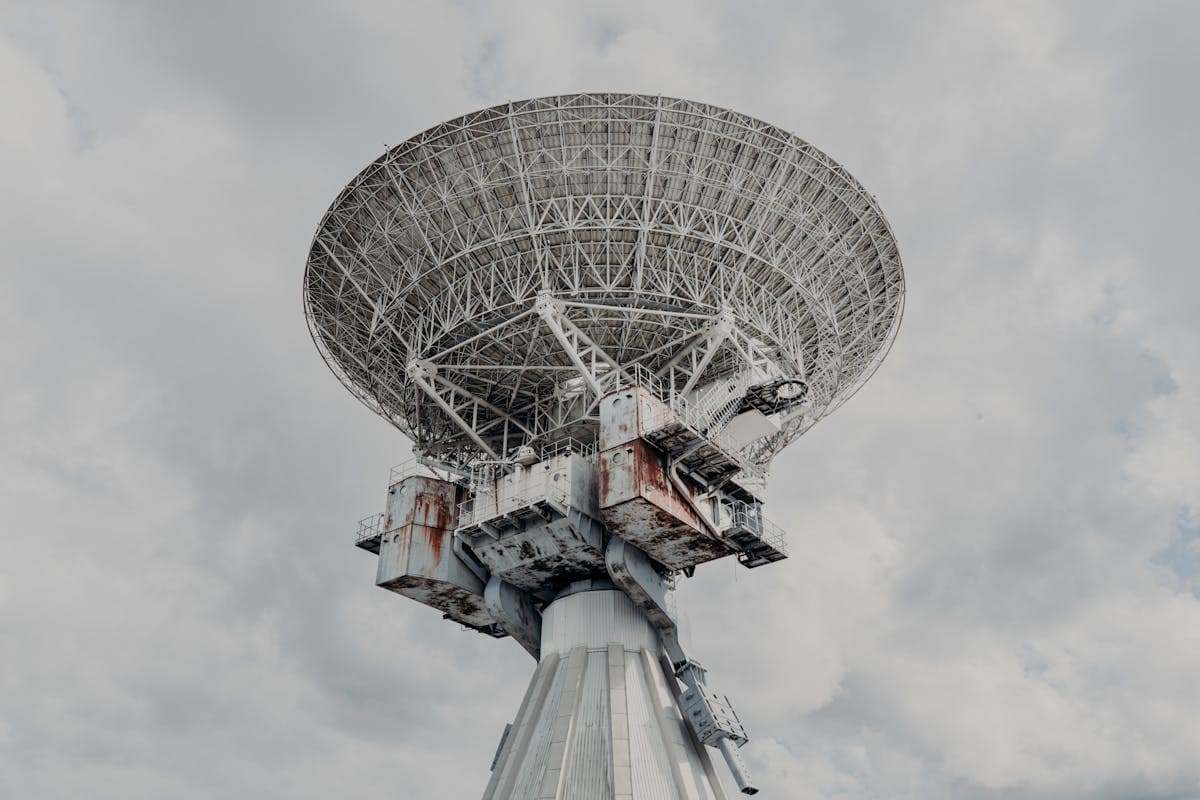
In 1899, Nikola Tesla was working alone in his laboratory in Colorado Springs when his instruments picked up a strange, rhythmic signal. It wasn't random static. It wasn't atmospheric noise. It repeated with a regularity that made Tesla believe he was receiving communication from somewhere beyond Earth.
He published his findings, and the scientific community largely dismissed him. But Tesla went to his grave convinced he had intercepted a signal from space - and over the next century, a growing body of strange observations would suggest he might not have been wrong.
Welcome to the mystery of the Black Knight Satellite: an object that may have been circling our planet for thousands of years before humanity ever launched anything into orbit.
What You'll Learn
- •What Did Tesla Actually Detect?
- •The 1927 Signals and Long Delayed Echoes
- •The 1960 Discovery: A Dark Object in Polar Orbit
- •Why Polar Orbit Matters
- •The 1998 NASA Photographs
- •What Does NASA Say?
- •The Duncan Lunan Connection
- •Could It Really Be 13,000 Years Old?
- •Why the Black Knight Refuses to Go Away
- •Frequently Asked Questions
What Did Tesla Actually Detect?
In 1899, Tesla built what was then the most sensitive radio receiving equipment on Earth at his experimental station in Colorado Springs. He was attempting to prove that electrical energy could be transmitted wirelessly across vast distances. What he wasn't expecting was incoming signals.
In a February 1901 article for Collier's Weekly, Tesla described receiving "electrical disturbances" that came in groups of one, two, three, and four pulses - a pattern he felt was too organized to be natural. "The feeling is constantly growing on me that I had been the first to hear the greeting of one planet to another," he wrote.
No one has been able to identify a conventional source for what Tesla detected. Jupiter's natural radio emissions weren't discovered until the 1950s. Pulsars weren't identified until 1967. Whatever Tesla picked up in 1899, it didn't match anything science could explain at the time - and the question of what it was has never been conclusively settled.
The 1927 Signals and Long Delayed Echoes
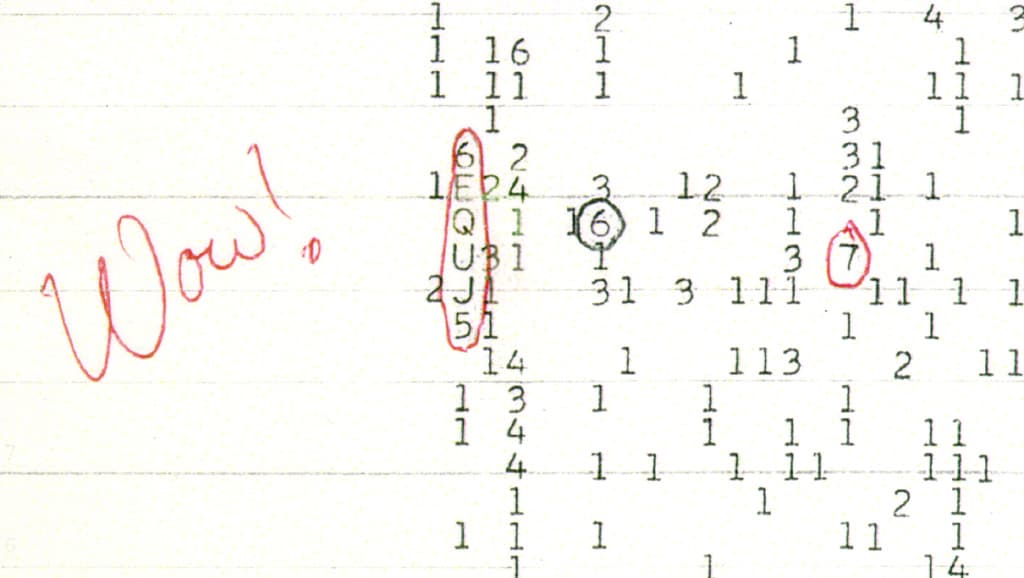
In 1927 and 1928, radio engineers in Oslo, Norway, documented a phenomenon that still puzzles physicists: long delayed echoes, or LDEs. Radio signals transmitted from Earth were being bounced back - but with delays of three to fifteen seconds, far longer than any reflection off the ionosphere could produce.
The delays were irregular, which ruled out a simple reflection off a fixed surface. Something was receiving the signals and sending them back, or the signals were bouncing off an object at a distance that kept changing.
In 1973, Scottish astronomer Duncan Lunan re-analyzed the 1928 LDE data and made a startling claim: when the delay times were plotted on a graph, they appeared to form a star map pointing to Epsilon Boötis, a double star system roughly 210 light-years from Earth. Lunan suggested the echoes were being produced by an alien probe parked in Earth orbit - a probe that had been there for approximately 13,000 years.
Lunan later distanced himself from some of his conclusions, but he never fully retracted the core observation: the delay patterns do form coherent shapes when graphed, and no natural phenomenon has been shown to produce long delayed echoes with those specific timing signatures.
The 1960 Discovery: A Dark Object in Polar Orbit
On February 11, 1960, newspapers across the United States ran a story that should have been front-page news for weeks. The U.S. Navy's Dark Fence radar system - a space surveillance network designed to track satellites - had detected an unknown object in polar orbit around Earth.
This was extraordinary for one reason: neither the United States nor the Soviet Union had the capability to place an object in polar orbit at that time. Both nations' early satellites orbited along the equator or at slight inclinations. A polar orbit requires significantly more energy and a different launch trajectory. Whoever - or whatever - had placed this object in orbit had done so using technology neither superpower possessed in 1960.
The object was described as dark, tumbling, and roughly the size of a small car. It was tracked for several weeks before the story quietly faded from the news cycle. The Department of Defense eventually attributed it to a piece of the Discoverer VIII satellite's launch vehicle, but that explanation has significant problems: the Discoverer VIII debris was accounted for separately, and the orbital parameters didn't match.
Why Polar Orbit Matters
This is a detail that often gets overlooked, but it's essential to understanding why the Black Knight story unsettled the defense establishment in 1960.
A polar orbit passes over every point on Earth's surface as the planet rotates beneath it. It's the orbit you'd choose if you wanted to observe or map the entire planet. It's the orbit used today by Earth-observation satellites, spy satellites, and weather monitoring systems.
In 1960, no nation on Earth had demonstrated the ability to achieve polar orbit. The fact that an unknown object was sitting in exactly the orbit a surveillance platform would use - at the height of the Cold War - was not lost on military analysts. Both the Americans and the Soviets initially suspected the other had achieved a secret breakthrough.
Neither had.
The 1998 NASA Photographs
The Black Knight legend might have remained a footnote of Cold War-era UFO lore if not for what happened during Space Shuttle mission STS-88 in December 1998.
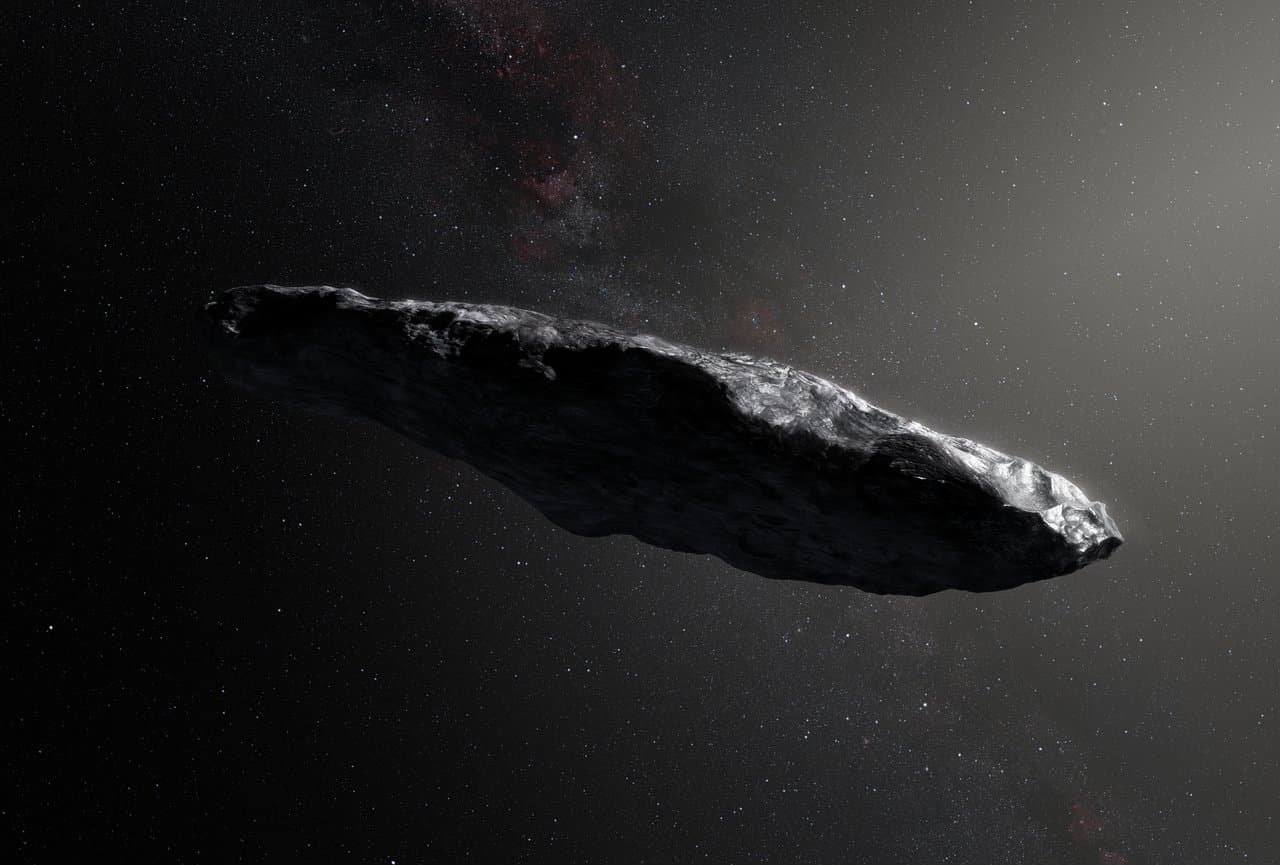
During the first assembly mission of the International Space Station, astronauts photographed a dark, irregularly shaped object tumbling through space near the shuttle. The photographs - designated STS088-724-65 through STS088-724-69 - are archived in NASA's official image database and remain freely available to the public.
The object in the photographs is striking. It's jet black against the bright blue of Earth's atmosphere, roughly elongated, with what appear to be angular surfaces that catch sunlight at odd angles. It looks nothing like a thermal blanket, a bolt, or any of the usual debris items cataloged by space agencies.
NASA identified the object as a thermal blanket that had drifted away during the EVA (spacewalk) conducted during the mission. And yet, the photographs show an object with a defined, consistent shape across multiple frames taken from different angles - not the crumpled, amorphous form you'd expect from a drifting piece of fabric.
What Does NASA Say?
NASA's official position is that the 1998 photographs show a thermal blanket lost during the STS-88 spacewalk. This explanation was offered relatively quickly after the images circulated publicly, and NASA has not revisited the identification since.
What's notable is what NASA has not addressed. The agency has never issued a complete response connecting the 1960 radar detection, the long delayed echoes of the 1920s, Tesla's 1899 signals, or the 1998 photographs into a single analysis. Each incident has been explained - or dismissed - in isolation, as though they are entirely unrelated events.
Perhaps they are. But the pattern of a mysterious object in polar orbit, detected across a full century by different technologies in different decades, at least warrants the question: is it really just coincidence?
The Duncan Lunan Connection
Duncan Lunan's 1973 analysis of the long delayed echoes deserves closer examination, because what he found is genuinely difficult to dismiss.
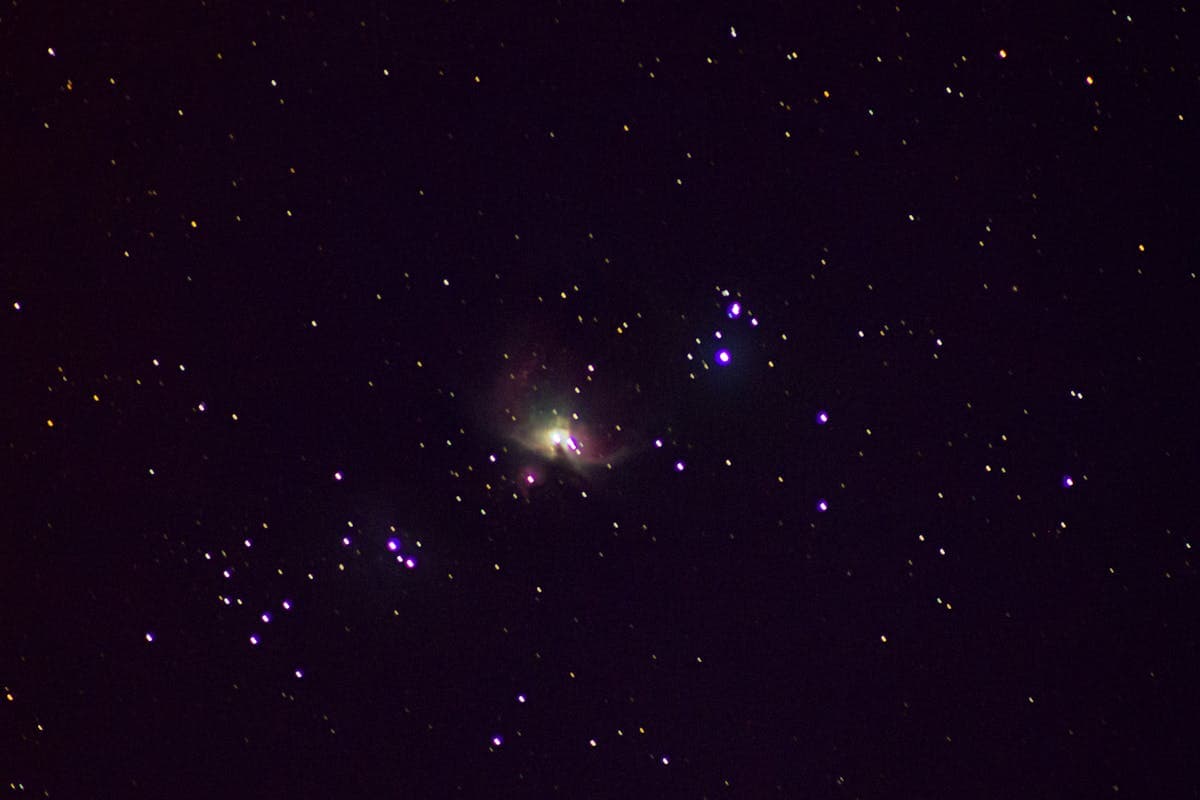
Lunan took the delay times recorded during the 1928 LDE experiments - raw data, published in scientific journals - and plotted them as coordinates on a graph. The resulting image resembled a star map of the constellation Boötis, with one star conspicuously displaced from its expected position: Epsilon Boötis.
The displacement, Lunan argued, corresponded to where Epsilon Boötis would have appeared in Earth's sky approximately 13,000 years ago, accounting for proper stellar motion. The implication was staggering: the probe was identifying its point of origin and telling us when it had arrived.
Critics argued that the pattern was coincidental, that you could find shapes in any dataset if you looked hard enough. But Lunan's methodology was straightforward - he didn't cherry-pick data points or rearrange the sequence. He plotted the delays in the order they were recorded. The star map emerged on its own.
Could It Really Be 13,000 Years Old?
Thirteen thousand years ago, the last Ice Age was ending. Humans were painting caves in Lascaux, building the earliest structures at Göbekli Tepe, and just beginning to settle into agricultural life. The idea that an artificial satellite was placed in orbit around Earth at that time is, by any conventional measure, extraordinary.
But consider what such a probe would represent. It wouldn't need to be large - even by our own standards, a monitoring satellite can be compact. It would need to be durable, built to withstand millennia of micrometeorite impacts and radiation exposure. And it would need to be in an orbit stable enough to persist for thousands of years without correction.
A polar orbit, as it happens, is one of the most stable orbital configurations available. Without atmospheric drag (which is negligible at sufficient altitude), an object in polar orbit could theoretically circle the Earth for tens of thousands of years.
We've been launching satellites for less than seventy years. We've already placed monitoring equipment around other planets. The idea that a civilization even slightly more advanced than ours might have done the same to Earth is not science fiction - it's a statistical near-certainty, if such civilizations exist.
Why the Black Knight Refuses to Go Away
The Black Knight Satellite occupies a unique space in the world of unexplained phenomena. Unlike Bigfoot or the Loch Ness Monster, the core evidence isn't eyewitness testimony - it's radar returns, radio data, and NASA's own photographs. Unlike most UFO cases, the object doesn't appear and vanish. If it's real, it's been there the entire time, circling overhead in patient, silent orbit.
Every few years, someone attempts a definitive debunking. And every time, the same unanswered questions remain:
What did Tesla detect in 1899? What produced the long delayed echoes in 1928? What was the dark object the U.S. Navy tracked in polar orbit in 1960, before any nation could achieve polar orbit? And what, exactly, is the angular black object NASA photographed in 1998?
Each of these questions has been given an individual answer. But no single explanation accounts for all of them. And until one does, the Black Knight Satellite will continue to orbit - not just the Earth, but the edges of what we think we know about who else might be watching.
Frequently Asked Questions
Is the Black Knight Satellite real?
Something was detected in polar orbit in 1960 by U.S. military radar. Something produced anomalous radio echoes in the 1920s. And NASA photographed an unidentified dark object during STS-88 in 1998. Whether these are all the same object - and whether that object is artificial and ancient - remains an open question that no authority has fully resolved.
What did NASA say about the 1998 photos?
NASA identified the object as a thermal blanket lost during a spacewalk. However, the object's consistent angular shape across multiple photographs taken from different angles has led many researchers to question whether a drifting blanket could maintain such a defined form.
How old is the Black Knight Satellite supposed to be?
Based on Duncan Lunan's 1973 analysis of 1928 radio echo data, some researchers estimate the object could be approximately 13,000 years old - placed in orbit around the time of the last Ice Age. This remains one of the most debated aspects of the legend.
Could it be space debris?
It's possible that individual sightings correspond to different pieces of debris. But the 1960 detection occurred before the space environment was cluttered with junk, and the object was in an orbit no nation could achieve at the time. Space debris doesn't explain the earlier radio anomalies either.
Why doesn't someone just go look at it?
This is perhaps the most frustrating aspect of the entire mystery. With current technology, it would be entirely feasible to send a small probe or direct a telescope to examine any object in Earth orbit. To date, no space agency has announced a mission to conclusively identify the Black Knight - which, depending on your perspective, either means there's nothing there to find, or means someone has decided we're better off not knowing.
Has anyone else detected it since 1998?
Amateur radio operators and independent satellite trackers periodically report anomalous objects in polar orbit that don't correspond to any cataloged satellite. Whether any of these detections relate to the Black Knight is impossible to confirm without an official investigation - and none has been forthcoming.
Further Reading
This article contains affiliate links. If you buy through them we may earn a small commission at no extra cost to you.
Want to explore more mysteries?
We've got plenty more rabbit holes to go down.